
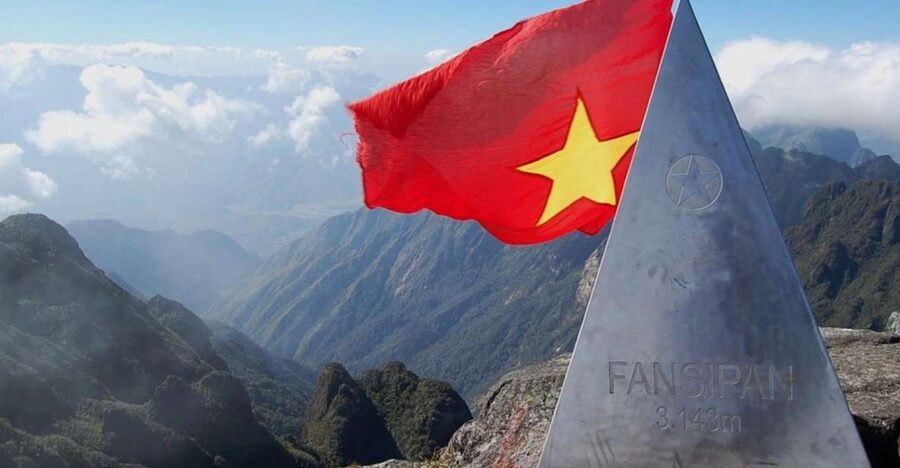
Reviewed · SAPA TREKKING TOURS
2-Day Fansipan Mountain Trek – Indochina’s Highest Peak
Reaching Fansipan at sunrise means hiking through pine, bamboo, rocky slopes, ladders, and thin mountain air before most cable-car visitors arrive. This 26-kilometer trek takes you from Tram Ton Pass to Vietnam’s highest point at 3,143 meters, then back down the mountain in time for an afternoon ride to Sa Pa.
I like the honest, old-fashioned shape of this trip: you carry only your personal gear, while a Black Hmong porter brings the food and sleeping bags. I also like the local focus, since your guide explains the lives and customs of the Black Hmong, Red Dao, and Dzay communities along the way. The catch is simple: this is a hard hike with basic overnight conditions, and temperatures near zero are possible.
Key points before you book
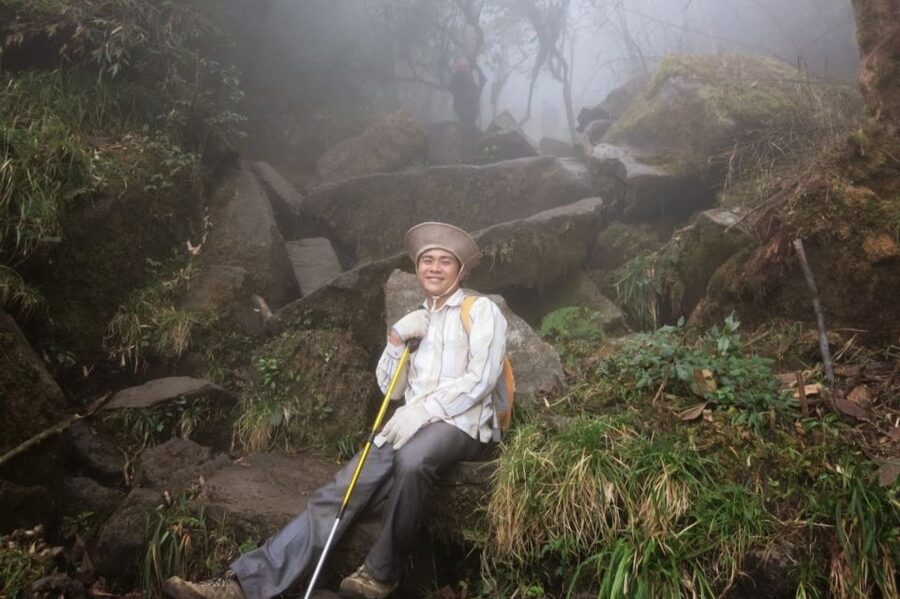
- Sunrise at 3,143 meters: Reach Fansipan’s summit around 7:30 AM, with views toward Sa Pa, Lai Chau, and possibly Yunnan in China.
- A real mountain trek: Expect about 26 kilometers over two days, with steep slopes, boulders, bamboo forest, ladders, and steps.
- Local support on the trail: An English-speaking guide leads the hike, while a Black Hmong porter carries food and sleeping bags.
- Simple overnight stay: Your bed may be a sleeping bag in a hut or tent, with little comfort and possible cold at night.
- Useful start and finish services: Hot showers and luggage storage are provided at the Sa Pa office before and after the hike.
- Cable car backup: If your legs give out on the descent, your guide can help arrange a cable-car ticket for an extra 700,000 VND.
Why the summit sunrise makes the effort worthwhile
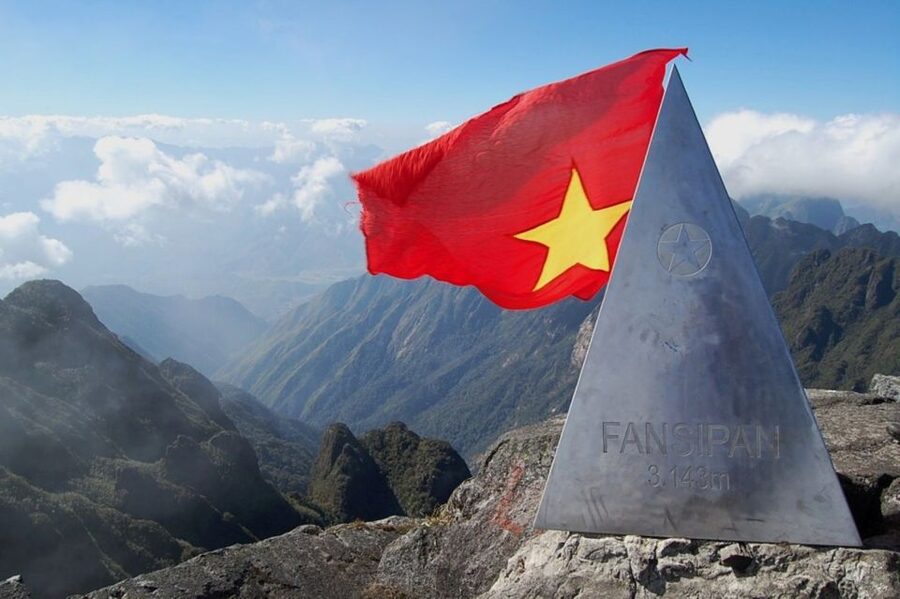
Fansipan is not just a high point marked on a map. The timing gives you a clear goal: leave camp at 5:00 AM, climb through the last bamboo stands, and arrive near the summit as the morning light reaches the valleys below.
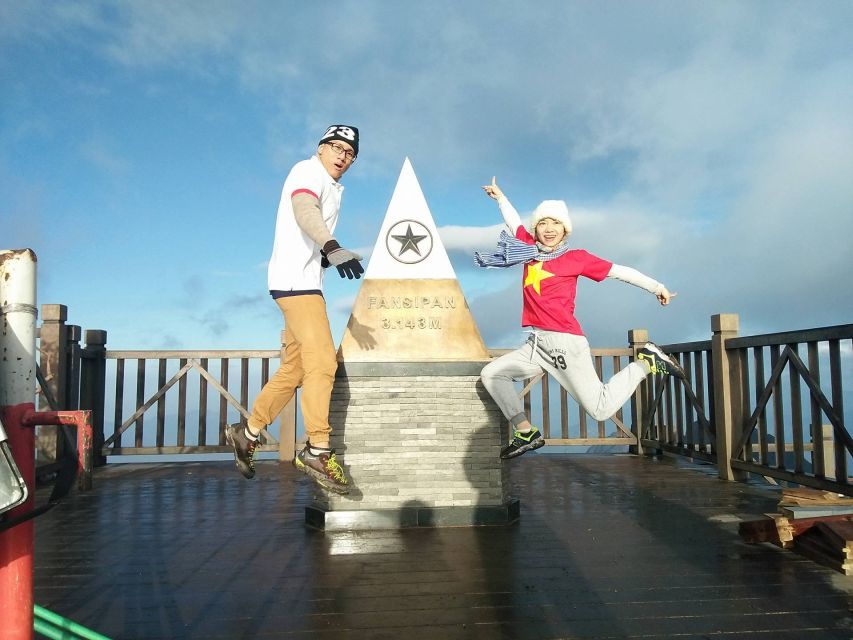
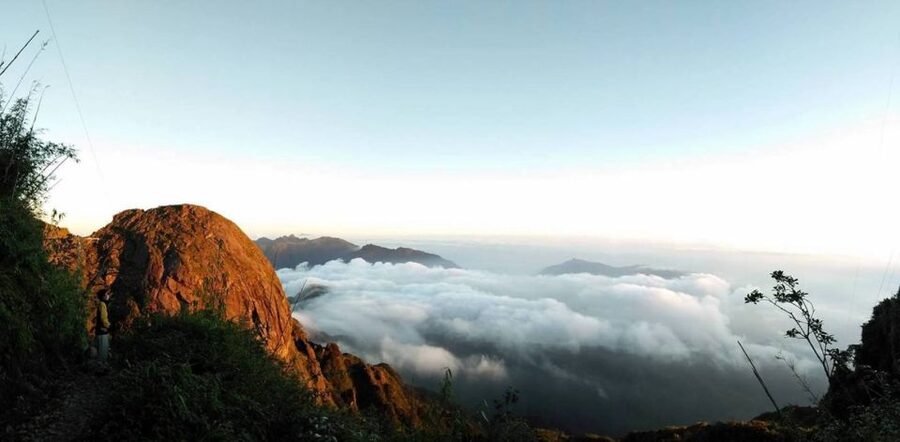
At 3,143 meters, the views can stretch over Sa Pa and Lai Chau Province. On a clear day, you may also see mountains in Yunnan, China. Weather is never guaranteed, but the early start gives you the best chance to experience the summit before the cable-car crowds arrive.
One particularly special version of this trip is reaching the top with no one else around. That quiet moment can make the steep climb feel worthwhile. It also gives you time for photographs without treating the summit as a quick stop between rides.
The summit itself is only part of the reward. The route takes you through changing vegetation, from pine and bamboo forest at lower elevations toward sparser growth near the top. You feel the mountain getting colder and more exposed as you climb.
More Hiking Tours in Sapa
- Sa Pa: Muong Hoa Valley Trek and Local Ethnic Villages
★ 4.6 · 864 reviews - Sapa: Eco Adventure Terrace Fields and Local Villages Trek
★ 4.9 · 636 reviews - From Sapa: 1-Day Guided Trek to Lao Chai & Ta Van with Lunch
★ 4.9 · 416 reviews
Starting in Sa Pa and leaving your luggage behind
You meet at the Vietnam Nomadtrails office at No. 013 Tue Tinh Street in Sa Pa. The information gives both 7:00 AM and 8:00 AM as start times, so confirm the exact meeting time when you reserve.
A hot shower is available before the hike, and you can store large luggage at the office. This is a small but valuable detail. You do not want to carry a full Sa Pa suitcase up a mountain, and a shower before the trek lets you begin fresh.
The morning also includes some free time in Sa Pa before the drive to Tram Ton Pass. The driver takes you to the trailhead at about 9:00 AM. From there, you meet the guide and porter who will accompany you up the mountain.
Pack a small day bag with warm layers, rain protection, personal medication, a phone or camera, and anything you need overnight. The tour provides 1.5 liters of water per day, but you should ask what extra water is available if you normally drink more during strenuous exercise.
Day one: Tram Ton Pass to the 2,800-meter camp
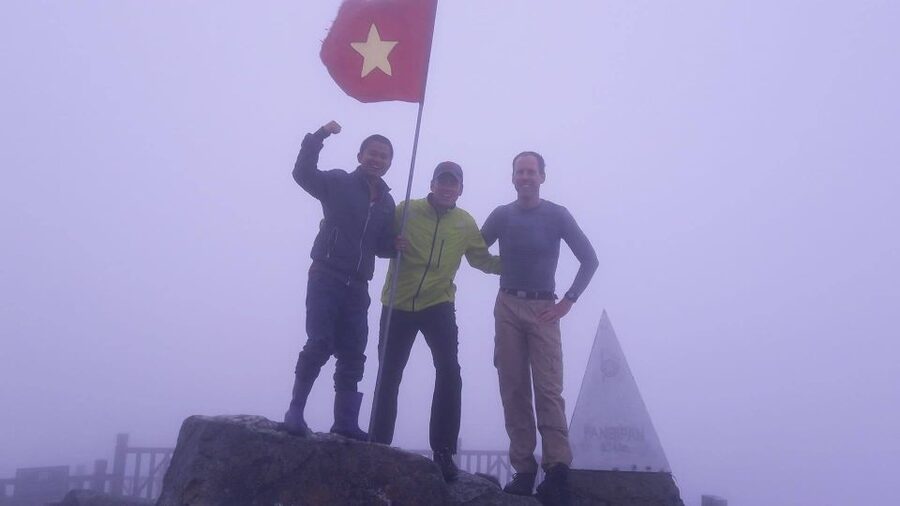
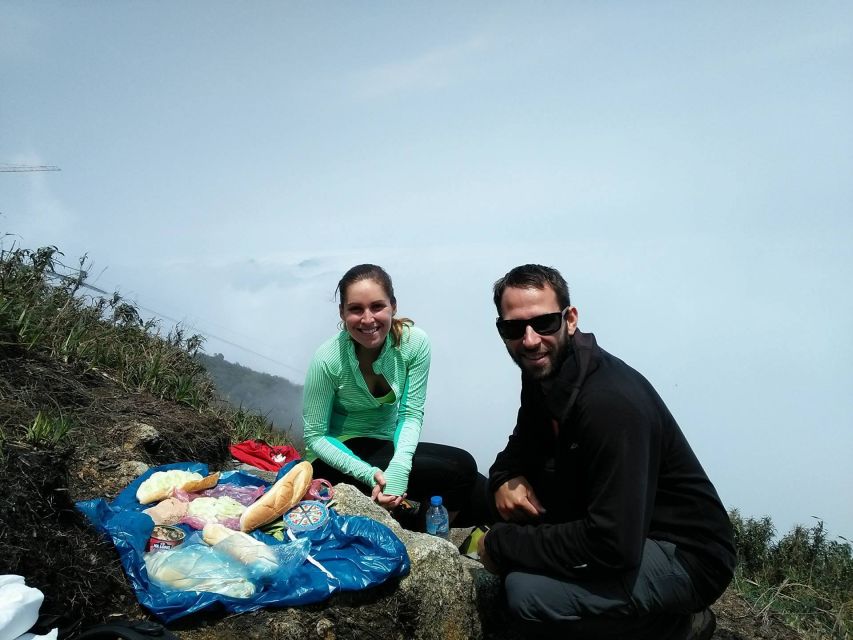
The first day moves from Tram Ton Pass toward a sleeping point at about 2,800 meters. Around noon, you reach roughly 2,200 meters for a picnic lunch prepared by the guide and porter.
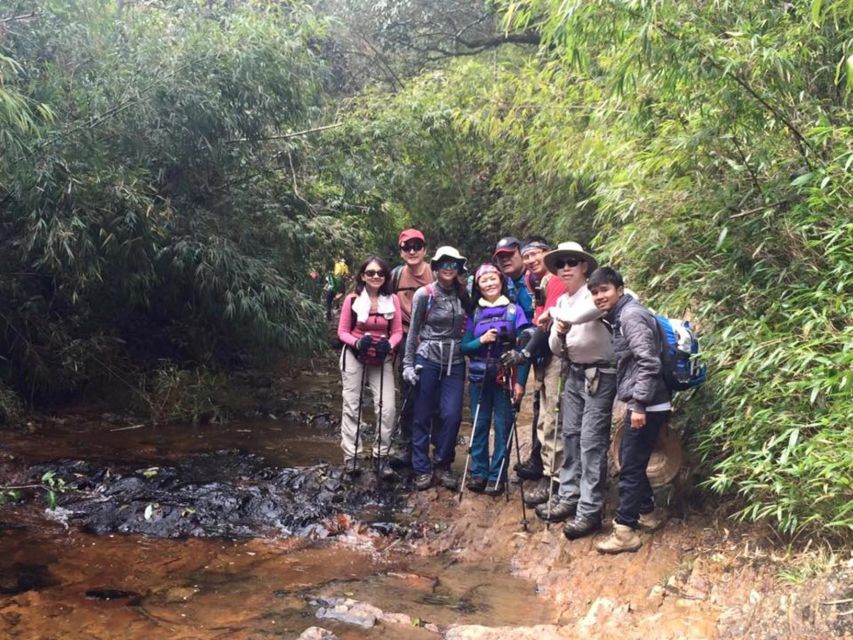
The route passes through pine and bamboo forest, with streams and cool mountain air. This section gives the trek its natural character. You are not simply climbing stairs to a viewpoint. You move through forest, cross different types of ground, and watch the vegetation change as the altitude rises.
The pace includes stops for rest and views. A good guide checks how you are coping, points out places of interest, and helps you manage the steep parts. Guides called Sinh and Cha have been praised for patient care, friendly conversation, and strong uphill speed. Your own guide may be different, but the tour is built around close support rather than a self-guided route.
The cultural side is useful here. Your guide can explain the Black Hmong, Red Dao, and Dzay communities, all minority groups living around Sa Pa. This does not turn the hike into a formal village visit, but it gives you context for the people who work and live in these mountains.
After lunch, you continue toward camp and usually arrive around 4:00 PM. That leaves a little time to rest or look around before dinner at about 6:30 PM. An early night is not optional luxury. You need the rest because the hardest climb comes before breakfast has fully settled.
Food on the mountain
The package includes two lunches, one dinner, and one breakfast. Lunch is served as a picnic on both hiking days, while dinner is prepared at the overnight point.
The food has received some of the warmest praise connected with this trip. Guides have prepared several dishes in very basic mountain conditions, offering a satisfying taste of regional Vietnamese cooking rather than relying only on packaged snacks.
Still, keep your expectations practical. This is mountain food carried uphill by a porter, not a restaurant meal. Inform the company about allergies or vegetarian requirements before you go. Drinks are not included, so bring money if you need to buy them along the way.
The porter carries food and sleeping bags, which makes a real difference. You still need to carry your clothing, water, and personal items, but you are not hauling the full camp kitchen up the trail.
A few other Sa Pa trips to compare
- Sapa 1 Day Long Trek: Trek to Hau Thao and Sa Seng Villages
★ 4.6 · 344 reviews - Sapa: Fansipan Cable, Cat Cat Village, Moana Instagram Tour
★ 4.8 · 294 reviews - From Sapa: 3-Day Ha Giang Loop with Safe Rider (max 8 pax)
★ 4.9 · 285 reviews - Explore Sapa by TrekkingAdventures, Mountain,Rice fields
★ 4.9 · 229 reviews
Sleeping at 2,800 meters: basic means basic
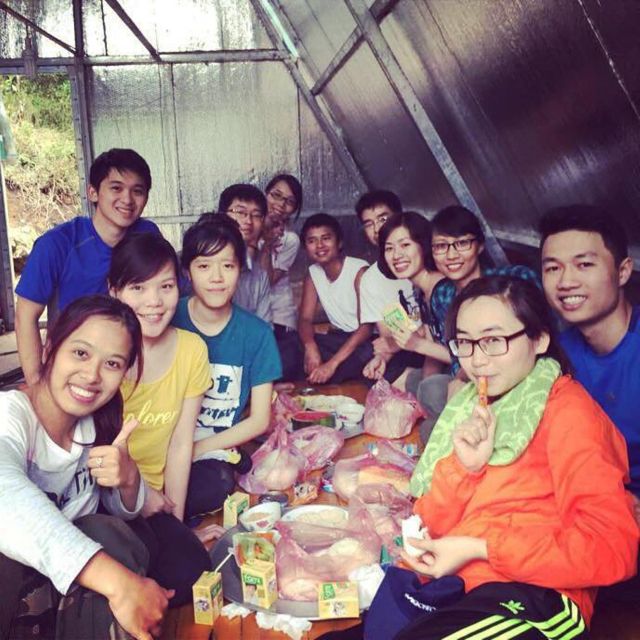
Your overnight accommodation may be a sleeping bag in a hut or tent. The setup is functional, not comfortable. One night can be cold enough for temperatures near zero, and a sleeping bag may not feel sufficient for everyone.
Bring warm sleepwear, dry socks, a hat, and a fleece or insulated jacket. A spare layer to place under or over the sleeping bag can help, though the tour does not promise extra blankets. Keep your night kit inside a waterproof bag if rain is possible.
The camp can also be noisy. Other groups may arrive or leave while you are sleeping, and this is outside the company’s control. Earplugs are a sensible addition.
The basic overnight stay is the largest comfort tradeoff in this trip. If you want a warm room, a proper mattress, and a quiet night, take the Fansipan cable car instead. If you want the satisfaction of earning the summit on foot, the hut or tent is part of the deal.
Day two: the steep push to Fansipan
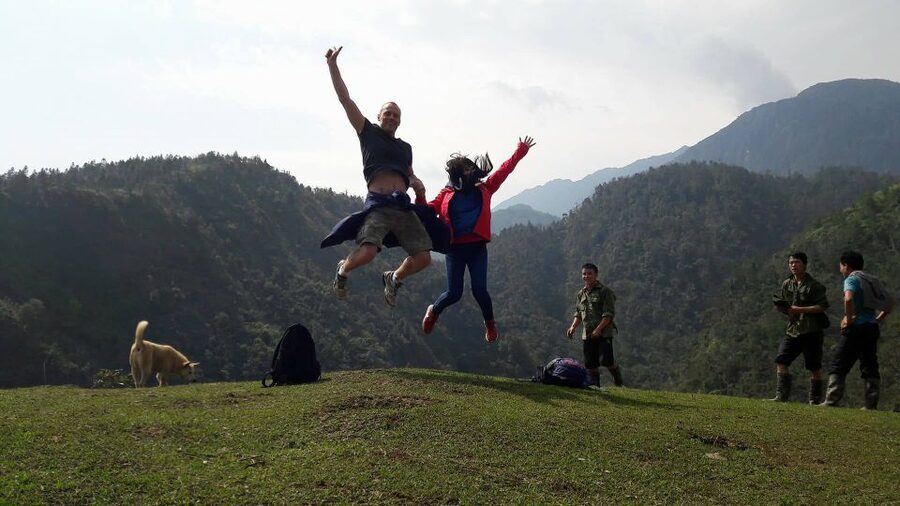
Breakfast comes at 5:00 AM, with hot tea or coffee. You then continue through bamboo forest toward the summit. The plants become less common as the altitude increases, and the path grows more exposed.
This is where the trek feels serious. The full route covers steep ground, boulders, steps, and ladders. A 60-year-old participant completed the hike with a parent, but the route was still described as quite demanding. That is a useful guide: age alone does not decide whether you can do it, but fitness, knees, balance, and comfort with long uphill walking matter.
You are scheduled to reach the summit around 7:30 AM. The final approach can be tiring, especially after the previous day and a short night. Move steadily, use the guide’s pace, and save energy for the descent. The summit photo is not the finish line, because you still need to return to Tram Ton.
At the top, take time for the views and sunrise. Sa Pa and Lai Chau lie below, and clear weather may reveal distant mountains across the border in Yunnan. Clouds can cover everything, so you should treat the view as a bonus rather than a promise.
The descent is not an easy afterthought
You begin going down around 8:00 AM and stop for a picnic lunch on the way back to Tram Ton. The return generally takes until 3:30 or 4:30 PM, when a car collects you for Sa Pa.
Many hikers find descending harder than climbing. Tired legs meet steep steps, loose-feeling rocks, and ladders. If you are struggling, you can ask the guide to arrange a cable-car descent for an additional 700,000 VND. The included tour price does not cover this ticket.
The cable car is not a failure. It is a sensible safety option if your knees or energy are running low. You still complete the demanding ascent and get the summit experience, while avoiding a painful or unsafe return.
Back at the office, you can take another hot shower. This is especially welcome after a full day on the trail. The tour ends at the Sa Pa meeting point, and you arrange your own onward bus or train to Hanoi. Transport between Sa Pa and Hanoi is not included.
What the $120 price really covers
At $120 per person, the price includes an English-speaking guide, porter support, permits, entrance fees, transport to and from Tram Ton, meals, water, sleeping equipment, and hot showers. That is solid value for a two-day mountain trip, especially since the permit and camp arrangements are handled for you.
The price does not include travel insurance, VAT, drinks, or the cable car. A Lunar New Year surcharge of $70 per person applies from January 26 to February 2, 2025, according to the supplied terms. A single traveler pays $230 for a private tour, so solo hikers should budget for that higher rate.
The main value is not comfort. You are paying for access, local support, food carried into the mountains, and a guided route to Vietnam’s highest summit. The tour makes sense if you would rather spend two hard days on the mountain than take a fast ride to the top.
Who should choose this trek
I would recommend it to fit hikers who want a physical challenge and prefer a local guide over a large group operation. It suits you if you enjoy early starts, simple camps, forest trails, and the feeling of earning a viewpoint.
It is also a good choice if you want more than a summit photograph. The guide can explain local minority communities and mountain life while you walk, and the porter system connects the experience to the people who make the route possible.
I would not choose it for children under 17, anyone with a disability that limits hiking, or older people who are not used to long, steep walks. The tour specifically advises elderly people against the 26-kilometer route.
You should also think carefully about cold. Sa Pa can feel mild while Fansipan camp feels wintry. Pack for the mountain, not the town.
Practical details that matter
The tour has an English-speaking live guide, but communication can vary. Some guides are highly social and explain plenty along the way. Others may speak less English, which can limit the cultural conversation even when their mountain skills are strong.
Cancellation is flexible up to 24 hours before departure for a full refund, and you can reserve now and pay later. Travel insurance is not included, so arrange your own cover before setting out.
The stated rating is 4.3 from 42 ratings, which fits the experience well: strong marks for guides, organization, food, and the summit moment, with sensible reservations about cold sleeping conditions, steep terrain, and basic facilities.
Do not confuse this route with the cable-car visit. The cable car ticket is 800,000 VND and is not included. The trekking tour gives you the physical journey, the overnight camp, and the sunrise arrival. It takes far more effort, but it also gives you a much stronger sense of place.
Should you book the Fansipan trek?
Book it if you want a demanding two-day adventure, can handle 26 kilometers of steep mountain walking, and are willing to sleep simply in exchange for a sunrise summit. The local guide, porter, cooked meals, permits, transport, and hot showers make the $120 price reasonable.
Skip it if your main goal is an easy view from the top, if you need reliable warmth and comfort overnight, or if descending steep steps would be a problem. For many people, the cable car is the better choice.
For everyone else, pack warm clothing, confirm the meeting time, tell the company about food needs, and keep the cable car option in mind. Fansipan is worth the effort, but only if you respect the mountain.
FAQ
How high is Fansipan?
Fansipan reaches 3,143 meters, making it the highest peak in Vietnam.
How long is the trek?
The full trek is about 26 kilometers over two days.
Where does the tour start?
You meet at the Vietnam Nomadtrails office at No. 013 Tue Tinh Street in Sa Pa, Lao Cai, Vietnam.
What time does the tour start?
The meeting information states 8:00 AM, while the schedule describes a welcome at 7:00 AM and a drive to Tram Ton at 9:00 AM. Confirm the exact time when booking.
What meals are included?
The tour includes two lunches, one dinner, and one breakfast. You should provide details about allergies or vegetarian requirements in advance.
Is camping equipment included?
Yes. Accommodation includes a sleeping bag, hut, or tent. The porter carries the food and sleeping bags.
Can I take the cable car down?
Yes. If you are too tired to continue down the trail, you can ask your guide to arrange a cable-car ticket. The additional cost is 700,000 VND. The regular cable-car ticket price is listed as 800,000 VND.
Is transport from Sa Pa to Hanoi included?
No. The tour returns you to the Sa Pa office, where you can shower. Your bus or train from Sa Pa to Hanoi is your own responsibility.
More Hikes in Sa Pa
- Sa Pa: 6-Hours Muong Hoa Valley Trek with Local Ethnic guide
★ 4.5 · 178 reviews - Half Day Sapa Trekking to Visit Lao Chai – Ta Van
★ 4.7 · 126 reviews - Sapa Trekking Bargains With Local Guide
★ 4.9 · 91 reviews - From Sapa: Waterfalls, Trekking and Tribal Villages Tour
★ 4.6 · 91 reviews
More 2-Day Experiences in Sa Pa
- EXPLORE SAPA: 2D1N TREKKING & HMONG CULTURE WITH DINH
★ 4.9 · 191 reviews - Sa Pa: 2-Day Trekking Trip with Ethnic Minority Homestay
★ 4.7 · 145 reviews - From Hanoi: 2-Day 2-Night Sapa Tour by Overnight Train
★ 4.4 · 96 reviews - Amanda Cruise – Ha Long, Lan Ha Bay – All Inclusive 2D1N & 3D2N
★ 5.0 · 4,358 reviews
Newly listed around Sa Pa
- In Sapa: 1 Day Mountain Trek, Visit beautiful villages★ 5.0 · 50 reviews
- From Hanoi: Sapa 3-Day Medium Trek and Limousine Trip★ 4.5 · 59 reviews
- Sapa: Private Highlights Day Tour with Lunch★ 4.8 · 61 reviews
- 1-Day Sapa Long Trek – Rice Field Terrace, Ethnic Culture★ 4.9 · 62 reviews
- Sa Pa: Half-Day Cat Cat Village Hike to Meet H’mong People★ 3.7 · 72 reviews
- From Sapa: Terrace Fields and Local Villages Trek with Lunch★ 4.3 · 77 reviews
- From Sapa: Guided Full-Day Trekking with Lunch and Drop-Off★ 4.2 · 86 reviews
- Sapa Trekking Bargains With Local Guide★ 4.9 · 91 reviews
Sapa Trekking Tours, compared.

Sapa 2 Days 1 Night From Hanoi – Overnight in Ta Van Village
Read our review →

Muong Hoa Valley Trek and Local Ethnic Villages
Read our review →
Fansipan Cable, Cat Cat Village & Moana Instagram Tour
Read our review →

Sapa 3 Days 2 Nights Trekking Tour (1 Night In Ta Van Village, 1 Night In Hotel)
Read our review →
Eco Adventure Terrace Fields and Local Villages Trek
Read our review →
3-Day Trekking Adventure of Sapa from Hanoi – Stay Ta Van Village
Read our review →Browse the lists this tour appears in