
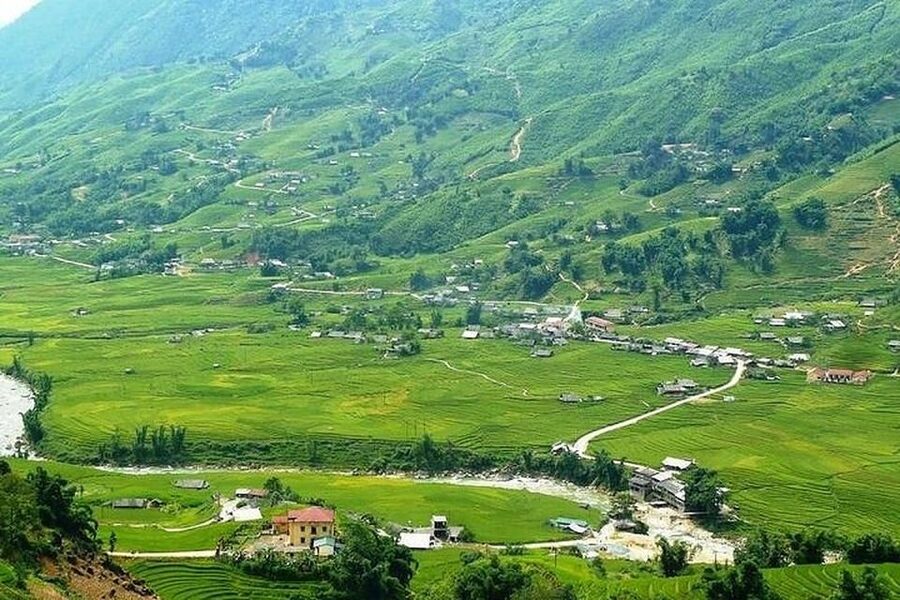
Reviewed · SAPA TREKKING TOURS
From Hanoi: 2-Day 2-Night Sapa Tour by Overnight Train
Sapa is at its best when you leave the town behind and walk into the hills. This trip combines an overnight train from Hanoi with treks through Black H’mong and Dzay villages, giving you a useful taste of mountain life without arranging every transfer yourself. Guides such as Ai, Sung, and Zua have been singled out for their warmth, cultural insight, and care on muddy paths.
I like two things right away: the train saves you a hotel night and gives you a memorable ride through northern Vietnam, while the return to Hanoi by daytime vehicle lets you see more of the countryside. I also like the mix of a short first trek and a longer walk through rice terraces on the second day.
The trade-off is comfort and timing. The train can be noisy, the road back to Hanoi takes about six hours, and the trekking is not gentle in wet weather. Communication around transfers can also be unclear, so you need to stay alert and ask questions.
Key points to know before booking

- The overnight train uses a shared four-berth air-conditioned cabin, with private compartments available only as an added option.
- Sin Chai is the shorter opening walk, while the Y Linh Ho, Lao Chai, and Ta Van route is the more demanding day.
- Guides Ai, Sung, and Zua have received especially strong praise for their English, kindness, and knowledge of local customs.
- Good shoes matter, since rice-field paths can turn slippery and muddy after rain.
- The return ride is by limousine-style vehicle, not a train, and arrival in Hanoi is expected around 8 or 9 PM.
- The $168 price includes transport, food, a hotel, guide, and entrance fees, making it good value if you want a tightly arranged short trip.
Why the Hanoi to Sapa train route works

The trip begins late at night, with the train leaving Hanoi at about 10 PM. If you stay in Hanoi’s Old Quarter, staff arrange a taxi to Hanoi Railway Station at 120 Le Duẩn Street around 9 PM. If you stay elsewhere, you need to reach the station yourself.
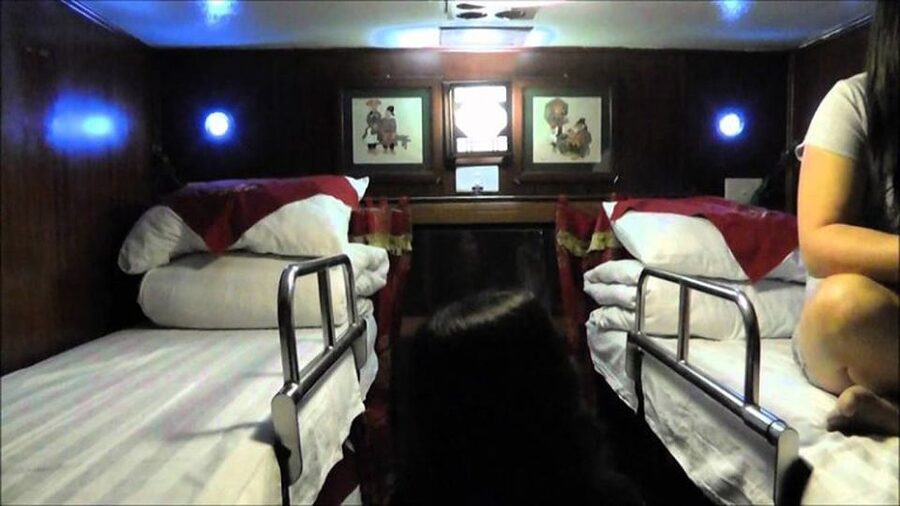
The train is not just a way to get from one place to another. It gives you the classic Vietnamese overnight rail experience, with a bed, shared cabin, washbasins, and toilets. The included berth is in a four-person air-conditioned compartment. Solo visitors share with three other people, while couples can pay extra for a compartment reserved for four or ask about smaller cabins.
Expect basic comfort rather than silence. One person found the train extremely noisy and had trouble sleeping because of frequent stops. Others found the beds, duvets, water, and snacks quite comfortable. Your sleep may depend on the train, your cabin companions, and how easily you rest in motion.
Pack your passport or ID card, a light jacket, and anything you need during the night. Keep important items close rather than buried in large luggage. You can leave bulky bags at the Sapa hotel after arrival, which makes the walking days much easier.
A few other Sa Pa trips to compare
- Sa Pa: Muong Hoa Valley Trek and Local Ethnic Villages
★ 4.6 · 864 reviews - Sapa: Eco Adventure Terrace Fields and Local Villages Trek
★ 4.9 · 636 reviews - From Sapa: 1-Day Guided Trek to Lao Chai & Ta Van with Lunch
★ 4.9 · 416 reviews
Reaching Sapa after an early arrival
The train reaches Lao Cai early in the morning, with the planned transfer to Sapa at about 6 AM. A shared, air-conditioned minivan takes you from the station into Sapa town. The ride connects the rail journey with the mountain part of the trip, but the early start means you may feel tired before the first walk begins.
At the hotel, you leave your luggage and have breakfast. Standard room check-in is at 2 PM, so your room may not be ready when you arrive. I strongly suggest paying for early check-in if it is available and you value a shower, a change of clothes, or a short rest after the train.
This small extra can make a big difference. One solo visitor described a hot shower before trekking as a blessing after the overnight journey. If you skip early check-in, pack your walking clothes where you can reach them, since the schedule may send you straight from breakfast toward the villages.
The hotel is described as a clean three-star property with spacious rooms and a good location. Heating was useful during a December visit, although the reception and dining areas could feel cold. Sapa temperatures can shift quickly, so bring warm layers even if Hanoi feels mild.
Sin Chai village on the first morning
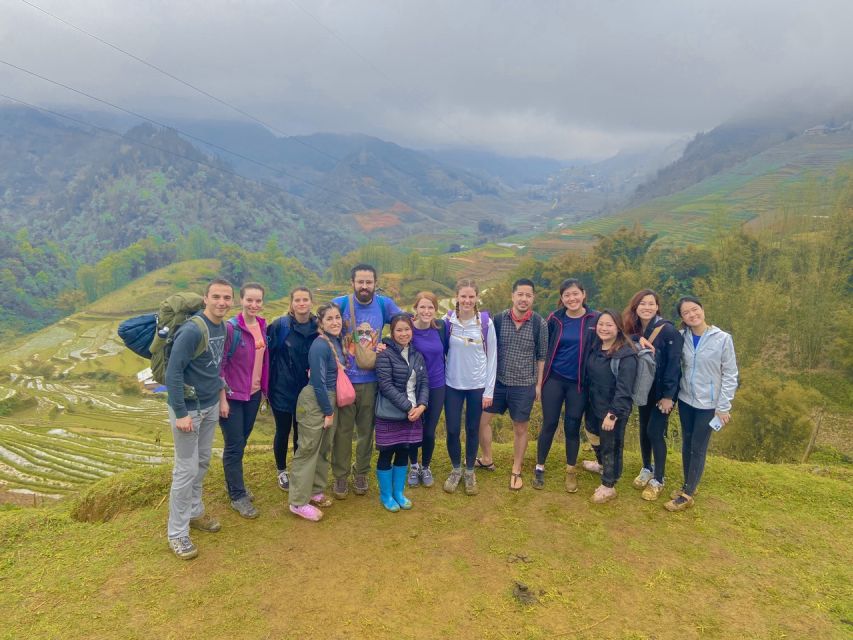
The opening trek heads southwest from Sapa for about four kilometers toward Sin Chai, home to the Black H’mong. The village is close to town but feels much simpler and more rural than the center, with a traditional highland way of life still visible.
This is a good first walk because it gives you mountain views and a cultural introduction without using up the whole day. The route is still a real trek, not a paved town stroll. You may walk downhill over uneven ground, so shoes with a firm grip are essential.
Your guide adds the meaning that scenery alone cannot provide. Guides Ai, Sung, and Zua have been praised for explaining local customs, traditions, plants, and village life in clear English. Sung also invited one group to meet her family and see her home, an experience that showed how much a good local guide can add.
Keep your expectations respectful. The villages are living communities, not open-air stage sets. Listen to your guide, ask before taking photos, and remember that buying something should be your choice, not a response to pressure.
After the walk, lunch is provided at a hotel restaurant. The quality of included meals seems uneven. Some food has been described as tasty and excellent, while other meals were considered dull with a limited menu. You should treat the included meals as convenient rather than a reason to book the tour.
The afternoon and evening are free. You can rest, walk around Sapa, visit the old cathedral, browse the market, or look for roasted corn and baked eggs cooked beside charcoal fires. This free time is valuable because the two trekking days are tightly packed.
The Muong Hoa Valley route to Ta Van
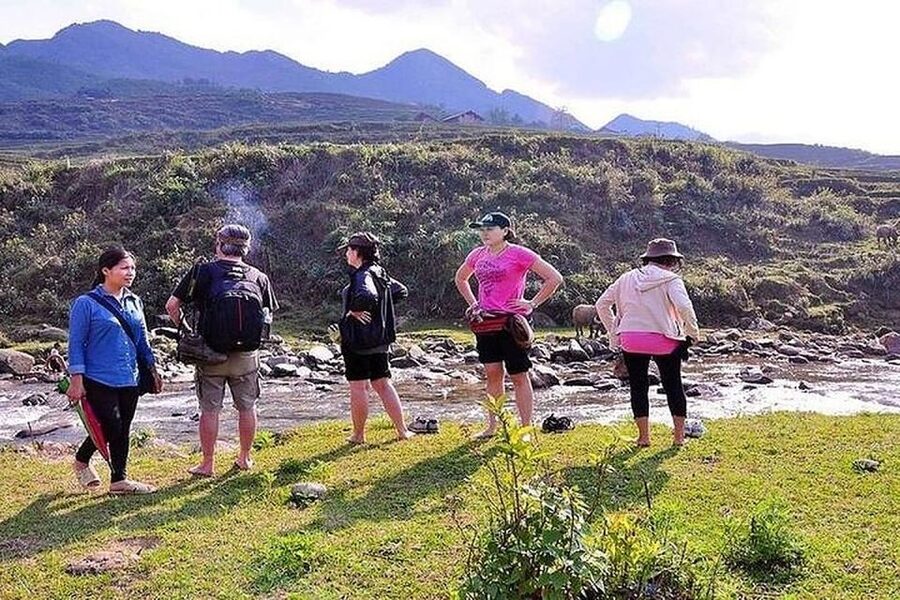
The second day is the heart of the trip. After breakfast, you walk down along the side of Muong Hoa Valley toward Y Linh Ho, a Black H’mong village. The route continues to Lao Chai, then crosses terraced rice fields and corn fields toward Ta Van, home to the Dzay minority.
This is the longer and more scenic trek, with wide mountain views and a closer look at how farming shapes the valley. The terraces are the main attraction, but the walk also helps you understand the distance between Sapa town and the communities around it.
Do not underestimate the route. Several people stress the need for proper footwear, especially after rain. Mud and slick paths can make the walk much harder, and local guides may recommend gum boots in wet conditions. If your guide tells you to wear them, listen.
The route is not suitable for people with mobility impairments, wheelchair users, or pregnant women. It is also not a good choice if you dislike uneven ground, downhill walking, or changing weather. Children must be accompanied by an adult, and infants must sit on laps during transport.
Lunch is included during the day. The schedule then calls for packing up around 2 PM and leaving Sapa at about 2:30 PM. The exact flow can feel rushed, especially if the walk runs late or you need time to collect luggage. Ask early where your bags are stored and when you must be ready.
Same base, a completely different day:
- Sapa 1 Day Long Trek: Trek to Hau Thao and Sa Seng Villages
★ 4.6 · 344 reviews - Sapa: Fansipan Cable, Cat Cat Village, Moana Instagram Tour
★ 4.8 · 294 reviews - From Sapa: 3-Day Ha Giang Loop with Safe Rider (max 8 pax)
★ 4.9 · 285 reviews - Explore Sapa by TrekkingAdventures, Mountain,Rice fields
★ 4.9 · 229 reviews
Meeting local people without losing your patience
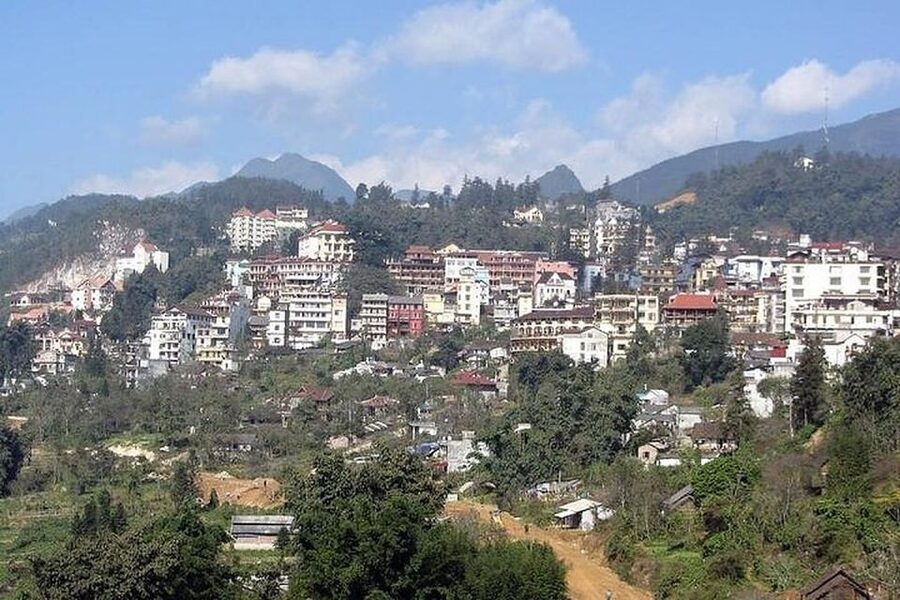
A difficult part of trekking around Sapa is the presence of local sellers who may walk beside you for much of the route. They may ask for money or offer handmade items at high prices. This issue is acknowledged in the tour information, and it is not something the guide can always prevent.
The best approach is simple: stay with your guide, use a polite but firm refusal, and do not let repeated offers spoil the walk. Some people choose to buy a small item as a friendly gesture, while others prefer not to buy anything. Neither choice should be forced.
One useful point from the experience is that local women sometimes help with difficult sections. If someone gives you practical help and you want to show thanks, agree on your own terms. Keep small amounts of cash available, but do not flash money or feel obliged to purchase an expensive item.
Your guide is the person to follow. Guides such as Ai have been praised for helping people cross rice fields and keeping the group together. That personal support matters far more than a long list of formal sights.
The ride back to Hanoi
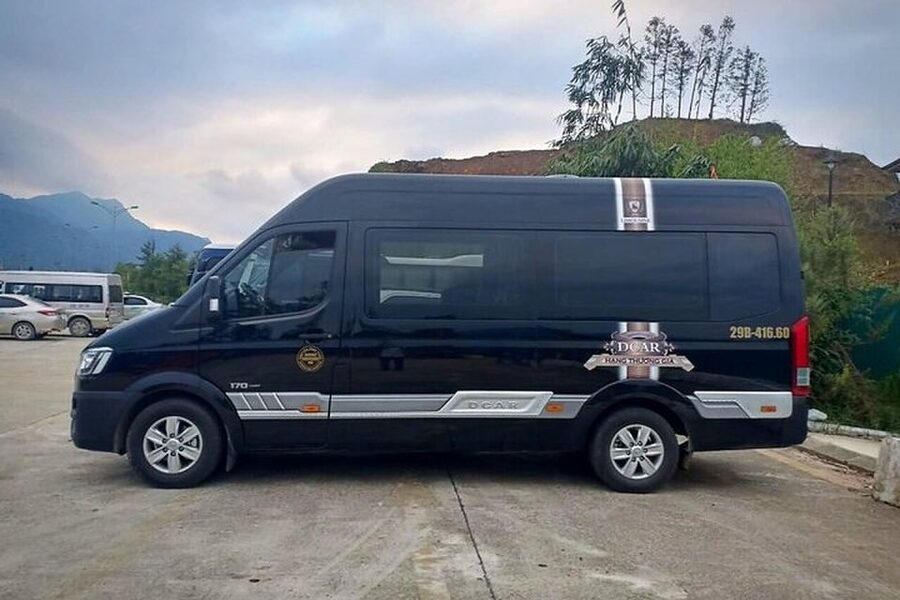
After the second day, you return to Hanoi by limousine-style minibus, with hotel drop-off expected around 8 or 9 PM. This is a long ride, roughly six hours, but it has one clear advantage: you travel during daylight and can see more of northern Vietnam than you would from a night train.
The word limousine should not lead you to expect a private luxury car. Some rides have been described as comfortable nine-seat buses, while others experienced confusion, delays, or vehicle changes. Seatbelt availability has also been a concern in some vehicles, so check your seat and speak up if something seems wrong.
Transport coordination is the weakest part of the experience. A late pickup, a driver who does not speak English, or a change in vehicle can create stress even when the day itself goes well. Keep your coordinator’s contact details handy, confirm pickup points, and ask for clear times rather than assuming the plan is unchanged.
The provider has sometimes worked quickly to arrange a different vehicle when a group’s preference changed. Still, I would not book this trip if you need every transfer to run with exact European-style precision.
What the $168 price includes

At $168 per person, the cost covers a lot for a short trip:
- Shared four-berth overnight train from Hanoi to Lao Cai
- Shared minivan from Lao Cai to Sapa
- One night in a three-star hotel
- Two breakfasts, two lunches, and one dinner
- Sightseeing entrance fees
- English-speaking guide
- Limousine-style transport from Sapa to Hanoi
The value is strongest for someone who wants transport and accommodation handled in one booking. Booking the train, Lao Cai transfer, hotel, meals, and guide separately would take time and could cost more, especially for a solo visitor.
The price is less compelling if you want a private train cabin, early hotel access, upgraded transport, or complete control over meal choices. Those extras may cost more. A private group is available, which can help couples or families who want a quieter pace and fewer coordination problems.
Free cancellation up to 24 hours before departure and the option to reserve now and pay later add useful flexibility. They do not change the basic nature of the trip: this is an active group-style tour with fixed transport and a demanding schedule.
Who should book this Sapa experience?

I would choose this trip if you have limited time in Vietnam and want to combine Hanoi with Sapa in roughly two and a half days. It suits people who enjoy walking, local stories, basic rail travel, and a planned route with little need to arrange taxis or meals.
It also works well for solo visitors. The shared train cabin can make the journey social, and the guide provides structure from the moment you reach Lao Cai. Couples may prefer paying extra for a private train compartment.
I would be cautious if you need guaranteed sleep, dislike long road rides, or want a slow mountain stay. The overnight train may be noisy, the second trek is physically demanding, and the return to Hanoi takes up much of the final day.
Weather should shape your decision. December can be cold, rain can turn paths into mud, and a planned walk may be changed or cancelled for safety. Bring warm clothes, waterproof protection, and shoes with grip. Sapa rewards flexibility.
Should you book it?
Book this tour if authentic village walking, a local guide, and simple all-in-one planning matter more to you than polished logistics. The strongest part is the time on the trails, especially the route through Y Linh Ho, Lao Chai, and Ta Van, supported by guides such as Ai, Sung, and Zua.
Skip it if you want an easy sightseeing trip or a guaranteed quiet night. For the right person, $168 is good value, but you should pay close attention to the trekking demands, shared cabin, cold weather, and possible transport confusion before committing.
FAQ
How long does the Hanoi to Sapa tour last?
The experience lasts about two and a half days, beginning with the overnight train from Hanoi and ending with arrival at your Hanoi hotel around 8 or 9 PM on the final day.
What time does the overnight train leave Hanoi?
The train is scheduled to leave Hanoi at about 10 PM. Old Quarter pickup takes place around 9 PM, while people staying outside the Old Quarter need to reach Hanoi Railway Station themselves.
Where do I board the train in Hanoi?
You board at Hanoi Railway Station, located at 120 Lê Duẩn Street. If your hotel is outside the Old Quarter, go directly to the station before the stated meeting time.
What type of train cabin is included?
The included ticket is for a shared, air-conditioned four-bed cabin. A private compartment or a smaller cabin may be available for an additional fee.
Is hotel pickup included in Hanoi?
Pickup is included for hotels in Hanoi’s Old Quarter. If you stay outside that area, you need to go to Hanoi Railway Station at 120 Lê Duẩn Street.
What villages are included in the trekking?
The route includes Sin Chai, Y Linh Ho, Lao Chai, and Ta Van. Sin Chai and Lao Chai are associated with the Black H’mong, while Ta Van is home to the Dzay minority.
Is breakfast available when I reach Sapa?
Yes. After transferring from Lao Cai to Sapa, you leave your luggage at the hotel and have breakfast. Standard hotel check-in is at 2 PM unless you arrange early check-in.
What should I wear for the trek?
Wear sturdy shoes with good grip and bring warm clothes. Rain can make the paths muddy and slippery, and gum boots may be needed in wet conditions.
Is the tour suitable for wheelchair users?
No. The tour is not suitable for wheelchair users, pregnant women, or people with mobility impairments because of the trekking routes.
What is included in the $168 price?
The price includes the overnight train, shared transfer to Sapa, return limousine-style transport to Hanoi, one hotel night, two breakfasts, two lunches, one dinner, entrance fees, and an English-speaking guide. Drinks, unlisted meals, personal expenses, and travel insurance are not included.
More Evening Experiences in Sa Pa
- Saigon By Night and Street Food By Motorbike | Opt: Ao Dai Riders
★ 5.0 · 4,066 reviews - Private Street Food Evening Walking Tour in Ho Chi Minh City
★ 5.0 · 3,175 reviews - Sapa 2 Days 1 Night From Hanoi – Overnight in Ta Van Village
★ 5.0 · 2,669 reviews - Hoi An : Hoai River Boat Trip by Night and Floating Lantern
★ 4.6 · 1,988 reviews
More 2-Day Experiences in Sa Pa
- EXPLORE SAPA: 2D1N TREKKING & HMONG CULTURE WITH DINH
★ 4.9 · 191 reviews - Sa Pa: 2-Day Trekking Trip with Ethnic Minority Homestay
★ 4.7 · 145 reviews - 2-Day Fansipan Mountain Trek – Indochina’s Highest Peak
★ 4.3 · 42 reviews - Amanda Cruise – Ha Long, Lan Ha Bay – All Inclusive 2D1N & 3D2N
★ 5.0 · 4,358 reviews
Newly listed around Sa Pa
- 2-Day Fansipan Mountain Trek – Indochina’s Highest Peak★ 4.3 · 42 reviews
- In Sapa: 1 Day Mountain Trek, Visit beautiful villages★ 5.0 · 50 reviews
- From Hanoi: Sapa 3-Day Medium Trek and Limousine Trip★ 4.5 · 59 reviews
- Sapa: Private Highlights Day Tour with Lunch★ 4.8 · 61 reviews
- 1-Day Sapa Long Trek – Rice Field Terrace, Ethnic Culture★ 4.9 · 62 reviews
- Sa Pa: Half-Day Cat Cat Village Hike to Meet H’mong People★ 3.7 · 72 reviews
- From Sapa: Terrace Fields and Local Villages Trek with Lunch★ 4.3 · 77 reviews
- From Sapa: Guided Full-Day Trekking with Lunch and Drop-Off★ 4.2 · 86 reviews
Sapa Trekking Tours, compared.

Sapa 2 Days 1 Night From Hanoi – Overnight in Ta Van Village
Read our review →

Muong Hoa Valley Trek and Local Ethnic Villages
Read our review →
Fansipan Cable, Cat Cat Village & Moana Instagram Tour
Read our review →

Sapa 3 Days 2 Nights Trekking Tour (1 Night In Ta Van Village, 1 Night In Hotel)
Read our review →
Eco Adventure Terrace Fields and Local Villages Trek
Read our review →
3-Day Trekking Adventure of Sapa from Hanoi – Stay Ta Van Village
Read our review →Browse the lists this tour appears in