
Reviewed · SAPA TREKKING TOURS
1-Day Sapa Long Trek – Rice Field Terrace, Ethnic Culture
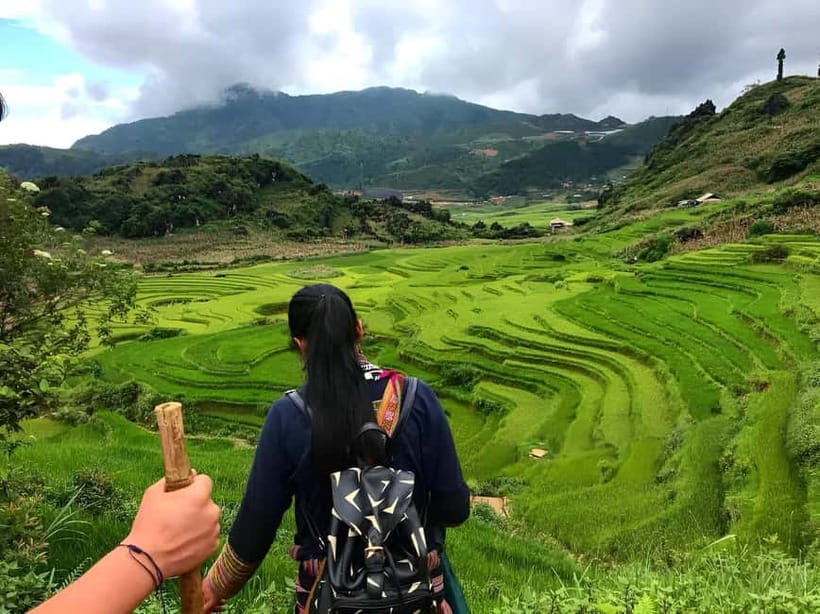
Sapa’s best scenery is not viewed from a café window. It is reached on foot, one muddy step at a time, through the rice terraces of Muong Hoa Valley. This seven-hour trek takes you from Sapa town to Lao Chai and Ta Van, with a local Hmong guide leading the way.
I like the personal scale of the trip, with groups limited to 10 and guides such as Mao, Sung, Chai, and Giang who explain village life in clear English. I also like the lunch in a local family home, where generous shared dishes make the stop feel like part of the day rather than a quick refueling break.
The catch is the trail. Depending on rain and the route chosen, you may walk 12 to 15 kilometers over steep, uneven, slippery ground. This is not a gentle village stroll, and proper hiking shoes are more important than a camera.
Key points at a glance
- Muong Hoa Valley views: Walk beside broad rice terraces, mountain streams, and distant peaks, with a chance to see Fansipan from a high ridge.
- Local Hmong guidance: Guides from nearby villages explain traditions, farming, clothing, family life, and local stories in English or Vietnamese.
- Family-style lunch: Eat home-cooked Sapa food with a Hmong family in Lao Chai Sang, with generous portions and dietary requests possible.
- A real mountain walk: Expect around 12 to 15 kilometers, with climbs, descents, rough paths, and mud after rain.
- Hmong and Giay villages: Finish in Ta Van, a quieter Giay settlement where the driver takes you back to Sapa.
- Small-group value: The group limit is 10 people, though a smaller group can make it easier to keep a steady pace.
Starting above Sapa with Fansipan in view
The morning begins at 9:00 AM in Sapa town, with hotel pickup included for addresses inside town. If you are staying outside Sapa, you can pay for a transfer to a meeting point, such as Sapa TT Homestay on Dien Bien Phu Street or Sapa View Spring Garden Hotel on Muong Hoa Street.
The first part takes you toward a quiet ridge above the town. On a clear day, you can look toward Fansipan, the highest mountain in Indochina, rising from the Hoang Lien Son range. Clouds are common in Sapa, so this view is never guaranteed. That is part of the mountain experience, but set your expectations sensibly.
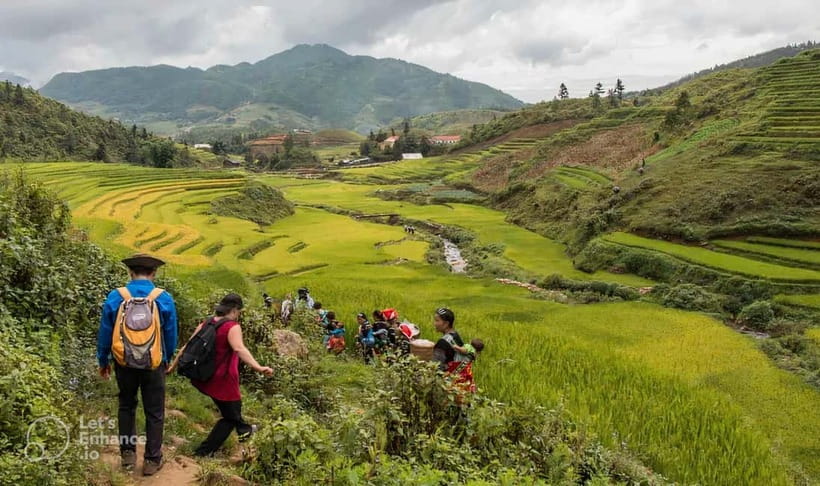
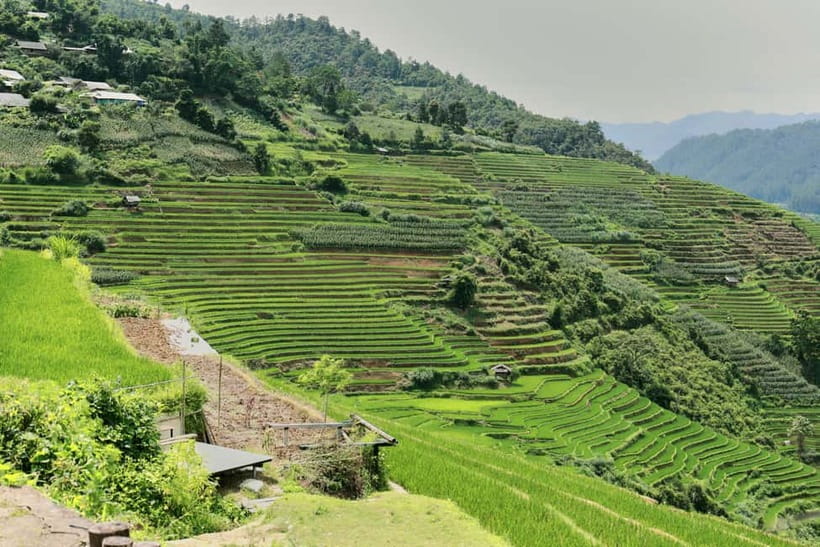
From the ridge, the route drops toward Muong Hoa Valley. The change in scenery is quick. Town gives way to open slopes, narrow paths, working fields, and terraces cut into the hillsides. These terraces are not just scenic decoration. They are working farmland shaped by generations of careful farming.
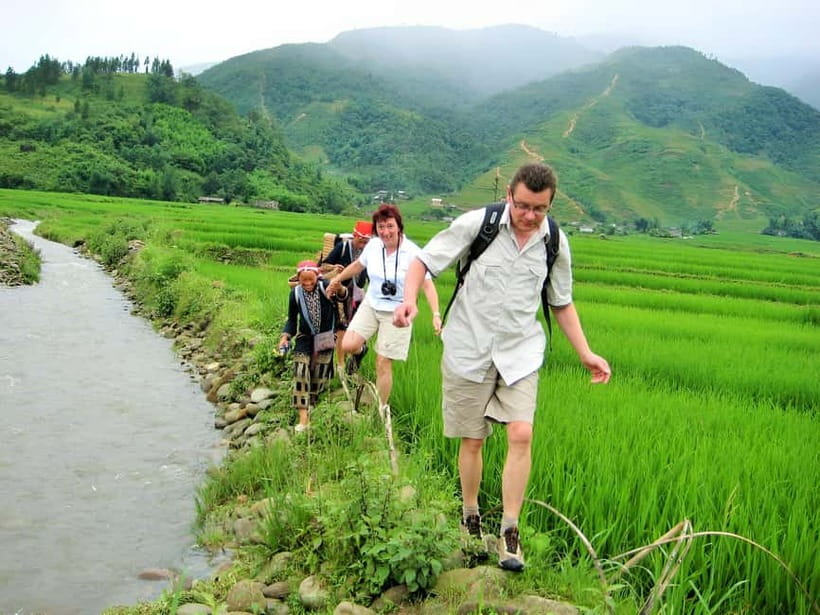
The walk takes roughly two hours before reaching the Y Linh Ho area. You cross a small wooden bridge near the river and continue through open fields. The combination of water, steep hills, and distant peaks gives this section its strongest sense of place.
More Hiking Tours in Sapa
- Sa Pa: Muong Hoa Valley Trek and Local Ethnic Villages
★ 4.6 · 864 reviews - Sapa: Eco Adventure Terrace Fields and Local Villages Trek
★ 4.9 · 636 reviews - From Sapa: 1-Day Guided Trek to Lao Chai & Ta Van with Lunch
★ 4.9 · 416 reviews
Y Linh Ho and the first rice terrace views
Y Linh Ho is a peaceful Hmong village beside a clear river. It is a good point to slow down, take photographs, and watch how the path changes from ridge walking to valley trekking.
The rice terraces look different across the seasons. At some times of year, they are bright green. At others, they may be newly planted, golden, or partly harvested. Cloud and mist can soften the views, while clear weather brings out the sharp lines of the terraces and the height of the surrounding mountains.
Your guide matters here. Guides from the local Hmong communities can explain what you are seeing in a way a viewpoint sign cannot. Mao, Sung, Soso, Thao, Giang, Ly, and Chai are among the guides praised for keeping a comfortable pace and sharing details about village life.
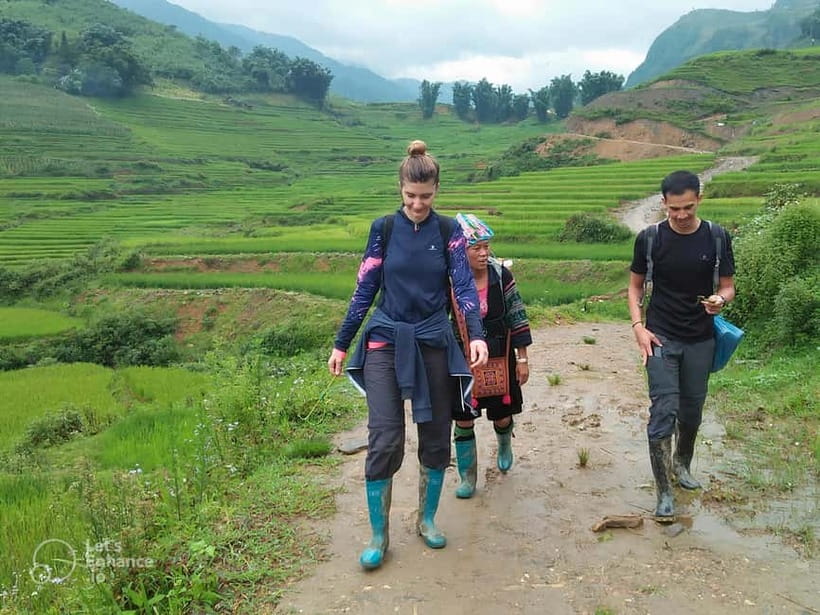
The trail is not always smooth. Reviews of the route describe steep parts, slippery sections, and uneven ground. After rain, mud can turn a simple descent into the most demanding part of the day. Local women sometimes walk alongside visitors and offer help on slick sections, but they may also try to sell scarves, bags, or other handmade goods. You can appreciate the help while politely declining a purchase.
Lao Chai Sang and a Hmong family lunch
Around 12:30 PM, the walk reaches Lao Chai Sang for lunch with a Hmong family. The meal is served in a simple mountain home, often family-style, with several dishes placed on the table for everyone to share.
This is one of the most useful parts of the experience. A meal gives you time to sit down, ask questions, and see a little of daily life beyond the trail. The food is home-cooked Sapa cuisine, and the portions are described as generous. You can also tell the operator about allergies or dietary restrictions before the tour.
The setting may be simple rather than polished. That is precisely the point. You are not eating at a large restaurant designed for tour groups. You are stopping in a local home, sharing food, and taking a proper break before the afternoon walk.
Some groups finish lunch with a small toast of local rice wine, sometimes called happy water. This is not the main event, and you should only join in if you want to. Water is more important, especially on a long walk.
Hmong clothing, indigo, and village craft
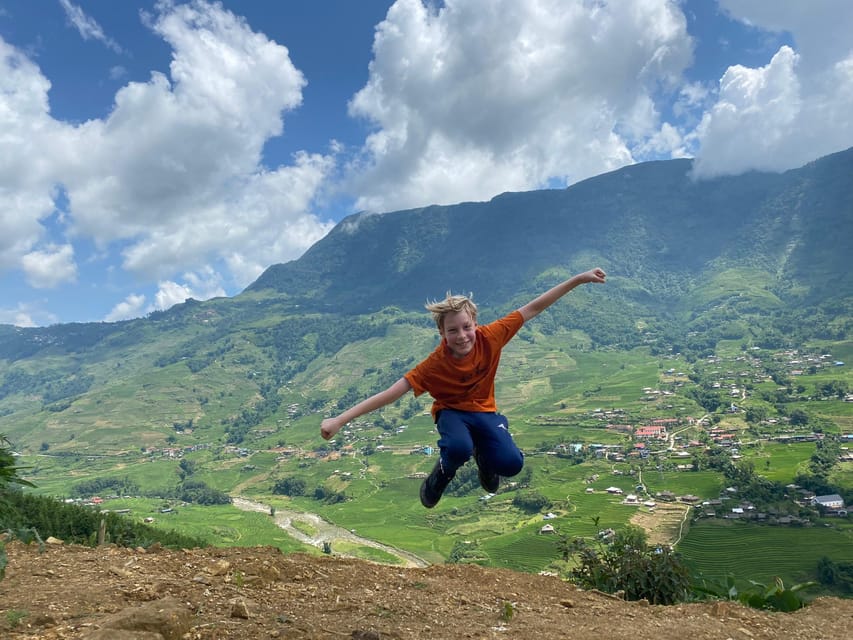
After lunch, the route includes a local stop focused on Hmong textile traditions. You can learn how traditional clothing is made from handwoven fabric and colored with natural dyes. Indigo dyeing is a particular highlight, with the process offering a useful look at the work behind the clothing seen in the villages.
The activity information also mentions traditional incense making as a highlight, while the detailed schedule places more emphasis on handwoven textiles, natural dyes, and indigo work. If incense making is important to you, ask the operator to confirm what will be included on your departure date.
This craft stop adds substance to the walk. You are not only photographing clothing and terraces. You are learning how materials are prepared and how cultural identity is expressed through pattern, color, and skill.
It is also worth remembering that craft demonstrations can lead into sales. If you buy something, do so because you like it and can use it, not because you feel pressured. A clear, friendly no is enough.
A few other Sa Pa trips to compare
- Sapa 1 Day Long Trek: Trek to Hau Thao and Sa Seng Villages
★ 4.6 · 344 reviews - Sapa: Fansipan Cable, Cat Cat Village, Moana Instagram Tour
★ 4.8 · 294 reviews - From Sapa: 3-Day Ha Giang Loop with Safe Rider (max 8 pax)
★ 4.9 · 285 reviews - Explore Sapa by TrekkingAdventures, Mountain,Rice fields
★ 4.9 · 229 reviews
The afternoon route through Ta Van
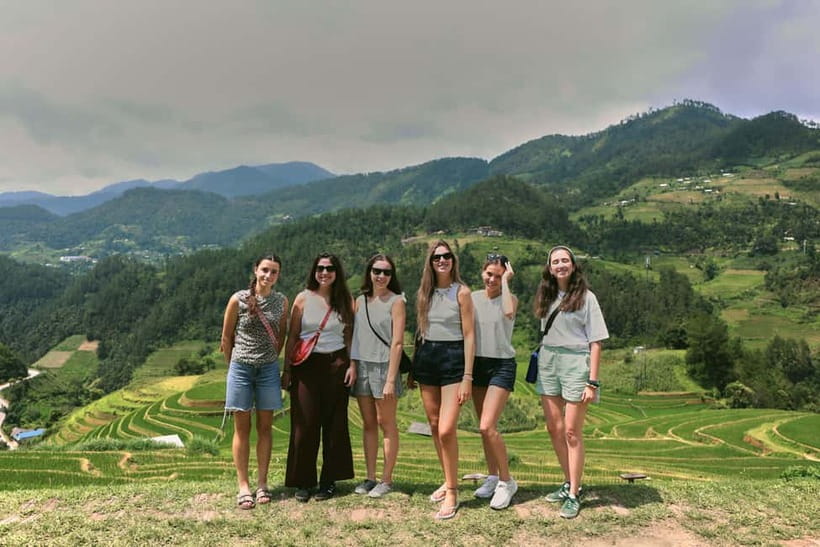
The walk continues toward Ta Van, a Giay village reached around 3:00 PM. The route passes more rice fields, mountain paths, streams, and village homes. Compared with the open views near the ridge, this section often feels more intimate, with daily life closer to the path.
Ta Van is the endpoint for the walking portion. Your driver waits there to return you to Sapa town. This is a practical arrangement because you finish in a different village rather than retracing the entire route.
The official timing suggests a seven-hour activity, but the walking distance can feel more like a full day outdoors. Some people have completed around 13 kilometers, while others describe routes closer to 15 kilometers. The exact distance depends on the path, weather, group pace, and any route changes.
Guides can adjust the route in response to conditions. On a misty day, Mao gave a group the choice of climbing higher for a possible view or staying lower where visibility was better. That kind of flexibility is valuable in Sapa, where weather can change quickly.
What the guide adds to the day
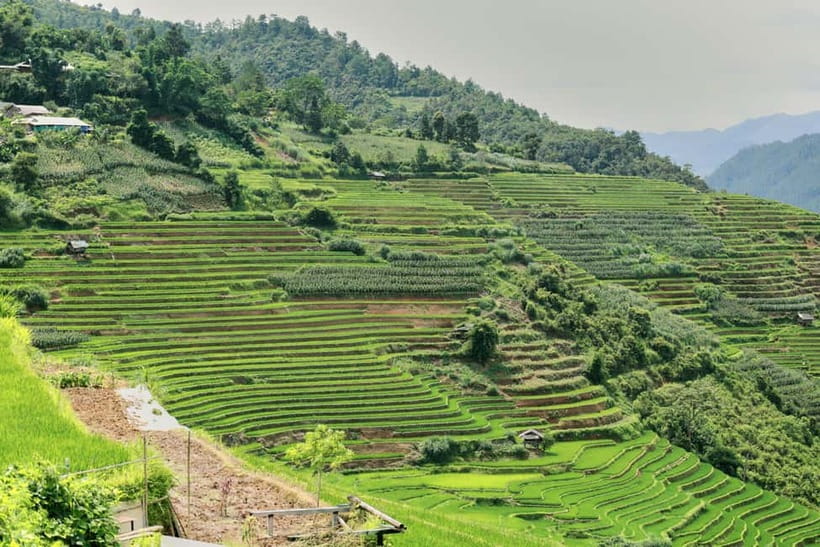
A local guide is the main reason to book this rather than simply hiring a driver to visit the villages. The guides do more than point out rice fields. They explain Hmong and Giay customs, village history, farming, clothing, family life, and changes brought by tourism.
English ability varies by guide, but many are praised for communicating well and answering questions clearly. Some learned English through conversations with visitors, which can make the exchange feel informal and personal. You may hear different perspectives on village life, including discussions about women’s work and the changes taking place in local communities.
Guides also control the pace. Chai, Mao, Sung, and Soso are noted for checking comfort, offering easier or steeper paths, and making time for photographs. This is especially important when the group includes people with different fitness levels.
A group of four is easier to manage than a full group of 10. A smaller party can keep its own pace and take less time at stops. The maximum group size is still reasonable for the price, but ask about a private option if you need a slower pace or want more control over the route.
How hard is the Sapa long trek?
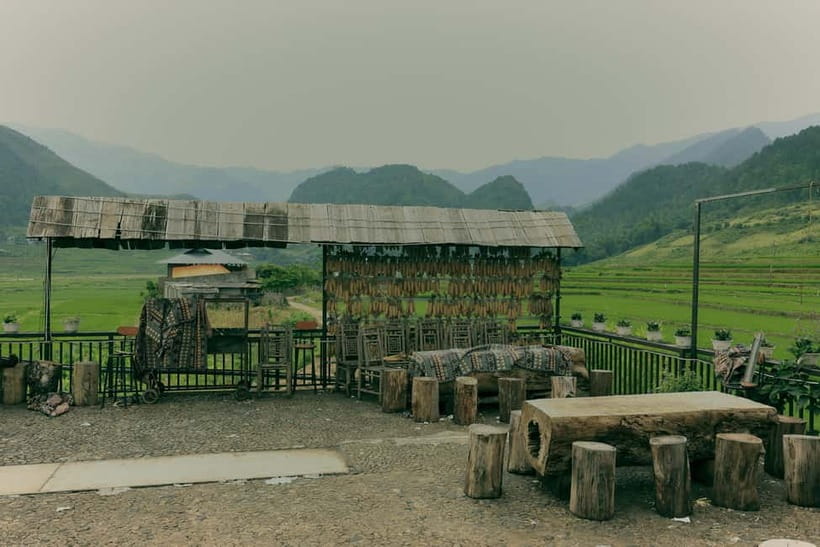
The tour is manageable for a reasonably active person, but it is not suitable for everyone. The total distance may reach 12 to 15 kilometers, with uphill and downhill sections and a high point above 1,100 meters on some routes.
The toughest conditions come after rain. Mud, wet stones, and narrow paths can make the walk slow. Several people found rubber boots useful, and wellies can be rented locally when the ground is especially wet. Good hiking shoes with firm grip are the safest choice in normal conditions.
Bring water, sunscreen, sunglasses, a sun hat, insect repellent, and a raincoat. The operator provides a small bottle of water and rain ponchos or raincoats, but I would still carry extra water for a long walk.
You should reconsider this activity if you have back, heart, mobility, or other pre-existing medical problems. It is not suitable for wheelchair users, people with visual impairments, or anyone afraid of heights. The guide can adjust the route, but route changes cannot remove every steep or uneven section.
Price, group size, and what you receive
At $24 per person, this is strong value if you want a full day of walking and local contact. The price includes pickup and drop-off in Sapa town, a local guide, village entrance fees, lunch, a small bottle of water, and basic rain protection.
The value comes from the combination. A viewpoint visit alone would be cheaper, but it would not include the long walk through the valley, the family meal, or the explanations about Hmong and Giay life. You also avoid arranging separate transport from Ta Van back to Sapa.
The price does not cover anything not listed in the inclusions. Bring cash for optional purchases, extra drinks, rental boots, or transport if you are staying outside the normal pickup area.
Pickup is included only within Sapa town. If your hotel or homestay sits beyond town, confirm the extra fee before booking. After the trek, drop-off at another location may be free or may cost extra, depending on the address.
You can cancel up to 24 hours before departure for a full refund, and the reserve-now, pay-later option helps if your Sapa plans are still moving around.
The best time and the right expectations
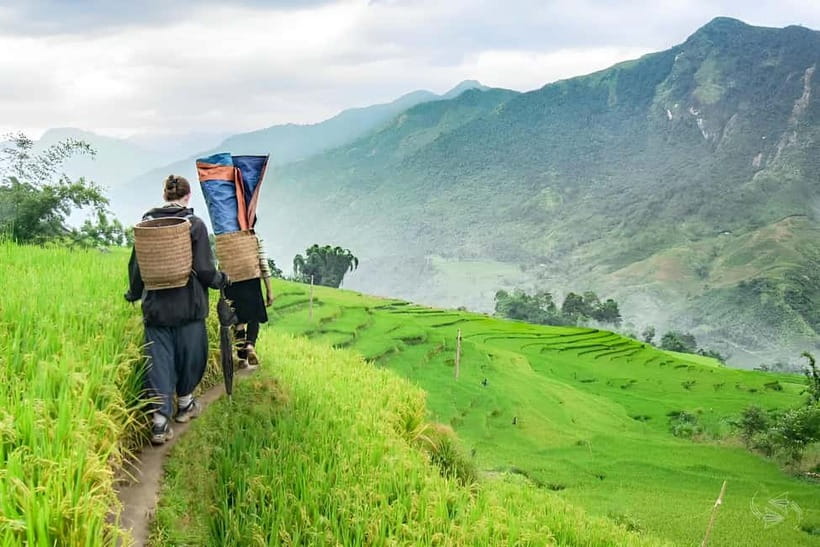
The tour operates in rain or shine. Clear weather gives you the broadest views, but mist creates a different mood and does not cancel the cultural parts of the day. The rice terraces, homes, craft work, and lunch remain worthwhile even when Fansipan disappears into cloud.
The wet season demands better preparation. Wear shoes with grip, carry a raincoat, and expect mud. Do not rely on the provided poncho alone if you dislike getting wet.
For photography, allow time at the ridge, wooden bridge, river, rice terraces, and village paths. Your guide can also help with photographs. Andy specifically appreciated how Pao stopped often to take pictures of him and his wife, which is useful if you are traveling as a couple and want more than quick snapshots.
Who should book this Sapa trek?
I would choose this tour if you have one full day in Sapa and want to connect mountain scenery with local life. It suits active couples, solo visitors, and small groups who enjoy walking, shared meals, and unscripted conversations.
It is also a good first introduction if you only have one night in town. The route covers major scenery without requiring an overnight stay, and the return vehicle means you sleep back in Sapa.
I would not choose it if you want a relaxed sightseeing day, dislike mud, or need guaranteed mountain views. A shorter walk or private route would be better for anyone who tires quickly or needs frequent stops.
One cultural point deserves care. The villages are working communities, not open-air performances. Ask before taking close-up photographs, listen to your guide, and treat local homes and craft makers with respect. Buying a handmade item can support local income, but it should never be treated as an obligation.
Should you book the Lao Chai and Ta Van trek?
Book it if you want the best mix of terraced mountain scenery, local food, and cultural contact for a low price. The strongest parts are the Hmong guide, the family lunch, and the chance to walk between villages instead of viewing them from a vehicle.
Before paying, confirm the pickup point, expected distance, weather, and whether the craft stop will include incense making or focus on textiles and indigo dyeing. Pack proper shoes, water, and patience for muddy ground.
For an active visitor who wants a real day in the Muong Hoa Valley, this is an excellent value. For anyone seeking an easy walk, it may ask too much from your knees.
FAQ
How long does the Sapa long trek last?
The activity lasts about seven hours, beginning around 9:00 AM and returning to Sapa after reaching Ta Van at about 3:00 PM.
Where does the trek start and finish?
It starts in Sapa town and finishes in Ta Van village. A driver then returns you to Sapa town.
Is hotel pickup included?
Pickup and drop-off are included for hotels and other locations inside Sapa town. Locations outside town may require a paid transfer to a meeting point.
How far do you walk?
The route is generally a long walk, with distances described around 12 to 15 kilometers. The exact distance can vary with the route, weather, and group pace.
Is lunch included?
Yes. A home-cooked lunch is included and is usually served family-style by a local family. Dietary restrictions and allergies can be discussed in advance.
What should I wear and bring?
Wear comfortable hiking shoes with good grip. Bring a hat, sunscreen, sunglasses, water, insect repellent, and a raincoat. Rubber boots may be useful or available to rent when the trail is muddy.
Is the trek suitable for people with limited mobility or medical conditions?
No. It is not suitable for wheelchair users or people with mobility, back, heart, visual, or other pre-existing medical conditions. It also includes steep and uneven sections that may be difficult for anyone with limited fitness.
More Hikes in Sa Pa
- EXPLORE SAPA: 2D1N TREKKING & HMONG CULTURE WITH DINH
★ 4.9 · 191 reviews - Sa Pa: 6-Hours Muong Hoa Valley Trek with Local Ethnic guide
★ 4.5 · 178 reviews - Sa Pa: 2-Day Trekking Trip with Ethnic Minority Homestay
★ 4.7 · 145 reviews - Half Day Sapa Trekking to Visit Lao Chai – Ta Van
★ 4.7 · 126 reviews
More 1-Day Tours in Sa Pa
- Sapa: Motorbike Tour 1 Day Visit Waterfalls & Local Villages
★ 5.0 · 112 reviews - In Sapa: 1 Day Mountain Trek, Visit beautiful villages
★ 5.0 · 50 reviews - Hanoi/Ninh Binh: 1-Day Tam Coc/Trang An, Hoa Lu & Mua Caves
★ 4.6 · 3,706 reviews - Full day trip to Lan Ha-Ha Long Bay from Cat Ba, avoid the crowds
★ 5.0 · 3,317 reviews
Newly listed around Sa Pa
- 2-Day Fansipan Mountain Trek – Indochina’s Highest Peak★ 4.3 · 42 reviews
- In Sapa: 1 Day Mountain Trek, Visit beautiful villages★ 5.0 · 50 reviews
- From Hanoi: Sapa 3-Day Medium Trek and Limousine Trip★ 4.5 · 59 reviews
- Sapa: Private Highlights Day Tour with Lunch★ 4.8 · 61 reviews
- Sa Pa: Half-Day Cat Cat Village Hike to Meet H’mong People★ 3.7 · 72 reviews
- From Sapa: Terrace Fields and Local Villages Trek with Lunch★ 4.3 · 77 reviews
- From Sapa: Guided Full-Day Trekking with Lunch and Drop-Off★ 4.2 · 86 reviews
- Sapa Trekking Bargains With Local Guide★ 4.9 · 91 reviews
Sapa Trekking Tours, compared.

Sapa 2 Days 1 Night From Hanoi – Overnight in Ta Van Village
Read our review →

Muong Hoa Valley Trek and Local Ethnic Villages
Read our review →
Fansipan Cable, Cat Cat Village & Moana Instagram Tour
Read our review →

Sapa 3 Days 2 Nights Trekking Tour (1 Night In Ta Van Village, 1 Night In Hotel)
Read our review →
Eco Adventure Terrace Fields and Local Villages Trek
Read our review →
3-Day Trekking Adventure of Sapa from Hanoi – Stay Ta Van Village
Read our review →Browse the lists this tour appears in