
Reviewed · SAPA TREKKING TOURS
Sapa Valley Trek and Homestay – 3D2N
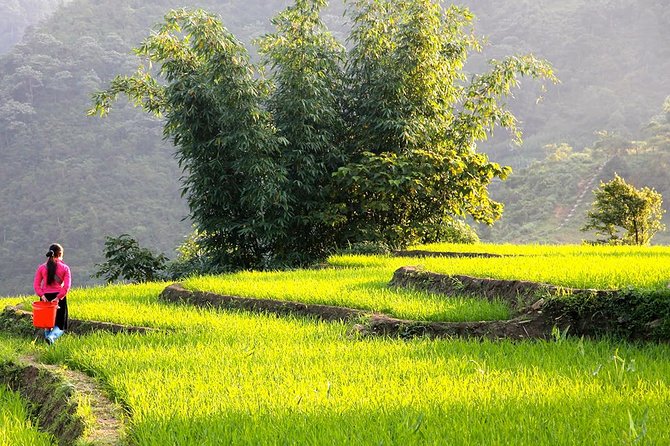
Sapa is at its best on foot, away from the town’s busy streets and into the rice terraces, bamboo paths, and village lanes below the mountains. This three-day route visits five villages tied to Hmong, Giay, Red Dao, Tay, and Black Hmong communities, with a local guide explaining daily life along the way.
I like two things especially. First, the guide is not just there to point out views. Guides such as Soso, Ly, May, Dom, Sush, and Mae have been praised for explaining local customs, helping on slippery paths, and adjusting the walking pace. Second, the homestay turns a scenic hike into a cultural experience, with local food, hot showers, family cooking, and time to see how people live.
The main caution is the physical effort. The trek can be long and difficult in places, particularly after rain, and the published details are not fully clear about whether you sleep one night or two nights in homestays. Confirm the sleeping arrangements before you pay.
Key points to know before you book
- Five ethnic villages in three days: The route links Y Linh Ho, Ta Van, Giang Ta Chai, Su Pan, Ban Ho, and Nam Tong.
- Local guides make the difference: Guides named Soso, Ly, May, Dom, Sush, and Mae have led this experience, with a strong focus on culture and trail support.
- A real homestay experience: Expect local meals, time with host families, and simple but comfortable village accommodation.
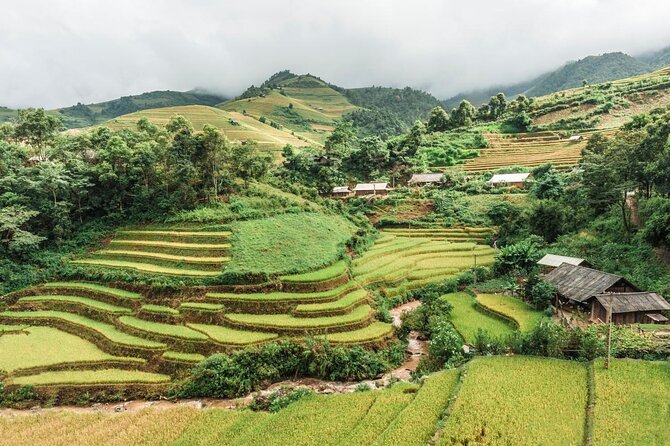
- Rice terraces and waterfalls: The route combines Sapa’s famous terraces with bamboo forest paths, mountain views, and Giang Ta Chai waterfall.
- Moderate fitness is required: The route includes long walks, uphill sections, and slippery ground in wet weather.
- $170 includes the essentials: Meals, village entry fees, a guide, water, homestay accommodation, and transport back to Sapa are covered.
Leaving Sapa at 9 a.m. for Y Linh Ho
The tour begins at 9 a.m. at Sapa Church in central Sapa, or with pickup from your hotel in Sapa Town. That later morning start is useful if you arrive in Sapa by overnight train or bus, though you still need to be ready to walk soon after meeting your guide.
The first section takes you down the road toward Cat Cat, with the route described as roughly 2 kilometers before continuing toward Y Linh Ho. This is where Sapa begins to feel less like a mountain resort and more like a collection of rural communities connected by footpaths.
Y Linh Ho is known for broad mountain views and rice fields cut into the slopes. The exact walking time can change with weather, group pace, and route choice, but the first day is built around walking through open countryside rather than rushing between sightseeing stops.
A local guide adds real value here. The cultural details are part of the point: you may learn about Hmong marriage traditions, rice farming, house-building methods, and the work that keeps a mountain household running. These explanations give the views some meaning. You are not simply looking at terraces. You are seeing farmland shaped and maintained by families over generations.
The trail can be uneven. Wear shoes with good grip, and do not treat the first downhill section as a warm-up that requires no effort. Downhill walking can be hard on your knees, and wet paths can become slick.
More Hiking Tours in Sapa
- Sa Pa: Muong Hoa Valley Trek and Local Ethnic Villages
★ 4.6 · 864 reviews - Sapa: Eco Adventure Terrace Fields and Local Villages Trek
★ 4.9 · 636 reviews - Number one top rated ethical cultural trekking and homestay by ETHOS
★ 5.0 · 456 reviews
Ta Van and the first village homestay
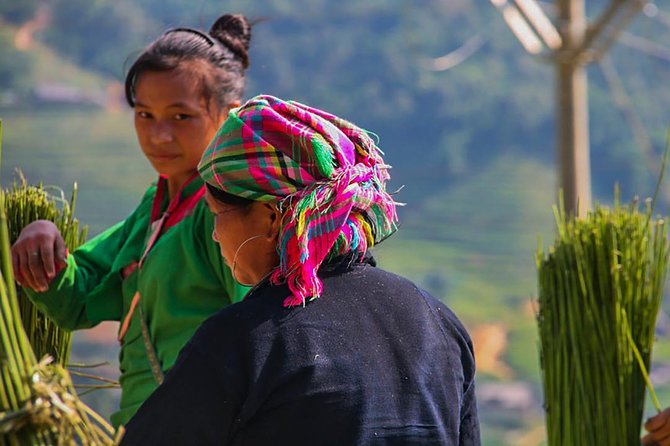
After walking through the Y Linh Ho area, the route continues to Ta Van Village, associated with the Giay people. Ta Van is one of the better-known villages in the Sapa area, but the stay here still gives you a chance to slow down and spend time with a local host family.
The arrival is practical rather than theatrical. You have time to rest, take a hot shower, and prepare for dinner. That shower matters after a full day on the trail, especially if the weather has been warm, damp, or muddy.
Dinner is included, along with lunch during the day. The meals are part of the value of the tour because you do not need to search for restaurants between rural villages. The setting is also more personal than eating back in Sapa Town, though you should expect homestay food rather than a restaurant menu.
The accommodation is simple village lodging. Past experiences on this route describe the homestays as clean and comfortable, with friendly families and opportunities to help prepare food, including spring rolls. You should still pack a small towel, toiletries, and a change of dry clothes. Extra drinks such as beer and bottled water at the homestay are not included.
There is an important detail to check. The tour is sold as 3D2N, but the listed inclusions specify one night of homestay accommodation. The route information and past experiences refer to homestays in the plural, and the second day includes Ban Ho. Ask the operator exactly where you sleep on each night, what bedding is supplied, and whether the second night is included in the $170 price.
Giang Ta Chai, waterfalls, and uphill walking
Day 2 starts with breakfast and time to look around the homestay area and nearby rice fields. This slower beginning is welcome because the second day brings more walking and an uphill section toward the mountains.
The route continues toward Giang Ta Chai Village and its waterfalls. The combination of water, forest, terraces, and mountain paths makes this one of the most varied parts of the trip. You are not walking through fields all day. The trail shifts between open views and more enclosed sections, including bamboo forest.
This is also where the guide’s practical skill matters. Dom, one of the guides associated with the tour, was noted for changing the difficulty to match the group’s condition. May was also praised for helping on difficult or slippery parts of the route. That kind of attention is worth more than a polished speech when the ground is wet.
Do not book this as a gentle village stroll. The route is described as suitable for people with moderate physical fitness, and the longer walking days can be difficult. Families with children aged 12 to 16 have completed the trek, but that does not mean the route will feel easy for every family. Your guide may adjust the pace, but you should be comfortable walking for several hours over uneven ground.
Bring a waterproof layer and protect your phone. Sapa weather can change quickly, and a clear morning does not guarantee a dry trail by afternoon. The tour includes one large bottle of water per person, but you should ask how much additional water access you will have between villages.
Su Pan and the mixed communities of Ban Ho
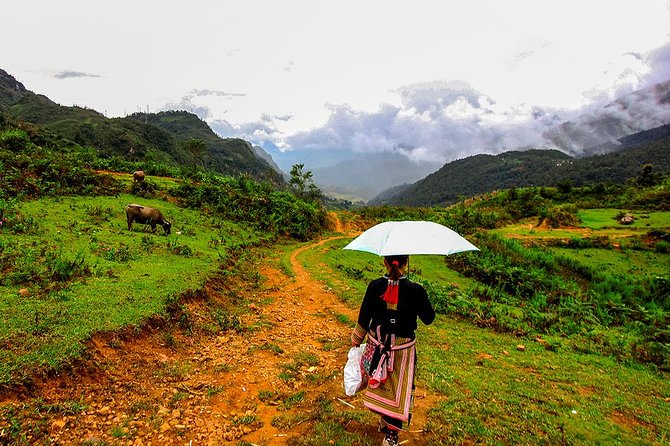
After Giang Ta Chai, the route heads uphill and onward to Su Pan, a community associated with the Black Hmong. You then continue toward Ban Ho, where several ethnic groups live, including Red Dao and Tay communities.
This part of the route is valuable because it avoids reducing Sapa to a single ethnic identity. Hmong, Giay, Red Dao, Tay, and Black Hmong traditions are not interchangeable, and a good guide can help you notice differences in clothing, houses, farming, family customs, and village life.
Sush and Soso are among the guides connected with particularly strong experiences on this route. Soso has been praised for her care and help throughout the walk, while Sush was noted for making the group feel welcome and explaining Hmong culture. Ly has also led the route, answering questions about villages, rice fields, waterfalls, and local life.
Guide assignment is not guaranteed, so do not book on the assumption that you will get one particular person. The important point is that the company uses local guides, including Hmong guides, rather than treating cultural information as a script delivered from outside the area.
Ban Ho is a good place to understand how the experience changes from a day hike to a village stay. The pace becomes less about reaching the next viewpoint and more about observing houses, meeting host families, and learning how people work and live in the valley.
A few other Sapa trips to compare
- Sapa: Fansipan Cable, Cat Cat Village & Moana Instagram Tour
★ 5.0 · 777 reviews - Cat Cat Village, Moana, Fansipan Cable Car, Alpine Coaster – Sapa
★ 5.0 · 420 reviews - From Sapa: 1-Day Guided Trek to Lao Chai & Ta Van with Lunch
★ 4.9 · 416 reviews - Sa Pa Full Day Trekking Tour
★ 5.0 · 414 reviews
Day 3 in Ban Ho and the walk to Nam Tong
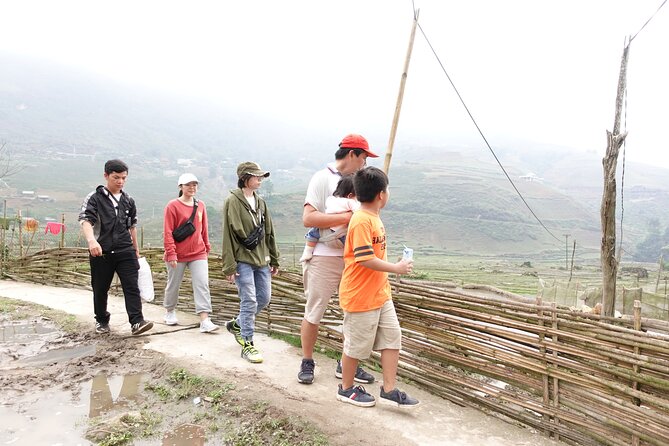
The final morning begins after breakfast in Ban Ho. You visit traditional houses and learn about Tay culture before continuing to Nam Tong Village.
The morning house visits are a useful counterpoint to the mountain views. Rice terraces are visually striking, but homes show you more about daily life: how space is arranged, how families use their buildings, and how local traditions fit into ordinary routines. Your guide’s explanations are most useful when you ask questions, so come prepared to be curious and respectful.
Nam Tong gives the final day a clear destination rather than sending you straight back to Sapa after breakfast. The published schedule does not provide exact walking times for the final stretch, so you should ask the operator how much walking remains and when transport returns to Sapa.
Transport back to Sapa after the village portion is included. The activity ends back at the Sapa meeting point, which makes it easy to continue with a hotel stay or onward plans in town. Still, avoid scheduling a tight bus or train connection immediately afterward. Mountain roads and walking groups rarely operate with minute-by-minute precision.
What the $170 price really covers
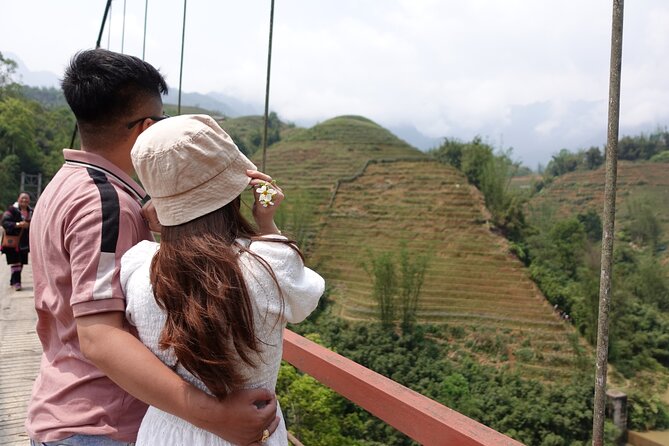
At $170 per person, this is not the cheapest way to see the Sapa valley. It is also more than a simple guided day walk because the price covers three days of route planning and guiding, village entry fees, meals, homestay accommodation, a large bottle of water, and transport back to Sapa.
Included meals are listed as three lunches, two breakfasts, and two dinners. That covers the main food during the trip, but you pay extra for drinks at the homestay and any personal purchases. Tips are not included.
The value is strongest if you want a complete rural experience without arranging each meal, village visit, and return transfer yourself. A local guide also helps with communication and cultural context, which is hard to arrange independently over a short stay.
The value is weaker if you mainly want dramatic viewpoints and minimal exertion. You will spend substantial time walking, and some of that time is on rough or slippery tracks rather than carefully built paths. A shorter Sapa walk may suit you better if your priority is comfort.
The maximum group size is 15 people. That is small enough for a guide to monitor the group, though it is not a private tour. If you want a quieter pace or very flexible stops, ask whether a private option is available before booking. The supplied information confirms a maximum of 15, but it does not promise a smaller group.
The guide matters more than the timetable
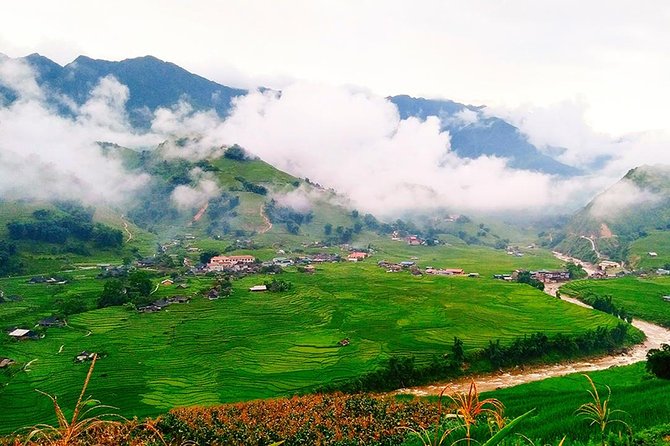
The route has plenty to see, but the guide shapes how much you get from it. A good guide can point out a house-building technique, explain why a field is planted a certain way, or help you handle a muddy slope without making the walk feel rushed.
Mae has been noted for clear English and for inviting a group to her home for lunch. Ly has been praised for explaining culture and village life in detail. Soso, May, Dom, and Sush have also been associated with warm, attentive guiding and practical help on the trail.
You should think of the guide as both walking leader and cultural interpreter. Ask about the ethnic groups you meet, the meaning of local clothing, marriage customs, farming, and how homes are built. The more specific your questions, the more useful the conversation will be.
There is also a social side to the experience. You may walk with a mixed group, eat together, and share the homestay atmosphere. That can be enjoyable, but it means the group’s pace affects your day. Strong hikers can sometimes request longer distances, while the guide may adjust the route when someone is tired.
Who should book this Sapa trek?
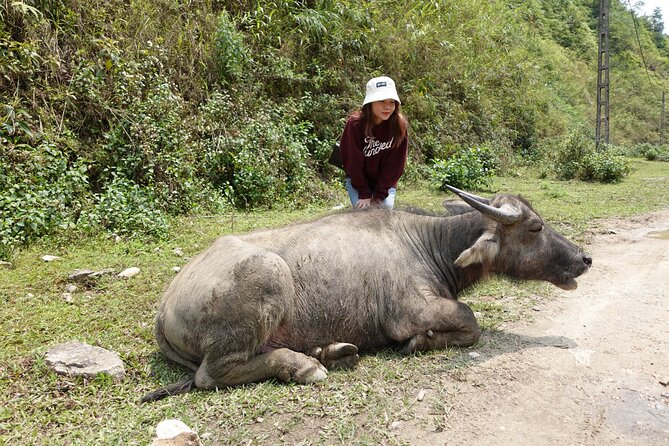
This tour suits you if you want to:
- Walk through several rural villages instead of staying around Sapa Town
- See rice terraces, waterfalls, bamboo forest, and mountain valleys in one trip
- Learn directly from a local guide about Hmong, Giay, Red Dao, Tay, and Black Hmong communities
- Try a homestay and local meals
- Travel with a small group of no more than 15 people
- Accept basic accommodation and a physically demanding route
It may not suit you if you have difficulty with uphill walking, uneven surfaces, or long days outdoors. The tour requires moderate fitness, and the route can be slippery after rain.
It also may not suit you if you need a tightly timed schedule. The exact walking distance, final-day timing, and sleeping arrangements need clarification. That is not a reason to reject the trip, but it is a reason to ask questions before departure.
Practical packing advice for three days
Pack light, since you will be walking between villages, but bring enough for changing mountain weather. Good-grip walking shoes are the most important item. Sandals are not a sensible main shoe for this route.
I would also bring:
- A light waterproof jacket
- Quick-drying clothes
- Warm layers for the evening
- A small towel and toiletries
- Insect protection
- A phone power bank
- Personal medicines
- Extra water money if you want drinks beyond the included bottle
You should also carry a small day bag rather than a large suitcase. The tour includes a homestay, not a full hotel setup, so pack for simplicity rather than comfort at every turn.
Confirmation is provided when you book. Pickup is offered from Sapa Town hotels, or you can meet at Sapa Church. Free cancellation is available up to 24 hours before the 9 a.m. start, but late cancellations and changes are not accepted. Bad weather or failure to reach the minimum group size can lead to a new date, another experience, or a full refund.
Should you book the Sapa Valley Trek and Homestay?
Book it if your idea of Sapa includes walking through rice fields, eating in villages, sleeping with a host family, and asking questions about local life. The best part is the mix of scenery and conversation, especially with a local guide who can explain what you are seeing and help when the trail gets rough.
Think twice if you want a soft adventure or a precise schedule. The trek can be long and difficult, and the one-night versus two-night accommodation detail should be settled before booking.
For active visitors with three days to spare, $170 is a fair package price because meals, entry fees, guiding, accommodation, water, and the return transfer are included. I would book after confirming the homestay plan and expected walking distance. That small check will tell you far more about the trip’s fit than the mountain photos.
FAQ
Where does the Sapa Valley Trek and Homestay begin?
The tour begins at Sapa Church, located on P. Hàm Rồng in Sapa. Pickup is also offered from hotels in Sapa Town.
What time does the tour start?
The tour starts at 9 a.m.
How long does the experience last?
The experience lasts approximately three days and is sold as a 3D2N tour.
Which villages does the route visit?
The route includes Y Linh Ho, Ta Van, Giang Ta Chai, Su Pan, Ban Ho, and Nam Tong. The tour describes visits to five different ethnic villages, while the schedule names these communities and stops.
Which ethnic groups can I learn about?
The tour includes cultural information about the Hmong, Giay, Red Dao, Tay, and Black Hmong communities.
Is accommodation included?
Accommodation in a homestay is included. The listed inclusions specify one night, while the three-day format and route details refer to homestays in the plural, so confirm the exact sleeping arrangements with Trekking Tour Sapa before booking.
Are meals included?
Yes. The inclusions specify three lunches, two breakfasts, and two dinners.
Is transport back to Sapa included?
Yes. Transport back to Sapa after the village portion of the tour is included, and the activity ends back at the meeting point.
How fit do I need to be?
You should have a moderate level of physical fitness. The trek includes long and difficult sections, uphill walking, and potentially slippery paths.
More Hikes in Sapa
- Sapa 1 Day Long Trek: Trek to Hau Thao and Sa Seng Villages
★ 4.6 · 344 reviews - EXPLORE SAPA: 2D1N TREKKING & HMONG CULTURE WITH DINH
★ 4.9 · 191 reviews - 1-day Authentik trek & Panorama valley views
★ 5.0 · 189 reviews - 1 day Fansipan Trekking
★ 5.0 · 180 reviews
More 3-Day Experiences in Sapa
- From Sapa: 3-Day Ha Giang Loop with Safe Rider (max 8 pax)
★ 4.9 · 285 reviews - From Hanoi: Sapa 3-Day Medium Trek and Limousine Trip
★ 4.5 · 59 reviews - 3-Day Trek in Amazing Muong Hoa Valley & ethnic Homestay
★ 5.0 · 49 reviews - Amanda Cruise – Ha Long, Lan Ha Bay – All Inclusive 2D1N & 3D2N
★ 5.0 · 4,358 reviews
Newly listed around Sapa
- Half Day Cat Cat Village Tour Guided from Sapa★ 5.0 · 39 reviews
- 1 Day Sapa Authentic Trekking ( off beaten track )★ 5.0 · 40 reviews
- Muong Hoa Valley Trek & Homestay Experience – 4D3N★ 5.0 · 42 reviews
- 2-Day Fansipan Mountain Trek – Indochina’s Highest Peak★ 4.3 · 42 reviews
- Cloud Dragon Skywalk and Silver Waterfall Tour From Sapa★ 5.0 · 47 reviews
- Full Day Sapa Jeep Open Air Jeep Off The Beaten Track★ 5.0 · 47 reviews
- Sa Pa: Private Guided Tour on a Motorbike with Lunch★ 4.8 · 47 reviews
- The best view and most authentic tour in Sapa (Non Touristy)★ 5.0 · 47 reviews
Sapa Trekking Tours, compared.

Sapa 2 Days 1 Night From Hanoi – Overnight in Ta Van Village
Read our review →

Muong Hoa Valley Trek and Local Ethnic Villages
Read our review →
Fansipan Cable, Cat Cat Village & Moana Instagram Tour
Read our review →

Sapa 3 Days 2 Nights Trekking Tour (1 Night In Ta Van Village, 1 Night In Hotel)
Read our review →
Eco Adventure Terrace Fields and Local Villages Trek
Read our review →
3-Day Trekking Adventure of Sapa from Hanoi – Stay Ta Van Village
Read our review →Browse the lists this tour appears in