
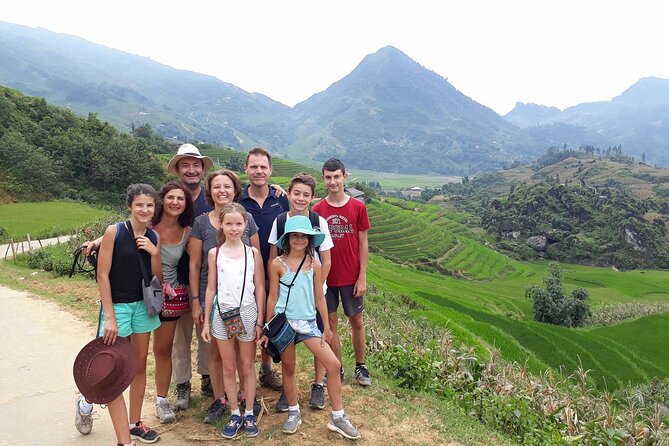
Reviewed · SAPA TREKKING TOURS
2 days authentic trekking tour in Sapa ( Homestay – Less touristy )
Sapa’s best moments often come away from its busy center, and this two-day trek takes you onto dirt paths through rice terraces, pine forest, and small ethnic villages. You sleep in a traditional wooden house rather than returning to town, which gives the trip a stronger sense of place than a standard day walk. Mai is one guide named by guests, and her route-finding and explanations receive special praise.
I like the combination of quiet mountain walking and village life, plus the practical value of having meals, water, transport, entrance fees, and a guide covered in the $89 price. The main caution is simple: this is not an easy stroll. Expect about nine hours of trekking over two days, with steep sections that can feel tough in hot weather.
Key points before you book
- Ta Phin begins with a downhill dirt trail through pine forest and open views across rice paddies and cornfields.
- The route visits Hmong and Dzao communities, with time for local meals, village visits, and workshops.
- Your overnight stay is in a traditional wooden homestay, rustic but described as comfortable and well organized.
- Day two reaches the Ngũ Chỉ Sơn area and Suối Thầu village, with rice-field paths and a mountain viewpoint.
- This is a private tour, so only your group takes part and the walking pace can be adjusted between medium and heavy levels.
- The $89 package includes the main trip costs, but tips, insurance, soft drinks, herbal baths, and personal spending are extra.
Why this Sapa trek feels different
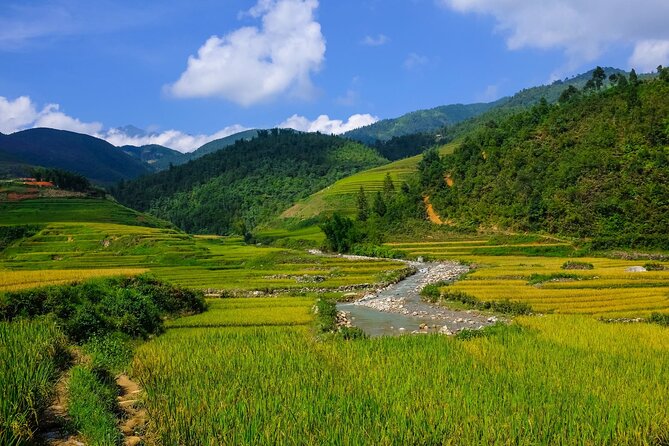
Sapa has no shortage of short walks and scenic viewpoints. This trip earns its appeal by linking the scenery with daily life in the highlands. You are not simply driven to a photo stop, given a few minutes, and returned to town. The walking connects villages, farmland, forest, and a night in a local home.
That overnight stay matters. A homestay gives you a break from the hotel strip in central Sapa and lets the trip continue after the day’s walking ends. The accommodation is rustic, so you should not expect polished hotel comforts. Still, the available details describe it as pleasant and well organized, with a traditional wooden setting and meals included.
The cultural side is also more than a quick village pass-through. You visit Hmong and Dzao communities, learn about local customs and ways of life, and may take part in workshops connected with local craft. The quality of that contact depends on your guide, which is why the guide is central to this experience.
Mai is specifically praised for finding paths that are hard to locate without local help and for explaining the rice terraces, villages, and people around Sapa. Other named staff include Mr. Tinh, who helps coordinate arrivals and the homestay, and Maykeiun, who is described as attentive during the trek. Guide quality can vary from departure to departure, but the company clearly uses local staff familiar with the area.
More Hiking Tours in Sapa
- Sa Pa: Muong Hoa Valley Trek and Local Ethnic Villages
★ 4.6 · 864 reviews - Sapa: Eco Adventure Terrace Fields and Local Villages Trek
★ 4.9 · 636 reviews - Number one top rated ethical cultural trekking and homestay by ETHOS
★ 5.0 · 456 reviews
Day one: pine forest, Ta Phin, and terraced fields
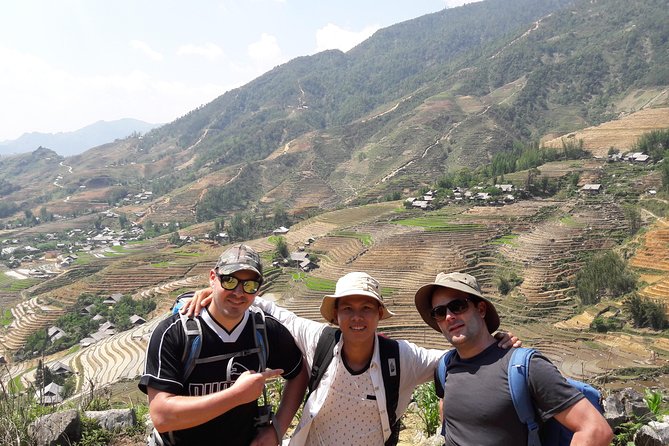
The first morning begins at 9:00 a.m., with transport from the meeting point. From there, the trek heads downhill through mountainous terrain on a dirt trail beside pine forest.
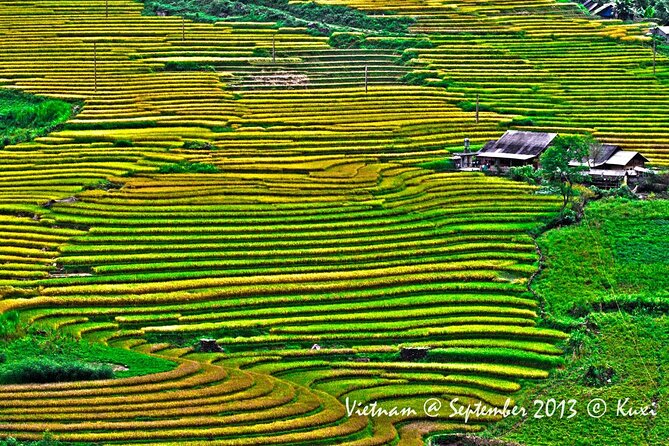
That downhill start gives you an early taste of the route’s natural side. The path opens to views over rice terraces and cornfields, and the quieter setting helps separate this trip from Sapa’s more crowded central sights. The description emphasizes broad views and peaceful surroundings, but remember that a dirt trail can be uneven, especially after rain.
Ta Phin is one of the day’s main points. The village is associated with Hmong and Dzao communities, and the visit gives your guide room to explain local life, customs, and craftsmanship. You may also have meals and workshop time connected with village traditions. The exact workshop activity is not specified, so treat it as a cultural stop rather than a guaranteed hands-on class with a fixed format.
The first day lasts about five hours. That sounds manageable on paper, but the terrain changes the calculation. Downhill walking can be hard on your knees, while later climbs and rough paths require steady footing. One important detail from the experience is the option to choose a medium or heavy walking level, so tell your guide early how you want to handle the route.
You should bring shoes with good grip, clothes that can get dirty, and a light rain layer. The tour supplies 1.5 liters of water per day, but you may still want to confirm how much extra you can carry if the weather is hot. Soft drinks are not included, and personal purchases are your responsibility.
The day ends at the village homestay. Expect a traditional wooden house and a simple rural setup rather than private hotel-style facilities. Dinner is included, and the meal is one of the practical pleasures of the trip. Food is repeatedly praised, which is useful because a hot meal after a long walk is not a small detail.
Sleeping in a wooden homestay
The homestay is the heart of the experience for anyone who wants more than scenery. You spend the night in a local community, surrounded by the setting you walked through rather than being transferred back to central Sapa.
The accommodation is described as rustic but comfortable. Those two words should guide your expectations. You get a genuine wooden-house setting and organized hospitality, but this is not the place to book if you need resort-style amenities or a carefully controlled hotel environment.
The evening also gives you a chance to slow down. You can eat dinner, talk with your guide and hosts, and learn more about local ways of life. The supplied details do not promise a particular evening performance or formal activity, so do not book expecting a fixed cultural show.
Breakfast is included the next morning, along with two lunches across the trip and one dinner. The inclusion of meals makes the price easier to assess, especially since food in a remote village is part of the experience rather than just fuel.
Mr. Tinh is noted for helping with a smooth arrival and arranging a room to refresh before the homestay. That suggests the operator pays attention to the transition between transport, trekking, and overnight arrangements. Still, conditions can be basic, and you should pack only what you need for the night.
Day two: Ngũ Chỉ Sơn and the road to Suối Thầu
After breakfast at the homestay, day two heads toward Suối Thầu village. The walk passes several minority villages and continues through rice-field paths toward higher ground.
The second day is shorter at about four hours, but it should not be treated as effortless. The route rises toward the top of a mountain, where you can look across the rice fields and surrounding highland scenery. A shorter walking time can still include steep sections, and the first day’s exertion may leave your legs tired.
The views change with the season. In October, the rice may already have been harvested, so the terraces can look more muted than they do during the growing season. That does not make the walk pointless. You still see the structure of the fields, village patterns, forest, and mountain contours, while your guide supplies the human context.
Fog is another factor in Sapa. One guest describes the route being changed when the original path became too foggy. That flexibility is valuable in mountain country, where conditions can affect both views and footing. It also means your exact route may shift for safety or visibility.
The area around Ngũ Chỉ Sơn and Suối Thầu suits people who like walking for the view rather than collecting a long list of formal attractions. The reward is the rhythm of the path: village, field, slope, and open mountain outlook. You will not find a large monument or major museum stop here, and that is precisely the point.
At the end of day two, the activity returns to the meeting point. Transport is included, which saves you from arranging a separate ride from a rural endpoint.
A few other Sapa trips to compare
- Sapa: Fansipan Cable, Cat Cat Village & Moana Instagram Tour
★ 5.0 · 777 reviews - Cat Cat Village, Moana, Fansipan Cable Car, Alpine Coaster – Sapa
★ 5.0 · 420 reviews - From Sapa: 1-Day Guided Trek to Lao Chai & Ta Van with Lunch
★ 4.9 · 416 reviews - Sa Pa Full Day Trekking Tour
★ 5.0 · 414 reviews
The walking: scenic, flexible, and genuinely physical
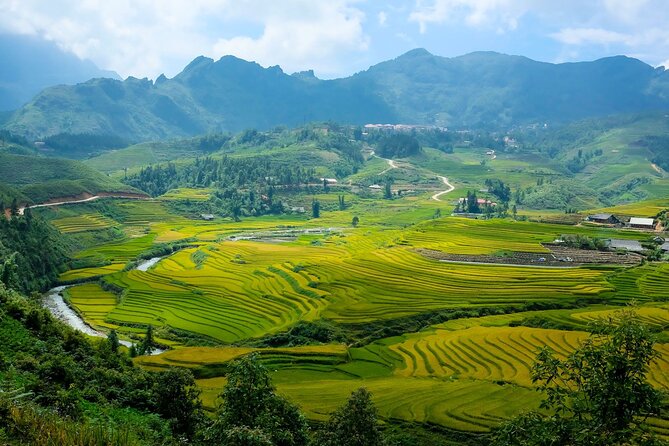
The word trekking is important here. This is not a paved village promenade. The route includes dirt trails, hills, rice-field paths, forest sections, and steep stretches. One account puts the total at roughly nine hours across the two days and warns that the walking is especially demanding in hot weather.
Most people can participate according to the supplied information, but that broad statement should not replace an honest look at the terrain. You need enough fitness for several hours on uneven ground and enough balance for slopes. If you have knee, ankle, or stamina concerns, discuss the medium route with your guide at the start.
The private format is a real advantage. Only your group participates, and the walking level can be adjusted between medium and heavy. A private departure gives you more room to pause for views, ask questions, or change the route when fog affects conditions.
The route-finding is another reason to use a guide. Small mountain paths are not always easy to identify, and the most appealing sections may not be marked in a way that helps an independent walker. Mai is praised for taking people along paths they could not have found alone, which is exactly the kind of local service that adds value.
Do not confuse a quieter route with an easy route. Less touristy usually means fewer developed paths and fewer facilities. That tradeoff brings better contact with the countryside, but it asks more from your legs and your clothing.
Culture, food, and the value of local guidance
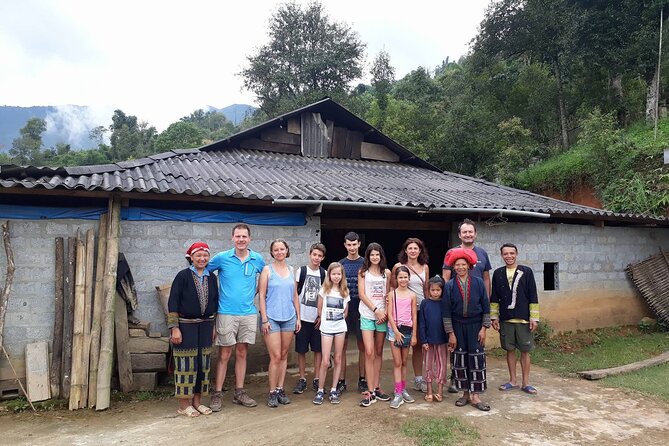
The strongest part of this trip is the way culture is built into the walking. You visit Hmong and Dzao villages, hear about habits and daily life, and encounter local craftsmanship. The guide is not just there to point out the next bend. A good guide helps you understand why the terraces matter, how village life is organized, and what you are seeing along the path.
The food adds another useful layer. Dinner, breakfast, and two lunches are included, and the food receives consistent praise. Meals at a homestay can be one of the most memorable parts of a rural trip because they connect the walk to the place where you are staying.
The experience is not a fully scripted cultural show. That is good for authenticity, but it also means the visit can feel less polished than a formal attraction. Show respect, ask before photographing people, and let your guide explain local etiquette.
The company has a strong overall satisfaction record, with a 4.9 rating from 68 reviews and 100 percent recommendation shown in the supplied information. I would not treat numbers as a guarantee, but they do support the practical impression that the guides, food, organization, and homestay arrangements are the tour’s strongest points.
Is $89 a fair price?
At $89 per person, the price is reasonable for a private two-day trip that includes transport, an English-speaking guide, village entrance fees, a homestay, dinner, breakfast, two lunches, and 1.5 liters of water per day.
The price is especially fair if you would otherwise need to arrange each part separately. A guide familiar with remote paths, a local overnight stay, meals, and transport can be difficult to organize on your own. The private format also gives the booking more value than a basic group walk.
You should budget for extras. Tips, travel insurance, personal expenses, herbal baths, and soft drinks are not included. The listing also mentions group discounts, but no discount amount is provided, so you will need to check the price for your party.
The tour is often booked well ahead, with an average booking time of 48 days in advance. That is a useful sign if your Sapa dates are fixed, though you should not assume every date will sell out.
Who should book this Sapa experience?
I would choose this trek if you want mountain scenery tied to village life and you are comfortable with basic accommodation. It suits couples, friends, and families with enough walking ability for uneven paths, especially because the private format allows some adjustment.
It is a good match for you if you value a local guide, home-cooked meals, and a quieter route more than hotel comfort or a tightly scheduled sightseeing program. It also works well if you want two days of activity without committing to a long multi-day expedition.
I would hesitate if you want gentle walking, guaranteed clear views, or a polished room with extensive facilities. Heat, fog, steep ground, and harvested fields can all change the feel of the trip. October may still be beautiful, but the terraces will not necessarily be bright green.
Free cancellation is available if you cancel at least 24 hours before the 9:00 a.m. start time. Inside that window, the payment is not refunded, and changes are not accepted.
Should you book the two-day Sapa trek?
Book it if your priority is a real village-to-village walk with a homestay, local meals, and a guide who can take you beyond the obvious paths. The combination of Ta Phin, Hmong and Dzao communities, mountain trails, and the Ngũ Chỉ Sơn area gives you a fuller picture of Sapa than a quick viewpoint visit.
Skip it if you are looking for a relaxed stroll or hotel-level comfort. The route is steep in places, and the wooden homestay is intentionally simple. For fit walkers who want scenery, food, and contact with local life, the $89 cost is a sound deal.
FAQ
How long is the tour?
The experience lasts approximately two days. Day one includes about five hours of trekking, while day two includes about four hours.
What time does the tour start?
The stated start time is 9:00 a.m.
Is this a private tour?
Yes. Only your group participates in the activity.
Is transport included?
Yes. Transport is included, and the activity ends back at the meeting point.
Where does the first day go?
Day one visits Ta Phin Village. The trek begins downhill through mountainous terrain and pine forest, with views over rice terraces and cornfields.
Where does the second day go?
After breakfast, the route heads toward Suối Thầu village and the Ngũ Chỉ Sơn area, passing several minority villages and rice fields.
What accommodation is provided?
You spend one night in a traditional wooden village homestay. It is described as rustic but comfortable and well organized.
What meals are included?
The package includes dinner, breakfast, and two lunches.
Is water included?
Yes. The tour provides 1.5 liters of water per day.
What is not included?
Tips, insurance, personal expenses, herbal baths, and soft drinks are not included.
Can I cancel for a refund?
Yes. You can receive a full refund if you cancel at least 24 hours before the experience start time. Cancellations or changes made within 24 hours are not accepted and are not refunded.
More Hikes in Sapa
- Sapa 1 Day Long Trek: Trek to Hau Thao and Sa Seng Villages
★ 4.6 · 344 reviews - 1-day Authentik trek & Panorama valley views
★ 5.0 · 189 reviews - 1 day Fansipan Trekking
★ 5.0 · 180 reviews - Sa Pa: 6-Hours Muong Hoa Valley Trek with Local Ethnic guide
★ 4.5 · 178 reviews
More 2-Day Experiences in Sapa
- EXPLORE SAPA: 2D1N TREKKING & HMONG CULTURE WITH DINH
★ 4.9 · 191 reviews - Sa Pa: 2-Day Trekking Trip with Ethnic Minority Homestay
★ 4.7 · 145 reviews - Sapa : 2-Day Trek & Heartwarming Homestay with an Ethnic Family
★ 5.0 · 143 reviews - Rice Terraced Fields & Homestay Experience– 2D 1N
★ 5.0 · 118 reviews
Newly listed around Sapa
- Half Day Cat Cat Village Tour Guided from Sapa★ 5.0 · 39 reviews
- 1 Day Sapa Authentic Trekking ( off beaten track )★ 5.0 · 40 reviews
- Muong Hoa Valley Trek & Homestay Experience – 4D3N★ 5.0 · 42 reviews
- 2-Day Fansipan Mountain Trek – Indochina’s Highest Peak★ 4.3 · 42 reviews
- Cloud Dragon Skywalk and Silver Waterfall Tour From Sapa★ 5.0 · 47 reviews
- Sa Pa: Private Guided Tour on a Motorbike with Lunch★ 4.8 · 47 reviews
- Full Day Sapa Jeep Open Air Jeep Off The Beaten Track★ 5.0 · 47 reviews
- The best view and most authentic tour in Sapa (Non Touristy)★ 5.0 · 47 reviews
Sapa Trekking Tours, compared.

Sapa 2 Days 1 Night From Hanoi – Overnight in Ta Van Village
Read our review →

Muong Hoa Valley Trek and Local Ethnic Villages
Read our review →
Fansipan Cable, Cat Cat Village & Moana Instagram Tour
Read our review →

Sapa 3 Days 2 Nights Trekking Tour (1 Night In Ta Van Village, 1 Night In Hotel)
Read our review →
Eco Adventure Terrace Fields and Local Villages Trek
Read our review →
3-Day Trekking Adventure of Sapa from Hanoi – Stay Ta Van Village
Read our review →Browse the lists this tour appears in