
Reviewed · SAPA TREKKING TOURS
1 Day Sapa Authentic Trekking ( off beaten track )
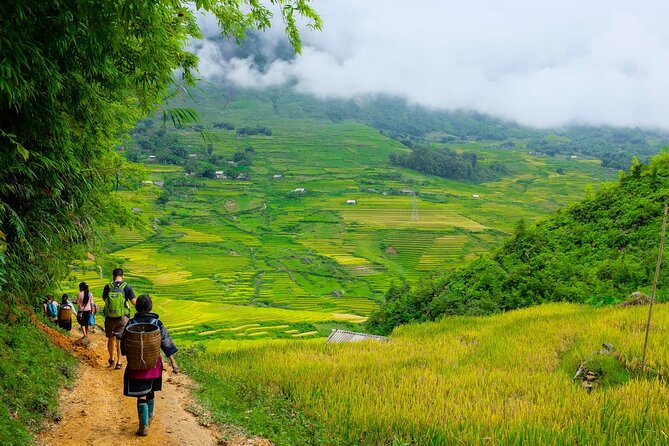
Sapa’s quieter side begins where the busy trekking routes thin out. This private 5 to 6-hour hike follows village paths, pine forest, rice terraces, cornfields, and hilltop trails through Suoi Ho, Giang Cha, Lu Khau, and Saxeng. You get countryside views without spending the day in the most visited parts of the valley.
I like two things right away: lunch and return transport are included, and the walk gives you real choices in difficulty. Guides such as Mr Sinh and Ms Mu have been praised for a friendly, low-key approach, with Ms Mu especially noted for answering questions without talking nonstop. The main consideration is that the harder route can be intense, so sturdy shoes and a reasonable level of fitness matter.
Key points to know before you book
- A quieter route through four villages: Walk from Ta Phin toward Suoi Ho, Giang Cha, Lu Khau, and Saxeng, with fewer tourists than on Sapa’s most familiar trails.
- Private guiding: Only your group takes part, giving you more control over pace, questions, and route difficulty.
- Several types of scenery: Expect pine forest, rice paddies, terraces, cornfields, black limestone, valleys, and hilltop views.
- Lunch at a local restaurant: A midday meal is included, which makes the $39 price easier to assess.
- A choice between easier and harder paths: The difficult option offers a more demanding walk, but you can select the simpler route at several points.
- Practical inclusions: An English-speaking guide, 0.5 liter of water per person, entrance fee, and car transport back to Sapa are covered.
Why this Sapa walk feels different
Many Sapa excursions focus on a small number of well-known villages and heavily used paths. This one heads toward less visited areas, where the pleasure comes from the walk itself rather than from checking off a famous viewpoint.
You follow your guide down toward a pine forest and Suoi Ho, a Hmong village set in a small valley among rice terrace fields. From there, the route continues through Giang Cha, then toward Lu Khau and Saxeng. The scenery changes often enough to keep the walk interesting: forest gives way to fields, valleys open below the trail, and black limestone appears near the cornfields.
I like this kind of day because it gives you a better sense of how Sapa’s countryside fits together. You are not simply stopping at a viewpoint, taking a photograph, and returning to town. You are walking between settlements and seeing how fields, homes, hills, and narrow paths connect.
The private format also matters. Your group is not tied to a large party moving at one fixed speed. You can ask about local customs, pause for photographs, or choose the easier path when the trail becomes rough. That flexibility is especially useful in Sapa, where a route that looks simple on a map can become tiring once it starts climbing or dropping through uneven ground.
More Hiking Tours in Sapa
- Sa Pa: Muong Hoa Valley Trek and Local Ethnic Villages
★ 4.6 · 864 reviews - Sapa: Eco Adventure Terrace Fields and Local Villages Trek
★ 4.9 · 636 reviews - Number one top rated ethical cultural trekking and homestay by ETHOS
★ 5.0 · 456 reviews
The 9:00 am start and the route toward Ta Phin
The walk starts at 9:00 am. The exact meeting point is supplied when you book, and the activity finishes back there after the return drive from the village area.
The first section takes you down toward pine trees and Suoi Ho. This is a good opening because you move quickly away from the town setting and into a quieter rural area. Suoi Ho is associated with Hmong residents and sits among a small valley and rice terrace fields.
A traditional wooden house is one of the early cultural details on the route. You can look at the structure and ask your guide about the local way of life. The tour does not promise a staged cultural performance, which is a positive point for anyone who prefers a normal village setting to a formal display.
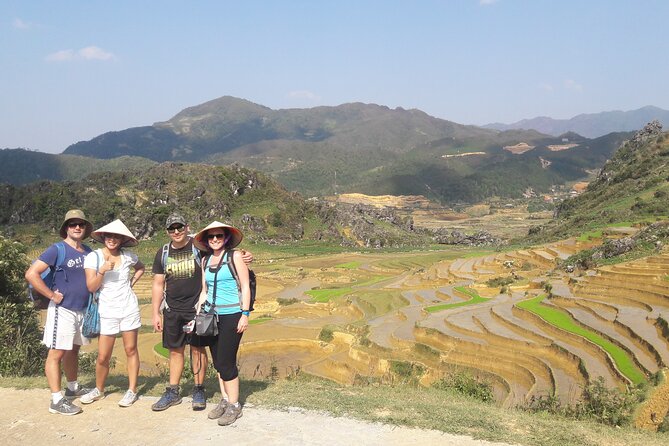
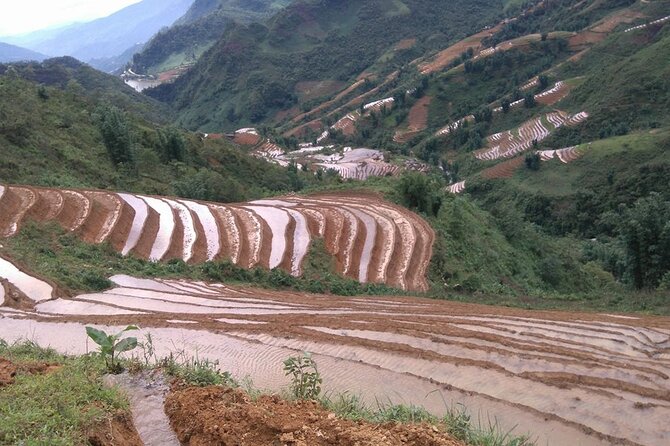
The trail then crosses rice paddies and terrace fields. The views depend on the season and on field conditions, but the basic appeal remains: you see the contours of the hills shaped for farming, rather than just a broad mountain view from a road.
This first portion is also where you can settle into the pace. If you are carrying a camera, keep it handy. The route offers changing views instead of one single photo stop, and the private guide format should make it easier to pause without holding up a large group.
Suoi Ho to Giang Cha, with valley views
The walk continues to Giang Cha, where the route opens to a small, attractive valley. The appeal here is scale. Rather than looking across Sapa’s entire mountain region, you get a closer view of fields, village areas, and slopes folding around one another.
The trail includes both easier and harder choices. That is one of the most useful details of this experience. A simple path can make the day manageable for a broad range of walkers, while the harder option gives fitter participants more of a challenge. The choice is not just about comfort. It can also affect how much time you spend climbing, descending, and navigating uneven ground.
One guide, Mr Sinh, has been described as friendly and informative about Sapa and its minority communities. Ms Mu has also been praised for being pleasant, answering questions, and keeping her talk measured. Those qualities suit this route. You want enough explanation to understand what you are seeing, but you also want quiet stretches in which to hear the countryside and enjoy the views.
The path is described as intense when the difficult route is chosen. Do not treat this as a casual stroll around town. The total duration is only about half a day, but the terrain and changes in elevation can make it feel like a proper country hike.
Lunch at a local restaurant
Lunch comes after the morning walking, at a local restaurant in the hill country. It is included in the tour price, along with water, so you do not need to budget separately for the main meal.
That inclusion improves the value of the trip in a practical way. A $39 private excursion already covers a guide, entrance fee, lunch, half a liter of water per person, and transport by car back to Sapa. You still pay for personal expenses and soft drinks, but the major costs are handled.
The meal also breaks up the route at the right point. After walking through forest, terraces, and village paths, sitting down for food gives you time to rest before the afternoon section. A local restaurant is a more fitting stop than a generic chain venue, though the supplied details do not specify the menu, dietary options, or whether special meals can be arranged.
If you have dietary needs, ask before booking. The tour confirms lunch, but it does not provide enough information to promise vegetarian, vegan, allergy-safe, or other special choices.
A few other Sapa trips to compare
- Sapa: Fansipan Cable, Cat Cat Village & Moana Instagram Tour
★ 5.0 · 777 reviews - Cat Cat Village, Moana, Fansipan Cable Car, Alpine Coaster – Sapa
★ 5.0 · 420 reviews - From Sapa: 1-Day Guided Trek to Lao Chai & Ta Van with Lunch
★ 4.9 · 416 reviews - Sa Pa Full Day Trekking Tour
★ 5.0 · 414 reviews
From Giang Cha toward Lu Khau and Saxeng
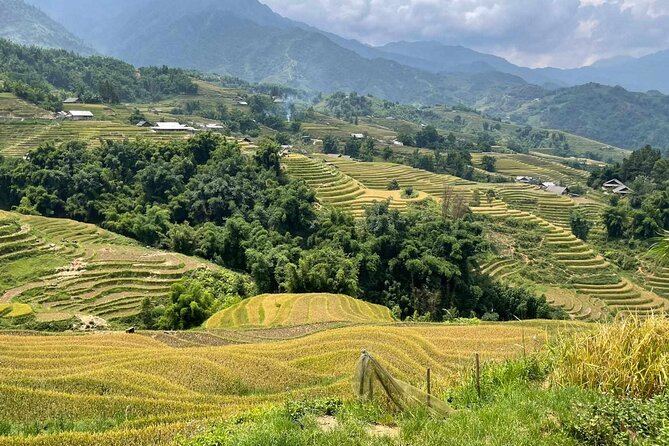
After lunch, the route heads down toward cornfields and areas of black limestone. This section adds a different texture to the day. Earlier you have rice terraces and pine trees, while here the fields and rock create a rougher, more open setting.
The walk continues through Lu Khau and Saxeng. The supplied route description gives less detail about individual sights in these villages, so you should think of them as part of the wider rural crossing rather than as separate attractions with a long list of monuments.
That is not a weakness if you know what you are booking. This is a walking day built around ordinary countryside, village connections, and views from the trail. It is not a museum tour, a fixed collection of landmark stops, or a performance-based cultural program.
You may also have the chance to visit a local site along the way, though the available details do not explain exactly what that visit involves. Your guide is the person to ask for context when you reach it.
The downhill sections can be harder on knees than the uphill stretches. Take the easier route if you prefer a relaxed day, and use the private format to set a sensible pace. The guide can help you decide when the path becomes more demanding, but the tour is still a trek, not a vehicle-based village tour.
What the private format adds at $39
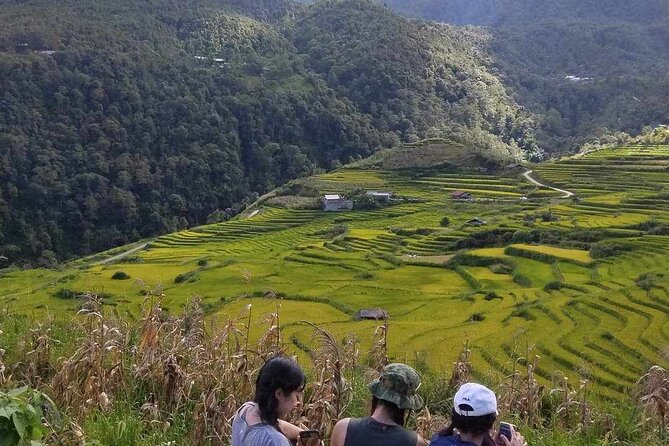
At $39 per person, the cost is reasonable for what is included, especially if you value privacy and transport. A private English-speaking guide accompanies only your group, and the package includes lunch, water, the entrance fee, and a car ride back to Sapa from the village area.
The private setup is most valuable for pairs, families, or friends with similar walking speeds. You do not have to match the pace of strangers, and you can spend more time on questions or photos. It also gives you a better chance to choose between the easy and difficult route at the points where that option is available.
There is a possible catch. A private tour can be less economical for a solo participant than joining a large group, although group discounts are available. The price also excludes tips, insurance, personal expenses, and soft drinks.
I would judge the value this way:
- You get good value if you want a full half-day outside Sapa with lunch and transport already arranged.
- You get especially good value if you want a private guide rather than a large group.
- You may find it less appealing if you want a very short, gentle walk or a detailed cultural program with many formal stops.
- You should also compare the price with your group size, since the per-person rate may work differently for one person, a couple, or a larger party.
How demanding is the trek?
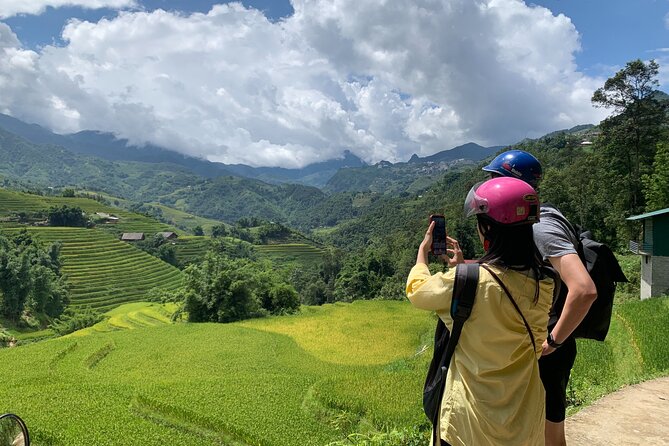
The tour is suitable for most participants, but that does not mean every version of the route will feel easy. The difficult route has been described as intense, while the easier route gives you a way to reduce the strain.
Expect a day on foot through hills, valleys, fields, and village paths. The walk lasts about 5 to 6 hours, including the lunch break and stops, so you should be comfortable being outdoors for most of the morning and afternoon.
Wear shoes with a firm grip. The information provided does not specify trail conditions or weather requirements, so prepare for the fact that rural paths can feel different from paved streets. Bring personal items you need for the day, since only 0.5 liter of water per person is included.
This is a particularly good match for people who enjoy photography. You get rice terraces, small valleys, pine forest, traditional wooden houses, cornfields, and black limestone in one outing. The changing scenery gives you more to work with than a single overlook.
The walk can also suit outdoor-minded families and couples, provided everyone can manage a half-day trek. Most people can participate, and service animals are allowed according to the tour information. Insurance is not included, so you should arrange your own cover if that matters to you.
The guiding style and local contact
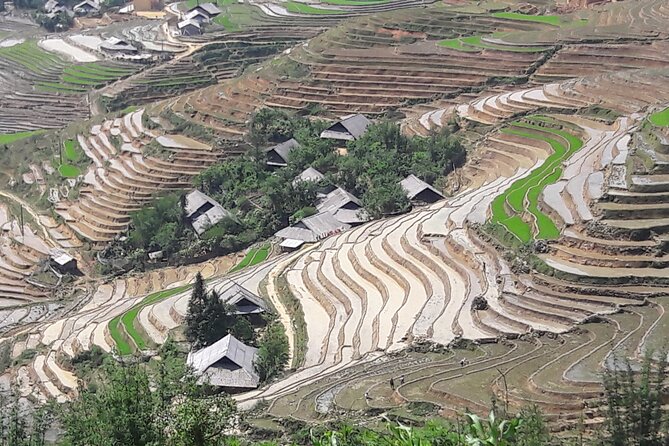
A guide can make or break a village trek. On this route, the strongest praise has gone to guides who are friendly without overwhelming the walk with constant commentary.
Mr Sinh is noted for helping visitors learn about Sapa and its minority communities. Ms Mu is described as pleasant, willing to answer questions, and restrained in how much she talks. Those details are useful because the best guide for this kind of route is not simply a person who knows directions. You want someone who can explain a wooden house, a village setting, or a farming area, then let you enjoy the quiet.
Guide assignments can vary, so do not assume you will receive one particular person unless the provider confirms it. Still, the comments about Sinh and Mu give you a clear idea of the guiding style to hope for: friendly, informative, and responsive rather than theatrical.
The private format lets you shape the conversation. Ask about the Hmong communities, farming, the villages, or the route choices. If you want more quiet time for photography, say so. If you want more cultural explanation, ask directly.
Who should book this Sapa experience?
I would choose this trek if you want to see rural Sapa beyond the standard town-to-village circuit. It suits you best if you enjoy walking, photography, and quieter paths more than a packed schedule of attractions.
It is also a smart choice for a private group that wants flexibility. Couples can set their own pace, families can choose the easier route, and active friends can take on the more demanding option.
You may want a different tour if you dislike uneven walking, want a guaranteed gentle route, or prefer a detailed menu of cultural stops. The available information does not promise a specific lunch menu, exact elevation gain, or fixed difficulty for every group, so ask questions before booking if those points are important.
The tour is normally booked around 10 days ahead, which suggests you should reserve before arriving in Sapa if your schedule is tight. Confirmation comes at booking, and free cancellation is available up to 24 hours before the start time. Cancellations inside that window are not refunded, and changes are not accepted within 24 hours.
Should you book the Ta Phin route?
Book it if you want a private, countryside-focused trek with lunch and return transport included. The strongest reasons are the quieter village route, the choice of walking difficulty, the varied scenery, and the chance to learn about local communities from a guide such as Mr Sinh or Ms Mu.
Skip it if you are looking for a short walk, a luxury outing, or a fully scripted cultural show. This is a proper half-day hike, and the harder option can be tiring.
For most active visitors, the $39 price is fair because it covers the main practical costs and gives you a more personal route through Suoi Ho, Giang Cha, Lu Khau, and Saxeng. Bring suitable shoes, decide how much walking you want before setting out, and use the private format to make the day fit your group.
FAQ
Where does the Sapa trek go?
The route begins in the Ta Phin area and continues through Suoi Ho, Giang Cha, Lu Khau, and Saxeng villages. It includes pine forest, rice terraces, cornfields, valleys, and black limestone areas.
What time does the activity start?
The trek starts at 9:00 am. It finishes back at the meeting point after transport returns you to Sapa.
How long does the trek last?
The experience lasts approximately 5 to 6 hours.
Is lunch included?
Yes. Lunch at a local restaurant is included in the tour price.
Is this a private tour?
Yes. Only your group participates in the activity, with an English-speaking guide.
What happens if I cancel?
You can receive a full refund if you cancel at least 24 hours before the local start time. Cancellations or changes made within 24 hours are not accepted, and the amount paid is not refunded.
More Hikes in Sapa
- EXPLORE SAPA: 2D1N TREKKING & HMONG CULTURE WITH DINH
★ 4.9 · 191 reviews - 1 day Fansipan Trekking
★ 5.0 · 180 reviews - Sa Pa: 6-Hours Muong Hoa Valley Trek with Local Ethnic guide
★ 4.5 · 178 reviews - Trekking Through Rice Terraced Fields – 1Day
★ 5.0 · 173 reviews
More 1-Day Tours in Sapa
- Sapa 1 Day Long Trek: Trek to Hau Thao and Sa Seng Villages
★ 4.6 · 344 reviews - Sapa Motorbike Tour With Local Guide 1 Day – Waterfalls, Villages
★ 5.0 · 254 reviews - Motorbike 1 Day Off The Beaten Track, Hidden Villages, rice field
★ 5.0 · 203 reviews - 1-day Authentik trek & Panorama valley views
★ 5.0 · 189 reviews
Newly listed around Sapa
- Half Day Cat Cat Village Tour Guided from Sapa★ 5.0 · 39 reviews
- Muong Hoa Valley Trek & Homestay Experience – 4D3N★ 5.0 · 42 reviews
- 2-Day Fansipan Mountain Trek – Indochina’s Highest Peak★ 4.3 · 42 reviews
- Cloud Dragon Skywalk and Silver Waterfall Tour From Sapa★ 5.0 · 47 reviews
- Sa Pa: Private Guided Tour on a Motorbike with Lunch★ 4.8 · 47 reviews
- Full Day Sapa Jeep Open Air Jeep Off The Beaten Track★ 5.0 · 47 reviews
- The best view and most authentic tour in Sapa (Non Touristy)★ 5.0 · 47 reviews
- 3-Day Trek in Amazing Muong Hoa Valley & ethnic Homestay★ 5.0 · 49 reviews
Sapa Trekking Tours, compared.

Sapa 2 Days 1 Night From Hanoi – Overnight in Ta Van Village
Read our review →

Muong Hoa Valley Trek and Local Ethnic Villages
Read our review →
Fansipan Cable, Cat Cat Village & Moana Instagram Tour
Read our review →

Sapa 3 Days 2 Nights Trekking Tour (1 Night In Ta Van Village, 1 Night In Hotel)
Read our review →
Eco Adventure Terrace Fields and Local Villages Trek
Read our review →
3-Day Trekking Adventure of Sapa from Hanoi – Stay Ta Van Village
Read our review →Browse the lists this tour appears in