
Reviewed · SAPA TREKKING TOURS
SAPA : Climb up to Fansipan mountain with LOCAL GUIDE
Fansipan is not a gentle hill walk. You start before sunrise at Tram Ton Pass and spend most of the day climbing, scrambling over rocks, and coping with changing mountain weather. The prize is Fansipan’s 3,143-meter summit, the roof of Indochina, reached with a local Black Hmong guide such as Za, Zo, Ke, Mai, Khu, or A Già.
I like two things right away: the guide-led pace and the homemade lunch. Za and his team are praised for checking on tired hikers, adjusting breaks, cooking filling food, and explaining local life around Sapa. The main catch is simple: this is a hard one-day climb, and fog, rain, mud, or a late finish can change the day.
Key points to know before climbing
- A true summit day: Allow 7 to 9 hours for the climb and descent, with some groups taking about 10 hours.
- A local Black Hmong connection: Za and his guide team share stories about the mountain, local communities, plants, and daily life.
- Lunch is part of the experience: Expect a picnic meal, often banh mi or a hot dish prepared by the guide, with snacks, coffee, or tea in some cases.
- The weather controls the views: You may get broad views over Muong Hoa Valley, or spend much of the day in cloud and fog.
- The descent is optional by cable car: If your legs are done, you can buy a separate ticket, reported by several hikers as about 800,000 VND per person.
- The $72 price covers the basics well: Transport, guide, entrance fee, lunch, water, gloves, and a certificate are included, with a porter for groups of four or more.
Starting at Tram Ton Pass before sunrise
The day begins around 5:30 AM, when the guide and driver collect you at the Stone Church in Sapa or at a hotel along the road toward Tram Ton Pass. Depending on your group and transport, you go by car or motorbike. The ride ends at roughly 1,800 meters above sea level, where the walking starts around 6 AM.
This early start matters. You need enough daylight for a long return, and a morning departure gives you the best chance of reaching the summit around midday. It also lets you climb before the mountain becomes warmer and busier.
The transfer is practical rather than scenic transport for its own sake, but it saves your legs for the part that counts. Confirm your pickup point in advance, especially if your hotel is not along the route. Za is praised for sending clear instructions before the climb, which is useful when you are preparing shoes, rain gear, breakfast, and water the night before.
A few other Sa Pa trips to compare
- Sa Pa: Muong Hoa Valley Trek and Local Ethnic Villages
★ 4.6 · 864 reviews - Sapa: Eco Adventure Terrace Fields and Local Villages Trek
★ 4.9 · 636 reviews - From Sapa: 1-Day Guided Trek to Lao Chai & Ta Van with Lunch
★ 4.9 · 416 reviews
The climb through changing mountain zones
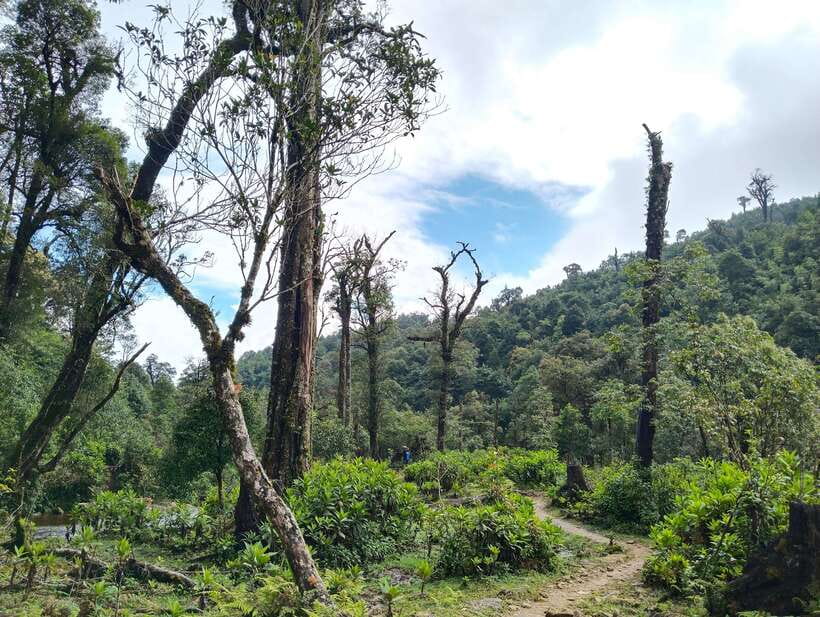
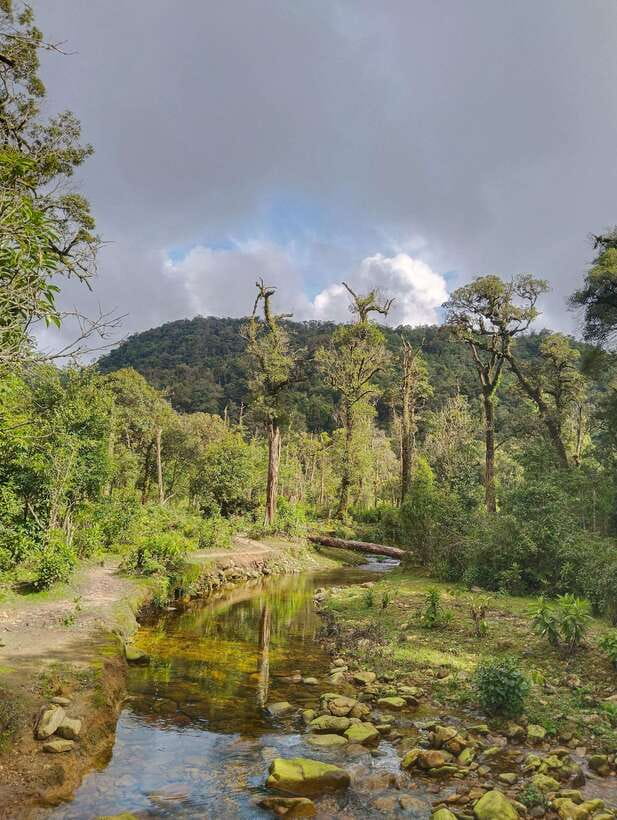
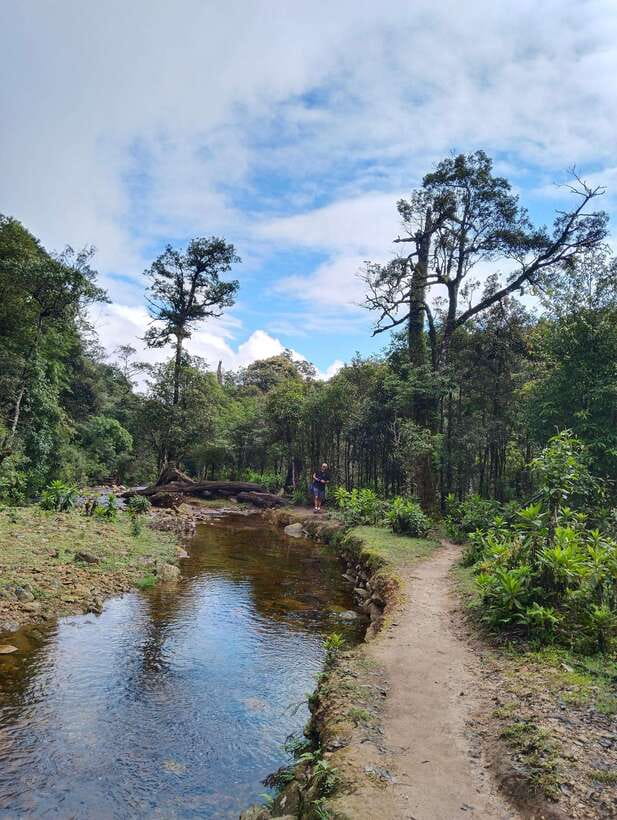
From Tram Ton Pass, the route rises through several forest types as the altitude increases. You may see cardamom, an important spice plant, along with the mountain’s changing plant life. The area is described as home to 2,024 floral varieties and 327 faunal species, though you should treat the figures as a sense of the area’s biological range rather than a promise of spotting wildlife.
The scenery changes as you gain height. Early sections offer forest, mountain views, and glimpses toward Muong Hoa Valley. Some hikers report seeing buffalo and finding plenty of good photo spots before the summit. On a clear day, these views can be the day’s best reward because the summit itself may be covered in cloud.
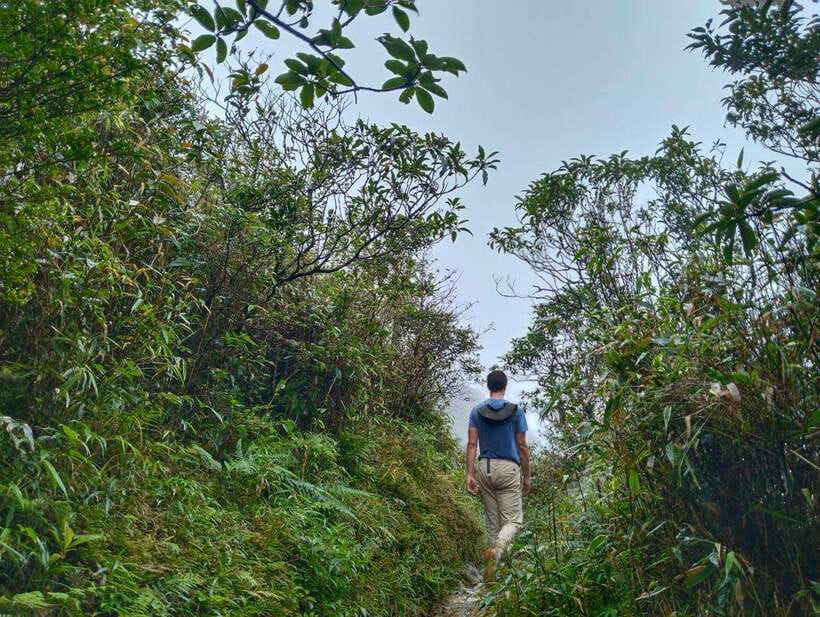
The route is not presented as a technical mountaineering trip. You do not need special climbing skills, but you do need solid fitness, good balance, and healthy joints. Expect steep sections, stairs, loose or uneven rock, and light scrambling. One hiker compared the effort to being able to run a 5K at a reasonable pace, but that is only a rough guide. A long mountain day feels very different from a road run.
What the hardest hours feel like
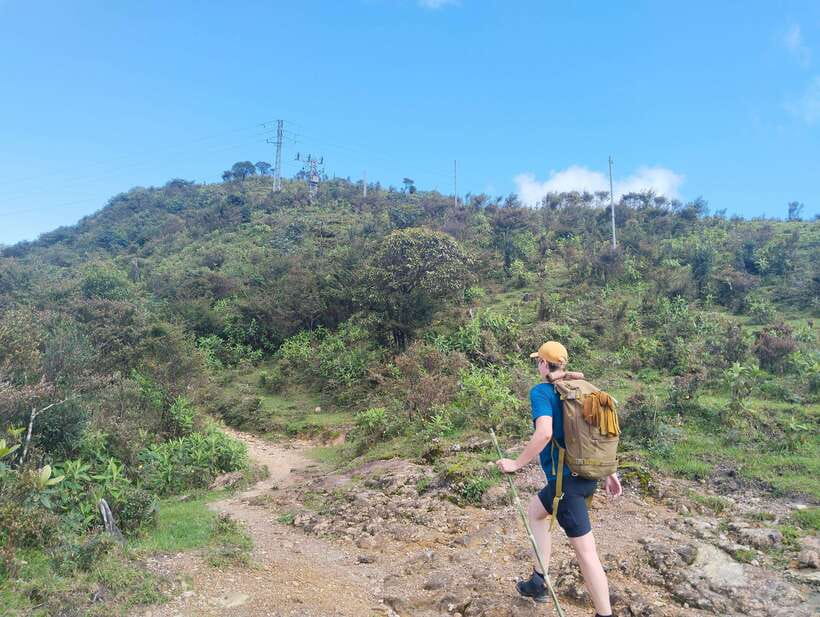
The final two or three hours of the ascent are where the tour earns its moderate-to-challenging label. Your legs are already tired, and the path becomes more demanding, with rockier sections and repeated uphill effort. Guides such as Za are highly praised for encouragement, patience, and frequent safety checks, but they cannot remove the physical work.
The pace may feel brisk if you are not used to mountain walking. Tell your guide early if you need more breaks. The team has adjusted pace and group arrangements for different fitness levels, but a small group with similar ability will generally have a smoother day.
Rain changes the equation. The path can become muddy, slower, and harder to manage. Poor visibility can also last for hours. That does not necessarily make the climb unsafe, but it can remove the views that many people expect and may push the return into darkness. One guide carried a headlamp for a late finish, but you should not rely on every group having the same arrangement. Ask before departure if you are concerned.
Lunch at altitude, not just a box of snacks
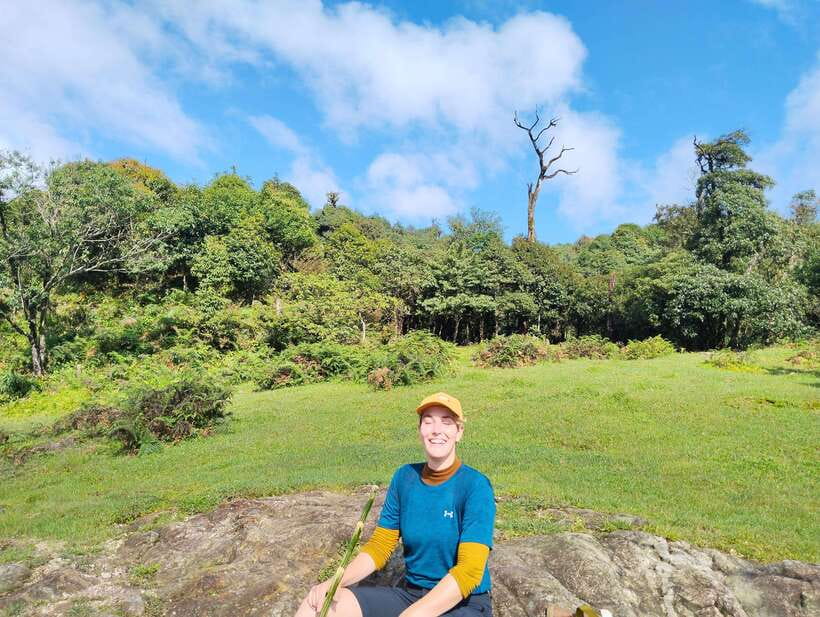
The included picnic lunch adds real value. Several guides prepare food themselves, including hot soup or a filling meal, while banh mi is another reported option. Some groups also receive snacks, coffee, or tea at a high camp around 2,800 meters.
Timing varies. One hiker ate lunch as early as 9 AM, while the schedule places lunch around the summit portion of the day. Think of it as mountain food arranged around the climb, not a restaurant meal at a fixed hour. Bring a small extra snack if you know you need regular fuel.
The meal also creates a welcome pause. You can warm up, drink, take stock of your legs, and hear more about local life from your guide. This is where the cultural side of the trip feels most natural. Guides from the Black Hmong community can talk about the area from personal experience, rather than giving only a memorized list of facts.
Same base, a completely different day:
- Sapa 1 Day Long Trek: Trek to Hau Thao and Sa Seng Villages
★ 4.6 · 344 reviews - Sapa: Fansipan Cable, Cat Cat Village, Moana Instagram Tour
★ 4.8 · 294 reviews - From Sapa: 3-Day Ha Giang Loop with Safe Rider (max 8 pax)
★ 4.9 · 285 reviews - Explore Sapa by TrekkingAdventures, Mountain,Rice fields
★ 4.9 · 229 reviews
Reaching Fansipan at 3,143 meters
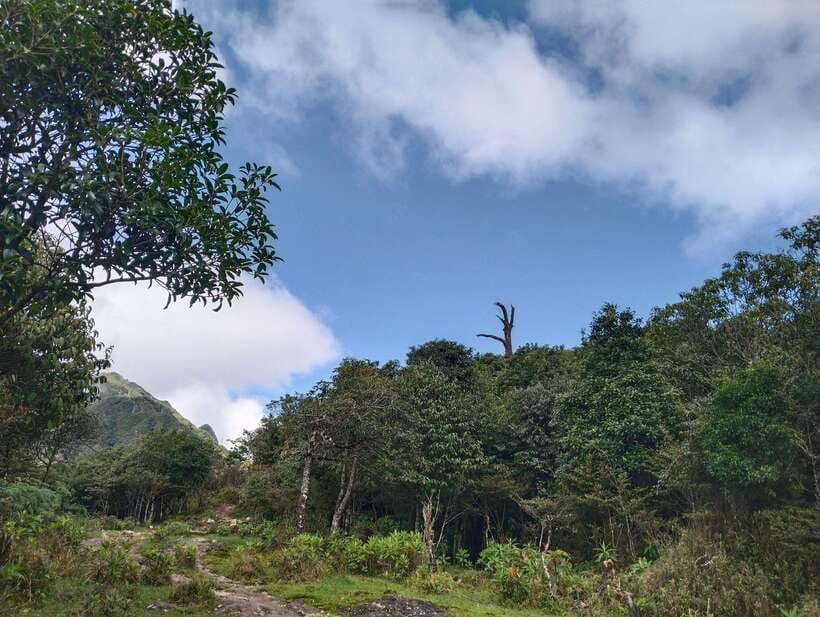
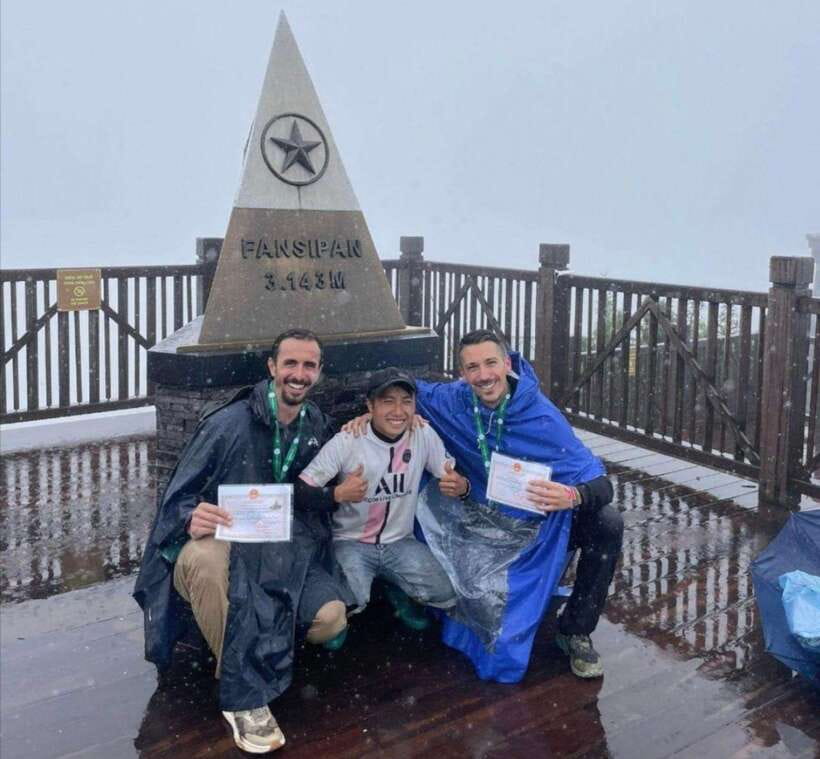
The summit is scheduled for around noon, though actual arrival depends on the group’s pace and weather. At 3,143 meters, you can celebrate, take photographs, and enjoy the feeling of completing a serious mountain climb.
Keep expectations realistic about the view. Fansipan can be wrapped in cloud, and several successful summit days had fog at the top. If the weather clears, the reward is broad mountain scenery and a memorable view from the roof of Indochina. If it does not, the achievement still comes from the climb itself, but your summit photos may show more mist than panorama.
The summit area can also feel busy because many people reach it by cable car. This creates an unusual contrast: you have spent hours climbing through forest and rock, then arrive at a developed, crowded mountaintop. I would treat the summit as the finish line, not the only reason to book. The quietest and most rewarding scenery is often found lower down during the trek.
The descent is the decision that matters most
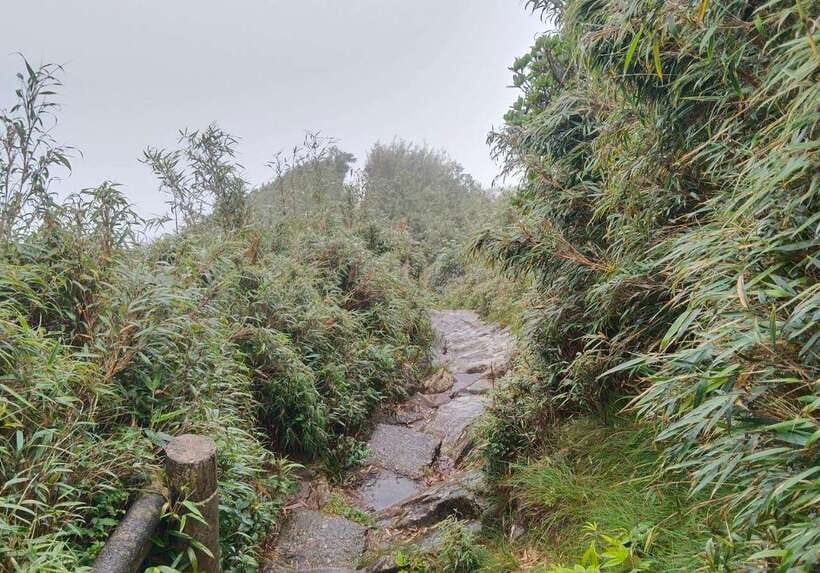
The planned return begins after the summit, with the group descending toward roughly 2,900 meters and then continuing to Tram Ton Pass. The driver waits there to take you back to Sapa, with arrival generally between 4 PM and 6 PM.
Do not underestimate the descent. Many people find walking down harder than expected because tired legs must control every step. Several hikers chose the cable car after reaching the top, while others continued on foot and found the descent rewarding because it offered more time with the scenery.
The cable car is not included. It is an optional extra, and the shuttle from the cable car station to your accommodation is also not included. Several accounts put the cable car ticket at about 800,000 VND per person, so carry enough cash and confirm the current price. If you choose this option, clarify exactly where your guide will meet you and how you will return to Sapa.
My practical advice is to decide only after seeing how your legs feel at the summit. There is no prize for forcing the descent if you are exhausted. A cable car ticket can be expensive, but it may be sensible after a long ascent, especially if rain has made the path slow.
The guides are the heart of the trip
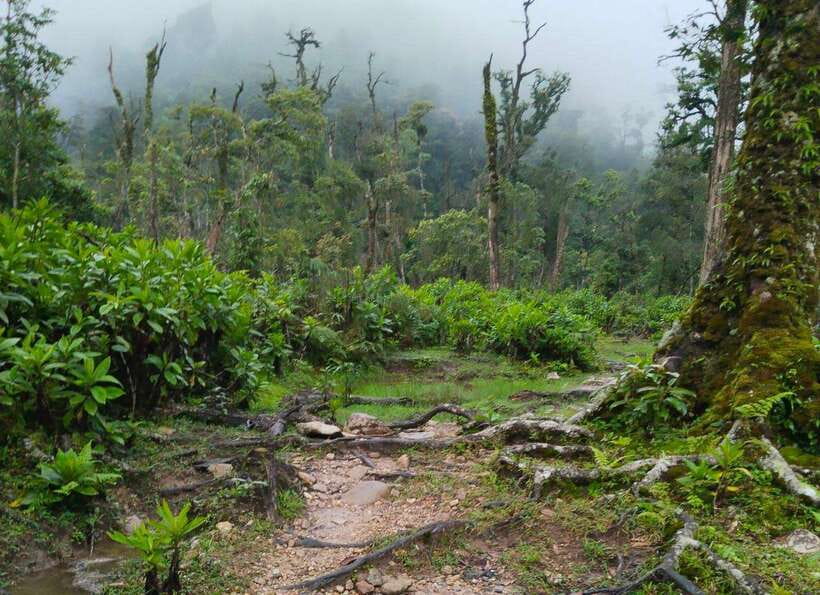
This experience is sold around a local guide, and that is the right focus. Za is the main contact, but the guide team also includes names such as Zo, Ke, Mai, Khu, and A Già. The specific person you receive may depend on availability.
The strongest part of the guiding is practical care. Guides carry or prepare food, bring water and snacks, watch footing, take photographs, encourage tired hikers, and adjust breaks. Za is also praised for clear English and for explaining Black Hmong culture and life around Sapa.
That cultural contact gives the climb more meaning. You are not simply following a marked route to a summit. You can ask about cardamom, nearby villages, mountain work, and the communities around Sapa. Keep your questions respectful and remember that the guide is sharing home territory, not putting on a stage show.
For groups of four or more, a porter is included. The supplied details do not specify the porter’s exact load or arrangement, so ask what they will carry before setting out. You should still pack lightly and bring only what you need for the day.
What the $72 price really covers
At $72 per person, the tour offers a useful bundle: guide, entrance fee, transport to and from the trailhead, picnic lunch, 1.5 liters of water, gloves, and a Fansipan climbing certificate. A porter is included for groups of at least four.
That is good value if you want a guided summit attempt without arranging permits, transport, food, and route support separately. The certificate and medal mentioned by some hikers are a pleasant finishing touch, though the listed inclusion specifically promises a certificate, so do not book solely on the assumption that every group receives a medal.
The price does not include personal travel insurance or the optional cable car. It also does not cover the shuttle from the cable car station to your accommodation. Those exclusions are important because the cable car can become the sensible choice after a long climb.
The 8-hour headline is best treated as an estimate. The schedule suggests a 7 to 9 hour climb and descent, and one group took about 10 hours with breaks. Keep your evening flexible. This is not the tour to book before a tightly timed night train, dinner reservation, or airport transfer.
What to pack for a safer, more comfortable day
Wear proper hiking shoes with grip. Comfortable closed-toe shoes are listed, but ordinary trainers may be a poor choice in mud or on wet rock. Bring a long-sleeved layer, a T-shirt, and rain gear because the temperature and conditions can shift quickly with altitude.
You receive 1.5 liters of water and gloves, but I would still carry a small personal reserve if you drink heavily during exercise. Pack snacks, sun protection, a phone or camera, and cash if you might use the cable car. The supplied instructions specifically call for comfortable shoes, hiking shoes, rain gear, long sleeves, a T-shirt, and closed-toe footwear.
You must be in good physical condition. The activity is not suitable for children under 15 or people over 70, and the one-day format is not a casual sightseeing walk. If you have concerns about altitude, joints, or stamina, discuss them before booking and ask the guide about the route and expected pace.
Who should book this Fansipan climb?
I would choose this tour if you want the satisfaction of earning the summit on foot, prefer a local guide to a large commercial group, and enjoy a full day of physical effort. It is especially appealing if you want conversation about Black Hmong culture along with mountain scenery.
I would be cautious if you dislike mud, unpredictable weather, early starts, or uncertain finish times. If your main goal is simply to see the summit view, the cable car is easier and more reliable, though it does not provide the same sense of achievement or time in the forest.
The 4.9 rating from 93 reviews reflects very strong satisfaction, especially with guide care, lunch, communication, and encouragement. The repeated cautions are just as useful: the hike is tougher than some people expect, the top can be foggy, and the descent may be the day’s hardest part.
Should you book it?
Book it if you want a demanding but supported mountain day and you are ready to work for the summit. The strongest reasons are the local Black Hmong guides, the included lunch and transport, and the option to decide about the cable car only after the climb.
Skip it if you want an easy Fansipan visit or need a fixed return time. For fit hikers who pack well and accept that the clouds may hide the view, this is a well-priced way to experience Fansipan as a mountain, not just as a cable car destination.
FAQ
Where does the Fansipan climb start?
The guide and driver meet you at Stone Church in Sapa or at hotels along the route from Sapa to Tram Ton Pass. The trek begins at Tram Ton Pass, about 1,800 meters above sea level.
Where does the tour end?
The activity ends back in Sapa at the agreed meeting point.
How long does the climb take?
The activity is listed as 8 hours, while the ascent and descent are expected to take about 7 to 9 hours. Some groups have taken around 10 hours with breaks and difficult weather.
What time does the tour start?
Pickup is scheduled for about 5:30 AM, with trekking beginning around 6 AM. Starting times should be confirmed when you check availability.
What is included in the $72 price?
The price includes a tour guide, entrance fee, picnic lunch, transport, 1.5 liters of water, gloves, and a Fansipan climbing certificate. A porter is included for groups of four or more.
Is the cable car included?
No. The optional cable car is paid separately, and the shuttle from the cable car station to your accommodation is also not included.
How much does the cable car cost?
Several hikers report paying about 800,000 VND per person. The price can change, so confirm the current cost before relying on this figure.
Is the climb suitable for children?
The activity is not suitable for children under 15.
What should I bring?
Bring hiking shoes or other comfortable closed-toe shoes, rain gear, a long-sleeved shirt, and a T-shirt. Extra snacks and cash are also practical if you may need the cable car.
What happens if the weather is bad?
Weather at this altitude is unpredictable. Rain can make the path muddy, slow the trek, and reduce visibility. You must be in good physical condition to complete the climb in one day, and the cable car may be used on the way down at your own cost if you are too tired.
Newly listed around Sa Pa
- 2-Day Fansipan Mountain Trek – Indochina’s Highest Peak★ 4.3 · 42 reviews
- In Sapa: 1 Day Mountain Trek, Visit beautiful villages★ 5.0 · 50 reviews
- From Hanoi: Sapa 3-Day Medium Trek and Limousine Trip★ 4.5 · 59 reviews
- Sapa: Private Highlights Day Tour with Lunch★ 4.8 · 61 reviews
- 1-Day Sapa Long Trek – Rice Field Terrace, Ethnic Culture★ 4.9 · 62 reviews
- Sa Pa: Half-Day Cat Cat Village Hike to Meet H’mong People★ 3.7 · 72 reviews
- From Sapa: Terrace Fields and Local Villages Trek with Lunch★ 4.3 · 77 reviews
- From Sapa: Guided Full-Day Trekking with Lunch and Drop-Off★ 4.2 · 86 reviews
Sapa Trekking Tours, compared.

Sapa 2 Days 1 Night From Hanoi – Overnight in Ta Van Village
Read our review →

Muong Hoa Valley Trek and Local Ethnic Villages
Read our review →
Fansipan Cable, Cat Cat Village & Moana Instagram Tour
Read our review →

Sapa 3 Days 2 Nights Trekking Tour (1 Night In Ta Van Village, 1 Night In Hotel)
Read our review →
Eco Adventure Terrace Fields and Local Villages Trek
Read our review →
3-Day Trekking Adventure of Sapa from Hanoi – Stay Ta Van Village
Read our review →Browse the lists this tour appears in