

Reviewed · SAPA TREKKING TOURS
Sa Pa: Muong Hoa Valley Trek and Local Ethnic Villages
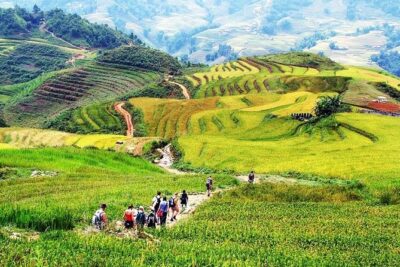
The best part of this Sa Pa trek is that the valley keeps changing under your feet. You start above the misty rice terraces, cross the Muong Hoa River, pass through Black Hmong and Red Dao villages, squeeze through bamboo forest, and finish beside a waterfall. It feels less like a scenic walk from one viewpoint to another and more like a day spent moving through a lived-in mountain valley.
I like the close look at village life, especially the chance to walk through Lao Chai and Ta Van Giay rather than simply photograph them from a road. I also like the lunch at a local home, which gives the six-hour outing a welcome pause and makes the $23 price good value. The catch is the 10-kilometer route, which can turn very muddy and slippery after rain. Trainers are a poor gamble.
- Rice terraces and river crossings: Follow narrow paths through Muong Hoa Valley, with views that change as the trail drops and rises.
- Three ethnic villages: Visit Lao Chai, Ta Van Giay, and Giang Ta Chai, home to Black Hmong and Red Dao communities.
- Ancient rock carvings: See stones marked with figures, stilt houses, and decorative patterns near Ta Van Giay.
- Local-home lunch: Stop for a meal in a village house, with vegetarian food available when arranged or requested.
- Bamboo forest and waterfall: The final section adds shade, uneven ground, and a short rest beside falling water.
- Small-group format: The group is limited to 11 people, with hotel pickup in central Sa Pa and return transport from the road.
Why This Valley Walk Feels Different
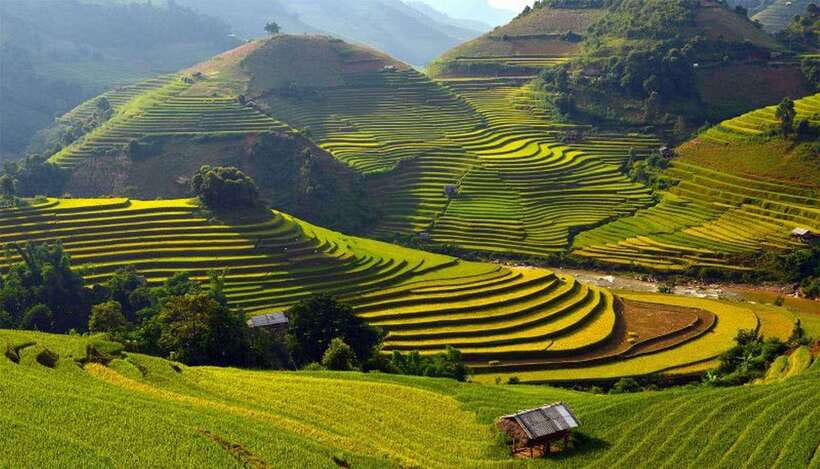
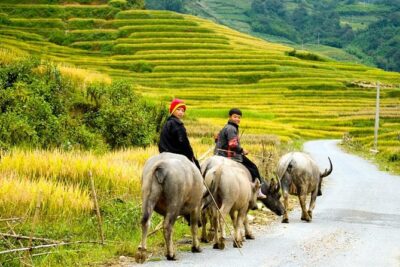
Sa Pa is surrounded by dramatic mountain scenery, but the Muong Hoa Valley trek gives you more than a distant view. You walk along the edges of cultivated terraces, see water buffalo at work, and pass homes and paths used by local people. Your guide also explains the customs and daily life of the communities along the route.
That local explanation matters. Without it, a stilt house can look like a pretty object in a photograph. With a guide such as Su, Khu, Chai, Nhu, Sunny, or Thao Nu, you can ask about the villages, the people who live there, and the traditions of the Black Hmong and Red Dao. Guides vary by departure, but the strongest part of the outing is consistently the personal connection and careful help on difficult ground.
The group limit of 11 is useful here. A smaller party can keep moving on narrow paths and makes it easier to hear your guide. Some departures have been much smaller, even only three people, while holiday periods may be busier. The tour begins with pickup from a hotel in Sa Pa town or from the Vietnam Nomadtrails office. Pickup outside the Sa Pa area is not offered.
Morning Mist Above the Muong Hoa River
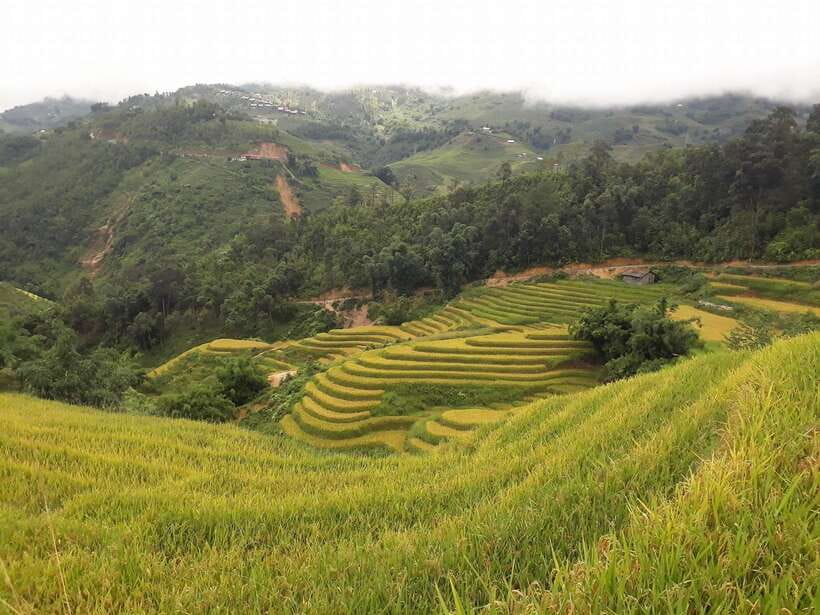
After pickup, you begin the route through the upper part of the valley. Morning mist may sit over the terraces, especially in the cooler months, leaving only patches of rice fields and hills visible at first. That changing view is part of the charm, though fog can hide the wider mountain scenery.
The trail soon becomes more than a viewpoint path. You follow a smaller track toward the Muong Hoa River and cross it before continuing beside carefully maintained fields. The route is scenic, but it is not a paved park walk. Expect stones, dirt, uneven steps, and sections where you need to watch each foot placement.
Weather controls the character of this outing. In dry conditions, the walk can feel manageable for an average hiker with decent stamina. After rain, steep sections become slick, particularly around the bamboo forest and rice terraces. Several people have needed a helping hand on muddy descents, and local Hmong women may walk beside the group to guide you over the worst patches.
That help can be genuinely useful. The local women know exactly where to step, and they often wear high-grip rubber boots suited to the trail. At the same time, you should understand the social side of the arrangement: you may be expected to buy a small item from them afterward as a thank-you. Bring cash and treat the exchange as part of the outing, not as a surprise fee.
More Hiking Tours in Sapa
- Sapa: Eco Adventure Terrace Fields and Local Villages Trek
★ 4.9 · 636 reviews - From Sapa: 1-Day Guided Trek to Lao Chai & Ta Van with Lunch
★ 4.9 · 416 reviews - Sapa 1 Day Long Trek: Trek to Hau Thao and Sa Seng Villages
★ 4.6 · 344 reviews
Lao Chai and the Black Hmong Valley
The first major village is Lao Chai, associated with the Black Hmong community. Here, the route brings you closer to homes, cultivated land, and ordinary village activity. The value is not a staged cultural show. You are seeing a working valley, with people tending fields and moving between homes.
Your guide is important at this point. A good guide can explain what you are seeing without turning every house into a photo stop. Guides such as Chai and Khu have been especially useful for visitors who wanted simple explanations about local customs, while Sunny and Su have been praised for keeping the group safe and adding stories along the way.
The trail through this section may be narrow and exposed in places. If you are uncomfortable on rough ground or have trouble with balance, this is not the right day trip. The activity is not suitable for people with mobility impairments, and children under six cannot join.
The route also passes working rice terraces, so the scenery changes with the season. In some months you may see green growth, while mist, harvest work, or water buffalo may define the view at other times. The tour does not promise clear skies, and the valley can be beautiful even when cloud softens the distant views.
Ta Van Giay and the Stone Carvings
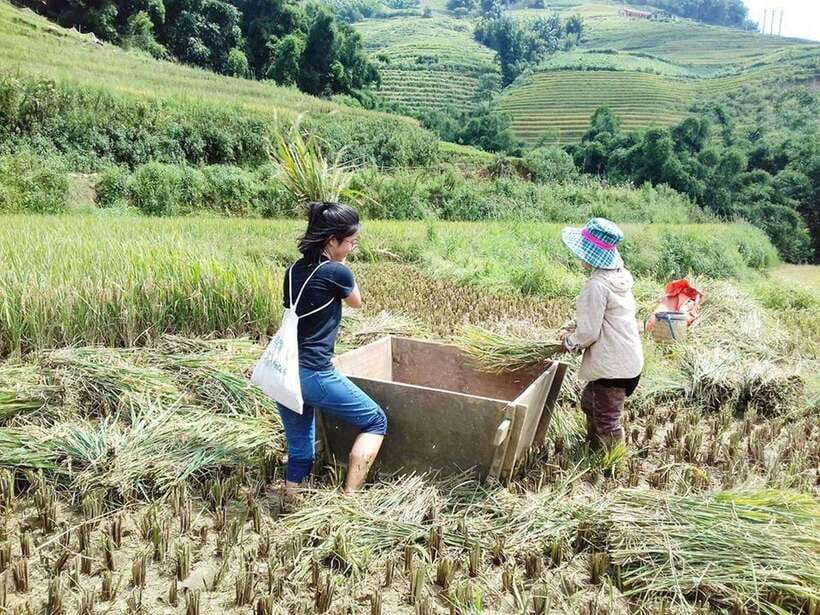
From Lao Chai, you continue toward Ta Van Giay, following the Muong Hoa River. Roughly two kilometers from the settlement, a small suspension bridge marks one of the memorable crossings. It is a practical part of the route, but it also gives you a different view down the river corridor.
The ancient rock carvings are the unusual stop here. The stones show images described as men, stilt houses, and decorative designs. They give the route a layer beyond scenery and village contact, though you should keep your expectations measured. This is not a large museum or a fully interpreted archaeological site. Your guide supplies the context, and the interest comes from seeing the carvings in their mountain setting.
This is also a good place to slow down and look at how the valley is organized. Trails, water, terraces, bridges, and homes fit together in a way that is easy to miss from a vehicle. The walk asks more of you than a roadside stop, but that effort is what brings you into the valley rather than keeping you at its edge.
Lunch in a Local Home

Lunch takes place at a local house in one of the villages. It breaks up the long walk at exactly the right time, usually after several hours on the trail. The meal has been described as generous and satisfying, with examples including rice, vegetables, tofu, eggs, and vegetarian spring rolls.
Do not expect a restaurant-style dining room or a long menu. The appeal is the setting and the chance to rest in a local home. For many people, this is the most social part of the outing. It also gives you a chance to dry off, check your shoes, and regain energy before the afternoon section.
If you are vegan, make your diet clear when booking or at the start of the tour. A vegan meal has been accommodated, but it is sensible to confirm rather than assume. Drinks are not included, so carry enough water and money for anything beyond the supplied 500-milliliter bottle.
The lunch is one reason the price works well. At $23 per person, you receive central Sa Pa pickup, an English-speaking guide, entry tickets, lunch, water, and return transport. You are paying for the guiding and route support as much as for the food. A cheaper independent arrangement may be possible in the valley, but this option gives you a fixed plan and transport back to Sa Pa.
A few other Sa Pa trips to compare
- Sapa: Fansipan Cable, Cat Cat Village, Moana Instagram Tour
★ 4.8 · 294 reviews - From Sapa: 3-Day Ha Giang Loop with Safe Rider (max 8 pax)
★ 4.9 · 285 reviews - Explore Sapa by TrekkingAdventures, Mountain,Rice fields
★ 4.9 · 229 reviews - EXPLORE SAPA: 2D1N TREKKING & HMONG CULTURE WITH DINH
★ 4.9 · 191 reviews
Bamboo Forest, Giang Ta Chai, and the Waterfall
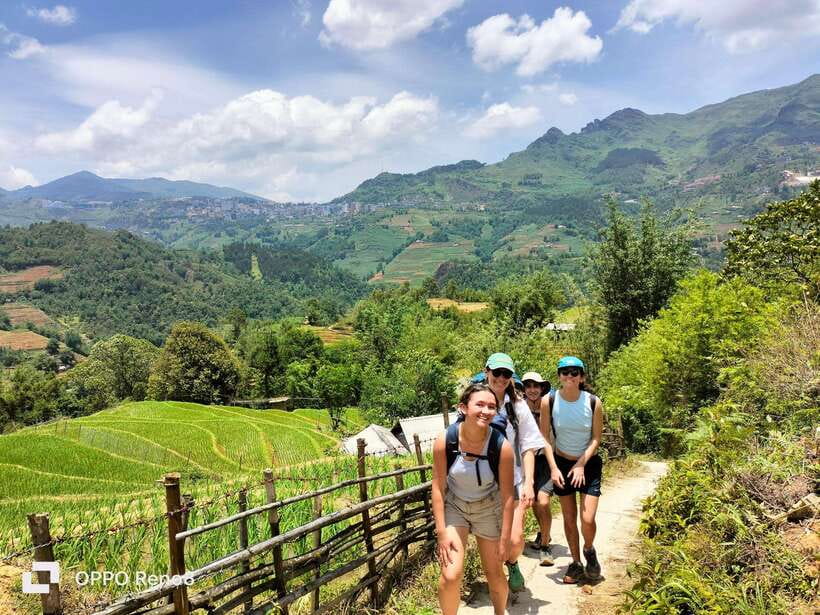
After lunch, the trail heads through bamboo forest toward Giang Ta Chai, a Red Dao village. The forest section feels cooler and more enclosed than the open terraces, but it can also be the slipperiest part of the day. Wet bamboo roots, mud, and rocks create a trail that requires patience rather than speed.
The final village gives you another view of local life and ethnic variety. The route does not treat every community as interchangeable. Lao Chai, Ta Van Giay, and Giang Ta Chai are part of a broader valley, yet the guide helps you notice differences in people, dress, customs, and settlement patterns.
A short rest beside a nearby waterfall follows. It is a modest stop, but welcome after the climb and uneven forest path. From there, you climb uphill to the main road, where your driver collects the group for the return to Sa Pa.
The official duration is six hours, with an end time of about 3:30 PM. The stated distance is 10 kilometers, though some hikers have recorded closer to 12.5 kilometers or more than 21,000 steps. That difference can come from route variations, extra walking, or phone tracking, but you should plan for a full day on your feet.
Mud, Shoes, and the Real Difficulty
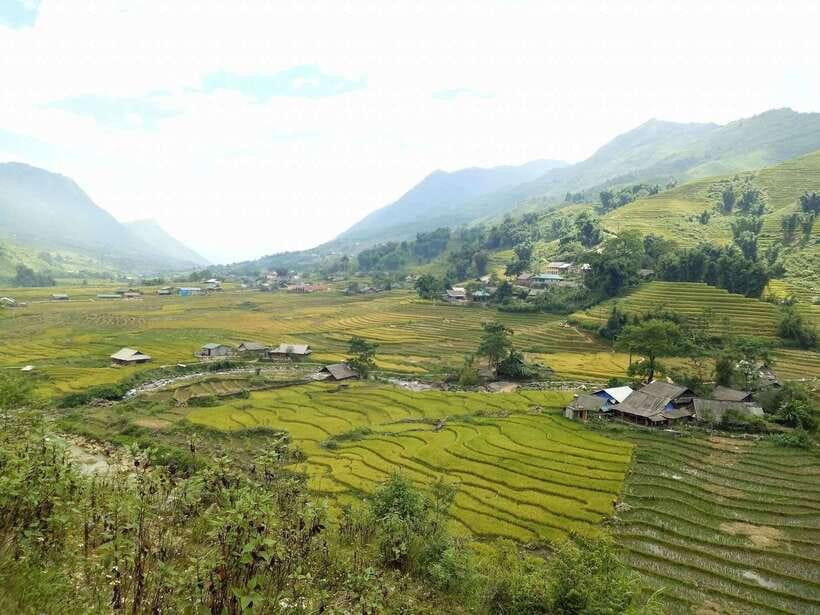
The most important booking advice is simple: bring proper trekking shoes. The tour information asks for hiking shoes, and that is not a formality. High-grip footwear will help on muddy slopes, wet rocks, and rough sections where ordinary running shoes slide.
If rain is forecast, consider waterproof hiking boots or sturdy wellies. Do not wear new white sneakers. Mud can be thick, and several people have ended the day soaked and covered in dirt. Some describe the mess as part of the fun, but it is still tiring and can make the route much harder.
You should also bring sunglasses, sunscreen, insect repellent, and warm clothing from October through March. Carry a small day bag rather than large luggage, which is not allowed. A spare layer is useful if fog or rain settles in, and extra cash is practical for village purchases and drinks.
Fitness matters more than speed. You do not need to be an expert mountaineer, but you should be comfortable walking for several hours over steep, slippery, and uneven ground. The route can be adjusted in some cases to a more natural and challenging path or an easier option, but you should still expect a genuine trek.
Guide Quality and Group Support
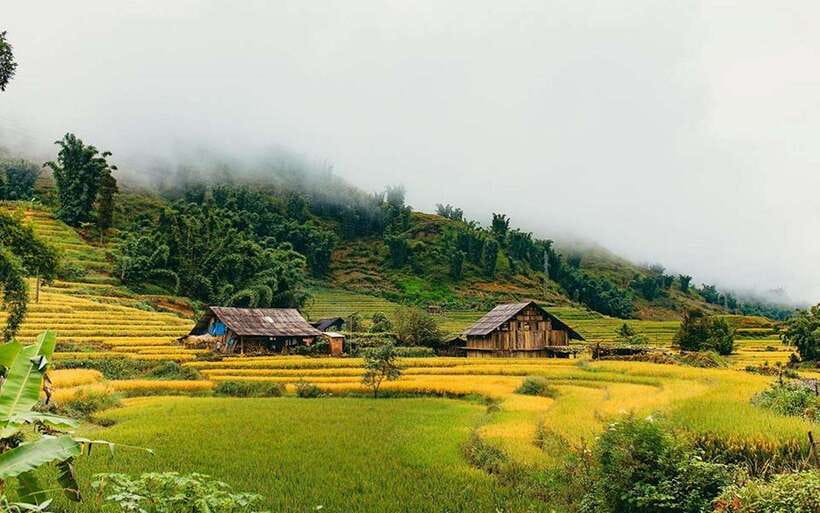
The English-speaking guide shapes the day. The strongest guides do three jobs at once: explain local culture, keep the group together, and point out safe footing. Su has been praised for reading the trail and warning about unstable rocks. Chai, Khu, Sunny, Minh, Nhu, and Thao Nu have also been singled out for friendliness, local insight, or care on difficult sections.
Names are not guaranteed, so book this for the route and format rather than one particular guide. Still, the pattern is clear: a capable local guide adds far more than directions. You get a better sense of why the villages look as they do, and you have someone watching the group when the trail turns slippery.
Local women may join for parts of the route, especially on muddy sections. Their practical assistance can make a real difference, but the selling afterward may feel uncomfortable if you prefer a firm boundary around shopping. Carrying small bills and deciding in advance what you are willing to buy keeps the situation straightforward.
One less appealing detail is rubbish in some spots near the path and river. It does not define the entire trek, but it can interrupt otherwise beautiful stretches. Keeping your own waste with you is a small way to help protect the valley.
Is $23 Good Value?
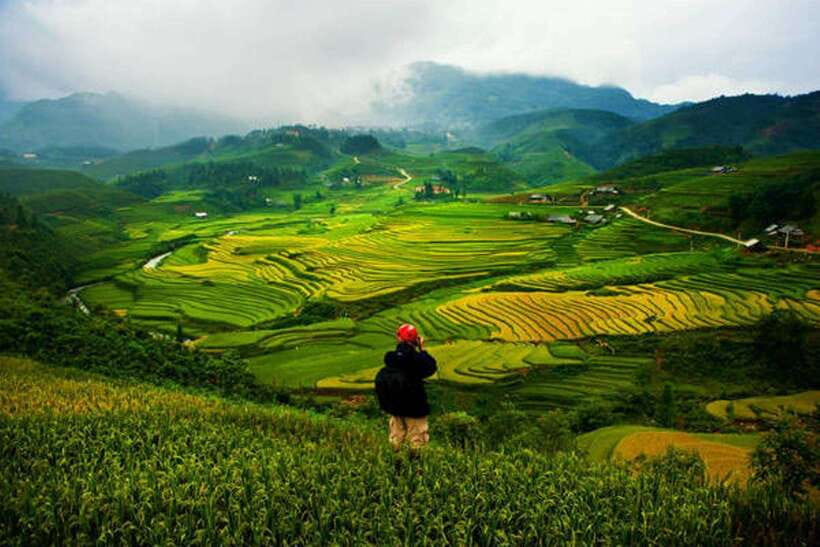
For a six-hour, small-group outing, $23 is a strong price. Pickup in central Sa Pa, an English-speaking guide, entry fees, lunch, water, and the ride back cover the main costs you would otherwise need to arrange separately.
The value is highest if you have limited time in Sa Pa and want one organized day that combines scenery, villages, food, and cultural explanation. You are not paying for luxury. You are paying for access to a long route, local guidance, safety help, and a meal in a village home.
There are extra costs. Drinks, personal purchases, and soft drinks are not included. A French-speaking guide costs an additional $19 per person, and a Lunar New Year surcharge of $30 per person applies from February 14 through February 21, 2026, payable at departure.
Free cancellation is available up to 24 hours before the activity for a full refund, and you can reserve now and pay later. Those terms help if the weather forecast is uncertain, though you should still understand that cloudy or wet weather can change the walk dramatically.
Who Should Book This Sa Pa Trek?
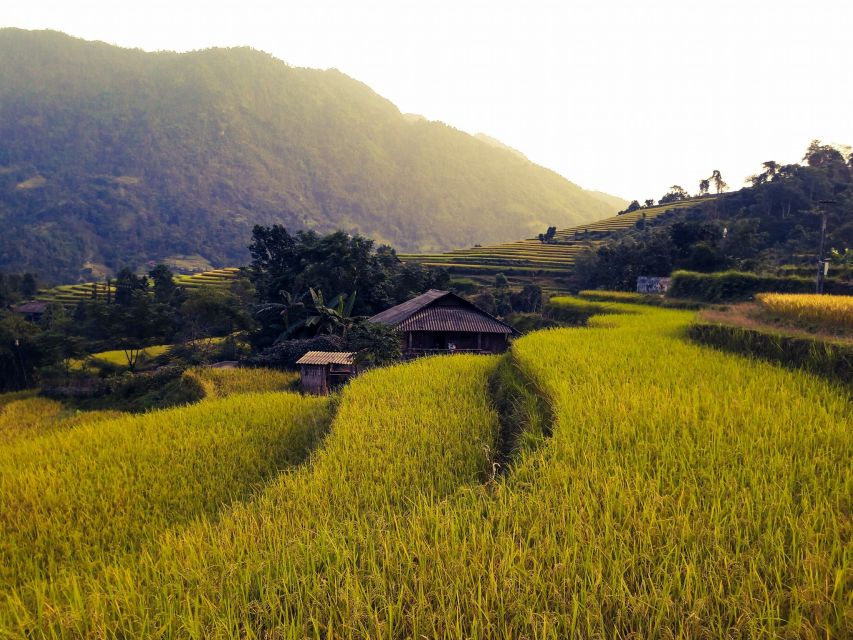
I would choose this trek if you want to walk through the valley rather than simply view it from a lookout. It suits active adults, couples, small groups, and anyone interested in local communities as much as mountain scenery.
It is also a good choice for a first Sa Pa trek if you want a guide and return transport. The route is long enough to feel substantial, yet the small-group format keeps it manageable when the path narrows.
I would hesitate if you dislike mud, have poor balance, need flat paths, or want a gentle sightseeing tour. Wet-weather conditions can be exhausting, and the route is not suitable for people with mobility impairments or children under six.
Final Call: Book It for the Trail, Not Just the View
Book this Muong Hoa Valley trek if you are ready for a proper walk with changing conditions. The rice terraces, Black Hmong and Red Dao villages, ancient carvings, home lunch, bamboo forest, and waterfall make a fuller day than a quick photo stop.
Go in with good footwear, cash, sunscreen, insect repellent, and realistic expectations about mud. If you can accept a little discomfort and want close contact with village life, the $23 price offers excellent value. If you want guaranteed sunshine, clean shoes, and an easy path, choose a shorter Sa Pa outing instead.
FAQ
How long is the Muong Hoa Valley trek?
The advertised trek is 10 kilometers and lasts about six hours. Depending on the route and your own tracking, the walk may feel closer to 12.5 kilometers and can involve more than 21,000 steps.
What villages does the tour visit?
The route passes through Lao Chai, Ta Van Giay, and Giang Ta Chai. Lao Chai is associated with the Black Hmong community, while Giang Ta Chai is a Red Dao village.
Is lunch included?
Yes. Lunch is served at a local home in one of the villages. Vegetarian dishes are available, and a vegan diet has been accommodated, but you should state your needs when booking.
What should I wear and bring?
Bring hiking or trekking shoes with strong grip, sunglasses, sunscreen, insect repellent, and a small day bag. Warm clothing is recommended from October through March. Waterproof footwear is especially useful after rain.
Is the trail difficult?
The trek can be challenging, particularly in wet weather. Muddy slopes, wet rocks, uneven ground, and bamboo forest sections require good balance and suitable fitness.
Is pickup included?
Pickup is included from hotels in Sa Pa town or from the Vietnam Nomadtrails office. Pickup from outside the Sa Pa area is not available, and the return transport meets you at the main road after the trek.
Can children or people with mobility impairments join?
The activity is not suitable for people with mobility impairments or children under six years old. The route is long, uneven, and potentially slippery.
More Hikes in Sa Pa
- Sa Pa: 6-Hours Muong Hoa Valley Trek with Local Ethnic guide
★ 4.5 · 178 reviews - Sa Pa: 2-Day Trekking Trip with Ethnic Minority Homestay
★ 4.7 · 145 reviews - Half Day Sapa Trekking to Visit Lao Chai – Ta Van
★ 4.7 · 126 reviews - Sapa Trekking Bargains With Local Guide
★ 4.9 · 91 reviews
Newly listed around Sa Pa
- 2-Day Fansipan Mountain Trek – Indochina’s Highest Peak★ 4.3 · 42 reviews
- In Sapa: 1 Day Mountain Trek, Visit beautiful villages★ 5.0 · 50 reviews
- From Hanoi: Sapa 3-Day Medium Trek and Limousine Trip★ 4.5 · 59 reviews
- Sapa: Private Highlights Day Tour with Lunch★ 4.8 · 61 reviews
- 1-Day Sapa Long Trek – Rice Field Terrace, Ethnic Culture★ 4.9 · 62 reviews
- Sa Pa: Half-Day Cat Cat Village Hike to Meet H’mong People★ 3.7 · 72 reviews
- From Sapa: Terrace Fields and Local Villages Trek with Lunch★ 4.3 · 77 reviews
- From Sapa: Guided Full-Day Trekking with Lunch and Drop-Off★ 4.2 · 86 reviews
Sapa Trekking Tours, compared.
Sapa 2 Days 1 Night From Hanoi – Overnight in Ta Van Village
Read our review →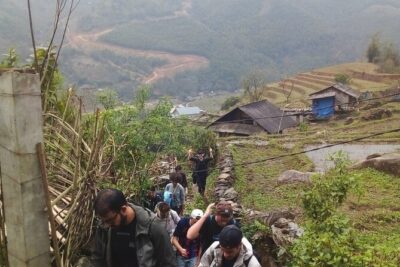
Fansipan Cable, Cat Cat Village & Moana Instagram Tour
Read our review →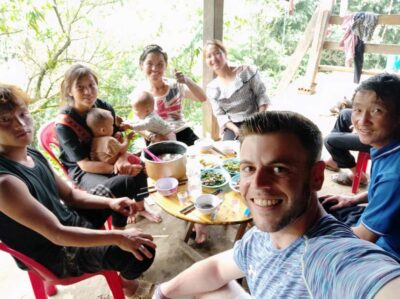
Sapa 3 Days 2 Nights Trekking Tour (1 Night In Ta Van Village, 1 Night In Hotel)
Read our review →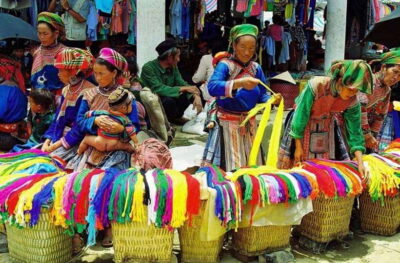
Eco Adventure Terrace Fields and Local Villages Trek
Read our review →
3-Day Trekking Adventure of Sapa from Hanoi – Stay Ta Van Village
Read our review →
2-Day Sa Pa Ethnic Homestay Tour & Trek with Limousine Bus
Read our review →Browse the lists this tour appears in