

Reviewed · SAPA TREKKING TOURS
Hanoi – Sapa 3 Days – 2 Nights Trekking with With the locals
Sapa’s appeal is not just the famous rice terraces. It is the chance to walk between H’Mông villages with a local guide, sleep in a village homestay, and see how quickly the scenery changes once you leave town. This three-day trip combines the main stops, including Cat Cat, Lao Chai, and Ta Van, with quieter paths around the Muong Hoa Valley.
I like two things here: the small-group format, listed at a maximum of 10 travelers in the practical details, and the all-inclusive setup covering transport, meals, entrance fees, and insurance. The main caution is the trekking itself. Expect repeated climbs and descents, with slippery sections, so this is not a gentle sightseeing tour.
Key points to know before booking

- Two very different nights: Spend one night in a 3-star hotel in Sapa and one night in a private room at a village homestay.
- Local H’Mông guidance: Your English-speaking guide helps explain village customs, daily life, and ethnic traditions along the route.
- A demanding walking route: The trails include many uphill and downhill sections, and wet ground can become slippery.
- Major Sapa villages in one trip: Cat Cat, Y Linh Ho, Lao Chai, Ta Van, Giang Ta Chai, and Su Pan all appear in the schedule.
- Transport is built in: VIP cabin bus transfers connect Hanoi and Sapa, with local transfers between the bus station, hotel, and trail areas.
- Good value at $130: The price includes two-way transport, accommodation, seven meals, a cooking class, guide service, entrance fees, and travel insurance.
Why this three-day Sapa route works
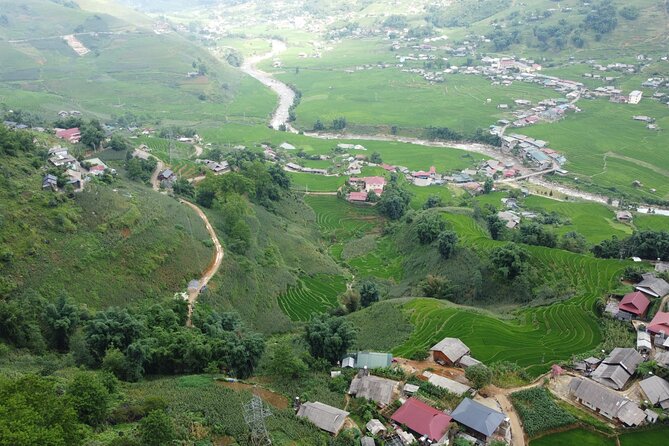
Sapa is easiest to understand on foot. The town itself is busy with hotels, restaurants, and tour activity, but the valleys below it feel much quieter. This trip gives you a short introduction to both sides of the area: the town-based sights and the longer village trek.
The route is also sensibly paced across three days. Day one is mostly transport, followed by a shorter walk at Cat Cat. Day two is the main trekking day, moving through Y Linh Ho, Lao Chai, and Ta Van. Day three continues through Giang Ta Chai and Su Pan before the return journey to Hanoi.
That structure matters. You do not spend every hour walking with a pack, but you also do not waste the trip sitting in Sapa town. You get a useful mix of scenery, village visits, and local accommodation.
The tour is promoted as flexible for walking speed and stops. That can be helpful because the route is not equally easy for everyone. Still, flexibility depends on the group and guide, so you should be prepared for the published schedule rather than assume you can redesign the day.
More Hiking Tours in Hanoi
- Halong Bay Full Day with Kayaking, Hiking viewpoint, Cave – Deluxe To Luxury
★ 5.0 · 884 reviews - From Hanoi: 2-Day Sapa Trekking Trip with Homestay & Meals
★ 4.8 · 704 reviews - Sapa 3 Days 2 Nights Trekking Tour (1 Night In Ta Van Village, 1 Night In Hotel)
★ 5.0 · 699 reviews
Leaving Hanoi at 6:00 in the morning
Pickup begins around 6:00 to 6:30 a.m. from the G8 Open Tour office on Ly Thai To Street in Hanoi’s Old Quarter. A small transfer bus takes you to the main departure point, where you board the VIP cabin bus for Sapa.
The highway journey takes about five hours. The cabin-bus arrangement is a useful inclusion in a $130 package, especially when compared with arranging separate transport and accommodation yourself. It also keeps the trip straightforward: you do not need to work out a train connection, a local transfer, and a hotel arrival on your own.
The early start is the trade-off. You will need to be ready in Hanoi before most sightseeing begins, and the first day is partly a travel day. Pack breakfast or arrange something before pickup if you do not like starting a long ride hungry. The provided schedule places lunch at the hotel restaurant after arrival in Sapa.
Once you reach Sapa around 1:00 to 1:30 p.m., a local transfer takes you from the bus station to the hotel. You have lunch, check in, and then get ready for the afternoon walk.
Cat Cat Village gives you a first taste of Sapa
The Cat Cat visit begins at about 2:30 p.m. A guide leads you on foot through the H’Mông village, explaining customs and everyday traditions. This is a good first stop because it introduces the cultural side of the trip before the longer valley trek begins.
Cat Cat is close to Sapa town, so it works well after a five-hour bus ride. You are not asked to tackle the longest route immediately. At the same time, the walk is not simply a photo stop. The stated visit lasts about three hours, giving you time to look at village life and the surrounding mountain scenery.
You should expect a tourist-oriented stop here. Cat Cat is one of Sapa’s best-known villages, and its popularity means it may feel more prepared for visitors than the smaller settlements on the later route. That does not make it worthless. It makes the guide’s role important. Ask questions about the customs, homes, and traditions you see rather than rushing from one viewpoint to another.
The first afternoon also lets you judge your own fitness. If the slopes and steps at Cat Cat already feel tough, you will want to tell the guide early. Day two is longer and includes more sustained climbing and descending.
Day two reaches Y Linh Ho and Lao Chai
Breakfast is served at the hotel from 7:00 to 8:00 a.m. You then check out and leave your main luggage at the hotel. Take only a small bag with the things you need for the hike and overnight stay.
This is one of the most useful practical details in the whole plan. Walking with a large suitcase would be awkward on village paths, and leaving it at the hotel makes the route far more manageable. Pack light, but include practical clothing, personal items, and anything you need for the homestay night.
The trek to Y Linh Ho starts around 8:15 a.m. The village lies roughly 6 kilometers from Sapa town, according to the schedule, and the walk takes about two hours before continuing toward Lao Chai. The route brings you away from the town and into the Muong Hoa Valley area, where mountain slopes, terraces, and village paths become the main attraction.
Y Linh Ho is valuable because it feels like a walking destination rather than just a bus stop. You get time to watch the scenery change at walking pace. The route can also be physically demanding. The supplied advice about many climbs, descents, and slippery surfaces should be taken seriously, especially after rain.
At about 10:30 a.m., you reach Lao Chai. The village is associated with the Black H’Mông and Red Dao communities and sits between the Hoang Lien Son range and Ham Rong Mountain. That setting gives you a good reason to slow down. The point is not only to arrive, but to understand how villages sit within the valley and mountain environment.
You may find local people offering goods or services along some village routes, as is common in popular walking areas, but no specific sales arrangement is stated for this tour. Keep your focus on the guide’s explanations and the route itself. Comfortable shoes matter more than stylish clothes here.
A few other Hanoi trips to compare
- Sapa 2 Days 1 Night From Hanoi – Overnight in Ta Van Village
★ 5.0 · 2,669 reviews - Hanoi – Sapa 2 Days 1 Night Overnight At Homestay
★ 5.0 · 899 reviews - 3-Day Trekking Adventure of Sapa from Hanoi – Stay Ta Van Village
★ 5.0 · 611 reviews - 2-Day Sa Pa Ethnic Homestay Tour & Trek with Limousine Bus
★ 4.8 · 440 reviews
Ta Van is the overnight turning point
The walk continues from Lao Chai toward Ta Van, with the schedule placing arrival around noon. Ta Van sits in the Hoang Lien Son range and is one of the best-known village stops in the Sapa area.
This is where the trip shifts from a day visit to a more local-style stay. The package includes one night in a private room at a homestay, along with dinner, breakfast, and a cooking class. You get a more direct connection to village life than you would by returning to a hotel in Sapa every evening.
The phrase private room does not mean a luxury hotel room. Accommodation at a homestay is part of the appeal, but standards can differ from a city hotel. You should value it for location and contact with local life, not polished facilities. The private room is a useful comfort, particularly after a long walk, while the shared setting of a homestay gives the evening a social and cultural element.
The cooking class is another worthwhile inclusion. It gives you something active to do after the trek and connects food with local daily life. The details of the dishes and class format are not specified, so do not book expecting a particular menu or length of lesson.
Dinner is included, as are two breakfasts and three lunches across the trip. Drinks with meals are not included, so budget separately for water, soft drinks, or other beverages. This is a small cost, but it is the main meal-related extra clearly identified.
Giang Ta Chai and Su Pan make a quieter final morning
The third day begins with breakfast at the homestay and check-out. Around 9:30 a.m., the route continues to Giang Ta Chai and Su Pan.
Giang Ta Chai gives you another chance to walk through the valley rather than simply revisit the same viewpoint. The visit is scheduled for about three hours, which suggests a proper morning outing rather than a quick stop for photographs. The route remains hilly, so do not treat day three as a completely easy finish.
At about 12:30 p.m., you reach Su Pan for lunch at a local restaurant. After lunch, a bus returns you to the hotel in Sapa. You have about an hour to walk around town before meeting the return transport.
That hour is short, but useful. You can collect your luggage, buy a small souvenir, or simply get your bearings before the long ride south. Do not plan an ambitious Sapa shopping session. The return bus leaves around 3:00 p.m., and the journey to Hanoi takes about five hours.
Arrival is scheduled for 10:00 to 10:30 p.m. The bus drops you at the station, not at your hotel, so you must arrange your own final ride back to your Hanoi accommodation. This is easy to overlook when planning a late arrival. Keep your phone charged and allow for the cost and time of that last transfer.
What the $130 price really covers
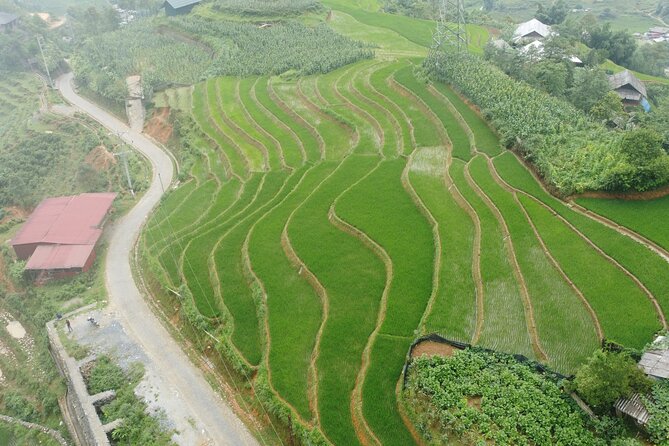
At $130 per person, this is a strong-value package if you want a ready-made Sapa trip. Two-way VIP cabin-bus transport alone would represent a meaningful part of the cost. Add one hotel night, one private homestay night, seven included meals, a guide, cooking class, entrance fees, and travel insurance, and the package removes many separate decisions.
The value is strongest for visitors who would otherwise need to arrange:
- Hanoi to Sapa transport in both directions
- A Sapa hotel
- A village homestay
- Local transfers
- A walking guide
- Meals during the route
- Entry fees and travel insurance
The price does not cover drinks, and the late arrival in Hanoi means you pay for your own transfer from the bus station to your hotel. You should also confirm the exact hotel before departure. One caution in the available feedback specifically says not to choose Delta Sapa Hotel, so this is worth raising with the provider rather than assuming every accommodation detail is fixed.
There is also a small capacity inconsistency. The main description says groups are limited to 12, while the practical information gives a maximum of 10. Ask Travel New Land to confirm the actual group size for your departure. Either limit is smaller than a large coach tour, but the difference matters if personal pacing and guide attention are central to your decision.
The walking difficulty deserves honest attention
The scenery is the reason to come, but the walking is the test. A direct account of the route describes many uphill and downhill sections, with very slippery surfaces in places. That warning should shape your packing and expectations.
You do not need to be a technical mountain hiker based on the information provided, but you should be comfortable walking for several hours over uneven village paths. The route includes repeated changes in elevation, not one flat stroll through rice fields.
Bring shoes with reliable grip, keep your bag small, and wear clothing that can handle dirt or damp conditions. A walking stick may be useful, though the tour information does not say whether one is provided. Avoid carrying a hard-sided suitcase on the trekking portion.
The group size and local guide are important here. A guide who knows the trails can help manage pace and explain where to step, while a smaller group makes it easier to stop or adjust the walking rhythm. Still, no tour can remove steep ground or bad weather. If you have serious mobility limits, ask the provider for a route assessment before booking.
The local guide is central to the experience
The guide is described as a local English-speaking H’Mông guide. That is more than a transport detail. The guide is the person who can connect village customs, ethnic traditions, and ordinary life with the scenery in front of you.
You will pass through areas associated with Black H’Mông and Red Dao communities, and the trip is designed to explain those cultures rather than simply use the villages as backdrops. Your questions will make a difference. Ask about the meaning of local customs, how village life changes with tourism, and what you are seeing along the path.
No guide names are provided, so you cannot select a particular guide in advance. The 4.9 rating from 95 reviews and 97 percent recommendation rate indicate a strong overall response, but those numbers should not replace practical preparation. The route difficulty and accommodation details matter just as much as the headline score.
Who should book this Sapa trip
I would recommend this tour to you if you want a short, structured introduction to Sapa without arranging each part yourself. It suits first-time visitors who want village walks, local food, a homestay, and round-trip transport from Hanoi in one booking.
It is also a good match if you value cultural contact over luxury. The private homestay room offers some privacy, but this is still a village-based night after a day on foot. You should be comfortable with a simpler setting than the hotel in Sapa.
The trip is less suitable if you want a relaxed resort break, a flexible independent route, or a very easy walk. The schedule is tight, the Hanoi transfers are long, and the trails can be slippery. A three-day duration gives you a useful sample, but not much spare time.
Free cancellation is available until 24 hours before the start time. After that cutoff, refunds are not available and late changes are not accepted, so check your Hanoi arrival plans before committing.
Should you book it?
Book this Sapa tour if you want the main valley villages, a local H’Mông guide, one homestay night, and transport handled for you at a reasonable price. The strongest features are the route through Y Linh Ho, Lao Chai, and Ta Van, the added visits to Giang Ta Chai and Su Pan, and the balance between a hotel night and village accommodation.
Before paying, confirm the hotel name, actual group limit, pickup instructions, and expected walking difficulty. If you pack light and accept the hills, this gives you a lot of Sapa in three days. If slippery trails and a late return to Hanoi sound unpleasant, choose a slower itinerary with fewer villages and more time in one place.
FAQ
How long is the tour?
The experience lasts approximately three days and two nights, including the Hanoi to Sapa and Sapa to Hanoi journeys.
Where does the tour start in Hanoi?
The listed meeting point is the G8 Open Tour office on Ly Thai To Street in Hanoi’s Old Quarter.
What time does pickup begin?
Pickup begins around 6:00 to 6:30 a.m. on the first day.
How do I travel between Hanoi and Sapa?
The package includes two-way VIP cabin-bus transport between Hanoi and Sapa. The bus journey takes about five hours each way.
Where do I stay?
You spend one night in a 3-star hotel in Sapa and one night in a private room at a village homestay.
Which villages are included?
The route includes Cat Cat, Y Linh Ho, Lao Chai, Ta Van, Giang Ta Chai, and Su Pan.
Are meals included?
Yes. The package includes two dinners, three lunches, and two breakfasts. Drinks with meals are not included.
Is a cooking class included?
Yes. A cooking class is included in the tour package.
How large is the group?
The information gives two limits: the main description says no more than 12, while the additional details state a maximum of 10. Confirm the exact number with Travel New Land before booking.
Can I cancel for a full refund?
You can cancel for a full refund up to 24 hours before the experience starts. Cancellations and changes made less than 24 hours before the start time are not accepted for a refund.
More Hikes in Hanoi
- 3D and 2N Lan Ha Bay Cat Ba Island Kayaking & Trekking with Vega
★ 5.0 · 593 reviews - Hanoi – Sapa 3 Day 2 Night Trekking With Hotel & Homestay
★ 5.0 · 389 reviews - From Hanoi: 2-Day Sapa Trek Tour – Luxury Limousine Transfer
★ 4.1 · 249 reviews - Ninh Binh 1 day Hoa Lu Trang An with Dragon Mountain Hiking
★ 5.0 · 245 reviews
More 3-Day Experiences in Hanoi
- Amanda Cruise – Ha Long, Lan Ha Bay – All Inclusive 2D1N & 3D2N
★ 5.0 · 4,358 reviews - Halong Bay – Le Journey Cruises – All Inclusive 2D1N and 3D2N
★ 5.0 · 2,500 reviews - Hanoi: 3-Day Ninh Binh, Ha Long, & Lan Ha Bay 5-Star Cruise
★ 4.8 · 1,401 reviews - Mon Chéri Cruises 5 star: Amazing 3 days exploring Halong & Cat Ba island
★ 5.0 · 1,280 reviews
Newly listed around Hanoi
- Hanoi: Halong Bay Cruise, Amazing Cave, Titov Island & Kayak★ 4.2 · 39 reviews
- Ninh Binh 1 Day Tour(Tam Coc – Mua Cave – Bich Dong)★ 5.0 · 39 reviews
- 2Days-1Night Halong Bay Luxury Genesis Regal Cruises★ 4.5 · 39 reviews
- 8 days 360° Vietnam Adventure from Hanoi★ 5.0 · 39 reviews
- Dora Cruise – Luxury 5 Star Cruise in Halong Bay & Lan Ha Bay (2D1N)★ 4.5 · 39 reviews
- 3 Days and 2 Nights Ha Giang Loop Tour★ 5.0 · 39 reviews
- Best Value Ha Long bay 1 day – Lunch, kayak, swimming, transfer★ 5.0 · 39 reviews
- From Hanoi: Ha Giang Loop Motorbike Tours 3-Days 2-Nights★ 5.0 · 40 reviews
Sapa Trekking Tours, compared.

Sapa 2 Days 1 Night From Hanoi – Overnight in Ta Van Village
Read our review →

Muong Hoa Valley Trek and Local Ethnic Villages
Read our review →
Fansipan Cable, Cat Cat Village & Moana Instagram Tour
Read our review →

Sapa 3 Days 2 Nights Trekking Tour (1 Night In Ta Van Village, 1 Night In Hotel)
Read our review →
Eco Adventure Terrace Fields and Local Villages Trek
Read our review →
3-Day Trekking Adventure of Sapa from Hanoi – Stay Ta Van Village
Read our review →Browse the lists this tour appears in