
Reviewed · HUE TOURS
Hue: Brew Egg, Salt & Coconut Coffee
Vietnamese coffee is not just a drink here. It is a slow ritual built around a small metal phin filter, strong robusta beans, and a willingness to let a few drops take their time. In this 90-minute Hue workshop, you make four styles yourself: classic phin coffee, egg coffee, salt coffee, and coconut coffee.
I like two things right away. First, the class gives you a useful taste of Hue’s daily culture instead of another quick sightseeing stop. Second, hosts such as Duck and Uyen make the lesson lively, friendly, and easy to follow. The one drawback is practical: you drink a lot of coffee, so come prepared for several strong servings.
Key Points
- Four distinct Vietnamese coffees: Brew classic phin, egg, salt, and coconut coffee in one sitting.
- Hands-on from start to finish: You use traditional phin filters, mix ingredients, and taste each drink you prepare.
- Strong Robusta beans: Learn why bold Vietnamese coffee forms the base for sweet, creamy, hot, and cold recipes.
- Small groups of up to eight: The format leaves room for questions and individual help.
- Local hosts with personality: Duck, Uyen, Daisy, and Annie have led sessions, with a warm and playful teaching style.
- Recipes for home: Take away a recipe handout, and you can buy a phin filter if you want to repeat the drinks later.
Four Cups That Explain Vietnamese Coffee
This experience works because the four drinks are not minor variations on one recipe. Each cup shows a different way Vietnamese coffee balances its powerful beans.
The classic phin coffee is your starting point. Ground coffee sits in a small metal filter placed over a glass or cup. Hot water passes through slowly, giving you time to watch the brewing process rather than rushing from machine to mug. The result is concentrated and bold, especially compared with the lighter coffee many visitors may be used to.
Egg coffee changes the texture completely. The coffee remains strong, but a sweet egg mixture adds a soft, creamy layer. It is closer to a dessert than a simple morning cup, and making it yourself helps you understand how the rich topping works with the bitter base.
Salt coffee may sound odd until you taste it. The salt is not there to make the drink savory. It helps balance the coffee and gives the cup a smoother, more rounded taste. This style is closely associated with Central Vietnam, making it especially fitting to try in Hue.
Coconut coffee brings a cooler, sweeter finish. The coconut element gives the coffee a creamy tropical character, and the drink can be served hot or cold according to the preparation. It is often the easiest style for someone who does not usually drink black coffee.
A few other Hue Vietnam trips to compare
- Hoi An: Vietnamese Coffee Culture and Coffee Making Class
★ 4.9 · 4,006 reviews - Hanoi Coffee Experience: 6 Brews, 9 Recipes & 3 Liquor Tastings
★ 5.0 · 2,945 reviews - Hanoi Coffee Workshop: Taste Salt, Coconut and Egg Coffee
★ 5.0 · 1,286 reviews
Starting With Robusta and the Phin
The session begins with an introduction to robusta beans, described here as the soul of Vietnamese coffee. That matters because robusta has the strength needed to hold up against egg, salt, coconut, ice, and sweetened ingredients.
Your host explains the coffee itself before moving into the recipes. You learn what makes the bean suitable for these drinks and how the brewing method brings out its force. This short background gives the class a clear purpose: you are not simply mixing ingredients, you are seeing how one basic coffee can become four very different drinks.
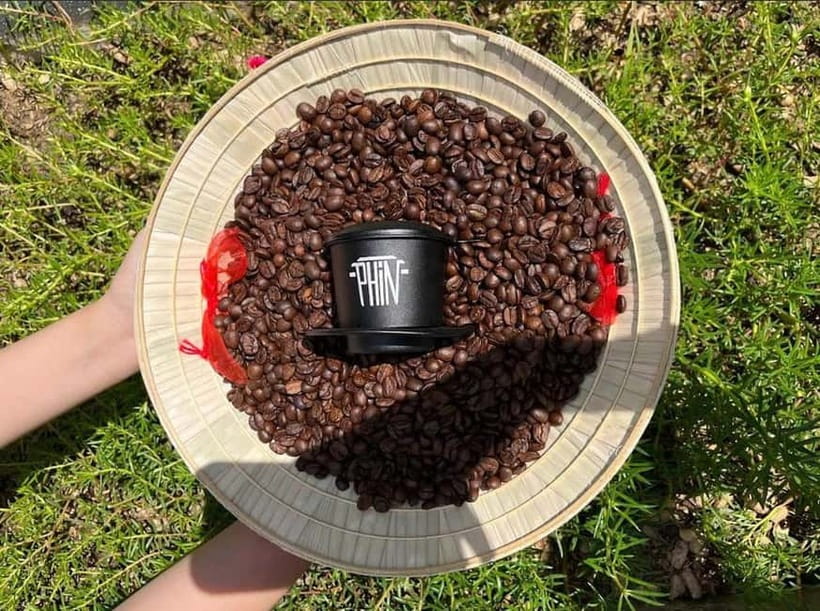
The phin filter is central to the lesson. It is simple, compact, and easy to carry home. You place it over your cup, add the coffee, and watch the brew form drop by drop. The method rewards patience, and the class gives you enough time to notice the process instead of treating it as a demonstration you only watch.
This is also where the workshop feels most useful for your time in Vietnam. Once you know how a phin works, café menus become less mysterious. You can better understand the difference between a traditional black coffee and a sweetened or blended version, even when the menu offers only a short name.
Making Egg Coffee Without Guessing
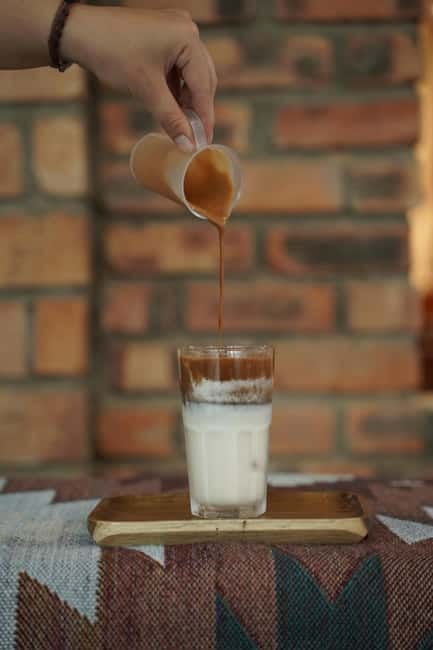
Egg coffee is the most theatrical of the four recipes, but it is not hard to make when the host guides you through it. You prepare the sweet egg component and combine it with the strong coffee base. The host explains the order of the steps and helps you get the texture right.
The hands-on format makes a difference here. A café can give you a polished finished drink, but it cannot show you how the topping was made or why the coffee tastes balanced. In the workshop, you see the ingredients before they become a dessert-like cup.
You also get a chance to adjust your understanding of Vietnamese coffee. The drink is sweet and creamy, but the robusta base does not disappear. That tension between bold coffee and soft topping is the point. If you usually take coffee with milk, egg coffee offers a more unusual route to the same basic comfort.
Hosts have been praised for explaining each step clearly and keeping the mood relaxed. Duck, also known by the playful nickname Quack Quack, is noted for conversation and humor. Uyen has also led classes, and the teaching style is friendly rather than formal. That helps if you are not confident in the kitchen or if coffee preparation is new to you.
Salt Coffee, Hue’s Best Local Lesson
Salt coffee is the recipe I would pay closest attention to. It gives the workshop a strong Hue connection and shows how a small change can shift a familiar drink.
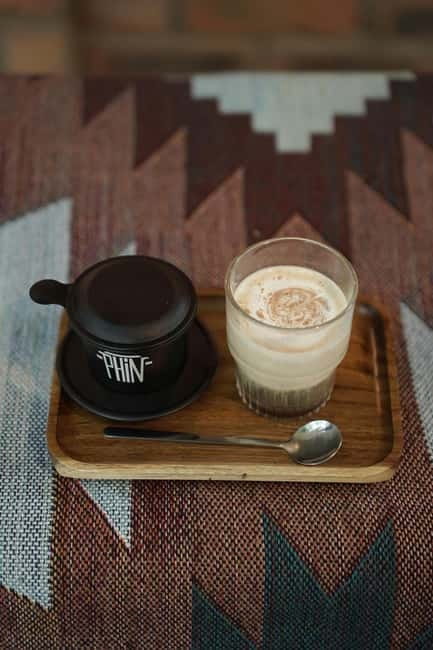
The salt works as a counterpoint to bitterness. Used in the right amount, it does not turn the coffee into a salty beverage. Instead, it softens the sharp edge and makes the drink taste fuller. The host explains the method while you prepare your own cup, so you can see how little is needed.
This is a good example of why a class is more useful than a standard tasting. You learn a recipe you can repeat, but you also learn the logic behind it. Vietnamese coffee is often strong, sweet, and thick. Salt coffee shows how local cooks and café makers play with that strength instead of trying to hide it.
If you are visiting Hue for imperial sights, temples, and royal architecture, this class adds a more ordinary part of local life. It gives you something you can use at a café later that day, and the recipe is small enough to remember once you return home.
Same base, a completely different day:
- Hue Customizable Tour with Imperial Citadel & Forbidden City
★ 4.9 · 937 reviews - Hue :Exploring Royal City with Multi Options and Dragon Boat
★ 5.0 · 675 reviews - Hue City Tour Full Day – Group Tour
★ 4.7 · 518 reviews - From Hue: DMZ Tour with Vinh Moc Tunnels and Khe Sanh Base
★ 4.9 · 503 reviews
Coconut Coffee Brings a Cooler Finish
Coconut coffee changes the pace of the tasting. After the direct force of phin coffee and the rich sweetness of egg coffee, coconut gives you a softer and often cooler style.
You prepare the coffee and coconut mixture with the tools provided. Depending on the recipe and serving method, you may taste it as a hot or cold drink. The workshop material describes both hot and cold preparations, so ask your host about the version being made in your session.
This drink is a useful choice for mixed groups. One person may be serious about coffee, while another may prefer sweet, creamy drinks. The coconut style gives the less committed coffee drinker a gentler entry point. Several participants have found the class enjoyable even when they did not usually drink coffee.
Still, the coffee flavor remains present. This is not simply a coconut smoothie with a little caffeine. The robusta base still gives it a firm finish, which is why tasting all four in sequence is worthwhile.
What the 90 Minutes Feel Like
The activity lasts about an hour and a half. That is long enough to cover the four recipes without turning the class into a full cooking course.
You begin with the coffee background and an explanation of the beans. Then the host introduces the phin filter and the basic brewing method. From there, you work through egg, salt, and coconut coffee, preparing and tasting each one.
The order lets you compare the drinks as you go. The phin shows the coffee on its own. Egg adds a rich topping. Salt changes the balance. Coconut brings a sweeter and more refreshing character. By the end, you have tasted a small lesson in texture, sweetness, bitterness, and temperature.
The class is limited to eight participants. That size matters because you are handling ingredients and tools, not sitting in a large room watching one person work. In a very small session, you may get especially close attention. One solo participant had a class with Duck when no one else had booked the same time, while a family of five also found the format manageable.
You should set aside enough time to enjoy the process. This is not a quick coffee stop squeezed between two major attractions. The slow brewing is part of the point.
A Warm Host Makes the Difference
The host is one of the strongest parts of this experience. Duck is frequently described as funny, welcoming, and good at explaining the process. Uyen has also received praise for her friendly teaching and easy conversation. Daisy and Annie have led sessions as well.
The names matter because the class is personal. You are not dealing with a recorded presentation or a fixed tasting tray. Your host answers questions, watches your technique, explains the cultural background, and keeps the group moving.
That makes the experience suitable for different levels of interest. A coffee enthusiast can ask about beans and brewing. Someone who rarely drinks coffee can focus on the sweeter recipes and the cultural context. A family can work together, and a solo participant can still have a relaxed conversation.
The teaching is offered in English and Vietnamese. The English-speaking local host is included, and the small size should make it easier to ask for a repeat explanation if a step is unclear.
The Meeting Point on Hoàng Quốc Việt Street
The meeting point is on Hoàng Quốc Việt Street. Enter alley number 1, walk about 50 meters, and look for the Huế Experience signboard.
This is worth handling before the class begins. An alley meeting point can be easy to miss if you are looking only for a café frontage on the main street. Give yourself a little extra time, then follow the sign rather than wandering farther down the road.
The activity is listed as wheelchair accessible. If accessibility is important for your booking, it is still sensible to confirm the exact route and setup when arranging your place, since the meeting point includes an alley.
No transport is included or described. Plan to reach the meeting point on your own.
Is 18 Dollars Good Value?
At $18 per person, the workshop costs more than buying four separate coffees at many local cafés. You are paying for more than the drinks, though.
The price includes the guided workshop, all ingredients and tools, traditional phin filters, robusta beans, water, tasting, a small-group setting, and a recipe handout. You leave with practical instructions rather than only a pleasant memory.
The value is strongest if you are curious about how Vietnamese coffee is made. You get four drinks, a local explanation, and enough practice to try the recipes later. The handout adds real value, especially for egg and salt coffee, where proportions and preparation matter.
The price is less compelling if you only want to sample a single cup or if you avoid caffeine. This is a tasting-heavy class, and the amount of coffee can be substantial. One participant found there was more than they could finish. You may want to pace yourself and treat the drinks as a sequence of tastes rather than four full café servings.
You can also buy a phin filter after the class, according to one participant who wanted to continue making Vietnamese coffee at home. That purchase is not listed as included, so think of it as an optional extra.
Best for Coffee Fans, Curious Families, and Rainy Days
I would choose this class for anyone who wants an activity with a clear local connection and a practical result.
It suits:
- Coffee drinkers who want to understand Vietnamese brewing
- People curious about egg coffee or Hue salt coffee
- Couples who enjoy making something together
- Families looking for a hands-on activity
- Solo visitors who like conversation with a local host
- Anyone wanting a useful indoor plan on a rainy day
It also works for the coffee-neutral member of a group. The sweeter egg and coconut versions can be more approachable than black coffee, and the host can explain the ingredients without assuming prior knowledge.
I would think twice if caffeine affects you strongly, since you prepare and taste four drinks. The activity is also not designed as a full meal or a broad Vietnamese cooking class. Its focus is narrow: coffee, coffee culture, and four recipes.
Small Details That Make the Class Useful Later
The recipe handout is more important than it may sound. Coffee experiences often end when the cup is empty. Here, you have instructions to take home, so the workshop can continue in your own kitchen.
The phin filter is another practical benefit. It is a small tool, and the brewing method does not require a large machine. If you already enjoy coffee at home, this is an easy way to add a new routine. If you are new to Vietnamese coffee, the class gives you a clear first attempt.
Pay attention to the balance of each recipe rather than trying to drink everything quickly. Notice how the same robusta coffee changes when you add egg, salt, or coconut. That comparison is the real lesson.
The class also gives you a better way to order coffee elsewhere in Vietnam. You will recognize the ingredients and understand why some drinks taste so strong or sweet. A short workshop can make the rest of your café stops more rewarding.
Booking Details and Flexibility
The activity lasts 90 minutes, with starting times available according to the date you select. Groups are limited to eight people, and the instructor may speak English or Vietnamese.
You can reserve now and pay later, which helps if your Hue schedule is still shifting. Cancellation is free up to 24 hours in advance for a full refund. Wheelchair access is listed as available.
The experience has a 5 out of 5 score from 47 ratings, with particular praise for the hosts’ friendliness, humor, clear explanations, and the quality of the drinks. Those are the qualities that matter most here, since the class depends on a relaxed teacher and enough hands-on time.
Should You Book the Hue Coffee Workshop?
Yes, if you want more than a café tasting. For $18, you get four distinct drinks, a local host, practical brewing skills, and recipes you can use at home. The salt coffee gives the session a special Hue connection, while egg and coconut coffee keep the tasting varied.
Book it early in your Hue plans if you want to use the knowledge during the rest of your Vietnam trip. Just arrive ready for strong coffee, a slow brewing process, and several generous tastes. If you are sensitive to caffeine, share the drinks when possible or pace yourself.
This is not a grand sightseeing tour. It is smaller and simpler, which is exactly its strength. You sit down, make something with your hands, talk with a local person, and leave knowing why Vietnamese coffee tastes the way it does.
FAQ
How long does the Hue coffee workshop last?
The workshop lasts 90 minutes.
What types of coffee will I make?
You will make classic phin coffee, egg coffee, salt coffee, and coconut coffee.
What is included in the price?
The price includes the guided workshop, ingredients and tools for all four recipes, robusta beans, traditional phin filters, coffee tasting, drinking water, a recipe handout, and an English-speaking local host.
How many people can join the class?
The group is limited to eight participants.
Where is the meeting point?
Enter alley number 1 on Hoàng Quốc Việt Street and walk about 50 meters. The meeting point is marked by the Huế Experience signboard.
What languages are available?
The instructor speaks English and Vietnamese.
Can I cancel the booking?
Yes. You can cancel up to 24 hours in advance for a full refund. You can also reserve now and pay later.
Newly listed around Hue Vietnam
- Half-Day Phong Nha Cave Adventure by Dragon Boat★ 4.9 · 39 reviews
- Hoi An/Da Nang : Golden Bridge , Marble Mt & Lady Buddha★ 5.0 · 39 reviews
- From Hue/Da Nang/Hoi An: Bach Ma National Park Trekking Tour★ 4.5 · 39 reviews
- Hue City Full-Day Tour★ 4.8 · 41 reviews
- Chan May Port : to Golden Bridge/Imperial City/Hoi An Town★ 5.0 · 41 reviews
- Hue Imperial City and Forbidden City Walking Private Tour★ 4.9 · 42 reviews
- From Hue : Full-Day City Highlights Tour with Lunch★ 4.5 · 46 reviews
- Hue City: Cyclo, Market Tour & Cooking Class at Madam Thu★ 5.0 · 48 reviews
Hue Tours, compared.

Hue to Hoi An ( Hoi An to Hue) Top Gear with Lefamily Riders Tours ( 1 way)
Read our review →
Easy Rider private tour via Hai Van pass from Hue – Da Nang – Hoi An (1Way|Loop)
Read our review →
Hue Customizable Tour with Imperial Citadel & Forbidden City
Read our review →
Easy Rider From Hue Da Nang Hoi An Via Hai Van Pass With Mister T
Read our review →
Hue to Dn/Hoi An: Hai Van Pass, beaches & Mt Monkey or vice versa
Read our review →
Imperial City Walk, Motorbike Tour & Private Car Options
Read our review →
Exploring Royal City with Multi Options and Dragon Boat
Read our review →
Hue city Deluxe Group Tour (Daily Tour-12 pax max)
Read our review →Browse the lists this tour appears in