
Reviewed · HOI AN TOURS
Hoi An: Vietnamese Coffee Culture and Coffee Making Class
Vietnamese coffee is not simply coffee with condensed milk. In this lively Hoi An workshop, you learn how French colonial influence, local ingredients, family recipes, and a strong café habit created drinks such as Hue salt coffee and Hanoi egg coffee. The format is hands-on, social, and full of caffeine.
I like the family-run feel and the way Tan and Le use humor to keep the class relaxed. I also like the practical focus: you do not just taste finished drinks, you use the small metal Phin filter, follow recipes, and leave with skills you can repeat at home. The main caution is simple: five coffee drinks in two hours can be a lot, especially if you are sensitive to caffeine.
Key points at a glance
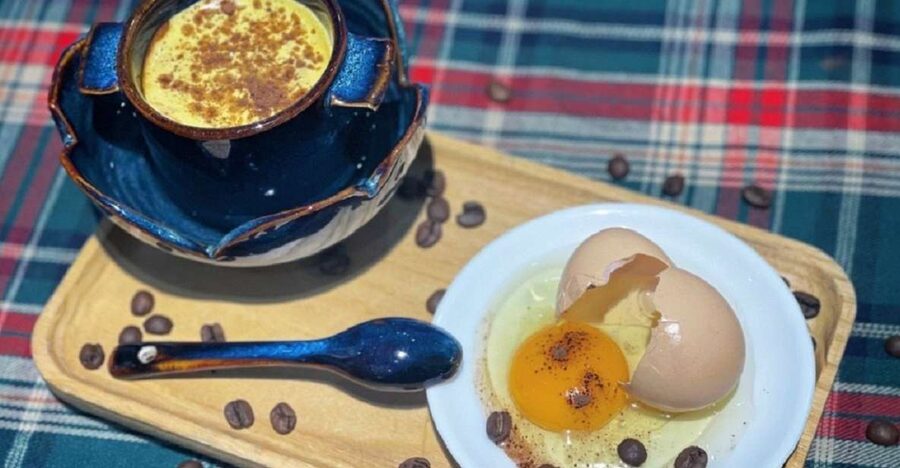
- Five coffee styles in practice: Prepare black coffee, iced or condensed-milk coffee, Hue salt coffee, coconut coffee, and Hanoi egg coffee.
- A family story behind the beans: The coffee used in the class comes from the family business, with connections to a grandfather’s farm.
- Tan and Le lead the fun: Expect clear demonstrations, playful banter, music, and an easygoing atmosphere.
- The Phin filter is the key tool: Learn how this compact Vietnamese brewer creates a slow, strong cup.
- Good value at $14: Ingredients, tools, tea, cookies, instruction, and coffee tasting are included.
- Plan around the caffeine: Eat first if coffee affects you, and consider booking earlier in the day.
A coffee class with a distinctly Vietnamese point of view
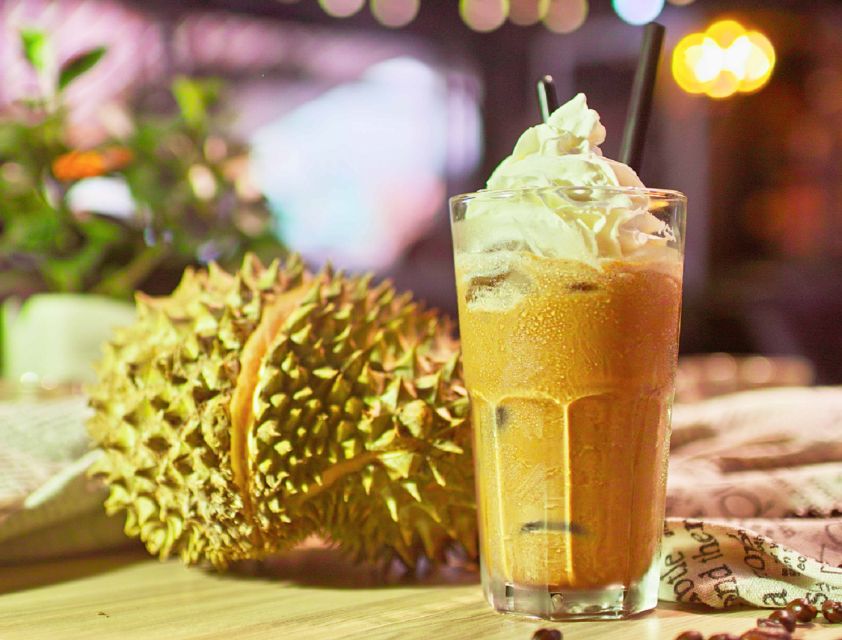
Hoi An has no shortage of cafés, but ordering a drink only tells you part of the story. This class gives you the background needed to understand why Vietnamese coffee is so bold, sweet, slow-brewed, and often inventive.
The session begins with Vietnamese herbal tea. That small opening matters. It gives you a gentler start before the coffee arrives and lets the instructors introduce the café culture of Vietnam in a relaxed way.
You hear about how coffee moved from crop to cup, including roasting dark beans and combining the finished brew with sweetened condensed milk. The class connects technique with daily life, so you are not just memorizing ingredients. You are learning why the drinks taste the way they do.
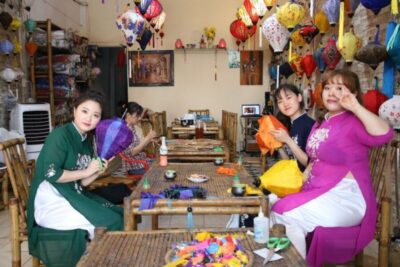
The workshop takes place in a room decorated with silk lanterns and marked by a Coffee Making Workshop sign. It is designed for a small group of up to 10 people, though one booking comment noted that the staff also handled a fairly large group well. The setting is comfortable rather than formal, with music and plenty of room for conversation.
A few other Hoi An trips to compare
- Early Morning My Son Sanctuary Trip w. Champa Food & Coffee
★ 5.0 · 629 reviews - Vietnamese Culture and Coffee Making Class
★ 5.0 · 497 reviews - Hoi An: My Son Early Morning with Banh My and Coffee 6 am
★ 4.7 · 205 reviews
Meeting Tan and Le under the silk lanterns
The family team is one of the strongest parts of the experience. Tan and Le are repeatedly singled out for their humor and friendly manner, while the wider family team helps with demonstrations and preparation.
That style makes a difference. Coffee preparation can become a dry lesson if someone simply lists measurements and dates. Here, the instructors use jokes, stories, and playful interaction to keep the room involved. You can expect the class to feel more like a shared activity than a quiet cooking demonstration.
English and Vietnamese are available for instruction, and an English audio guide is included. The teaching is aimed at an international audience, with steps explained clearly enough for beginners.
I would not book this expecting a serious barista certification course. The strength is practical introduction, cultural context, and fun. You learn useful techniques, but the tone remains light.
From crop to cup, without a long lecture
The first teaching section explains the coffee process before you begin mixing drinks. You learn about the beans, dark roasting, brewing, and the role of condensed milk in the Vietnamese style.
This overview helps you notice details later. A slow Phin brew is not meant to behave like a quick machine-made espresso. The dark roast and condensed milk are not random additions, either. They balance one another, producing the strong, sweet cup many people associate with Vietnamese café culture.
The family connection adds a personal touch. The coffee is described as coming through the family business, with beans linked to a grandfather’s farm. That makes the lesson feel more grounded than a generic demonstration using anonymous ingredients.
You also get a useful explanation of café culture and its link to Vietnam’s past and present. The class does not try to cover every part of the country’s coffee industry, but it gives you enough context to understand why cafés are such an important part of everyday life.
Using the Phin filter for black coffee
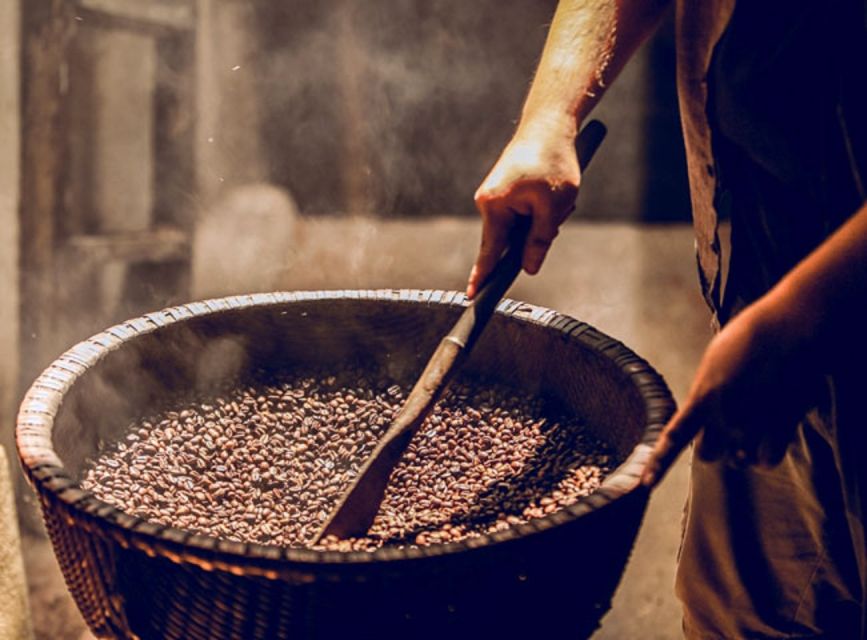
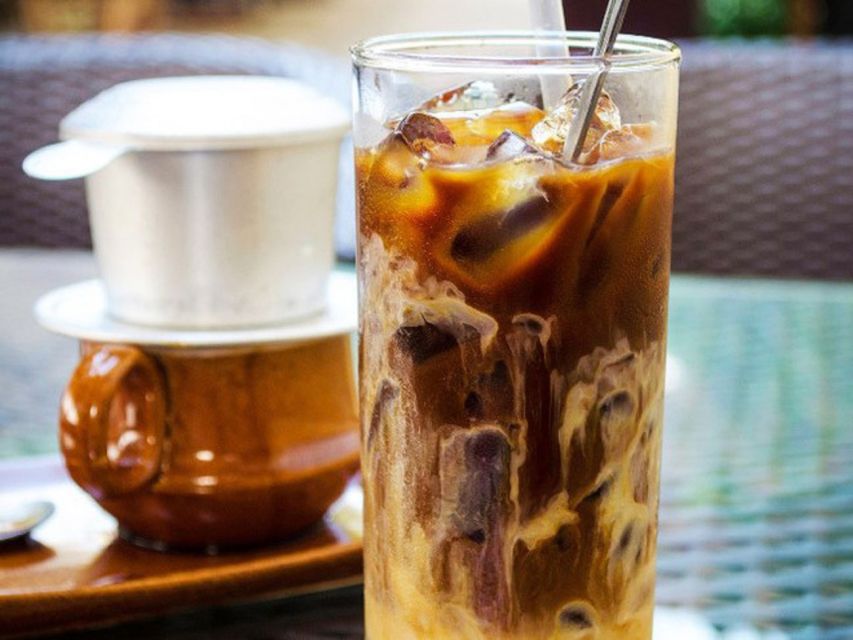
The Phin is a small metal filter placed over a cup. It is often compared to a compact version of a French press, though the brewing process has its own pace and character.
You learn how to set it up and allow the coffee to drip. This is the foundation for several drinks in the session. The black coffee lets you taste the beans without the extra sweetness or creamy toppings.
I like this part because it gives you a skill you can actually use. A Phin is small, simple, and easy to pack, so it is a more practical souvenir than a complicated piece of equipment. The class also provides ingredients and tools for use during the workshop, and several participants received a small Phin filter or another small gift to take home.
Do not expect instant results. The charm of the Phin is its slow pace, and the class uses that waiting time to explain what is happening in the cup.
Same base, a completely different day:
- Hoi An: Basket Boat Ride in the Coconut Forest
★ 4.9 · 4,956 reviews - Hoi An: Vietnamese Foldable Lantern Making Class
★ 4.9 · 3,742 reviews - Cooking Class Hoi An:Local Market, Basket Boat, Fishing & Cooking
★ 5.0 · 3,660 reviews - Hoi An Cooking Class(Market,BasketBoat Crabfishing&Cooking Class)
★ 5.0 · 3,386 reviews
Sweet condensed milk and iced coffee
Next comes the familiar Vietnamese combination of strong black coffee and sweetened condensed milk. The drink may be served hot or over ice, depending on the preparation used in your session.
The class refers to this as happy white coffee, and the drink shows how much the milk changes the character of the brew. The coffee remains powerful, but the condensed milk gives it a smooth sweetness.
This is a good moment to compare the plain black coffee with the milk-based version. You can taste how the same base becomes a very different drink through one simple addition.
The details of the exact serving order may vary, but the class is designed so you make and taste the drinks yourself. A cookie is served with the coffee at the end, which gives you a small sweet bite alongside the final tasting.
Hue Imperial salt coffee
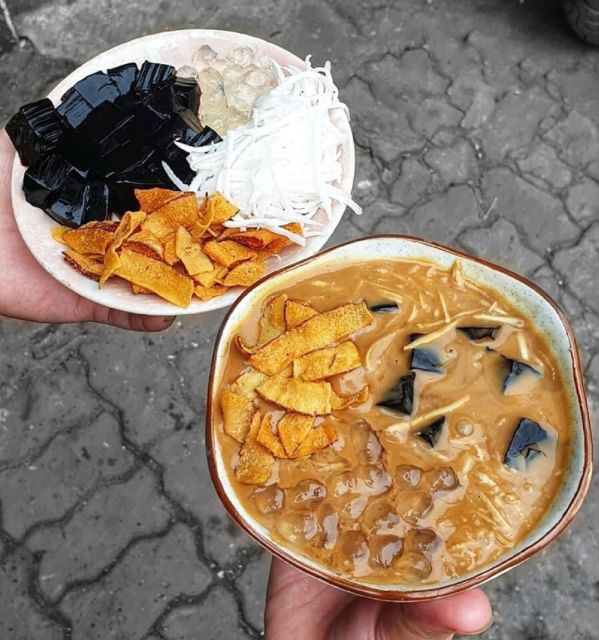
Salt coffee sounds odd until you try it. The Hue-style version uses salt to sharpen the overall flavor and balance the sweetness and bitterness.
The workshop presents this drink as Hue Imperial salt coffee. That regional reference gives the recipe a sense of place. You are not just adding an unusual ingredient for novelty. You are learning about a style associated with Hue, Vietnam’s former imperial capital.
The salt is not meant to turn the drink savory. Used in a small amount, it can make the sweet and roasted notes feel more focused. The class gives you a chance to see how a minor change affects the base coffee.
This is one of the better reasons to take the workshop instead of simply ordering a standard iced coffee. You can compare several styles side by side and decide which one suits your taste.
Coconut coffee for a cooler, softer drink

Coconut coffee adds a creamy, tropical element to the lineup. It is a useful contrast to the dark black coffee and the dense sweetness of condensed milk.
The coconut version is especially appealing if you like blended or dessert-like drinks, though the class does not present it as a replacement for the more traditional brews. It shows how Vietnamese cafés adapt coffee into different textures and flavors.
Because you prepare the drink yourself, you can pay attention to the balance. The coffee still needs to hold its own against the coconut. Too much topping can hide the base, while too little may not give you the style you expect.
The workshop is not only about copying a recipe. It gives you a starting point and lets you understand the building blocks: coffee, sweetness, texture, temperature, and flavor contrast.
Hanoi egg coffee takes patience
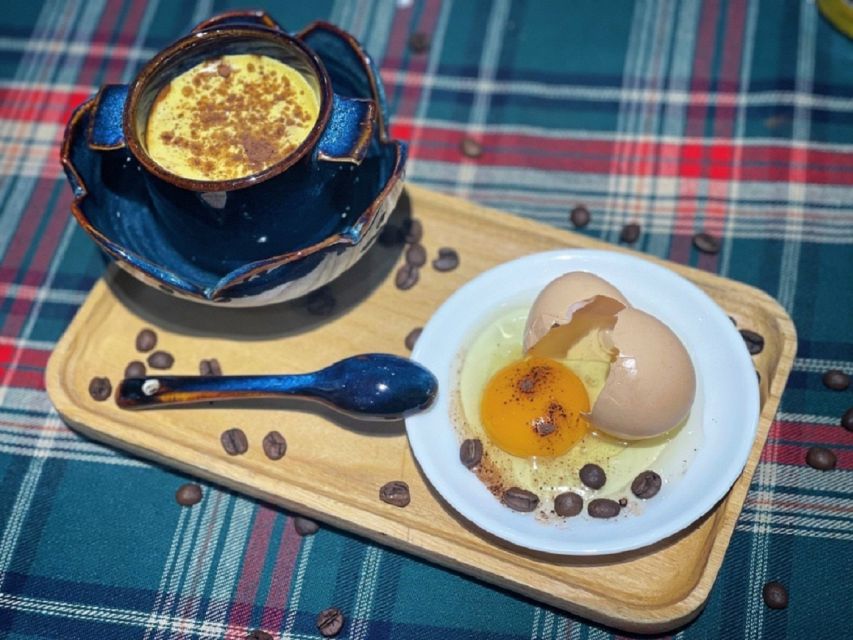
Hanoi egg coffee is the most unusual drink in the class for many people. It combines coffee with a whipped egg mixture, creating a thick, creamy topping that can look closer to a dessert than a morning drink.
The demonstration explains why egg coffee takes time to prepare. You whip the mixture until it reaches the right texture, then combine it with the coffee base. The process is a useful reminder that the topping is not a quick splash of milk.
You also get a better idea of why the drink may take a while when ordering it in a Hanoi café. The preparation is part of the experience, not wasted time.
This recipe may be the main reason to bring a camera. The finished drinks are visually distinct, and the silk-lantern setting gives you a pleasant backdrop for photos. The activity information specifically recommends bringing a camera.
Four styles or five?
There is a small inconsistency in the way the experience is described. The headline summary says you will make four Vietnamese coffee styles, while the detailed program and many recent booking comments describe five: black coffee, iced or condensed-milk coffee, salt coffee, coconut coffee, and egg coffee.
For practical planning, expect the five-drink format if the current session follows the detailed program. Still, it is sensible to confirm the exact lineup when booking, since activities can change. Either way, you will work with several recipes rather than making only one cup.
The amount of coffee is the more important point. You may not finish every drink if you are full, caffeine-sensitive, or more interested in the technique than the tasting. Eat beforehand, drink the herbal tea, and pace yourself.
What you take home
The best souvenir is not necessarily the coffee itself. It is the ability to repeat the process.
You receive recipes to use at home, and some sessions provide a small Phin filter or another modest gift. The compact brewer is especially useful because it lets you recreate the slow drip method without buying a large machine.
You can also purchase coffee afterward if you want to continue the experience at home. The family connection behind the coffee gives that purchase more meaning, though buying coffee is not listed as part of the $14 price.
Bring a camera, but also consider taking a photo of the recipe card. One participant specifically used a picture of the card to recreate the drinks later. That is a sensible backup if printed recipes are not supplied in every session.
Is $14 good value in Hoi An?
At $14 per person, this is a strong-value activity. The fee includes the class, ingredients, tools, Vietnamese tea, coffee, cookies, and a local guide. You are also paying for two hours of structured instruction, not just a single drink in a café.
The value improves if you are curious about food, enjoy hands-on activities, or want something to do during a rainy afternoon in Hoi An. You get several tastings, cultural background, and recipes for later.
The price is less compelling if you only want to sample Vietnamese coffee. Hoi An cafés offer plenty of ways to do that for less money and with no fixed schedule. This class earns its price through the teaching, the number of drinks, and the chance to make them yourself.
Hotel pickup and drop-off are not included. You need to make your own way to the workshop, identified by silk lanterns and the Coffee Making Workshop board.
Timing, group size, and practical comfort
The activity lasts two hours, with starting times depending on availability. Since you will consume several coffee drinks, an earlier booking may suit you better than a late afternoon or evening session.
A small group is limited to 10 people. That is a useful size for a hands-on workshop because you can see the demonstrations and take part without getting lost in a crowd.
The venue is wheelchair accessible. English and Vietnamese instruction are available, with an English audio guide. The stated age restriction says the activity is not suitable for people over 95, which is unlikely to affect most bookings but is worth noting for family groups.
Free cancellation is available up to 24 hours in advance for a full refund, and you can reserve now and pay later. Those terms help if your Hoi An plans are still shifting.
Who should book this coffee workshop?
I would recommend it to coffee fans, curious eaters, couples, solo visitors who enjoy meeting people, and families with older children who can handle the caffeine. It also suits anyone looking for a short cultural activity that does not require a full-day trip outside Hoi An.
The class is particularly useful if you have already tried Vietnamese coffee and want to understand the recipes. It gives you several styles in one sitting, from plain black coffee to the more theatrical egg version.
You may want to skip it if you avoid caffeine, dislike sweet drinks, or prefer quiet, technical instruction. The tone is social and humorous, and the tasting schedule can feel intense. People sensitive to caffeine should eat before arriving and should feel free to sip rather than finish every cup.
Final verdict: book it for the skills, not just the coffee
I would book this Hoi An coffee class if I had two spare hours and wanted more than another café stop. The combination of Phin brewing, family stories, regional recipes, music, and a lively teaching team gives you a useful look at Vietnam through one everyday drink.
The best reasons to go are the five-style tasting format, the recipes, and the chance to take home a practical brewing skill. The main drawback is the caffeine load, plus the need to confirm whether your session includes four or five styles.
At $14, it is an easy recommendation for most coffee drinkers. Arrive fed, bring a camera, listen for the family stories from Tan and Le, and treat the workshop as both a tasting and a lesson.
FAQ
How long does the Hoi An coffee class last?
The workshop lasts two hours.
How much does the coffee-making class cost?
The listed price is $14 per person.
How many Vietnamese coffee styles will I make?
The detailed program describes five styles: black coffee, happy white coffee, Hue Imperial salt coffee, coconut coffee, and Hanoi capital egg coffee. The summary describes four, so confirm the exact lineup when booking.
Is coffee included in the price?
Yes. Coffee, Vietnamese tea, ingredients, tools, cookies, and the coffee-making class are included.
Do I get recipes to take home?
Recipes are provided for recreating the drinks at home. Some sessions also provide a small Phin filter or another small gift.
Who teaches the workshop?
The activity is led by a local family team. Tan and Le are named as instructors in the activity feedback, and instruction is available in English and Vietnamese.
Is hotel pickup included?
No. Hotel pickup and drop-off are not included. You must travel to the workshop meeting point, marked by silk lanterns and a Coffee Making Workshop board.
Is the workshop wheelchair accessible?
Yes, the activity is listed as wheelchair accessible.
Can I cancel the booking?
Yes. You can cancel up to 24 hours in advance for a full refund. A reserve-now, pay-later option is also available.
More Workshops in Hoi An
- From Hoi An: Market Tour, Basket Boat Ride and Cooking Class
★ 4.8 · 2,208 reviews - Hoi An Full Lantern Making Class- A special Foldable lantern
★ 5.0 · 2,007 reviews - Hoi An Cooking Class(Local market,Basket Boat,Fishing & Cooking)
★ 5.0 · 1,323 reviews - Hoi An: Basket Boat Ride, Cooking Class by Hangcoconut
★ 4.9 · 802 reviews
Newly listed around Hoi An
- VIP Limousine: Hoi An to Hue Trip★ 4.0 · 39 reviews
- Hoi An Ancient Town And Countryside Tour Full Day★ 5.0 · 39 reviews
- A Private Full Day Tour to My Son Sanctuary & Marble Moutains★ 5.0 · 39 reviews
- Hoi An: Private Car To/From Hue via Multi Attraction( 1-Way)★ 5.0 · 39 reviews
- My Son Sanctuary and Hoi An Walking Tour★ 4.5 · 40 reviews
- From Hoi An: Cooking Class at Organic Farm★ 5.0 · 40 reviews
- Coconut Boat Hoi An★ 4.6 · 41 reviews
- Hoi An: Full-Day Small Group Trip to My Son Sanctuary★ 4.4 · 41 reviews
Hoi An Tours, compared.
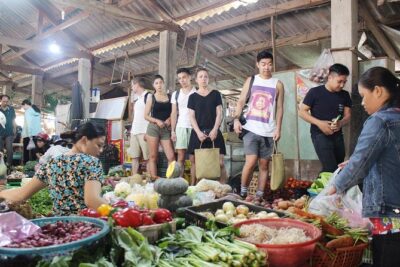
Cooking Class Hoi An:Local Market, Basket Boat, Fishing & Cooking
Read our review →
Hoi An Cooking Class(Market,BasketBoat Crabfishing&Cooking Class)
Read our review →
My Son Sanctuary Early Morning w. Champa Food Brunch
Read our review →
Ba Na Hills – Golden Bridge Deluxe Small group
Read our review →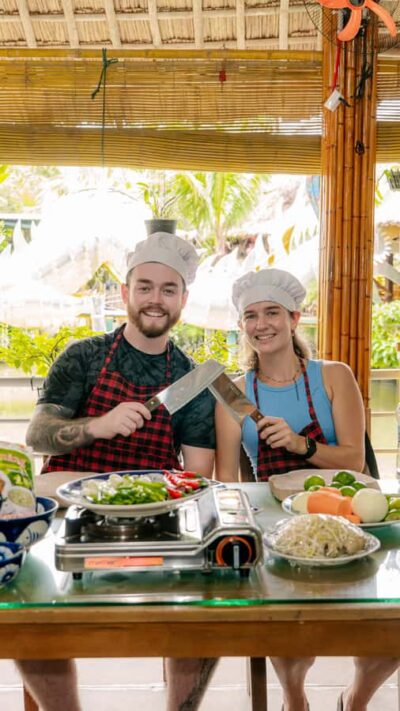
Market Tour, Basket Boat Ride and Cooking Class
Read our review →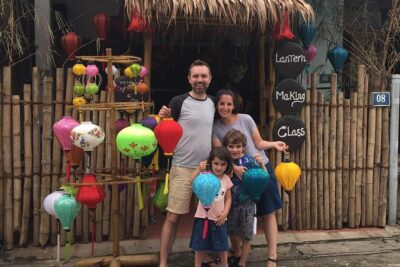
Hoi An Full Lantern Making Class- A special Foldable lantern
Read our review →Browse the lists this tour appears in