

Reviewed · SAPA TREKKING TOURS
Sapa Trekking Tour 2 Days 1 Night By Bus
Sapa’s best moments come on foot, and this tour gets you quickly from Hanoi to the Muong Hoa Valley, where rice terraces, narrow paths, and minority villages replace the town’s busy streets. You’ll visit Black H’mong, Dao, and Dzay communities, eat local food, and spend one night in either a family homestay or a hotel.
I like the choice of accommodation, since a homestay gives you a closer look at daily life while the hotel option offers more privacy. I also like the small group cap of 15 people and the chance to trek on two different days with local guides such as Vu, Su, Koo, or Mu.
The main drawback is the tight schedule. A six-hour sleeper-bus ride can take eight hours, and a two-day trip leaves little spare time in Sapa. The trails can also be rough, muddy, and physically demanding.
Key points to know before booking

- Two days include long bus journeys: You travel from Hanoi to Sapa and back by sleeper bus, so the actual time on the trail is limited.
- Three ethnic cultures feature in the route: The tour visits villages connected with the Black H’mong, Dao, and Dzay people.
- You choose your overnight style: Select a local homestay or a hotel option that can range up to five-star accommodation.
- The trekking is real exercise: Routes cover about 6 to 12 kilometers and include uneven ground, downhill paths, and muddy sections.
- The guides add the human side: Vu, Su, Koo, and Mu are among the guides praised for friendliness, cultural explanations, and practical help.
- Cat Cat Village may divide opinion: It is included among the Sapa sights, but the busy, staged feel may not appeal to everyone.
The long road from Hanoi to Sapa
The tour starts at about 6:30 in the morning, with taxi pickup from your hotel in Hanoi’s Old Quarter. You then transfer to the bus station and board an air-conditioned sleeper bus with Wi-Fi.
The bus is an efficient way to reach Sapa without arranging a separate transfer, but it takes up a large part of the two-day program. The planned arrival is around 1 p.m., though the journey can run longer. One report describes an eight-hour ride instead of six, with only one toilet stop after five hours. That is useful information if you need regular breaks or dislike long road journeys.
The return ride was described as better, but bus quality can vary. The sleeper seats are designed for resting, yet small details matter. The trays beside the beds may not always be as clean as you would like.
I would bring water, tissues, hand sanitizer, and a light snack. Keep your trekking shoes and a change of clothes easy to reach, since your large bag may be stored separately during the transfer. The tour includes the bus, taxes, and Wi-Fi, so the $85 price covers a useful amount of transport and food rather than only the guided walk.
More Hiking Tours in Hanoi
- Halong Bay Full Day with Kayaking, Hiking viewpoint, Cave – Deluxe To Luxury
★ 5.0 · 884 reviews - From Hanoi: 2-Day Sapa Trekking Trip with Homestay & Meals
★ 4.8 · 704 reviews - Sapa 3 Days 2 Nights Trekking Tour (1 Night In Ta Van Village, 1 Night In Hotel)
★ 5.0 · 699 reviews
First afternoon in Sapa and the Muong Hoa Valley
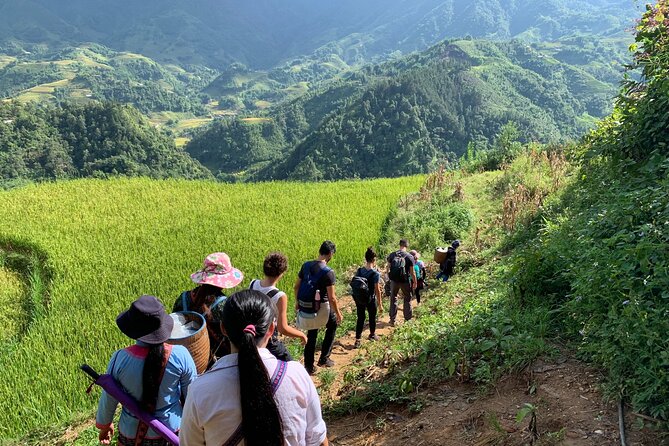
After arriving in Sapa, you meet the local guide and begin the first trek. The homestay version starts at about 2 p.m. with a 12-kilometer route down into the Muong Hoa Valley toward Lao Chai, a Black H’mong village.
The route passes through Y Linh Ho and Lao Chai on small paths. This is the part of the tour that gives you the strongest sense of Sapa beyond its central streets. You are not simply stopping at a viewpoint for a photograph. You are moving through farming areas and villages, with the hills and rice terraces opening up around you.
The downhill direction sounds easy, but it can be harder than a flat walk. Loose earth, uneven stones, and wet ground require careful footing. One person needed help from local women on rough sections, which tells you to treat this as a proper trek, not a gentle village stroll.
Good shoes are essential. Sandals and smooth-soled trainers are poor choices, especially in rain. You should also expect the weather to change quickly in the northern highlands. A waterproof layer and spare socks will make the walk much more pleasant.
The villages connected with the Black H’mong, Dao, and Dzay people are not interchangeable tourist decorations. Each community has its own traditions and way of life, and the guide helps explain what you are seeing. Guides such as Vu were praised for sharing information about local culture, while Su, Koo, and Mu were described as friendly and helpful.
Cat Cat Village, waterfalls, and the touristy side of Sapa
Cat Cat Village is part of the Sapa program, along with visits to Giang Ta Chai and Su Pan. The exact order can change between the hotel and homestay versions, but the mix gives you several different village settings.
Cat Cat is one of the most famous stops near Sapa, and that fame is both its strength and its weakness. It offers easy access to traditional dress, photo spots, village scenery, and a waterfall. You may also have the chance to swim near a waterfall, which can be a welcome break after walking.
At the same time, Cat Cat can feel built for tourism. The staged clothing photographs and heavy focus on pictures may make it less appealing if you want a quiet encounter with village life. I would treat it as a visual stop rather than the most authentic part of the tour.
The quieter value comes from the walking between villages. Giang Ta Chai and Su Pan help shift the focus back to paths, terraces, homes, and the people who live in the area. Your guide’s explanations matter most here, because the meaning of a house, field, or local custom is easy to miss when you are only looking for a nice view.
Choosing between a homestay and a hotel

The accommodation choice changes the feel of the trip.
The homestay option places you with a Dzay family. The second morning begins early, at 6:30, with time to experience daily life before breakfast with the family at 7:30. That early start gives the homestay version a more personal rhythm. You wake in the village rather than simply checking out of a standard room.
The homestay is also the better choice if cultural contact matters more to you than comfort. You can expect a simpler setting, shared local meals, and less control over the routine. That is part of the point, but it may not suit you if you need a private, quiet night.
The hotel option is more straightforward. You have breakfast at the hotel, check out, and begin the second trek at 9 a.m. The choices range from basic accommodation to a five-star hotel, depending on the option selected.
Comfort can matter in Sapa’s cool, wet conditions. One stay included a heating blanket, which was especially welcome after trekking in the rain. If you are visiting in damp weather or prefer a proper room after a long walk, the hotel may offer better recovery. The homestay is the more distinctive choice, while the hotel is the safer pick for rest.
A few other Hanoi trips to compare
- Sapa 2 Days 1 Night From Hanoi – Overnight in Ta Van Village
★ 5.0 · 2,669 reviews - Hanoi – Sapa 2 Days 1 Night Overnight At Homestay
★ 5.0 · 899 reviews - 3-Day Trekking Adventure of Sapa from Hanoi – Stay Ta Van Village
★ 5.0 · 611 reviews - 2-Day Sa Pa Ethnic Homestay Tour & Trek with Limousine Bus
★ 4.8 · 440 reviews
A second morning on foot
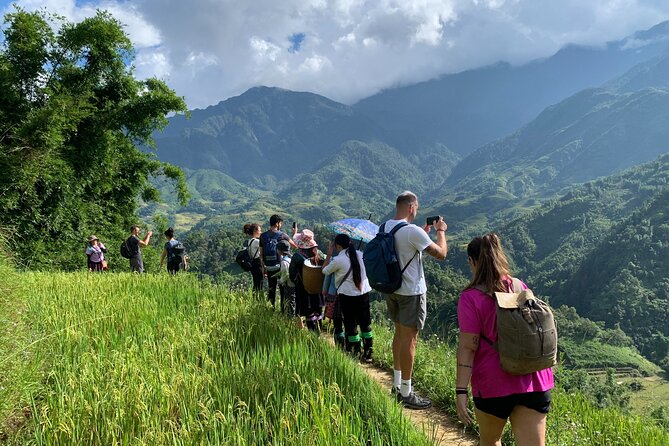
The hotel version begins with a 12-kilometer trek down toward Muong Hoa at 9 a.m. The homestay version starts earlier and covers about 6 to 8 kilometers into the Ho area after breakfast.
That difference is important. You are not choosing only between two beds. You are also choosing between different walking distances and morning schedules. The homestay program may be shorter on paper, but its 6:30 start can feel early after the first day and the long bus ride.
The second day continues the focus on villages, terraces, and minority communities. Lunch is included, as is a second lunch during the tour, so you do not need to plan meals around the trekking route. Breakfast and dinner are also included.
Traditional Vietnamese food is one of the pleasant parts of the package, though the supplied details do not specify exact dishes. You should expect local-style meals rather than a menu designed around international tastes. If you have dietary restrictions, confirm them before departure because no special meal information is provided.
The trip ends with the return journey to Hanoi. Since the bus ride is substantial, you should avoid booking an important evening connection unless you have plenty of extra time.
How difficult is the trekking?

The operator asks for moderate physical fitness, and that is a fair description. The distances are manageable for someone used to walking, but the terrain makes the effort greater than the numbers suggest.
You may walk downhill on small trails, cross uneven ground, and deal with mud or rain. The route is not presented as accessible or suitable for people who cannot manage rough paths. It is also not a good fit if you want most of your Sapa visit to happen from a vehicle.
Local women may offer assistance on difficult sections. That help can be valuable, but it also leads to a practical issue: some people who accompany the walk may later try to sell you goods. One account describes local sellers following the group for much of the tour. Be polite, but decide in advance how you want to handle shopping and offers of help.
A walking pole would be useful, especially in wet weather, though it is not listed as included. Pack a waterproof jacket, warm layer, strong shoes, socks, sunscreen, and a small day bag. Keep your heavier luggage for the accommodation or bus, rather than carrying it along the trails.
Guide quality and group size

The maximum group size is 15 people, which is small enough for a guide to keep an eye on the group without making the walk feel like a procession. It also allows you to ask questions about customs and village life.
The named guides in the feedback give a useful picture of the guiding style. Vu was praised for careful organization and cultural explanations. Su was described as friendly and helpful, while Koo received credit for leading the walk through difficult terrain. Mu was noted for a relaxed manner and a pleasant trek.
Guides can make or break a Sapa visit because the scenery is easy to admire but the cultural context is not. A good guide explains without turning the village into a stage. The strongest part of this tour is likely to be the time spent walking and talking with the guide, not simply ticking off village names.
Your guide may change, so you should not book solely for one particular person. Still, the repeated praise for friendliness and local knowledge is a meaningful strength.
Is $85 good value?

At $85 per person, the tour includes Hanoi pickup by taxi, sleeper-bus transport, accommodation, breakfast, dinner, two lunches, Wi-Fi on the bus, entrance fees, taxes, and a local guide. That is a strong package if you want someone else to coordinate the complicated parts of a Hanoi to Sapa trip.
The value is best for a first visit. You do not need to arrange a bus, find a guide, choose village routes, or sort out meals after arriving. The small group and accommodation choice add flexibility.
The price is less attractive if you want slow travel. You spend a great deal of time on the road for only one night in Sapa. A longer stay would give you more room for weather changes, rest, and independent exploration. One person even wished the trip had two nights, which is understandable.
The five-star hotel option may also change the final price, so check the exact accommodation category before paying. The $85 figure should be treated as the starting reference for the advertised tour, not a guarantee that every room type costs the same.
Who should book this Sapa trip?
I would recommend it to you if you have limited time in Vietnam and want a guided introduction to Sapa’s villages. It works well for families with mixed ages too, provided everyone can handle moderate walking and uneven paths. A family ranging from age 14 to over 80 completed the trip, suggesting that the right pace and guide can make it workable across generations.
Choose the homestay if you want direct contact with Dzay family life and do not mind an early morning or simpler accommodation. Choose the hotel if you value sleep, warmth, privacy, or an easier morning routine.
I would be cautious if you dislike long bus rides, muddy trails, staged tourist attractions, or sales pressure along the route. I would also avoid squeezing this trip into a schedule with a fixed Hanoi departure immediately afterward.
Cancellation is free up to 24 hours before the 6:30 a.m. start. Changes inside 24 hours are not accepted, and poor weather may lead to a new date or a full refund. The activity requires suitable weather, so keep your plans flexible.
Should you book it?
Book this tour if you want good logistical value and a quick, guided look at Sapa’s ethnic villages, rice terraces, and mountain paths. The local guides, included meals, two trekking days, and choice of homestay or hotel make it a sensible package at $85.
Skip it if you can spare more time and would rather spend several nights in Sapa at a slower pace. The best parts are the village walks and guide conversations, while the weakest parts are the long bus transfer and the touristy feel of Cat Cat. For a short first taste of the region, it is a practical choice. For a relaxed mountain holiday, add another night.
FAQ
How long does the Sapa trekking tour last?
The tour lasts two days and one night, with travel from Hanoi to Sapa by sleeper bus and a return bus journey included in the program.
What time does pickup begin?
Pickup begins at about 6:30 a.m. from hotels in Hanoi’s Old Quarter.
Is transport from Hanoi included?
Yes. The tour includes taxi pickup from your Old Quarter hotel to the bus station and an air-conditioned sleeper bus with Wi-Fi.
Which villages does the tour visit?
The program includes Cat Cat, Giang Ta Chai, Su Pan, Lao Chai, and Y Linh Ho, with connections to Black H’mong, Dao, and Dzay communities.
How far do you walk?
The routes vary by accommodation option. The program includes a 12-kilometer trek on the first day, a 12-kilometer trek in the hotel version on the second day, and a 6 to 8-kilometer second-day route in the homestay version.
Can you choose a homestay or hotel?
Yes. You can select a local homestay or a hotel option, with hotel choices ranging from standard accommodation to a five-star hotel, depending on the selected option.
Are meals included?
Yes. Breakfast, dinner, and two lunches are included.
How large is the group?
The group can have a maximum of 15 people.
What happens if the weather is poor?
If poor weather causes cancellation, you will be offered a different date or a full refund. You can cancel for a full refund if you do so at least 24 hours before the start time.
More Hikes in Hanoi
- 3D and 2N Lan Ha Bay Cat Ba Island Kayaking & Trekking with Vega
★ 5.0 · 593 reviews - Hanoi – Sapa 3 Day 2 Night Trekking With Hotel & Homestay
★ 5.0 · 389 reviews - From Hanoi: 2-Day Sapa Trek Tour – Luxury Limousine Transfer
★ 4.1 · 249 reviews - Ninh Binh 1 day Hoa Lu Trang An with Dragon Mountain Hiking
★ 5.0 · 245 reviews
More 2-Day Experiences in Hanoi
- Amanda Cruise – Ha Long, Lan Ha Bay – All Inclusive 2D1N & 3D2N
★ 5.0 · 4,358 reviews - Hanoi: 2-Day Halong & Lan Ha Bay 5-Star Cruise with Balcony
★ 4.8 · 3,300 reviews - Halong Bay – Le Journey Cruises – All Inclusive 2D1N and 3D2N
★ 5.0 · 2,500 reviews - Mon Chéri Cruise 5 star: Unique 2 Days Tuan Chau – Halong bay – Lan Ha Bay
★ 5.0 · 2,422 reviews
Newly listed around Hanoi
- Hanoi: Halong Bay Cruise, Amazing Cave, Titov Island & Kayak★ 4.2 · 39 reviews
- 2Days-1Night Halong Bay Luxury Genesis Regal Cruises★ 4.5 · 39 reviews
- Ninh Binh 1 Day Tour(Tam Coc – Mua Cave – Bich Dong)★ 5.0 · 39 reviews
- 8 days 360° Vietnam Adventure from Hanoi★ 5.0 · 39 reviews
- Dora Cruise – Luxury 5 Star Cruise in Halong Bay & Lan Ha Bay (2D1N)★ 4.5 · 39 reviews
- 3 Days and 2 Nights Ha Giang Loop Tour★ 5.0 · 39 reviews
- Best Value Ha Long bay 1 day – Lunch, kayak, swimming, transfer★ 5.0 · 39 reviews
- From Hanoi: Ha Giang Loop Motorbike Tours 3-Days 2-Nights★ 5.0 · 40 reviews
Sapa Trekking Tours, compared.

Sapa 2 Days 1 Night From Hanoi – Overnight in Ta Van Village
Read our review →

Muong Hoa Valley Trek and Local Ethnic Villages
Read our review →
Fansipan Cable, Cat Cat Village & Moana Instagram Tour
Read our review →

Sapa 3 Days 2 Nights Trekking Tour (1 Night In Ta Van Village, 1 Night In Hotel)
Read our review →
Eco Adventure Terrace Fields and Local Villages Trek
Read our review →
3-Day Trekking Adventure of Sapa from Hanoi – Stay Ta Van Village
Read our review →Browse the lists this tour appears in