
Reviewed · SAPA TREKKING TOURS
Hanoi – Sapa 3 Day 2 Night Trekking With Hotel & Homestay
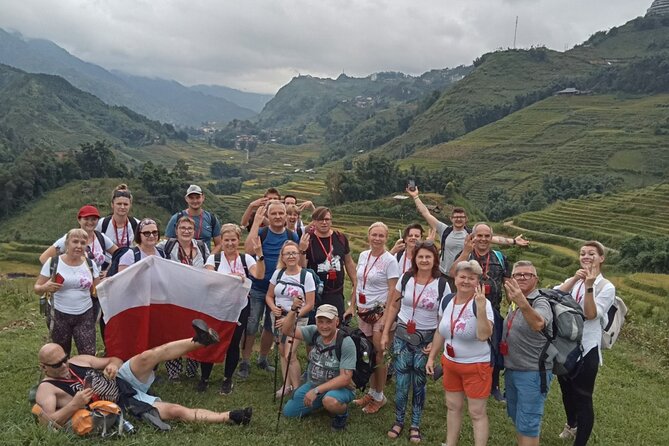
Sapa’s best moments come on foot, and this trip puts you on village paths rather than keeping you in town. Over three days, you’ll pass rice terraces, mountain streams, waterfalls, and the homes of H’mong and Red Dao communities, with a maximum group of 15.
I like the easy transport plan: pickup in Hanoi’s Old Quarter, a VIP cabin bus to Sapa, and the return ride included. I also like the mix of a comfortable three-star hotel and a private room in Ta Van, plus seven included meals. The main catch is that the trek is weather-dependent and can be slippery, while the homestay may feel more like a simple lodge than a family home.
Key points to know before booking
- Cat Cat begins the Sapa program: Your first afternoon covers the H’mong village of Cat Cat, followed by free time in Sapa town.
- The main trek is on Day 2: Walk from Y Linh Ho through Lao Chai and along the Muong Hoa stream to Ta Van.
- Day 3 adds Red Dao scenery: The route continues to Giang Ta Chai and Su Pan, with roughly eight kilometers of walking in the morning.
- You carry only a small bag: Large luggage stays at the hotel lounge while you spend the trekking night in Ta Van.
- The package includes seven meals: Two breakfasts, three lunches, and two dinners are covered, but drinks are extra.
- The $125 price buys convenience: Transport, accommodation, guide services, entrance fees, meals, and cooking classes are included in one booking.
The long ride from Hanoi to Sapa
The trip starts early, with pickup from hotels in Hanoi’s Old Quarter between 6:00 and 6:30 a.m. If your hotel is outside the pickup area, the stated meeting point is the G8 Open Tour office on Ly Thai To Street near Hoan Kiem Lake.
You then board a VIP cabin bus for the journey north. Arrival in Sapa is scheduled for around 1:00 to 1:30 p.m., followed by a transfer from the bus station. The bus is a major part of the value here. Arranging the Hanoi to Sapa connection yourself can be one more task on an already busy Vietnam itinerary, while this trip links the transfer directly to your hotel and walking program.
Still, this is a long travel day. You leave Hanoi at breakfast time and do not return to the city until roughly 10:00 or 10:30 p.m. on Day 3. If you want three full days of hiking, this schedule may feel tight. If you want a guided Sapa sampler without arranging separate buses, hotels, village walks, and meals, the timing makes sense.
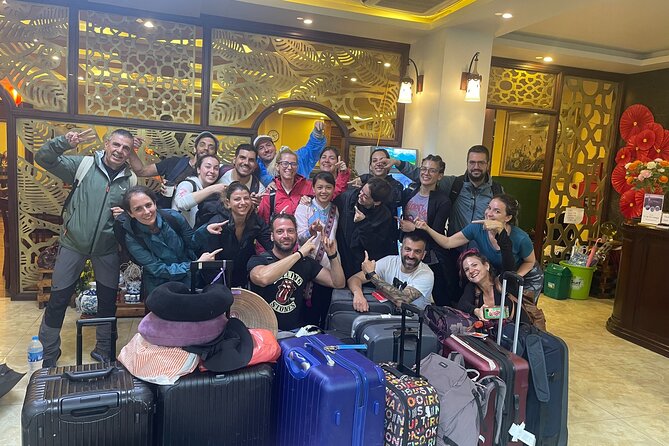
The group limit is 15 people. That is small enough to keep the guide connected to the group, though it is not a private tour. Pickup and return details matter, so keep the Old Quarter meeting point handy and allow time to make your own way from the final bus stop back to your Hanoi hotel.
More Hiking Tours in Hanoi
- Halong Bay Full Day with Kayaking, Hiking viewpoint, Cave – Deluxe To Luxury
★ 5.0 · 884 reviews - From Hanoi: 2-Day Sapa Trekking Trip with Homestay & Meals
★ 4.8 · 704 reviews - Sapa 3 Days 2 Nights Trekking Tour (1 Night In Ta Van Village, 1 Night In Hotel)
★ 5.0 · 699 reviews
Cat Cat Village and your first evening in Sapa
After arriving in Sapa, you check into the town hotel before meeting the guide around 2:00 to 2:30 p.m. The first walk heads to Cat Cat Village, associated with the H’mong people.
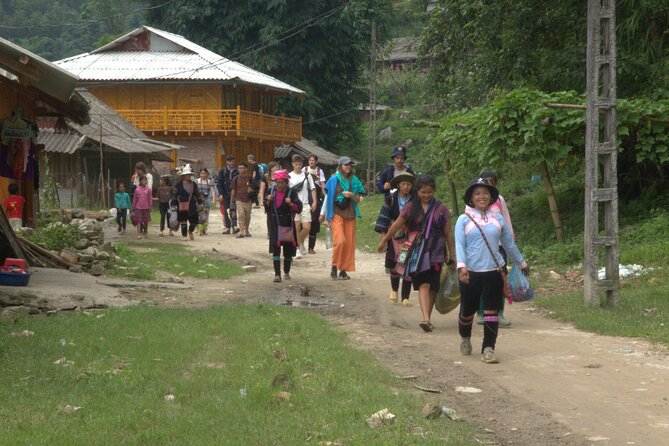
This opening visit gives you a gentle introduction to Sapa’s ethnic communities, local customs, and mountain scenery. The route includes village paths and access to a waterfall area, with entrance included in the tour price. It is a useful first afternoon because you get a taste of the region without beginning with the longer trek that follows.
Cat Cat is also a popular stop, so do not expect a remote village experience. The value lies in seeing how the village fits into the Sapa tourism circuit and in having a local guide explain customs and daily life as you walk. The afternoon lasts about four hours, making it a substantial first outing after the morning bus ride.
Dinner is included, and you are free afterward to explore Sapa. The stone church and night market are within the town program, giving you a chance to look at traditional products and get your bearings before the early start on Day 2.
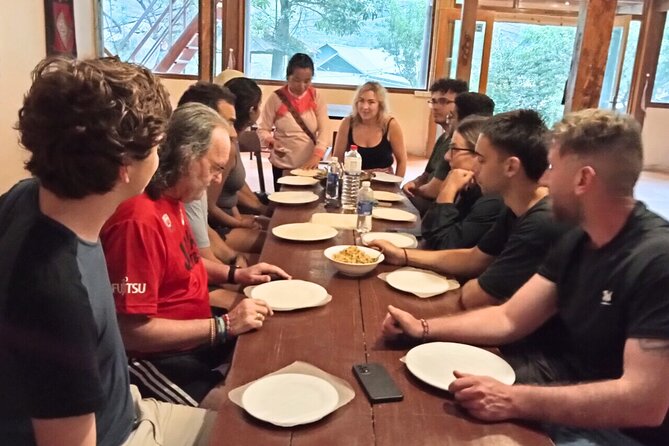
Food quality may vary by location. The hotel meals have received particularly strong praise, while food at the homestay has been described as less impressive. I would treat the included meals as practical fuel rather than the central reason to book, and budget for drinks since they are not covered.
Day 2: Y Linh Ho, Lao Chai, and Ta Van
Day 2 is the heart of the trip. Breakfast is served at the hotel from 7:00 to 8:00 a.m., followed by checkout. You leave large luggage in the hotel lounge and take only a small bag with important items for the night in Ta Van.
That luggage plan is helpful. The main walk covers village paths and uneven ground, so carrying a full suitcase would quickly become a nuisance. Pack light, keep valuables with you, and bring footwear with a good grip. One account describes roughly six miles of walking on the first trekking day, while the published schedule gives the route in stages rather than one single distance.
The walk begins around 8:00 a.m. at Y Linh Ho. This area is known for mountain views, rice terraces, and H’mong village life. The appeal is not one famous monument. It is the steady change in scenery as the path moves between cultivated hills, homes, streams, and open views.
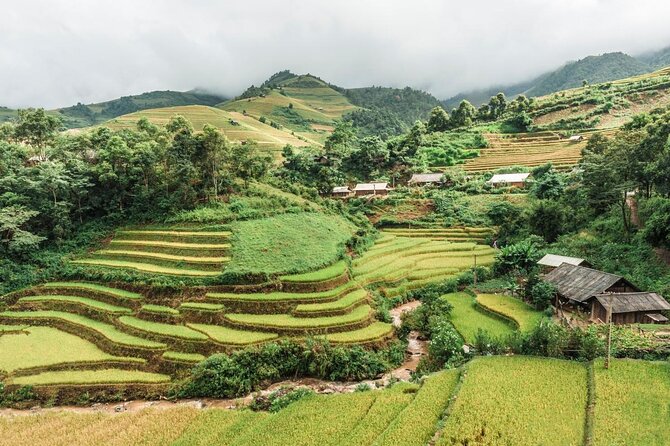
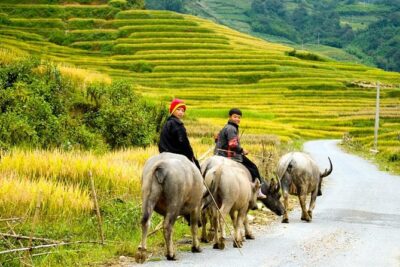
At about 11:00 a.m., the group reaches Lao Chai, a village set among terraced rice fields between the Hoang Lien Son range and Ham Rong Mountain. The terraces are the visual prize here, especially when the weather is clear. Clouds and rain can soften the views, but they can also make the route wetter and harder underfoot.
From Lao Chai, the walk continues about two kilometers beside the Muong Hoa stream toward Ta Van. The combination of water, forests, mountain slopes, and terraces gives this section a more varied rhythm than a simple road walk. You are not just being driven from village to village. You are linking them on foot.
The route is not described as an extreme mountain climb, but it does require solid fitness. Mud and slick surfaces are possible, and one account specifically notes slippery sections. Good walking shoes are more important than stylish clothes. A rain layer and a dry change of socks would also be sensible choices, though the tour does not provide a packing list.
Lunch is served at the homestay around 12:30 p.m., followed by check-in and rest. The accommodation is described as a private room in Ta Van, with a cooking class included. This is a good place to slow down after the morning walk, but set your expectations carefully. The word homestay does not necessarily mean sleeping inside a local family’s ordinary home. Here, it may feel closer to a basic lodge with private rooms.
That distinction matters if you are booking for cultural contact. You will stay in Ta Van and spend time in a village setting, but the accommodation may not offer the intimate family interaction some people associate with a traditional homestay. For a first Sapa trek, the private room can be a welcome compromise between local setting and personal space.
The Ta Van night and what the accommodation means
The hotel night is in central Sapa, in a three-star property. The hotel room quality has been praised, and its central location is useful for the evening walk to the stone church and market.
The second night is in a private room in Ta Van Village. This creates a clear contrast: town comfort on the first night, village accommodation after the longer walk. You get the practical benefit of not returning to Sapa after trekking all day.
The package includes two dinners, two breakfasts, and three lunches. A cooking class is also included, which adds a hands-on activity to the overnight stay. Drinks at meals cost extra, so carry some Vietnamese dong or another accepted payment method for beverages and small purchases.
The food at the homestay may be simpler than the hotel meals. That is not unusual for a rural stay, but it is worth knowing before you book. If food standards are a major part of your trip, you may prefer a tour with more detailed meal information. If you mainly want the walking route and a place to sleep, the arrangement is serviceable.
A few other Hanoi trips to compare
- Sapa 2 Days 1 Night From Hanoi – Overnight in Ta Van Village
★ 5.0 · 2,669 reviews - Hanoi – Sapa 2 Days 1 Night Overnight At Homestay
★ 5.0 · 899 reviews - 3-Day Trekking Adventure of Sapa from Hanoi – Stay Ta Van Village
★ 5.0 · 611 reviews - Sapa 2 Days 1 Night From Hanoi – Overnight in Hotel
★ 5.0 · 440 reviews
Day 3: Giang Ta Chai, Red Dao culture, and Su Pan
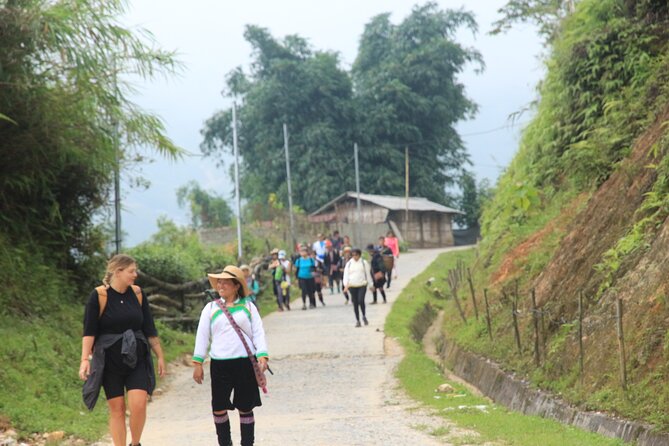
Breakfast at the homestay runs from 7:30 to 8:30 a.m., followed by checkout. The morning route covers about eight kilometers and heads to Giang Ta Chai and Su Pan.
Giang Ta Chai is connected with the Red Dao people, giving the day a different cultural focus from the H’mong villages visited earlier. The route includes forest and mountain views, and a waterfall is part of the wider Sapa program. You should expect another proper walk, not a quick photo stop beside a road.
The schedule allows about six hours for this section, including the village visit and movement through the countryside. The pace should suit people who want a meaningful walk but do not need an advanced expedition. You will still need stamina, since the second trekking day follows the longer route through Y Linh Ho, Lao Chai, and Ta Van.
Around 12:30 p.m., you reach Su Pan for lunch at a local restaurant. Su Pan consists of several small villages associated with Black H’mong and Red Dao communities, set on rocky slopes overlooking the surrounding area. It is a useful final stop because it broadens the cultural picture beyond the more familiar Cat Cat and Lao Chai routes.
Lunch is followed by a return to Sapa at about 1:30 p.m. The afternoon schedule includes a rest period, the option of a quick 30-minute foot massage, and time to buy souvenirs before boarding the bus back to Hanoi. The massage and shopping are presented as optional uses of your waiting time, not as core tour inclusions.
This gap before departure is practical, but it is not a full afternoon of sightseeing. You may be tired, and the return bus is still ahead. Think of it as a buffer that lets you clean up, rest your legs, and collect your bags rather than as another major touring block.
How hard is the trekking?
The tour requires a strong level of physical fitness. That wording should be taken seriously, even though the route is not promoted as a technical climb.
The first trekking day is roughly six miles according to one detailed account, and the second is about four miles, while the published Day 3 route gives eight kilometers. Distances can vary with the exact village paths and group pace, but you should expect several hours on foot over uneven ground.
Rain changes the experience. Clear weather gives you the best chance of seeing the terraces and mountain views, while wet weather can reduce visibility and make paths slippery. Check the forecast before you go if possible, and bring footwear that can handle mud.
This trip suits you if you enjoy walking through rural scenery and can manage a full morning on your feet. It may not suit you if you want a demanding wilderness trek, since the routes are established village walks rather than a remote expedition. It may also be a poor match if you want a slow, luxury-oriented holiday.
What the $125 price really covers
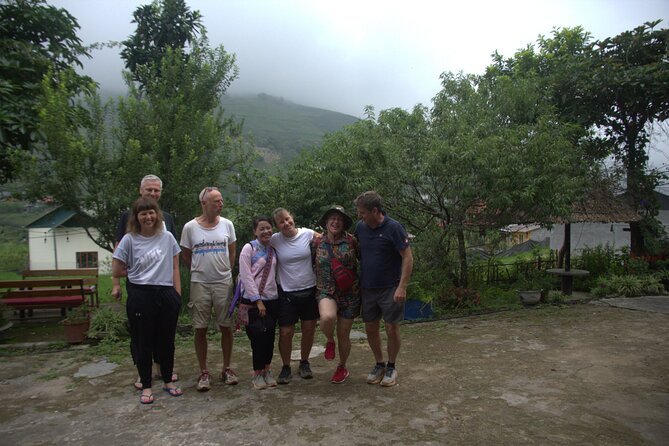
At $125 per person, the price is attractive because it bundles the expensive and awkward parts of a short Sapa trip. You receive round-trip VIP cabin bus transport from Hanoi, one night in a central three-star hotel, one night in a private Ta Van room, a local English-speaking guide, entrance fees, seven meals, and a cooking class.
That package can save time and planning. You do not need to find separate transport, compare Sapa hotels, arrange village transfers, or work out how to reach Ta Van after the Day 2 hike. For a first visit, that convenience has real value.
The tradeoff is control. You follow a fixed schedule, share the experience with up to 14 other people, and accept the assigned hotel, homestay, meals, and bus. A locally arranged trip may cost less, especially if you already know Sapa and can organize transport and walks yourself. One critical assessment found the organized package expensive compared with local options, so bargain hunters should compare before booking.
I see this as a convenience-focused price rather than a luxury price. The hotel is a strong part of the package, while the Ta Van accommodation and homestay meals may feel basic. You pay for the complete connection between Hanoi and Sapa as much as for the actual walks.
Who should book this Sapa trip?
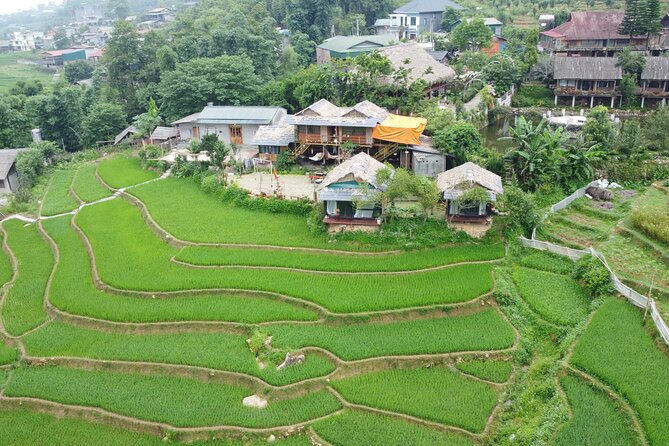
I would recommend it to a first-time Sapa visitor who wants village trekking without handling the logistics alone. The included bus, guide, hotel, homestay, meals, and entrance tickets create a simple three-day plan.
It also fits you if you want cultural contact without giving up all comfort. You see H’mong and Red Dao communities, walk through several villages, and sleep in Ta Van, but you also get a central hotel and a private room.
The tour is less suitable for independent hikers who want to set their own pace or choose a remote route. It is also not ideal for anyone who dislikes early departures, long bus rides, basic rural accommodation, or uncertain weather.
The guide is an important part of the experience, since the value of the village stops comes from explanation rather than scenery alone. The supplied details do not name the guides, so you should not book expecting a particular person. You can expect a local English-speaking guide assigned by the provider.
Booking is flexible if your plans change: free cancellation is available up to 24 hours before the start time. Changes or cancellations inside that window are not accepted for a refund.
FAQ
How long is the tour?
The experience lasts approximately three days and two nights. You spend one night in a three-star hotel in Sapa and one night in a private room at a Ta Van Village homestay.
Where does the tour start and finish?
The stated meeting point is the G8 Open Tour office on Ly Thai To Street in Hanoi’s Old Quarter. The return ends at the same office area, and you make your own way back to your hotel.
Is pickup from a Hanoi hotel available?
Pickup is offered from hotels in Hanoi’s Old Quarter between about 6:00 and 6:30 a.m. The listed meeting point applies if the pickup arrangement does not cover your hotel.
How much walking is involved?
The tour requires a strong level of physical fitness. Day 2 includes the route from Y Linh Ho through Lao Chai to Ta Van, and Day 3 includes an approximately eight-kilometer trek to Giang Ta Chai and Su Pan.
What meals are included?
The package includes two breakfasts, three lunches, and two dinners, for seven meals total. Drinks with meals are not included.
Is the tour private?
No. It is a small-group tour with a maximum of 15 people. A local English-speaking guide leads the Sapa activities.
Is transport between Hanoi and Sapa included?
Yes. Round-trip VIP cabin bus transport from Hanoi to Sapa and back is included, along with local transfers connected to the itinerary.
Should you book it?
Book this tour if you want Sapa’s major village routes in one tidy package, especially if you are starting in Hanoi and do not want to arrange the bus, accommodation, and guide separately. The best parts are the walking route from Y Linh Ho to Ta Van, the second morning through Giang Ta Chai and Su Pan, and the relief of having your large luggage stored while you trek.
Go in with realistic expectations. This is not a strenuous wilderness expedition, not a guaranteed sunny photo trip, and not necessarily a traditional family homestay. For $125, it offers strong practical value, but the experience depends heavily on weather, guide communication, meal quality, and your comfort with basic village accommodation. If those terms suit you, it is a sensible, well-packed introduction to Sapa.
More Hikes in Hanoi
- 3D and 2N Lan Ha Bay Cat Ba Island Kayaking & Trekking with Vega
★ 5.0 · 593 reviews - 2-Day Sa Pa Ethnic Homestay Tour & Trek with Limousine Bus
★ 4.8 · 440 reviews - From Hanoi: 2-Day Sapa Trek Tour – Luxury Limousine Transfer
★ 4.1 · 249 reviews - Ninh Binh 1 day Hoa Lu Trang An with Dragon Mountain Hiking
★ 5.0 · 245 reviews
More 3-Day Experiences in Hanoi
- Amanda Cruise – Ha Long, Lan Ha Bay – All Inclusive 2D1N & 3D2N
★ 5.0 · 4,358 reviews - Halong Bay – Le Journey Cruises – All Inclusive 2D1N and 3D2N
★ 5.0 · 2,500 reviews - Hanoi: 3-Day Ninh Binh, Ha Long, & Lan Ha Bay 5-Star Cruise
★ 4.8 · 1,401 reviews - Mon Chéri Cruises 5 star: Amazing 3 days exploring Halong & Cat Ba island
★ 5.0 · 1,280 reviews
Newly listed around Hanoi
- Hanoi: Halong Bay Cruise, Amazing Cave, Titov Island & Kayak★ 4.2 · 39 reviews
- 2Days-1Night Halong Bay Luxury Genesis Regal Cruises★ 4.5 · 39 reviews
- Ninh Binh 1 Day Tour(Tam Coc – Mua Cave – Bich Dong)★ 5.0 · 39 reviews
- 8 days 360° Vietnam Adventure from Hanoi★ 5.0 · 39 reviews
- Dora Cruise – Luxury 5 Star Cruise in Halong Bay & Lan Ha Bay (2D1N)★ 4.5 · 39 reviews
- 3 Days and 2 Nights Ha Giang Loop Tour★ 5.0 · 39 reviews
- Best Value Ha Long bay 1 day – Lunch, kayak, swimming, transfer★ 5.0 · 39 reviews
- From Hanoi: Ha Giang Loop Motorbike Tours 3-Days 2-Nights★ 5.0 · 40 reviews
Sapa Trekking Tours, compared.

Sapa 2 Days 1 Night From Hanoi – Overnight in Ta Van Village
Read our review →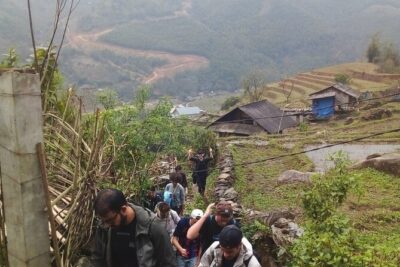
Muong Hoa Valley Trek and Local Ethnic Villages
Read our review →
Fansipan Cable, Cat Cat Village & Moana Instagram Tour
Read our review →
Sapa 3 Days 2 Nights Trekking Tour (1 Night In Ta Van Village, 1 Night In Hotel)
Read our review →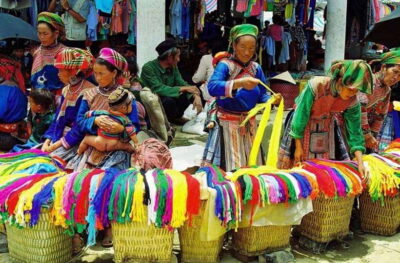
Eco Adventure Terrace Fields and Local Villages Trek
Read our review →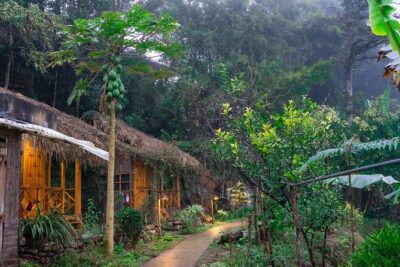
3-Day Trekking Adventure of Sapa from Hanoi – Stay Ta Van Village
Read our review →Browse the lists this tour appears in