
Reviewed · HOI AN TOURS
Quintessence of Vietnamese Cuisine Learn with a Local Family
The best part of this Hoi An food day happens away from the old town. You begin at a local market, then pedal along narrow country roads to Tra Que Vegetable Village before cooking at a family home. The food is only half the lesson. You also see how vegetables are grown, how herbs are used, and how a countryside kitchen works.
I like the mix of gentle cycling and hands-on cooking, rather than a class that keeps you seated at a counter. I also like the thoughtful extras: vegetable carving, a lemongrass and ginger foot massage, and the chance to toss a Vietnamese pancake in the pan. The main caution is timing. The duration is listed as approximately 1 day 3 hours, which is unclear, so confirm the exact finish time if your day is tightly planned.
Key points at a glance
- A market visit comes first: Learn the names of Vietnamese fruits and vegetables, sample local street food, and hear how some plants are used in traditional home remedies.
- Quiet roads lead to Tra Que: Cycle past rice fields, buffaloes, shrimp farms, ducks, and working farms with little traffic.
- The class teaches four dishes: Expect Vietnamese pancakes, Hoi An spring rolls, green papaya and banana flower salad, and chicken cooked in a clay pot, with rice, morning glory, and dessert.
- The hosts bring farming experience: The young family hosts grew up in the countryside and spent more than 10 years working and studying in restaurants.
- You do more than chop: Learn table decoration, carve flowers from carrots and tomatoes, and try a fire-pan pancake performance.
- The group stays small: A maximum of 10 people makes it easier to follow the cooking demonstrations and ask questions.
From Hoi An market to the family kitchen
The day starts at 9:00 a.m., with pickup offered and private transportation included. That matters in Hoi An, where getting from the center to the countryside can take more planning than the map suggests. Your exact pickup arrangement should be confirmed when you book, but the activity is designed to move from the market to rural Hoi An and then to the cooking site.
At the market, the hosts introduce you to the names of fruits and vegetables used in everyday Vietnamese cooking. This is more useful than a quick look at food stalls because it gives you a working vocabulary for the rest of the day. You can connect what you see in the market with the ingredients that later appear on your cutting board.
The market visit also includes street food and conversation with local people. The language element is informal rather than a full Vietnamese lesson, but it gives you a chance to hear native speakers and learn the everyday names for ingredients. If you are curious about food beyond the restaurant menu, this opening section sets up the rest of the day well.
The hosts also explain how some fruits, herbs, and vegetables are used in local medicine. That detail adds context without turning the visit into a formal lecture. You get a better sense of why certain plants appear so often in Vietnamese kitchens.
A few other Hoi An trips to compare
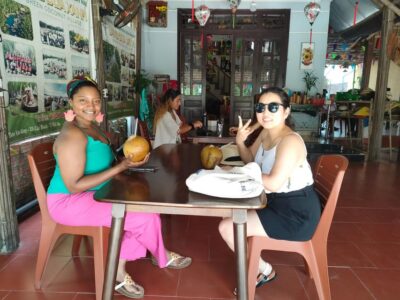
- Hoi An: Basket Boat Ride in the Coconut Forest
★ 4.9 · 4,956 reviews - Hoi An: Vietnamese Coffee Culture and Coffee Making Class
★ 4.9 · 4,006 reviews - Hoi An: Vietnamese Foldable Lantern Making Class
★ 4.9 · 3,742 reviews
Cycling the quiet roads around Tra Que
After the market, you cycle through the countryside on small winding roads. The route is described as quiet, with no busy traffic, and the sights are the working parts of rural Hoi An: buffaloes eating grass, farmers tending rice fields, and farms raising shrimp and ducks.
This is not a sightseeing ride built around grand landmarks. Its appeal is the change of pace. You trade the compact streets of Hoi An for open fields and farm paths, and you see how much of the local food culture begins outside the kitchen.
The ride takes you to Tra Que Vegetable Village, one of Hoi An’s traditional craft villages. The focus here is on manual vegetable growing, including the use of organic fertilizers and pesticides. That makes the stop worthwhile even if you have already taken a cooking class elsewhere. You are not simply told that ingredients are fresh. You see the farming methods behind them.
The cycling portion should suit anyone who enjoys a little movement before lunch. It may be less appealing if you want a cooking class with no outdoor activity, or if riding on narrow rural roads is uncomfortable for you. The supplied information does not give a distance, bike type, or terrain details, so ask the provider if those points matter to you.
Cooking four Vietnamese dishes at home
The cooking class takes place at a local family’s house, with a chef leading the lessons. The hosts are young farmers who grew up in the countryside and later spent more than 10 years studying, working, and building restaurant experience. Their goal is practical: to explain local dishes in a way you can repeat at home.
That home setting changes the feel of the class. You are not only watching a professional kitchen team work at speed. You are learning in a family environment, with ingredients connected to the garden and nearby farms.
The menu includes:
- Vietnamese pancake
- Hoi An spring roll
- Green papaya and banana flower salad
- Chicken in a clay pot
- Morning glory stir-fried with garlic
- Rice and dessert
The menu is a useful cross-section of Vietnamese cooking. You get a crisp pancake, a fresh salad, a fried or rolled snack, a clay-pot dish, and a quick vegetable preparation. Each item highlights a different technique, so the class has more range than a menu built around four similar dishes.
The Vietnamese pancake is likely to be the most playful part. You get to practice the fire-pan performance, including juggling or tossing the pancake. This is a fun detail, but it also teaches you how the batter behaves in the pan. You may not produce a restaurant-perfect pancake on your first attempt, which is part of the point.
The clay-pot chicken gives the meal a slower, more savory centerpiece. The salads and morning glory keep the plate from becoming too heavy. Since the class includes rice and dessert, you are preparing a full lunch rather than a collection of samples.
The instructors also teach table decoration, including flowers carved from carrots and tomatoes. This is not essential cooking knowledge, but it adds a festive Vietnamese touch and gives families or small groups a shared task while the main dishes are being prepared.
Why the family hosts make a difference
The hosts’ background is one of the stronger reasons to choose this class. They combine rural experience with restaurant training, so you get both sides of Vietnamese food culture: how ingredients are grown and how dishes are prepared for the table.
Duyen and Hai are named as guides connected with the experience. Their English is described as strong, and the class is presented as friendly and easy to follow. That matters when a cooking lesson includes unfamiliar ingredients, fast demonstrations, and a bit of kitchen humor.
The teaching also appears flexible. A family with hungry children had the program adjusted so the children could eat sooner. That does not guarantee a custom schedule for every group, but it suggests that you can explain dietary timing or family needs ahead of time rather than simply follow a fixed script.
Still, the information does not confirm vegetarian, vegan, allergy-free, or halal substitutions. If you need changes to the chicken or other dishes, ask before booking. Do not assume that a family cooking class can automatically adapt the menu.
Same base, a completely different day:
- Cooking Class Hoi An:Local Market, Basket Boat, Fishing & Cooking
★ 5.0 · 3,660 reviews - Hoi An Cooking Class(Market,BasketBoat Crabfishing&Cooking Class)
★ 5.0 · 3,386 reviews - Hoi An: My Son Sanctuary Early Morning w. Champa Food Brunch
★ 4.9 · 2,750 reviews - Hoi An/ Da Nang – Ba Na Hills – Golden Bridge Deluxe Small group
★ 5.0 · 2,613 reviews
The herbal foot massage and other finishing touches
After cycling and cooking, you receive a foot massage using herbal leaves such as lemongrass, ginger, and basil. It is a simple but well-judged addition. A short massage gives your feet a rest after the bicycle ride and adds another connection between the garden and the household.
The listed inclusions also mention cold towels, bottled water, and a welcome drink called É water. These are small details, but they are useful in Hoi An’s warm climate. Coffee, tea, soda, and alcoholic drinks are not included, so bring that expectation to the table.
The class includes lunch, all listed fees and taxes, private transportation, an English-speaking local guide, and the foot massage. The combination makes the $35 price look strong, especially if you value a full outing rather than a cooking demonstration alone.
The price is not simply paying for food. It covers the market introduction, transport, countryside ride, farming stop, instruction, lunch, and cultural activities. If you only want to learn two or three recipes, you may find a shorter class cheaper or more focused. If you want a broader day with scenery and local contact, this package offers more for the money.
A small group keeps the class workable
The maximum group size is 10 people. That is large enough to create a social atmosphere but small enough that you should be able to see the chef’s techniques and get help with your own ingredients.
Small groups matter most during the pancake performance and vegetable carving. Those activities can become frustrating when several people crowd around one pan or demonstration table. A limit of 10 gives the hosts a better chance to keep the session moving.
The private transportation is another practical advantage. You are not left to arrange every transfer between Hoi An, the market, Tra Que, and the family home. Pickup is offered, and the meeting time is 9:00 a.m. Since the exact duration is written unclearly as 1 day 3 hours, confirm how long the day actually lasts before scheduling a train, flight, or another fixed appointment.
The activity is near public transportation, but that does not necessarily mean you will need to use it. The included transport should make the day easier, particularly if you are staying outside central Hoi An.
What the day feels like for different kinds of visitors
This is a good match for couples, families, food lovers, and anyone who wants to see rural Hoi An without arranging several separate activities. Children can take part in vegetable carving and pancake tossing, and the program has been adjusted for hungry children in the past.
It also suits first-time visitors who want several introductions in one outing. You learn market vocabulary, see farming, ride through rice country, cook local dishes, and receive a foot massage. The range is the attraction.
You may want something else if you are a serious culinary student seeking advanced knife skills, exact restaurant recipes, or a long technical lesson. The class is built around local food and family instruction, not professional certification.
It may also feel too busy if your ideal day is a slow lunch with no schedule. The sequence includes several stages, and the cycling, market stop, garden visit, carving, cooking, meal, and massage all need to fit into the available time.
Practical details before you book
The price is $35 per person. Pickup is offered, mobile tickets are available, and confirmation is provided at booking. The start time is 9:00 a.m., and the group is limited to 10 people.
Wear clothes suitable for cycling and cooking. The provided information does not specify clothing rules or equipment details, so comfortable clothing is the sensible choice. You should also tell the provider in advance about food allergies, dietary restrictions, or mobility concerns, since the advertised meal includes chicken and several prepared dishes.
Free cancellation is available if you cancel at least 24 hours before the local start time. Cancellations made within 24 hours are not refunded, and late changes are not accepted. That is worth noting if your Hoi An plans are still shifting.
The overall rating is 5 from 104 reviews, with 100 percent recommending the activity. The most consistent praise focuses on the warm family atmosphere, clear English, delicious food, peaceful countryside setting, and the confidence people gain from learning to make the dishes themselves.
Should you book Spring Onion Family Tour?
Book it if you want a full local food day, not just a cooking lesson. The market, Tra Que farming visit, quiet bicycle ride, family kitchen, four-dish menu, vegetable carving, pancake performance, and herbal foot massage give you a rounded look at Hoi An’s food culture.
The strongest reason to choose it is the connection between farm and table. You see ingredients in the market and garden, then use them in lunch. That simple link makes the meal more memorable and gives you recipes you can try at home.
Skip it if you dislike cycling, need a tightly timed schedule, or want guaranteed dietary substitutions without discussing them first. For most people who enjoy food, countryside scenery, and relaxed hands-on activities, $35 is a fair price for the amount included.
FAQ
Where does the experience take place?
The experience takes place in Hoi An and includes the local market, countryside roads, Tra Que Vegetable Village, and a local family’s home.
What time does the tour start?
The stated start time is 9:00 a.m.
How long does the activity last?
The duration is listed as approximately 1 day 3 hours. Because this wording is unclear, confirm the expected finish time with the provider.
Is pickup available?
Yes. Pickup is offered, and private transportation is included.
What dishes will I cook?
You will learn to prepare a Vietnamese pancake, Hoi An spring roll, green papaya and banana flower salad, and chicken in a clay pot. The meal also includes morning glory with garlic, rice, and dessert.
Is lunch included?
Yes. Lunch is included as part of the cooking class.
Is a foot massage included?
Yes. The experience includes a foot massage using herbal leaves such as lemongrass, ginger, and basil.
How many people can join?
The activity has a maximum of 10 travelers.
Are drinks included?
Bottled water, cold towels, and a welcome drink called É water are included. Coffee, tea, alcoholic drinks, and soda are not included.
Can I cancel for a full refund?
Yes, if you cancel at least 24 hours before the local start time. Cancellations or changes made less than 24 hours before the start time are not accepted for a refund.
Newly listed around Hoi An
- VIP Limousine: Hoi An to Hue Trip★ 4.0 · 39 reviews
- Hoi An Ancient Town And Countryside Tour Full Day★ 5.0 · 39 reviews
- A Private Full Day Tour to My Son Sanctuary & Marble Moutains★ 5.0 · 39 reviews
- Hoi An: Private Car To/From Hue via Multi Attraction( 1-Way)★ 5.0 · 39 reviews
- My Son Sanctuary and Hoi An Walking Tour★ 4.5 · 40 reviews
- From Hoi An: Cooking Class at Organic Farm★ 5.0 · 40 reviews
- Coconut Boat Hoi An★ 4.6 · 41 reviews
- Hoi An: Full-Day Small Group Trip to My Son Sanctuary★ 4.4 · 41 reviews
Hoi An Tours, compared.
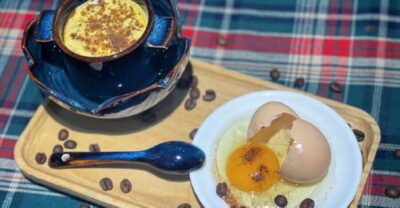
Vietnamese Coffee Culture and Coffee Making Class
Read our review →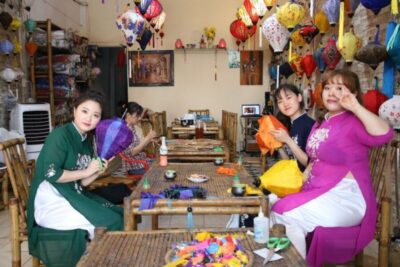
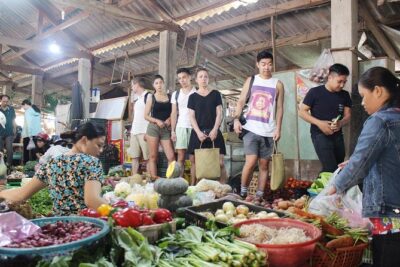
Cooking Class Hoi An:Local Market, Basket Boat, Fishing & Cooking
Read our review →
Hoi An Cooking Class(Market,BasketBoat Crabfishing&Cooking Class)
Read our review →
My Son Sanctuary Early Morning w. Champa Food Brunch
Read our review →
Ba Na Hills – Golden Bridge Deluxe Small group
Read our review →
Market Tour, Basket Boat Ride and Cooking Class
Read our review →Browse the lists this tour appears in