
Reviewed · HANOI TOURS
Hanoi: 5 Local Dishes Cooking Class with Meal & Market Visit
Hanoi’s best cooking lessons do more than show you how to stir a pot. This 3.5-hour Apron Up class begins at a local wet market, where your chef selects fresh ingredients and explains how to shop for them. You then prepare five Hanoi dishes and eat the meal you made.
I like the market visit, since it gives your cooking a useful local setting. I also like the practical teaching: guides such as Vy, Winnie, Bella, Ruby, Kim, and Perla explain each step, repeat demonstrations when needed, and share tips you can use at home. The main consideration is that the class is not suitable for children under four, wheelchair users, or people with mobility impairments.
Key points to know
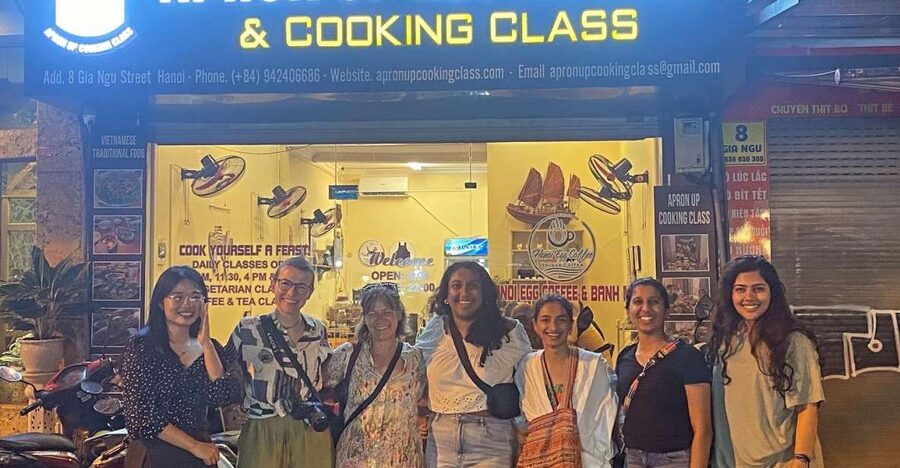
- Five dishes in one class: Choose between two menus covering dishes such as pho, bun cha, spring rolls, salads, pancakes, noodle soup, and egg coffee.
- A real wet-market stop: Watch the chef select and buy the ingredients used in your meal.
- Hands-on, not just a demonstration: You chop, mix, roll, cook, and assemble the food with guidance.
- Vegetarian versions are available: The set menus can be adapted so you can take part in every course.
- A social meal at the end: Sit down with the group, eat what you prepared, and sample fruit and rice whisky.
- Useful take-home extras: You receive a recipe book and certificate, while the $40 price includes ingredients, tools, instruction, and the meal.
Starting at Apron Up in Hanoi’s Old Quarter
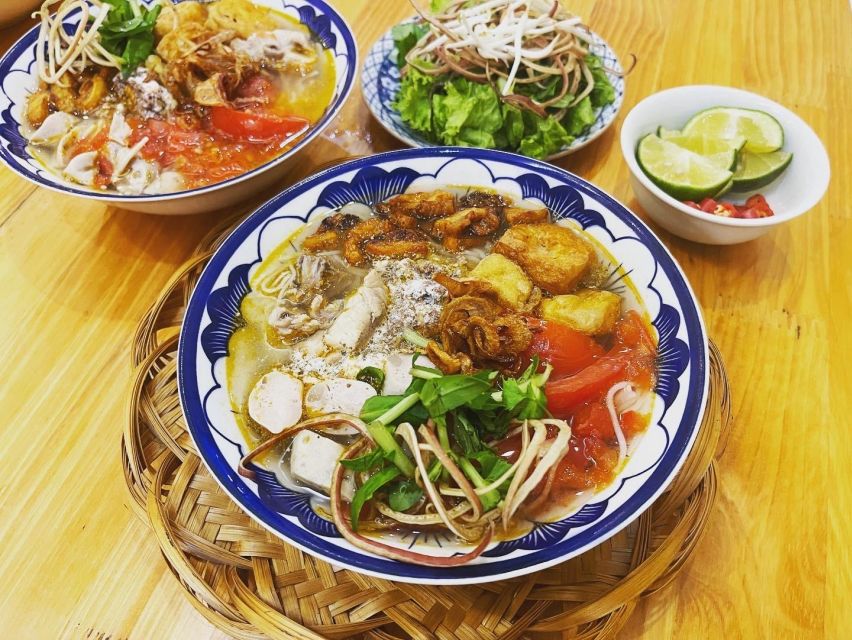
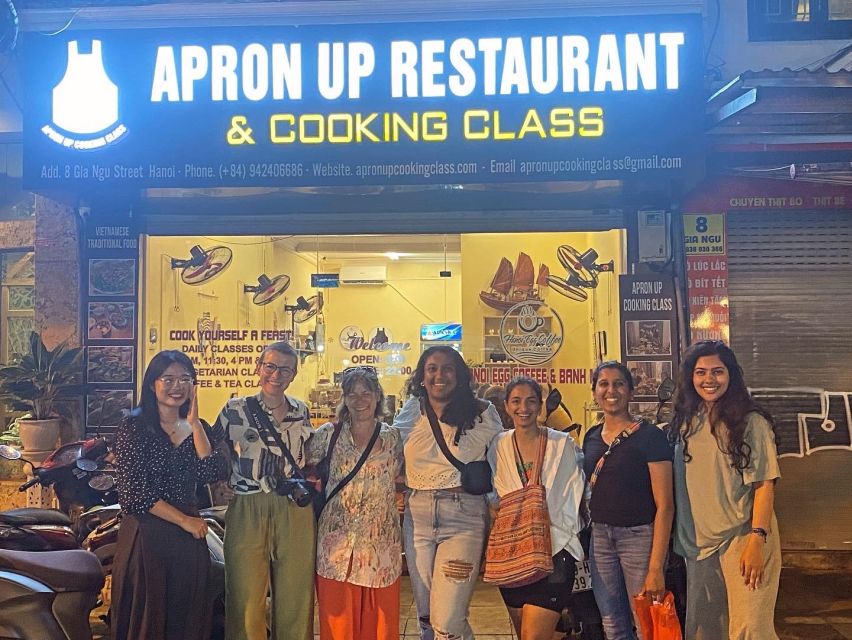
You meet your English-speaking chef at Apron Up Cooking Class. Look for the large Apron Up sign in front of the venue. The activity begins and ends at this same meeting point, so you do not need to arrange transport between the class and another part of Hanoi.
That simple setup matters in Hanoi. You can make your own way to the Old Quarter, and you are not paying for a hotel transfer that may add little value. Transportation is not included, so allow enough time to reach the venue on your own.
The class lasts about three and a half hours. You choose lunch or dinner, with the exact starting time depending on availability. I would treat this as a half-day activity rather than a quick meal. The market visit, preparation, cooking, and shared table all need time, and rushing any part would weaken the experience.
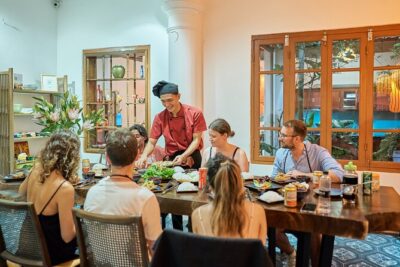
The class can work well for solo visitors, couples, and small groups. It also has a natural social rhythm. You work alongside other people, divide tasks, and then share the food at the end. Several guides, including Vy, Winnie, Bella, Ruby, Kim, and Perla, are praised for creating a friendly atmosphere and helping people with different cooking abilities.
More Cooking Classes in Hanoi
- Hanoi Cooking Class: Culture, Local Market & Meaning CSR Impact
★ 5.0 · 5,147 reviews - 5 Traditional Dishes Hanoi Cooking Class with Market Trip
★ 5.0 · 4,890 reviews - Vietnamese Food Cooking Class in Hanoi with Market Experience
★ 5.0 · 778 reviews
Shopping for ingredients at a Hanoi wet market
The market visit is the part that gives this cooking class its strongest sense of place. Instead of meeting pre-measured ingredients at a studio, you follow the chef to a local wet market and watch how the food for your dishes is selected.
Your instructor chooses and buys fresh ingredients, while explaining what to look for. Winnie, for example, explains how to judge freshness. You also learn Vietnamese words for ingredients as you shop, a small detail that can make the market feel less like a display and more like a useful lesson.
This stop is short enough to keep the class moving, but it adds context to the recipes. Vietnamese cooking depends on fresh herbs, vegetables, meat, noodles, sauces, and careful balance. Seeing those ingredients before they reach the worktable helps you understand why the finished dishes taste the way they do.
The market is also the least polished part of the experience. A wet market can be crowded, damp, and busy underfoot. That is part of the point, but you should wear comfortable shoes and expect a working market rather than a calm food hall. Since the activity is not suitable for people with mobility impairments or wheelchair users, the market portion is an important practical consideration.
Choosing between two five-dish menus
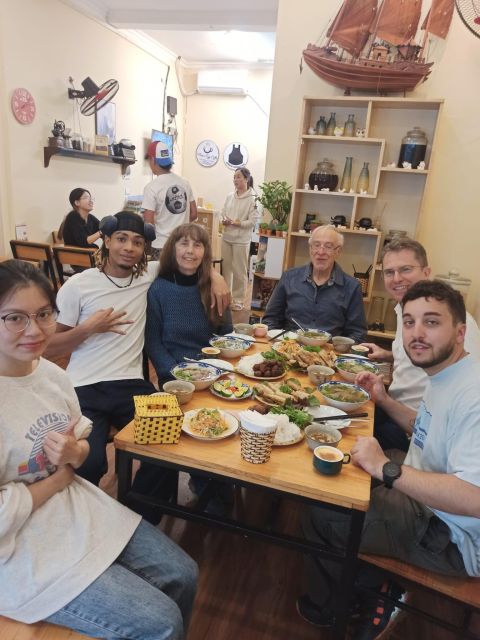
You choose one of two set menus. The first includes banh xeo pancakes, bun cha, pork rib noodle soup, beef fresh rolls, chicken salad, and banana ice cream. The second includes pho, bun cha, fried spring rolls, papaya salad, and egg coffee.
You make five dishes, not every dish listed across both menus. That distinction matters when you are deciding what to book. The two menus give you different snapshots of Vietnamese food, so check which one is offered or selected when you reserve.
The first menu gives you a broad mix of textures and cooking tasks. Banh xeo involves making a crisp, savory pancake. Bun cha brings grilled pork and noodles together, while fresh rolls require careful wrapping. Pork rib noodle soup adds a broth-based dish, and banana ice cream finishes the meal with something sweet.
The second menu has a more familiar Hanoi focus. Pho gives you practice with one of Vietnam’s best-known noodle soups. Bun cha appears again, while fried spring rolls and papaya salad add contrast. Egg coffee is the unusual finale, with a sweet, creamy topping that makes it different from an ordinary coffee stop.
You can also take two classes to learn both menus. That option costs more time and money, but it makes sense if Vietnamese food is a major reason for your visit. For a single class, I would choose based on the dish you most want to learn at home, especially pho, bun cha, spring rolls, or egg coffee.
Cooking five dishes with clear, active instruction
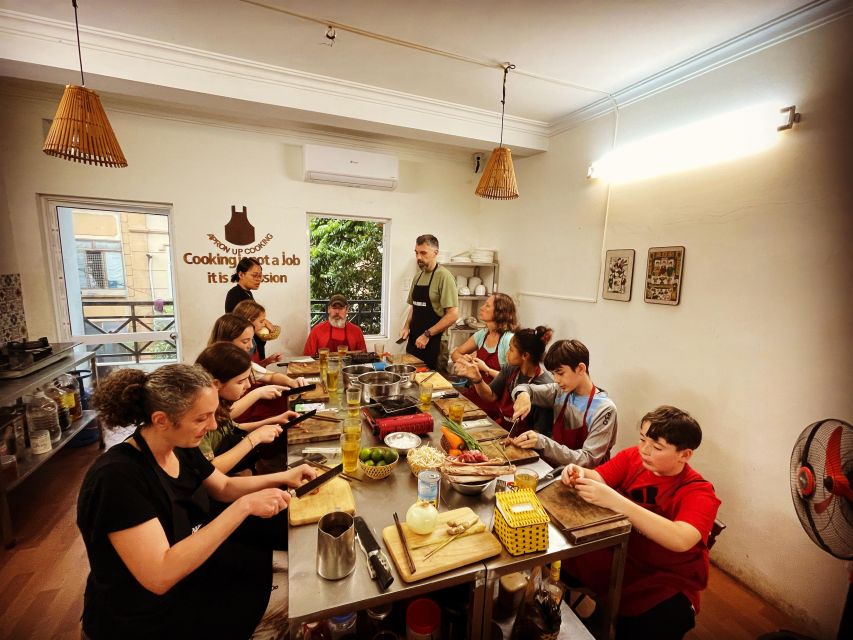
This is a hands-on class. You do not simply sit and watch the chef prepare lunch while you take notes. The chef demonstrates each stage, then gives you a task to complete, with help available as you work.
The format suits mixed ability groups. Ruby is praised for giving clear instructions and repeating a demonstration when needed. Kim receives similar credit for patience and for guiding a beginner through the recipes step by step. That makes the class approachable if you rarely cook, while still giving confident cooks something useful to practice.
The teaching focuses on small decisions that affect flavor. You learn how ingredients are prepared, how the components are combined, and how to make the dishes taste more authentic. These details are more useful than simply copying a recipe because they help you adjust the food when you cook it in a home kitchen.
The class also keeps people involved. One person may prepare an ingredient while another works on a different part of the same dish. The schedule is described as well organized, with everyone given a job and little dead time. That is a good sign for a group class, though it also means you should expect some shared work rather than five completely separate dishes made alone.
Your guide remains central to the experience. Vy is praised for patience, clear explanations, and accommodating different skill levels. Bella adds humor and explains the origins of the dishes. Perla even teaches ingredient words in Vietnamese, which adds a small language lesson to the cooking.
English is the listed teaching language. One person found Bella occasionally difficult to understand, so if you are not comfortable following spoken English in a busy class, pay close attention to the demonstrations and ask for a repeat when needed. The instructors are described as willing to show techniques more than once.
More Markets in Hanoi
- Hanoi Cooking Class and Market Tour in Ancient House
★ 5.0 · 379 reviews - Rose Kitchen Hanoi: Market, Cooking & Culture Tour + Free PickUp
★ 5.0 · 342 reviews - Hanoi Maya Kitchen: Traditional Cooking Class & Market Tour
★ 5.0 · 287 reviews - Hanoi: Old Quarter Market Tour and Cooking Class with Meal
★ 4.8 · 192 reviews
What you actually eat at the shared table
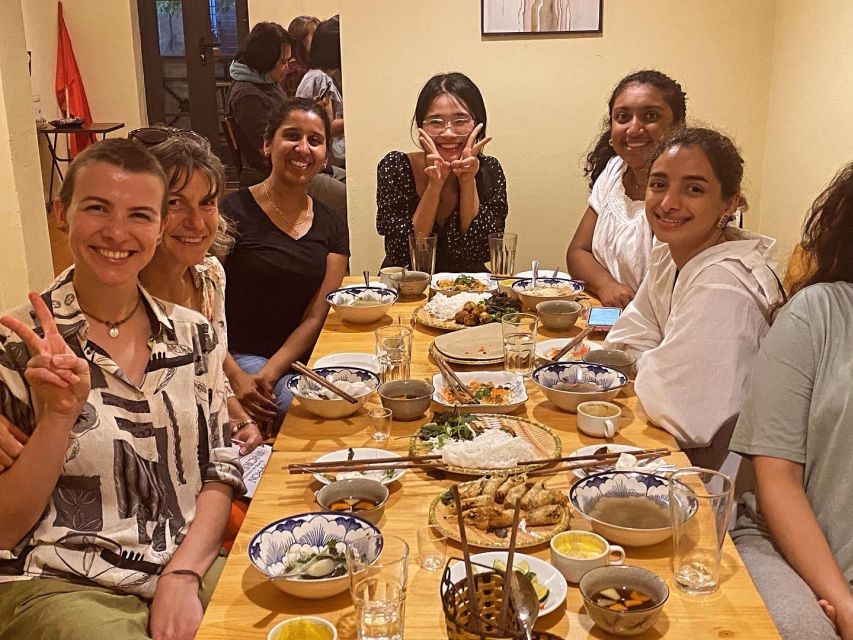
After the cooking is finished, you sit down to eat lunch or dinner made during the class. This is more satisfying than receiving a plate prepared entirely by someone else. You have handled the ingredients, made the decisions, and watched each dish come together.
I like this ending because it turns the lesson into a proper meal. You can taste how the dishes work together, compare results with the rest of the group, and ask final questions while the recipes are still fresh in your mind.
The food receives especially strong praise. One class produces five dishes that are described as delicious, while another leaves a participant particularly pleased with the pho and spring rolls. The menu also offers plenty of contrast: noodles, grilled meat, fried food, fresh rolls, salads, soup, dessert, and egg coffee depending on your selection.
Vegetarians are not left watching other people eat. The menus can be adapted for vegetarian diets, and the vegetarian option includes a version of every meal. That is an important advantage for a mixed group, since nobody needs to skip the cooking or settle for a side dish.
The meal is accompanied by tea, seasonal fruit, and homemade rice whisky. The whisky is a sample rather than the focus of the class, but it adds a distinctly local touch. If you do not drink alcohol, the included tea and fruit still give you something to enjoy.
The cookbook is more useful than a souvenir certificate
You receive a certificate confirming that you completed the class, but the recipe book is the more valuable extra. It gives you a way to recreate the dishes after your trip, when the smells and techniques are still familiar.
A recipe book cannot replace the chef’s live guidance. It will not show you exactly how a pancake should look or how tightly to roll a fresh roll. But after you have prepared the dishes once, the written recipes can help you remember the order of work and the main ingredients.
I would keep the book with your travel notes and try one recipe soon after returning home. That is when you are most likely to remember what the guide explained about preparation, seasoning, and texture.
The certificate is a pleasant memento, especially for children and first-time cooks, but it is not the reason to book. The real value comes from the combination of market shopping, active cooking, a full meal, and recipes you can use again.
Is $40 good value for three and a half hours?
At $40 per person, the price includes the English-speaking instructor, market visit, ingredients, tools, five-dish cooking class, lunch or dinner, tea, rice whisky, fruit, cookbook, and certificate. You are paying for much more than a single Vietnamese meal.
The value is strongest if you would otherwise book a separate food tour and a restaurant meal. Here, the market adds local food context, the class gives you a skill, and the shared meal covers the main eating portion of the activity. You also avoid paying for transport, since the class starts and ends at Apron Up.
The price is less compelling if you only want to eat pho or bun cha without spending half a day preparing food. This is an activity for someone who enjoys participation. You will spend time chopping, rolling, mixing, cooking, and waiting for each stage to finish.
There may also be a higher-priced premium package. If you see that option while booking, compare what it adds before paying extra. The standard experience already includes the core elements needed for a full class.
The ability to cancel up to 24 hours ahead for a full refund and reserve now while paying later makes the booking easier to fit into a changing Hanoi schedule. Starting times vary, so check availability before arranging other plans.
Who will get the most from this cooking class?
I would recommend this class to first-time visitors who want a practical introduction to Hanoi food. You get an explanation of ingredients, a taste of the market, several classic dishes, and a chance to ask questions in one sitting.
It is also a good fit for people who enjoy learning by doing. The class does not require advanced cooking ability. Clear instruction and repeated demonstrations make it friendly for beginners, while the range of dishes gives experienced home cooks new techniques to consider.
Vegetarians should give it serious consideration because the full menu can be adapted. Couples and friends may enjoy dividing tasks, and solo visitors have a natural way to meet people at the shared table.
Families need to check the age and access limits. Children under four are not accepted, and the activity is not suitable for wheelchair users or people with mobility impairments. The market and cooking setup may also demand more standing and movement than some visitors expect.
If you are mainly interested in Hanoi street food but do not want a formal lesson, a food walk may suit you better. If you want to take home recipes and skills, this class offers more lasting value than a meal alone.
Should you book Apron Up?
Book it if you want to understand Vietnamese food through fresh ingredients, practical cooking, and a meal you helped prepare. The market visit, vegetarian flexibility, friendly English instruction, and take-home cookbook give the $40 price a solid case.
Choose your menu carefully, and do not assume one class covers every listed dish. If pho and egg coffee are your priorities, select the menu that includes them. If you want both menus, plan for two classes.
I would skip it only if you have limited time, dislike shared cooking, or want a quiet restaurant meal instead. For most food-focused visits to Hanoi, this is a useful three and a half hours, with enough instruction to make the experience matter after you fly home.
FAQ
Where does the cooking class begin?
Meet at Apron Up Cooking Class in Hanoi’s Old Quarter. Look for the large Apron Up sign in front of the venue.
Where does the activity end?
The class ends back at the same meeting point at Apron Up Cooking Class.
How long does the experience last?
The activity lasts approximately 3.5 hours. Starting times vary, so check availability when booking.
What food can I learn to cook?
Depending on the selected menu, you can learn dishes including pho, bun cha, fried spring rolls, papaya salad, egg coffee, banh xeo pancakes, pork rib noodle soup, beef fresh rolls, chicken salad, and banana ice cream.
Can the menus be adapted for vegetarians?
Yes. The two set menus can be adapted for vegetarian diets, including vegetarian versions of each meal.
Is transportation included?
No. Transportation is not included. You make your own way to the Apron Up meeting point, and the activity ends there.
What is included in the $40 price?
The price includes an English-speaking instructor, market trip, ingredients, cooking tools, lunch or dinner, tea, rice whisky, fruit, a cookbook, and a certificate.
Can I cancel the booking?
Yes. You can cancel up to 24 hours in advance for a full refund. You can also reserve now and pay later.
More Shopping Trips in Hanoi
- Cooking Class Hoi An:Local Market, Basket Boat, Fishing & Cooking
★ 5.0 · 3,660 reviews - Hoi An Cooking Class(Market,BasketBoat Crabfishing&Cooking Class)
★ 5.0 · 3,386 reviews - From Hoi An: Market Tour, Basket Boat Ride and Cooking Class
★ 4.8 · 2,208 reviews - Can Tho: Floating Market & Mekong’s Legacy( About 6 Pax)
★ 5.0 · 1,438 reviews
More Shopping Tours in Hanoi
- Local Market Tour and Private Cooking Class
★ 5.0 · 104 reviews - Hanoi Cooking Class: Market Tour, Free Liquor & Coffee Tasting
★ 5.0 · 86 reviews - Cooking class with market visit
★ 5.0 · 49 reviews
Newly listed around Hanoi
- Hanoi: Halong Bay Cruise, Amazing Cave, Titov Island & Kayak★ 4.2 · 39 reviews
- 2Days-1Night Halong Bay Luxury Genesis Regal Cruises★ 4.5 · 39 reviews
- Ninh Binh 1 Day Tour(Tam Coc – Mua Cave – Bich Dong)★ 5.0 · 39 reviews
- 8 days 360° Vietnam Adventure from Hanoi★ 5.0 · 39 reviews
- Dora Cruise – Luxury 5 Star Cruise in Halong Bay & Lan Ha Bay (2D1N)★ 4.5 · 39 reviews
- 3 Days and 2 Nights Ha Giang Loop Tour★ 5.0 · 39 reviews
- Best Value Ha Long bay 1 day – Lunch, kayak, swimming, transfer★ 5.0 · 39 reviews
- From Hanoi: Ha Giang Loop Motorbike Tours 3-Days 2-Nights★ 5.0 · 40 reviews
Hanoi Tours, compared.

Hanoi Jeep Tour: Food, Culture and Fun by Vietnam Army Jeep
Read our review →
Full-Day Ninh Binh Highlights Tour from Hanoi
Read our review →
Ha Long Bay Day Cruise – Swimming, Meal, Kayaking
Read our review →

Hanoi Motorbike Tour: Food, Culture and Fun by Vintage Motorbike
Read our review →
Hanoi Cooking Class: Culture, Local Market & Meaning CSR Impact
Read our review →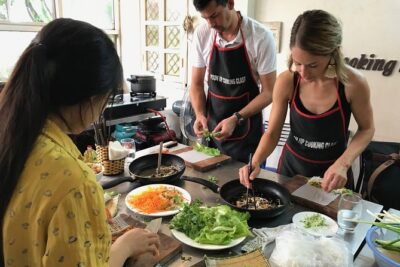
5 Traditional Dishes Hanoi Cooking Class with Market Trip
Read our review →Browse the lists this tour appears in