
Reviewed · DA LAT TOURS
Experience specialty coffee with sustainable coffee farmers
Da Lat is Vietnam’s coffee country, but a cafe cup rarely tells you much about the plant, the farmer, or the work behind the flavor. At HuyEco Coffee & Culture, farmer Huy takes you from green beans to brewed coffee, with five samples made from his own farm. You can taste coffee that is sour, sweet, or fruity without the usual additions that can hide its character.
I like two things right away: you roast beans yourself, and you compare Arabica and Robusta through different processing and roast methods. I also like that Huy explains sustainable growing from the farmer’s point of view, rather than giving you a generic coffee lecture. The main consideration is that the activity length varies from 90 minutes to as much as five hours, so check the exact option and start time before booking.
Key points to know before you go
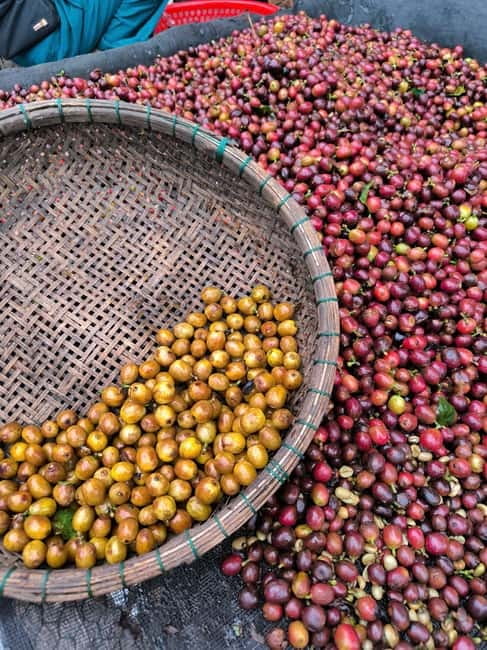
- Five coffees from one farm: Compare Arabica and Robusta, with different processing and roasting choices.
- Hands-on roasting: Watch green beans change color and aroma as you roast your own portion.
- Three roast levels: Light, medium, and dark roasts show how heat changes a coffee’s taste.
- Traditional Phin brewing: Finish by making your own Vietnamese-style coffee while looking over Da Lat.
- Small, personal group: The experience is limited to 10 people and is led in English or Vietnamese by Huy.
- Central meeting point: HuyEco Coffee & Culture is in central Da Lat, reachable on foot, by motorbike, taxi, or booking app.
Why this Da Lat coffee experience feels different
Many Vietnamese coffee stops focus on drinking a strong cup and moving on. This one slows down enough to show you what happens before the coffee reaches the filter. That makes it useful even if you are not a serious coffee expert. You leave with a better sense of why two beans can taste so unlike each other.
The central idea is simple: coffee flavor begins with the plant and continues through processing, roasting, and brewing. Huy grows coffee himself, so he can connect those steps instead of treating them as separate facts. He also talks about sustainable farming, giving you a clearer picture of the choices made at the farm level.
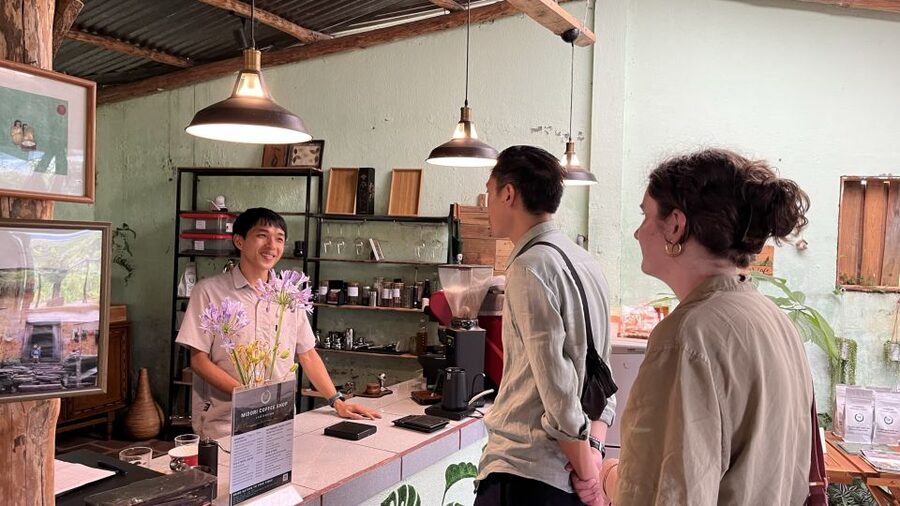
The setting adds to the appeal. The cafe has views over Da Lat, and the property is described as comfortable and atmospheric, with pleasant verandas. It is a relaxed place for a lesson, not a formal classroom. One useful detail for cool-weather visitors: Da Lat can feel cold, and one visitor arrived without a jacket and was lent one by the owners. Still, bring a light layer of your own.
A few other Dalat trips to compare
- Dalat: MOTORBIKE TOUR TO PONGOUR FALLS- SILK- COFFEE FARM
★ 4.9 · 52 reviews - Hoi An: Vietnamese Coffee Culture and Coffee Making Class
★ 4.9 · 4,006 reviews - Hanoi Coffee Experience: 6 Brews, 9 Recipes & 3 Liquor Tastings
★ 5.0 · 2,945 reviews
Meeting farmer Huy at HuyEco Coffee & Culture
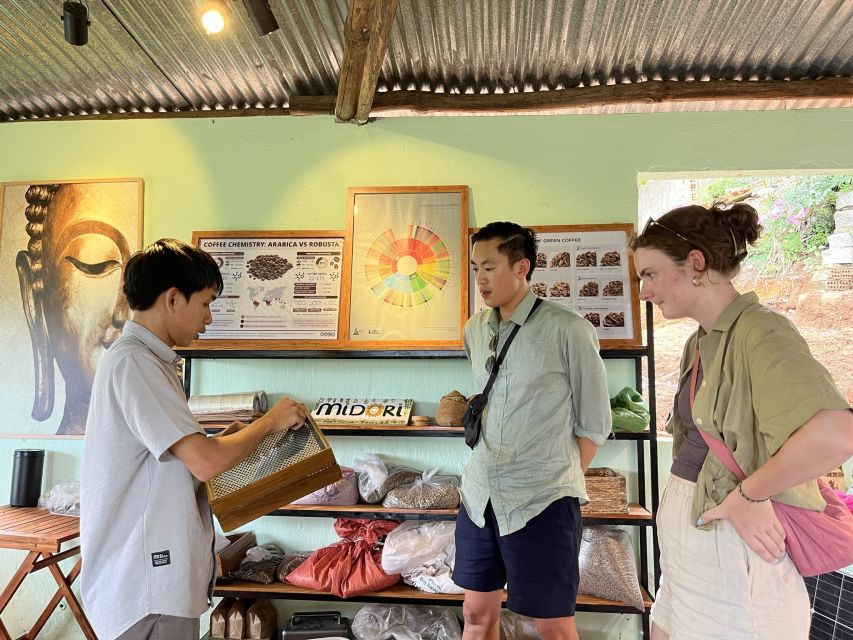
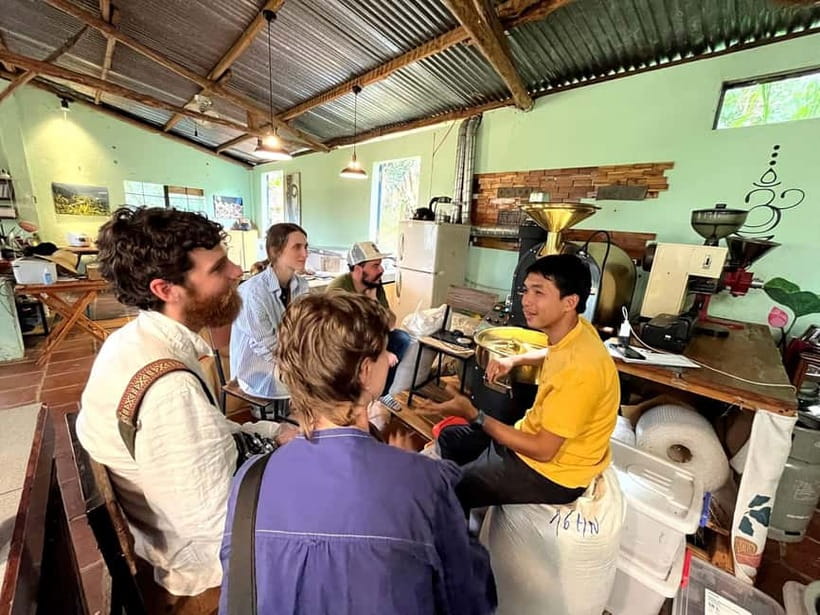
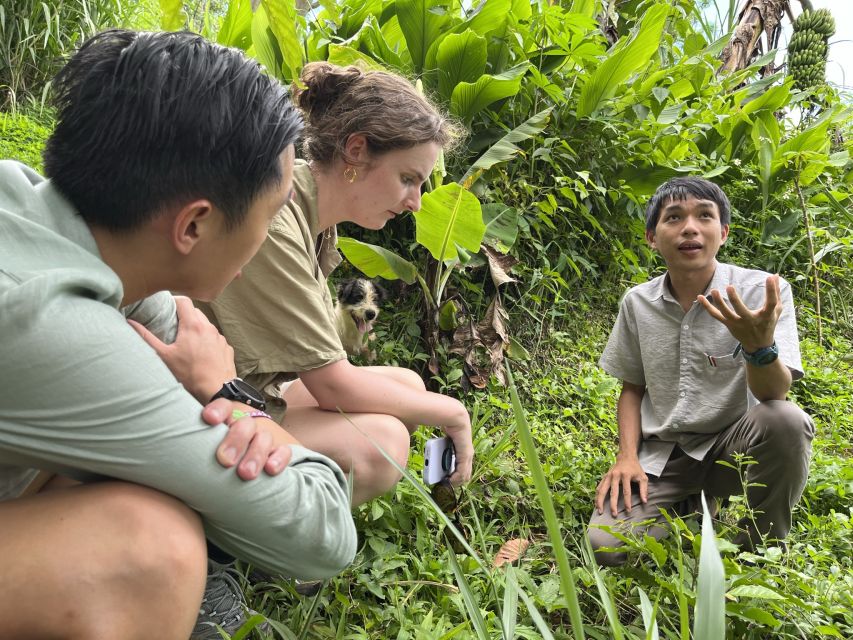
The experience takes place at HuyEco Coffee & Culture in central Da Lat. Huy leads the session, and his partner also helps run the business. The group limit is 10 people, which matters here because coffee tasting works better when you can ask questions and watch the preparation closely.
Huy’s role is the heart of the activity. He is not simply pouring coffee from a menu. He grows the beans, processes them, roasts them, and serves them. That direct connection gives his explanations a practical edge. You can ask why a coffee tastes fruity, how processing changes the cup, or why one roast feels heavier than another.
English and Vietnamese are available. The experience is especially well suited to people who like asking questions, since the session can be shaped by the group. Past sessions have taken about an hour to an hour and a half, while some bookings have included a longer farm visit. If you want the extended version, confirm the details when you choose your time.
Tasting five coffees from Arabica and Robusta
The tasting is the core of the visit. You receive five coffee drinks, with Arabica and Robusta from Huy’s farm represented through different processing and roasting methods. This is more useful than tasting five unrelated coffees because you can focus on how specific changes affect flavor.
You may notice sour, sweet, or fruity notes, especially in lighter coffees. Those flavors can seem surprising if your main experience with Vietnamese coffee has been a dark, intense cup with condensed milk. Here, the point is to taste the coffee without mixing it with anything that might cover its natural character.
Arabica and Robusta also give you a useful comparison. Arabica is often associated with more delicate flavors, while Robusta is commonly linked with stronger body and power. The exact impression depends on the bean, farm conditions, processing, roast, and brewing method. Huy’s approach lets you see that the species name alone does not tell the whole story.
Pay attention to texture as well as flavor. A dark roast may taste more forceful, while a lighter roast can show sharper or more unusual notes. The tasting helps you notice those differences for yourself, rather than asking you to accept a list of tasting terms.
Roasting green beans by hand
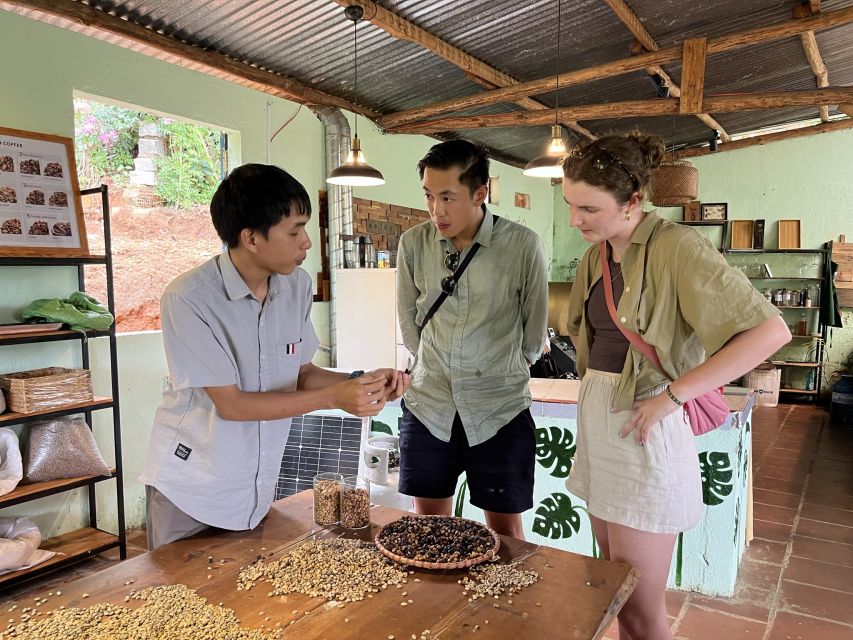
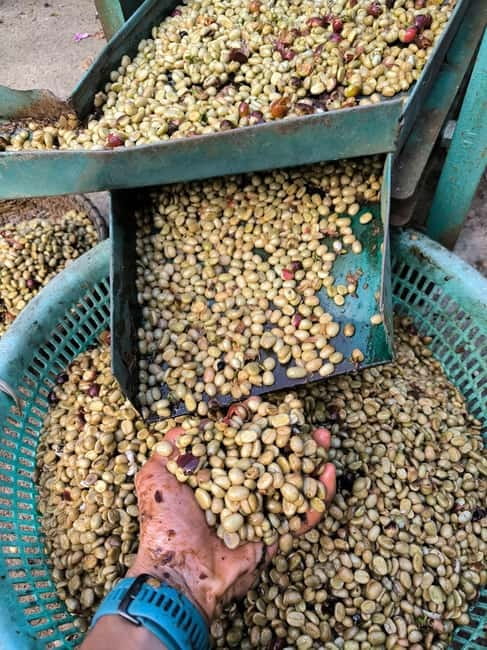
One of the most memorable parts is roasting your own beans. You begin with green coffee, then watch the beans turn into the familiar brown color associated with roasted coffee. The change is visual, but it also helps you understand how much work happens before brewing.
Roasting is not just a color change. Heat brings out new aromas and shifts the balance of flavors. A lighter roast can preserve more of the bean’s original character, while a darker roast creates a heavier, more roasted profile. The session uses light, medium, and dark roast levels so you can compare the results.
I like this part because it gives you a small task instead of making you sit through a talk. You handle the beans and see the process happen in front of you. The experience also makes a good souvenir of knowledge: when you buy coffee later, roast level will mean something more than a label on a bag.
The available information does not specify the exact roasting equipment or whether each participant takes beans home. Do not assume that a takeaway bag is included. Ask Huy directly if that matters to you.
Same base, a completely different day:
- Dalat: Three Waterfalls Small Group Tour – Alpine Coaster
★ 4.9 · 1,256 reviews - Dalat: 3 Waterfalls Day Tour — Datanla, Pongour & Elephant
★ 4.9 · 931 reviews - Dalat: Go Kart – Mongo Land – Countryside Small Group
★ 5.0 · 600 reviews - Dalat: Countryside Tour with Silk Village & Elephant Falls
★ 5.0 · 300 reviews
Brewing coffee three ways
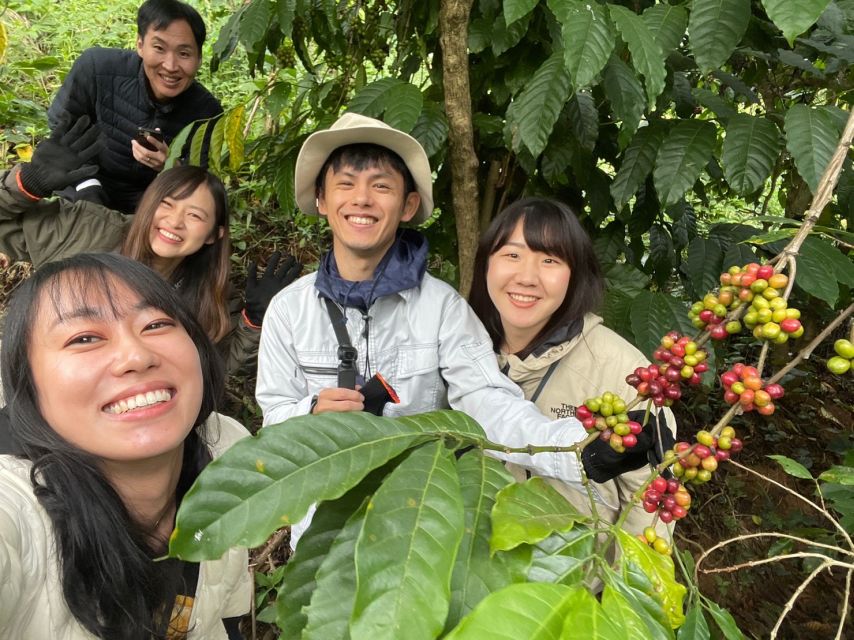
After roasting, you taste coffee prepared with different brewing techniques. The goal is to show that the same bean can taste different depending on how it is brewed. This is one of the most useful lessons for anyone who buys coffee at home.
The final step is your own traditional Phin coffee. A Phin is the small Vietnamese metal filter that sits directly on top of your cup. It produces a slow, concentrated brew and is closely tied to everyday coffee culture in Vietnam.
Making the Phin coffee yourself gives the session a fitting finish. You have already looked at the farm, compared beans, and roasted coffee. Now you control the last stage. The view over Da Lat makes this a pleasant moment to pause, sip, and think about the differences you have just tasted.
The experience includes five coffee drinks at the cafe. Extra drinks and food are not included, so plan on paying separately if you want something beyond the included tasting.
The farm and sustainable coffee story
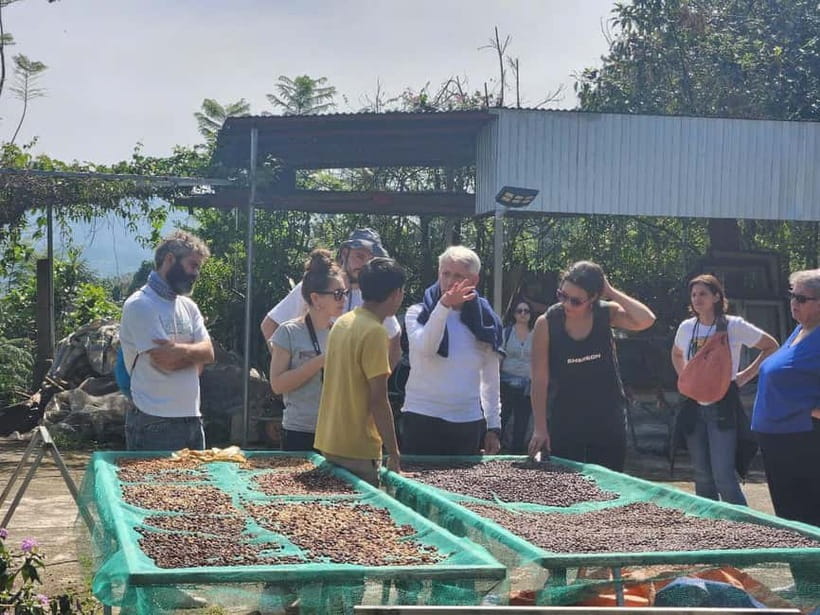
The activity is presented as a meeting with a sustainable coffee farmer, and Huy explains how he grows coffee in a more sustainable way. The farm side can be part of a longer booking, and past visits have included a tour of the coffee farm, a vegetable garden, and an explanation of the growing process.
That longer version is worth considering if you want more than a cafe tasting. Seeing the farm gives context to the beans in your cup. It also helps connect coffee with the wider work of rural life, including cultivation and care of the land.
At the same time, you should not book this expecting a guaranteed full-day farm expedition. The stated duration ranges from 90 minutes to five hours, and the meeting point is the cafe in central Da Lat. Some accounts describe the farm as a little outside the city and mention help arranging a taxi. Confirm what is included in your selected booking, especially if visiting the farm is your main goal.
The sustainability discussion is valuable because it comes from someone who works directly with coffee production. You can ask about how the plants are grown and how the beans are treated after harvest. The exact farming practices are not listed in detail, so the best approach is to arrive with questions rather than expecting a set technical presentation.
Views, verandas, and Da Lat’s cool air
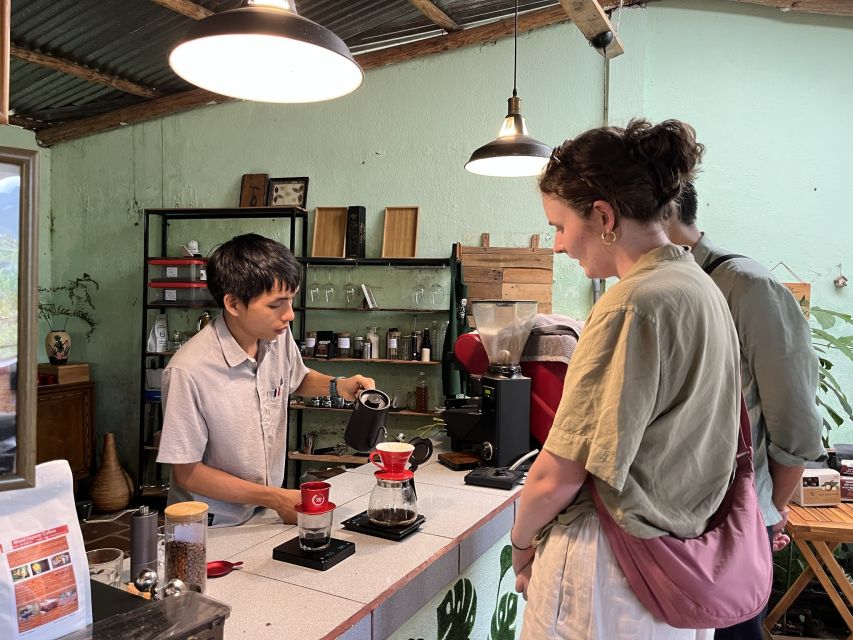
The cafe setting is more than a place to wait between tastings. The property includes verandas and views, giving you an easy place to enjoy the final coffee. The atmosphere is described as peaceful and well equipped, with a friendly feel created by Huy and his partner.
Da Lat’s climate is another practical point. The city can be cool, particularly compared with other parts of Vietnam. Bring a light jacket, even if the day begins warm. A jacket was loaned to one underdressed visitor, but that is a kindness, not a service you should count on.
The setting may be especially appealing after a busy day in central Da Lat. The activity is educational, but it is not rushed or stiff. You can take in the view, talk with Huy, and enjoy the cafe at the same time. Two kittens have also been part of the cafe’s charm, though of course animals and their presence can change.
How long the visit really takes
The advertised duration is broad: 90 minutes to five hours. That range likely reflects the difference between the cafe-based coffee session and longer options that include time at the farm. Several completed sessions have lasted around one to one and a half hours.
For most visitors, the shorter session should fit easily into a Da Lat day. It gives you enough time for the coffee explanation, five drinks, roasting, brewing comparisons, and your own Phin coffee. If you are building a tight sightseeing plan, allow extra time for questions and the relaxed pace of the cafe.
If you choose a longer option, leave more space in your schedule. The farm may be outside central Da Lat, and transport is not included. You can reach the cafe by walking, motorbike, taxi, or booking app, but hotel and airport transfers are not part of the price.
Check the start time and exact duration before you reserve. The booking system allows you to reserve now and pay later, and cancellation is free up to 24 hours ahead for a full refund. Those policies are useful if your Da Lat plans are still moving around.
Is 14 dollars good value?
At $14 per person, this is a strong value if you enjoy coffee and want more than a drink. The price includes five coffees and the guided experience, including the tasting, roasting, brewing instruction, and coffee-growing discussion. You are paying for access to the farmer’s time and for a hands-on lesson, not just cafe seating.
The value is clearest when you compare it with buying five separate specialty coffees and trying to understand the differences on your own. You get the explanation at the moment you taste each cup. The small group, limited to 10 participants, also keeps the price reasonable while allowing questions.
The price does not cover food, extra drinks, or transport. If you choose a farm option, check whether any additional travel costs apply. The activity remains inexpensive, but your final cost can rise if you add a taxi, order from the cafe, or select a longer format.
Who should book this coffee session?
I would choose this for coffee drinkers who want to understand Vietnamese coffee beyond the familiar condensed-milk style. It is also a good pick for anyone interested in sustainable farming, local producers, and the steps between harvest and cup.
You do not need prior coffee knowledge. The session covers basic differences in beans, processing, roasting, and brewing, and Huy can answer questions as you go. If you already know a great deal about specialty coffee, you may find the practical tasting more useful than the introductory explanations.
The experience suits solo visitors, couples, and small groups. A 10-person limit keeps it from feeling like a large commercial tour. The cafe setting and city view also make it a nice choice for a slower afternoon.
It may not suit you if you dislike coffee, want a fast photo stop, or need hotel pickup. It is also not the best choice if you expect a guaranteed long farm tour without checking the booking details first.
What to bring and how to prepare
Bring your passport, which is listed as required. Wear something comfortable for sitting, tasting, and roasting, and take a light jacket because Da Lat can be cold.
Arrive at the cafe named HuyEco Coffee & Culture in Google Maps and check the spelling carefully. The meeting point is in central Da Lat, but confirm the route before setting out, particularly if you are using a motorbike or booking app.
Come ready to taste coffee without sugar, milk, or other additions at first. That is the best way to notice the sour, sweet, and fruity notes Huy is trying to show you. You can decide later how you prefer your cup.
Should you book HuyEco Coffee & Culture?
Book it if you want a personal introduction to Da Lat coffee, especially if you like tasting several styles side by side. The strongest reasons are the five farm coffees, the chance to roast beans yourself, Huy’s direct experience as a farmer, and the final Phin coffee with a city view.
Choose the shorter option if you mainly want the tasting and brewing lesson. Choose the longer option only after confirming that it includes the farm visit you want. At $14, the cafe session offers very good value, but transport and extra food are separate.
I would make this a priority for coffee lovers spending time in Da Lat. It gives you a better understanding of what is in your cup, and it does so in a friendly, practical setting rather than through a long technical lecture.
FAQ
Where does the coffee experience take place?
It takes place at HuyEco Coffee & Culture in central Da Lat, Vietnam.
How much does the experience cost?
The listed price is $14 per person.
How long does the activity last?
The stated duration is 90 minutes to five hours. Check the available booking option for the exact duration and start time.
Who leads the experience?
Farmer Huy leads the coffee experience. English and Vietnamese are available.
How many people can join?
The activity is limited to 10 participants.
How many coffees are included?
Five coffee drinks at the coffee shop are included.
Does the experience include Arabica and Robusta?
Yes. The tasting includes five coffees from the farm, including Arabica and Robusta, prepared with different processing and roasting methods.
Will I roast coffee myself?
Yes. You can roast coffee beans yourself during the experience.
Will I make Vietnamese Phin coffee?
Yes. The experience includes making your own traditional Phin coffee.
Are transport, food, and extra drinks included?
No. Hotel and airport transfers, extra drinks, and food are not included.
What should I bring?
Bring your passport. A light jacket is also sensible because Da Lat can be cold, though the jacket is not listed as a required item.
Can I cancel the booking?
You can cancel up to 24 hours in advance for a full refund.
Newly listed around Dalat
- Da Lat Loop Tour On Private Car★ 4.9 · 40 reviews
- Trekking to Hidden Waterfall & Sturgeon Farm for dog-lovers★ 4.8 · 43 reviews
- Dalat: Sunrise Trekking and Cloud Hunting experience★ 4.9 · 43 reviews
- Da Lat: Datanla New Alpine Coaster Experience Entry Ticket★ 3.6 · 44 reviews
- 7-hour Datanla waterfall, Clay Tunnel and Holy See temple★ 4.7 · 47 reviews
- Da Lat: Half-Day Morning Datanla + Clay Tunnel + Crazy House★ 4.8 · 50 reviews
- Dalat: MOTORBIKE TOUR TO PONGOUR FALLS- SILK- COFFEE FARM★ 4.9 · 52 reviews
- Dalat City Tour with Cable Car, Alpine Coaster & Clay Tunnel★ 4.9 · 60 reviews
Da Lat Tours, compared.
Da Lat Countryside Minivan Shared Tour (Three Waterfalls)
Read our review →
3 Waterfalls Tour (Datanla – Elephant – Pongour)
Read our review →
Full Day Canyoning Activity in Da Lat with Lunch
Read our review →
Cloud Hunting and The Glow of Dawn in Da Lat 4:00 – 10:00 AM
Read our review →
Three Waterfalls Small Group Tour – Alpine Coaster
Read our review →
Full Day Exploring Tour with Langbiang -Crazy House- Datanla Fall
Read our review →
Browse the lists this tour appears in