
Reviewed · HANOI TOURS
Bat trang Pottery Ceramics Class in Hanoi’s Old Quarter | VN
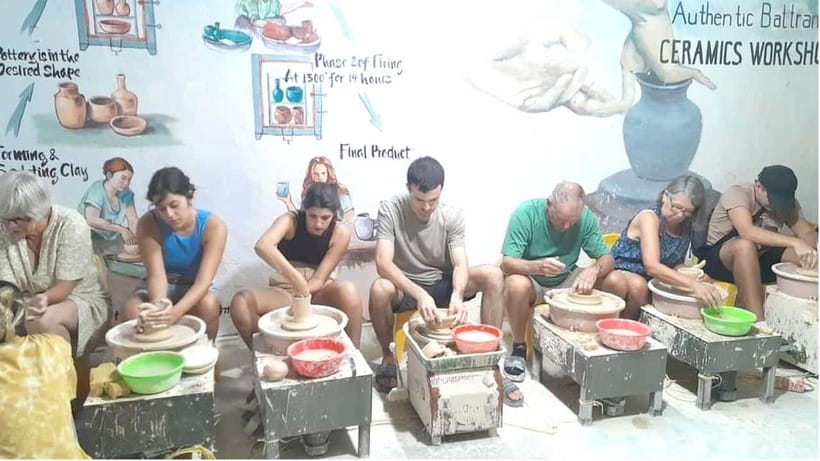
Making pottery by hand is a fine way to spend an afternoon in Hanoi, especially when the class brings the craft of Bat Trang village right to 115 Hàng Gai in the Old Quarter. You sit at an electric wheel, work with soft clay, and get steady help from Vietnamese instructors connected with the famous ceramics village.
I like two things right away: you can make as many pieces as time allows, and beginners get real hands-on help instead of a quick demonstration followed by guesswork. The main catch is timing. Glazing and firing normally take two to three days, so book this early in your Hanoi stay if you want to collect your pottery in person.
Key points at a glance
- Make several pieces in three hours: Try bowls, plates, cups, vases, and your own shapes without a strict piece limit.
- Learn on an electric wheel: The powered wheel makes the first lesson more manageable for complete beginners.
- Work with Bat Trang craft traditions: The instructors explain the basics and connect the class to Vietnam’s long pottery-making culture.
- Receive one finished piece free: One item can be glazed, fired, and taken home at no extra charge.
- Plan for a short wait: Colored glazing takes two to three days, while white glaze may be ready in one to two days.
- Expect patient instruction: Teachers such as Han and Tuan Vu have been praised for calm, practical guidance, especially with children and first-time potters.
Why this Hanoi pottery class is worth your time
Hanoi offers plenty of food tours, walking tours, and day trips. This class gives you something different: a small object that you made yourself, even if it comes out a little lopsided.
The workshop is run by Authentic Bat Trang, which brings the craft of Bat Trang ceramics village into the Old Quarter. Bat Trang has been known for handmade and hand-painted ceramics for generations. You are not simply buying a finished bowl from a shop. You are learning the basic movements behind it, then deciding what shape and color suit you.
That difference matters. A mass-produced souvenir can be attractive, but it does not carry the memory of sitting at a wheel with wet clay under your fingers. Your finished item may be smaller than expected or slightly uneven, yet those small flaws are part of its story.
The class lasts three hours, with a morning session from 8:30 to 11:30 and an afternoon session from 14:00 to 17:00. That is enough time to get past the first failed attempt and try again. Several people have managed four or five pieces, while others have made more basic forms as they gained confidence.
A few other Hanoi trips to compare
- Hanoi Cooking Class: Culture, Local Market & Meaning CSR Impact
★ 5.0 · 5,147 reviews - 5 Traditional Dishes Hanoi Cooking Class with Market Trip
★ 5.0 · 4,890 reviews - Hanoi Coffee Workshop: Taste Salt, Coconut and Egg Coffee
★ 5.0 · 1,286 reviews
Finding the studio at 115 Hàng Gai
The meeting point is 115 Hàng Gai Street in Hoan Kiem, directly in Hanoi’s Old Quarter. This is a useful location if you are already exploring the center, since you do not need to arrange transport out to Bat Trang village for the lesson itself.
The class takes place above the pottery shop. The shop is worth a look before or after your lesson, since it displays finished ceramic pieces and gives you a better idea of what skilled Bat Trang work can look like. Keep your expectations sensible, though. A three-hour beginner class will teach you the basics, not turn you into a master potter.
One practical point is to look for the correct entrance and make yourself known when you arrive. The waiting point has occasionally been unclear, especially when the person receiving participants did not speak fluent English. Have the activity details ready on your phone and arrive with enough time to identify the workshop without rushing.
The first lesson: clay, balance, and patience
The instructor begins with the basic process. You learn how to handle the clay, center it on the wheel, and use your hands to open and shape it. The teachers explain why certain hand positions and wall thicknesses matter. This is not just about making a pretty shape. If the clay is too thin or uneven, the piece may lose its structure.
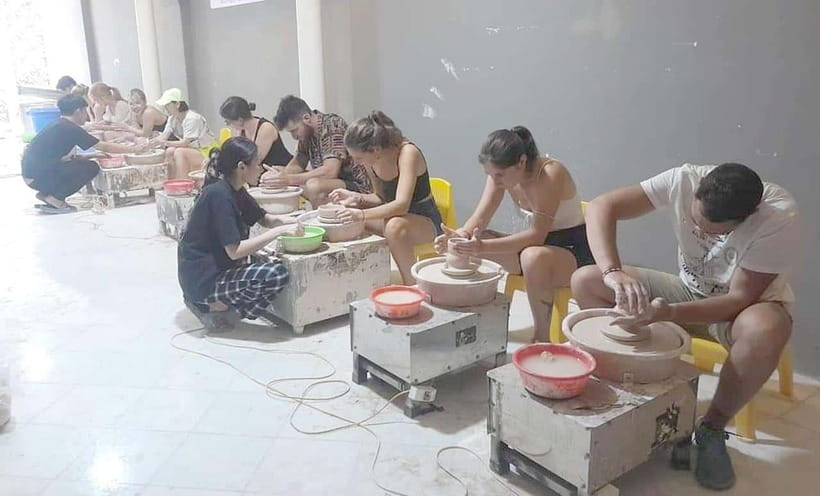
The electric wheel is a good choice for beginners. It provides steady motion, so you can focus on your hands rather than learning to control a foot pedal at the same time. Even with the powered wheel, the first few attempts can collapse quickly. That is normal.
I would not judge your ability by the first piece. One participant failed three times before leaving with three finished forms. The instructors are used to this. They can help correct a shape, show you where to place your fingers, or remove a failed attempt so you can start again.
Teachers identified in class experiences include Han and Tuan Vu. Han has been praised for clear English, patience, and a friendly teaching style. Tuan Vu has helped students with hand placement while they shaped their pieces. Instructor assignments can change, but the pattern is consistent: expect practical help at the wheel rather than a long lecture.
Three hours of making bowls, plates, and vases
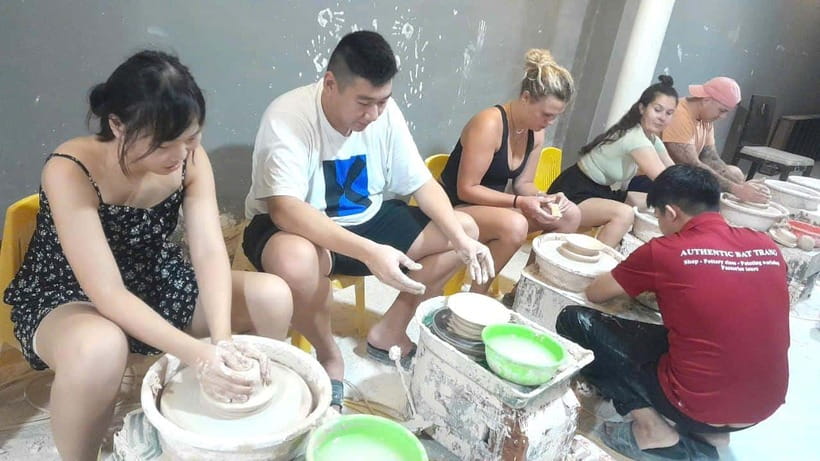
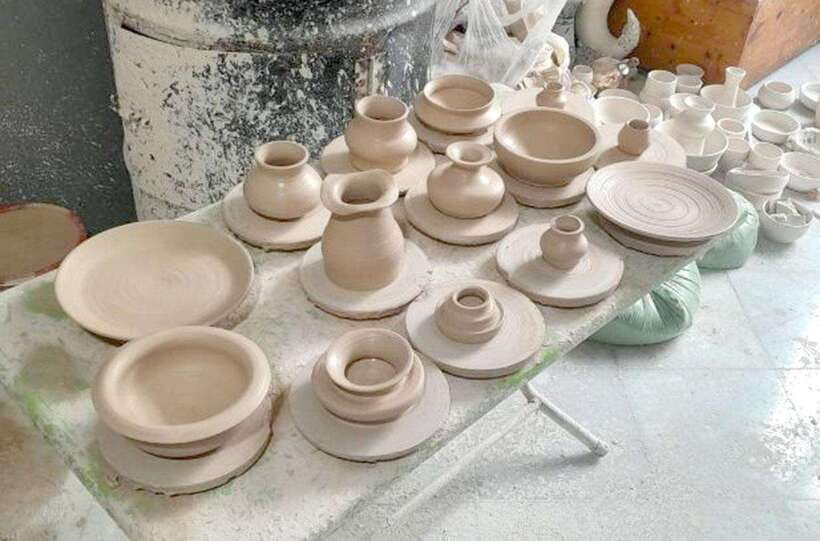
Once you understand the basic motion, the class becomes more open-ended. You can make a bowl, plate, cup, vase, or something less conventional. The activity has no stated limit on the number of pieces you may try during the session, though your actual total depends on how quickly you work and how many attempts need correction.
This freedom is one of the class’s best features. You are not handed one mold and told to copy it. The teacher may demonstrate several shapes, then let you experiment. You can make a simple dish first, then try a taller form once your hands are steadier.
For families, couples, and friends, the shared work area adds to the fun. A group of eight, including four children, completed the class together and had a good time. Children may not produce perfect forms, but the process gives them something active to do. Parents should expect clay, mistakes, and plenty of hand washing afterward.
The class is also a good rainy-day or hot-afternoon choice. It offers a break from Hanoi’s streets without turning into a passive indoor attraction. You remain busy for most of the three hours, but the pace is relaxed enough to feel creative rather than pressured.
There are two small comfort issues to know about. The seating has been described as too low or uncomfortable for a three-hour session. Also, the cooling room uses a fan, so do not expect a quiet, air-conditioned art studio. These are minor points, but they matter if you have back or knee trouble.
Same base, a completely different day:
- Hanoi Jeep Tour: Food, Culture and Fun by Vietnam Army Jeep
★ 5.0 · 15,222 reviews - Full-Day Ninh Binh Highlights Tour from Hanoi
★ 5.0 · 7,761 reviews - Hanoi: Ha Long Bay Day Cruise – Swimming, Meal, Kayaking
★ 4.7 · 7,415 reviews - Hanoi: Water Puppet Show Tickets
★ 4.6 · 7,029 reviews
Choosing your glaze and your one free piece
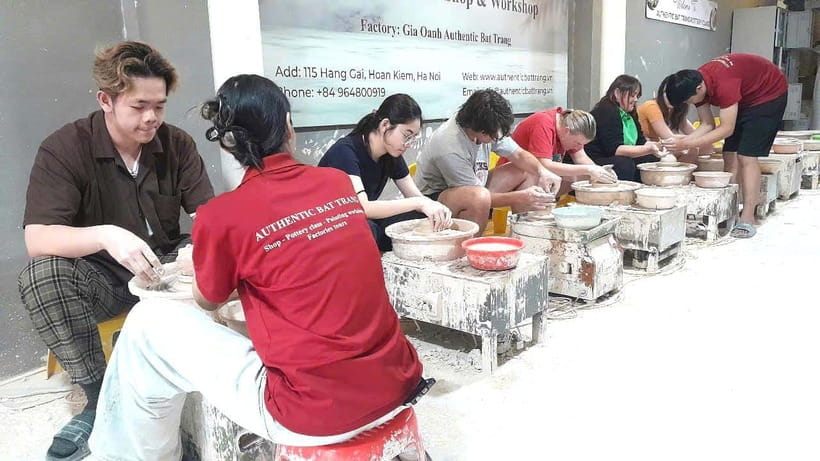
At the end of the making period, you choose one item to keep. The basic price includes the clay and materials, use of the electric wheel, instruction in English or Vietnamese, and the glazing and firing of one product.
Choosing only one can be surprisingly difficult. You may have a heart-shaped dish, a small vase, several cups, or a plate that looks better than expected. Think about which piece has the strongest shape and the best chance of surviving the kiln. The largest item is not automatically the best souvenir.
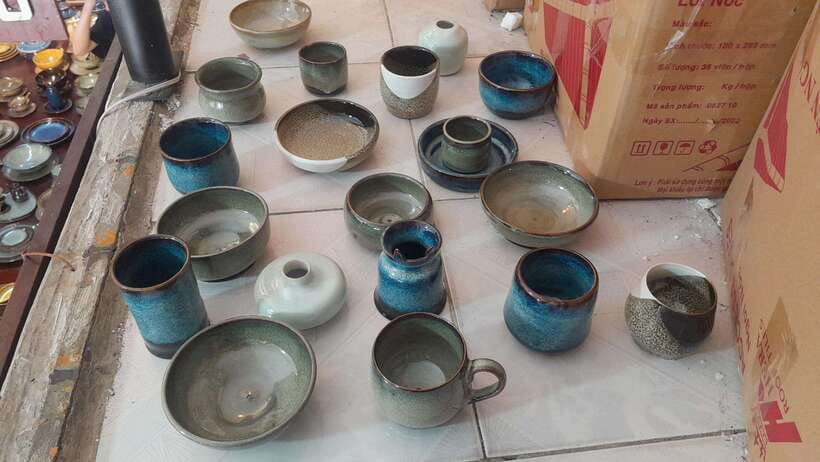
You also choose a glaze color. The final appearance will change after firing, so the wet piece you see in the studio is not the finished result. The process takes patience, and your object will shrink in the kiln. One maker expected dinner plates and received pieces closer to side-plate size. Another person noted roughly 20 percent shrinkage.
That shrinkage is useful to remember when shaping your work. If you want a generous bowl, do not make it too small at the wheel. The teacher can explain the process, but it is worth asking directly how much your chosen form may reduce.
Extra pottery, added fees, and shipping
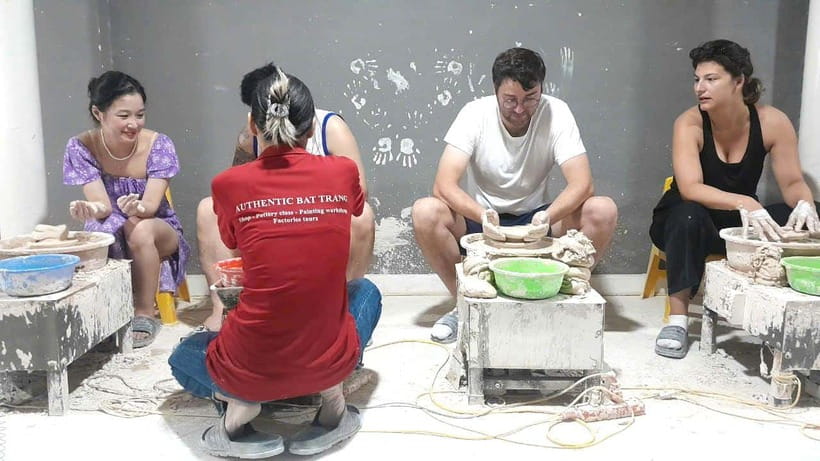
You can make more than the one free item, but additional pieces require an extra fee for glazing and firing. Recent booking information has put the added cost at about $5 per piece, though you should confirm the current amount when you choose your items.
This can be good value if you have room in your luggage and like the objects you made. Making several pieces also increases your chance of ending with one that is genuinely useful. Still, costs can climb if you fire every attempt, so decide before saying yes to all of them.
Transport is another issue. Ceramic pieces are heavier and more fragile than the average Hanoi souvenir. If you are flying with only a small bag, carrying several bowls home may be awkward. One participant reported paying about $30 to ship a piece to the United States. Shipping prices depend on the destination and package, so treat that figure as a guide, not a fixed rate.
The studio may also ship items to a later destination, with shipping charged separately. If you are moving around Vietnam, this can be easier than carrying pottery from city to city. Ask about the arrangement before you leave the workshop.
Firing times can shape your Hanoi schedule
Colored glazing and firing generally take two to three days. This is the most important planning detail in the whole activity.
I recommend booking the class near the beginning of your Hanoi stay. If you take the workshop on your last afternoon, you may not have time to return for the finished piece. Some people have arranged for the pottery to be shipped later, but that adds cost and requires extra coordination.
There is a faster option. If you only have one or two days, the studio can fire the piece with white glaze in roughly one to two days. The available information specifies white glaze only for this quicker option, so do not assume every color can be rushed.
Holiday timing can also affect collection. Around Tet, the Lunar New Year, firing schedules may change. A misunderstanding over collection time was resolved, but the situation shows why you should ask for a clear pickup date, especially during holiday periods.
Before leaving, confirm:
- Which piece is being fired
- Which glaze color you selected
- The expected collection date
- The extra cost for additional items
- Whether shipping is possible if you leave Hanoi
Is $33 a fair price?
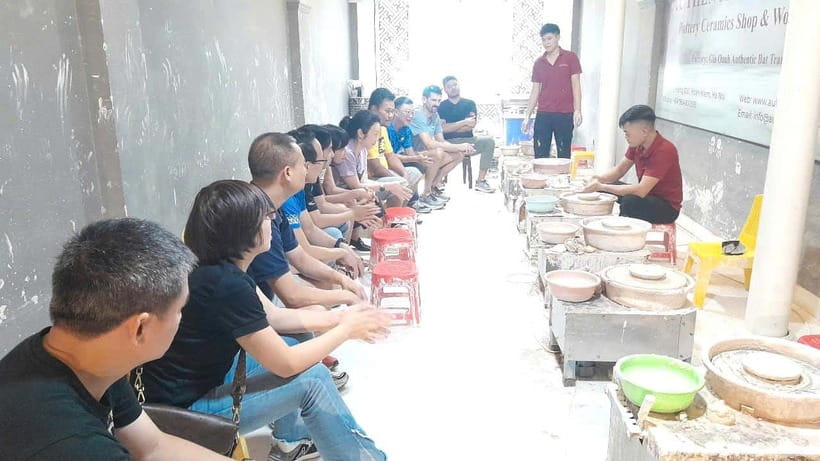
The class costs $33 per person. That is not the cheapest craft activity in Hanoi, but it is reasonable for three hours of instruction, materials, wheel use, and one glazed and fired item.
The value comes from the amount of time you get at the wheel. You are not paying for a ten-minute demonstration followed by a quick souvenir purchase. You can practice repeatedly and make several shapes. The first free fired piece also gives you a finished reminder of the experience, not just a lump of unfired clay.
The price works best if you value the process as much as the object. If your only goal is to buy beautiful Bat Trang ceramics, the shop may be enough. If you want to learn a new skill, make mistakes without embarrassment, and take home something personal, the class earns its cost.
Families should also factor in the extra firing fees if each person wants several finished items. The base price includes one product per participant, not every object created during the lesson.
Who will enjoy this class most?
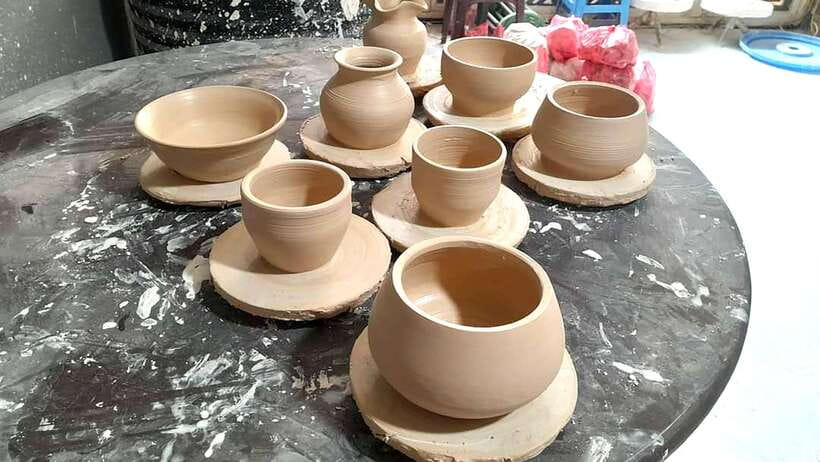
I would recommend it to first-time potters, couples looking for a hands-on date, families with children, and anyone who wants a quieter activity between Hanoi sightseeing stops. You do not need artistic training. The instructors are used to helping people who have never touched a pottery wheel.
It suits creative people who like experimenting, but it also works for nervous beginners. The teacher can guide you closely when you need help, then leave you alone to try your own ideas. That balance is important. You get instruction without losing control of the finished design.
The class may be less appealing if you want a formal, highly polished art lesson or if you dislike sitting for a long period. The low seating and fan-cooled room may not suit everyone. Also, if you leave Hanoi immediately, the finished pottery becomes harder to collect.
Practical tips for a better session
Wear clothes and shoes that can handle a little clay. You may get messy, even though the class is manageable and the studio provides the working materials.
Arrive ready to make several attempts. Centering clay takes practice, and a failed piece is not wasted time. It teaches you what pressure and speed feel like.
Ask questions early. If the teacher’s explanation is not clear, ask for a demonstration of hand position or wall thickness. English instruction is available, but individual communication can vary.
Take photos before the pieces go into the kiln. Once the clay is trimmed and glazed, the object may look quite different. A picture of the original form makes the souvenir more meaningful.
Book the morning class if you want a less crowded session. One account found the morning quieter, while the afternoon group had about 12 people and an extra instructor was added to maintain individual help. Group size can change, but the timing may affect the feel of the lesson.
Reserve with flexibility if your schedule is uncertain. The activity allows cancellation up to 24 hours before the start for a full refund, and a reserve-now, pay-later option is available.
Should you book the Bat Trang pottery class?
Book it if you want a creative Hanoi memory, not just another sightseeing stop. The strongest reasons are the patient teaching, the chance to make several pieces, and the free finished item included in the $33 price.
I would place it early in your itinerary and leave two to three days for colored glazing and firing. If you are departing sooner, ask about white glaze or shipping before you begin. With that small bit of planning, this is a rewarding choice for beginners, families, and anyone who wants to bring home a souvenir with fingerprints, effort, and a story attached.
FAQ
Where is the pottery class held?
The class is held at 115 Hàng Gai Street in Hoan Kiem, in Hanoi’s Old Quarter.
How long does the pottery class last?
The activity lasts three hours.
What time are the classes held?
Morning classes run from 8:30 to 11:30. Afternoon classes run from 14:00 to 17:00.
Do I need previous pottery experience?
No. The class is designed for beginners, and the instructors guide you through the process step by step.
What language is the instruction in?
Instruction is available in English and Vietnamese.
How many pottery pieces can I make?
You can make as many pieces as you can during the three-hour class. The number depends on your pace and how many attempts need correction.
Is one finished pottery item included?
Yes. One product can be glazed, fired, and taken home at no additional charge.
Can I fire more than one item?
Yes. Additional products can be glazed and fired for an extra fee.
How long does glazing and firing take?
Colored glazing and firing usually take two to three days. White glaze may be available in one to two days.
Can the finished pottery be shipped?
Shipping may be arranged later, but the shipping fee is not included.
Newly listed around Hanoi
- Hanoi: Halong Bay Cruise, Amazing Cave, Titov Island & Kayak★ 4.2 · 39 reviews
- 2Days-1Night Halong Bay Luxury Genesis Regal Cruises★ 4.5 · 39 reviews
- Ninh Binh 1 Day Tour(Tam Coc – Mua Cave – Bich Dong)★ 5.0 · 39 reviews
- 8 days 360° Vietnam Adventure from Hanoi★ 5.0 · 39 reviews
- Dora Cruise – Luxury 5 Star Cruise in Halong Bay & Lan Ha Bay (2D1N)★ 4.5 · 39 reviews
- 3 Days and 2 Nights Ha Giang Loop Tour★ 5.0 · 39 reviews
- Best Value Ha Long bay 1 day – Lunch, kayak, swimming, transfer★ 5.0 · 39 reviews
- From Hanoi: Ha Giang Loop Motorbike Tours 3-Days 2-Nights★ 5.0 · 40 reviews
Hanoi Tours, compared.

Hanoi Jeep Tour: Food, Culture and Fun by Vietnam Army Jeep
Read our review →
Full-Day Ninh Binh Highlights Tour from Hanoi
Read our review →
Ha Long Bay Day Cruise – Swimming, Meal, Kayaking
Read our review →

Hanoi Motorbike Tour: Food, Culture and Fun by Vintage Motorbike
Read our review →

Hanoi Cooking Class: Culture, Local Market & Meaning CSR Impact
Read our review →
5 Traditional Dishes Hanoi Cooking Class with Market Trip
Read our review →Browse the lists this tour appears in