
Reviewed · HANOI TOURS
Hanoi Coffee Class with Egg, Coconut, Salt, and Dripping Coffee
Vietnamese coffee is more than strong black liquid under a cap of condensed milk. In this two-hour Hanoi coffee class, you make five local styles yourself, including egg, coconut, salt, and traditional drip coffee, then drink the results in a recycled cafe in the Old Quarter. John and Riley are among the instructors who have led the class.
I like the small maximum of eight people, which gives the lesson a personal feel rather than turning it into a production line. I also like the mix of hands-on work and cultural background, since you learn not only how to prepare each drink but why these styles matter in Hanoi.
The main consideration is that this is a coffee tasting and preparation class, not a wider food tour. If you do not drink coffee, or want a long walking tour through Hanoi, your $25 is better spent elsewhere.
Key points at a glance
- Five coffee styles in one class: Prepare drip black coffee, condensed-milk coffee, egg coffee, coconut coffee, and salt coffee.
- A small Hanoi setting: The class takes place at Hidden Gem Cafe, 1 Hàng Mắm, in the Old Quarter.
- Guides with a friendly teaching role: John and Riley are named instructors associated with the class.
- More than a recipe lesson: The session explains Vietnamese and Hanoi coffee culture and its history.
- Two hours, with drinks to enjoy: You make the coffees and taste them during the class, with a snack included according to the class description.
- Good booking flexibility: You can cancel for a full refund up to 24 hours before the start time.
Five Vietnamese coffees, not just one
The useful thing about this class is its range. Vietnamese coffee is often reduced to one image: a metal filter slowly dripping into a glass of condensed milk. Here, you see how that basic drink becomes several very different cups.
The lesson includes traditional dripping coffee, usually prepared as black coffee and with condensed milk. It also covers three Hanoi specialties: egg coffee, coconut coffee, and salt coffee. That gives you a clear taste of the country’s coffee habits without asking you to commit to a full day of food activities.
You are not simply handed five finished drinks. The class teaches you to prepare them yourself. That matters because the filter, the coffee, and the additions all change the final result. You can compare a direct black brew with the sweet, creamy egg version, then see how coconut and salt alter the balance.
The class description promises five different coffees made from scratch. For anyone who likes to understand what is in the cup, that is a better deal than a standard cafe visit. You leave with a more useful sense of how the drinks are built, even if no printed recipe sheet is guaranteed.
A few other Hanoi trips to compare
- Hanoi Coffee Experience: 6 Brews, 9 Recipes & 3 Liquor Tastings
★ 5.0 · 2,945 reviews - Hanoi Coffee Workshop: Taste Salt, Coconut and Egg Coffee
★ 5.0 · 1,286 reviews - Hanoi: Salt Coffee Workshop Awake Your Senses With 6 Brews
★ 5.0 · 792 reviews
Starting with Vietnam’s slow drip coffee
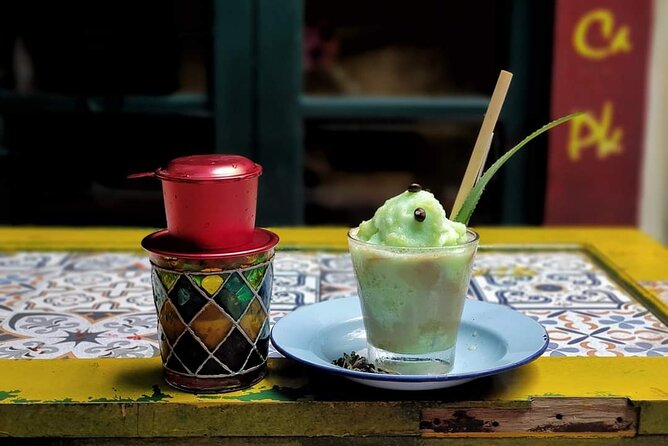
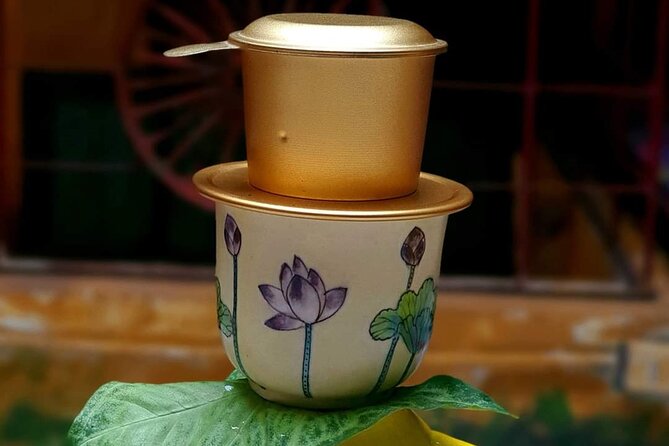
The traditional Vietnamese phin filter is the natural starting point. It is small, simple, and slower than the paper filters many people know at home. Coffee passes through the metal filter into the cup below, creating the familiar drip style.
The class covers dripping black coffee, which lets you taste the coffee without milk or flavored additions. It also teaches coffee with condensed milk, one of the country’s best-known combinations. The contrast helps you understand why Vietnamese coffee often tastes so bold and sweet.
This part of the session is especially useful if you plan to order coffee around Hanoi after the class. You will recognize the metal filter and understand why your drink may arrive before it has finished dripping. That small wait is part of the pleasure, not a mistake in service.
Do not expect a specialty coffee lecture with a long focus on bean varieties or technical brewing theory. The supplied details point to a practical cultural workshop, with preparation and tasting at its center. That is a strength for most holidaymakers, though serious coffee students may want more technical detail.
Egg coffee: Hanoi’s most famous sweet cup
Egg coffee is the star for many first-time visitors. It combines coffee with a sweet, creamy egg topping, creating something closer to a dessert than a plain morning brew. The class shows you how to prepare this signature Hanoi drink rather than merely ordering it at a cafe.
The cultural context makes the drink more interesting. You learn about the place of egg coffee in Hanoi’s coffee traditions and how local cafes turned a limited ingredient into a distinctive specialty. The exact preparation matters, since the topping needs to work with the coffee below rather than simply sit there as a heavy layer.
This is likely the most memorable drink in the line-up, but it may also be the sweetest. If you prefer sharp, unsweetened coffee, taste the black drip coffee first. That way, you can judge the egg coffee as a local treat rather than expecting it to behave like a normal cup.
The activity includes a snack with the drinks according to the description. That fits the sweet nature of the class, though the supplied information does not specify the snack or how much food is served. Plan to see it as a light accompaniment, not a meal replacement.
Coconut and salt coffee bring the surprises
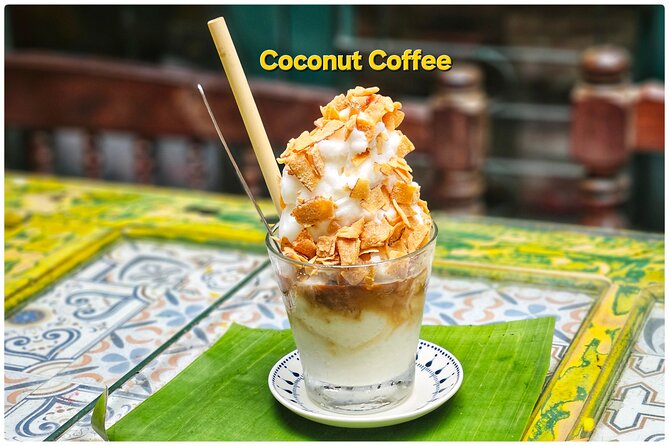
Coconut coffee gives you another clear change in texture and flavor. The coffee remains the base, but coconut adds a creamy, sweet character that makes the drink feel cooler and more dessert-like. The class lets you prepare this combination yourself, so you can see how the ingredients are brought together.
Salt coffee sounds odd until you understand what a small amount of salt can do. Used with restraint, it can soften bitterness and sharpen the taste of sweetened coffee. The class presents it as one of the Hanoi specialties, giving you a chance to try a drink you might otherwise overlook on a cafe menu.
I like having both drinks in the same session because they show how flexible Vietnamese coffee can be. Egg and coconut lean toward dessert. Salt works in a different direction. Alongside black coffee and condensed-milk coffee, they create a useful little tasting menu.
The practical drawback is volume. Five coffees in two hours can be a lot, especially if you drink every cup in full. The information does not say whether half portions are available, so pace yourself and ask the instructor if you prefer to taste rather than finish each drink.
Same base, a completely different day:
- Hanoi Jeep Tour: Food, Culture and Fun by Vietnam Army Jeep
★ 5.0 · 15,222 reviews - Full-Day Ninh Binh Highlights Tour from Hanoi
★ 5.0 · 7,761 reviews - Hanoi: Ha Long Bay Day Cruise – Swimming, Meal, Kayaking
★ 4.7 · 7,415 reviews - Hanoi: Water Puppet Show Tickets
★ 4.6 · 7,029 reviews
Coffee culture in the Old Quarter
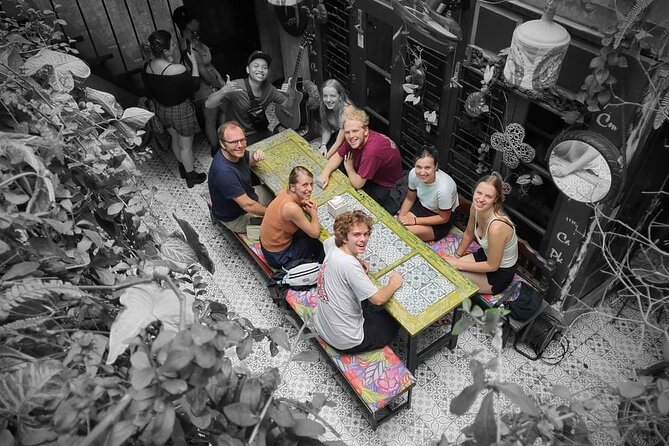
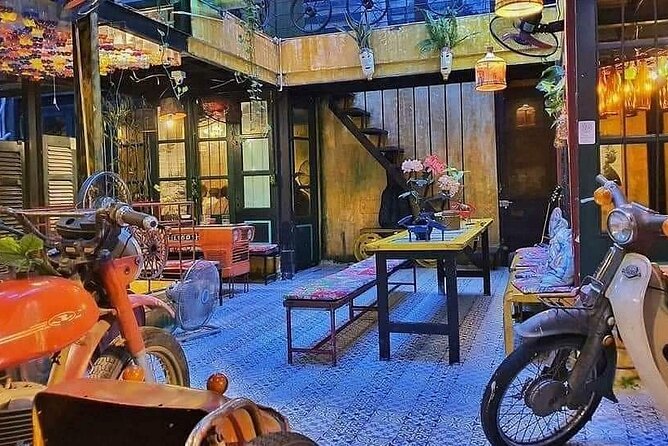
The class takes place at Hidden Gem Cafe, an eco-friendly cafe at 1 Hàng Mắm, Hanoi Old Quarter. Its furniture and decorations are made with creatively reused materials, giving the room a distinct character instead of the polished, interchangeable look of a modern chain.
That setting supports the subject. You are not learning Vietnamese coffee in a hotel conference room. You are sitting in a working local-style cafe where coffee and food are part of the daily rhythm. The Old Quarter location also makes it easy to pair the class with other sightseeing before or after.
The class adds background on Vietnamese and Hanoi coffee culture and history. That explanation is valuable because a drink can tell you something about place. The metal filter, condensed milk, egg topping, and cafe setting all reflect adaptation, habit, and local taste.
The cafe also serves Vietnamese beverages and healthy, organic Vietnamese cuisine. The supplied information does not say that a full meal is included in the class, so do not book it as a food tour. Think of the food service as an option before or after, unless your confirmation gives you different details.
A small class with named instructors
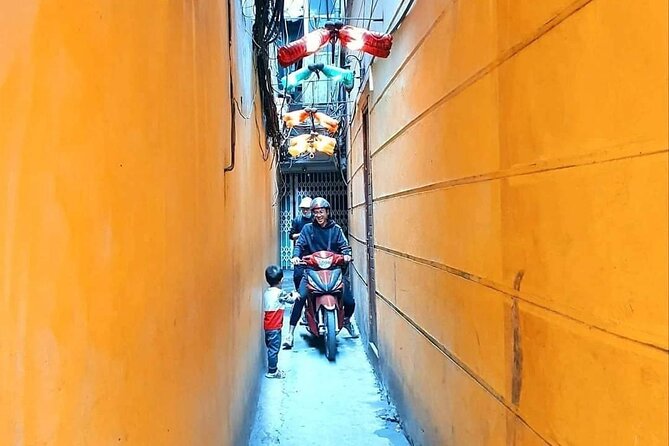
A group capped at eight people is one of the strongest practical features. You have a better chance to see the demonstrations, ask questions, and get help with each drink. A larger group could make a hands-on coffee workshop feel like a lecture, while eight keeps it closer to a shared kitchen lesson.
John is identified as an instructor and host, and Riley is also named as an excellent host and teacher in the class material. Since staffing can change, check your confirmation for the guide assigned to your date. The important point is that the format depends on an active instructor, not a self-guided tasting.
The class has an informal social side, too. You prepare drinks, taste them, and have time for conversation with the staff. That can be a pleasant way to meet people while learning something specific about Hanoi, though anyone seeking a quiet coffee should choose a regular cafe visit instead.
This setup suits solo visitors, couples, and small groups particularly well. Families should consider the caffeine and sweetness involved. The supplied information does not provide a minimum age or child policy, so confirm those details before booking with young children.
Is $25 good value?
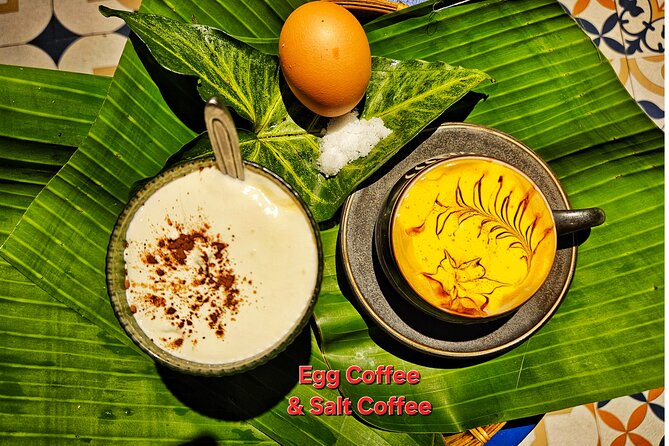
At $25 per person, the class is reasonably priced for a two-hour, small-group activity that includes instruction and five drinks. You are paying for more than ingredients. The fee also covers the use of the cafe, a host, cultural explanation, and the chance to prepare drinks you may not know how to make at home.
The value is strongest if you enjoy coffee and want a practical activity. Five cafe orders in Hanoi could cost less than the class, but they would not give you the same instruction or comparison. A normal cafe visit wins on price alone. This class wins on participation and context.
It is also a good option on a rainy afternoon or during a crowded Old Quarter schedule. You get a fixed two-hour activity without leaving central Hanoi. Since the location is near public transportation, reaching the meeting point should be straightforward, though the information does not identify the nearest station or give transfer instructions.
The average booking lead time is nine days. That suggests you should not leave it until your final morning if the class is important to your plans. With only eight places, a popular time could fill before you arrive.
What the two-hour flow feels like
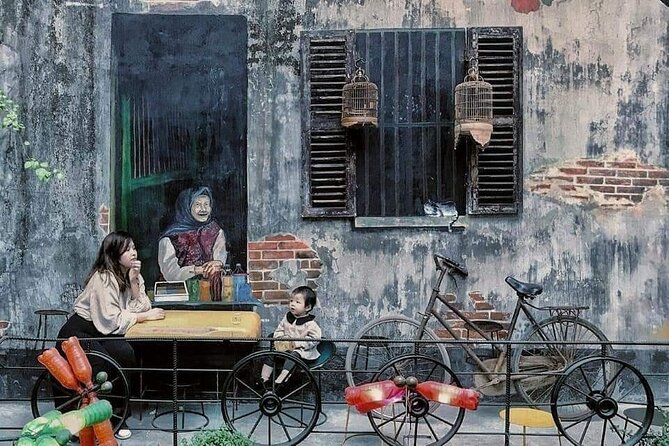
The exact minute-by-minute schedule is not provided, but the class has a clear practical shape. You can expect an introduction to Vietnamese coffee and Hanoi coffee culture, followed by instruction and preparation of the five featured drinks.
The likely learning order begins with drip coffee, since black and condensed-milk coffee form the base for understanding the other styles. From there, the class moves into egg, coconut, and salt coffee. Treat that as the working structure rather than a guaranteed timetable, since the activity details do not list exact start and end times for each preparation.
You should have opportunities to watch, make, taste, and compare. That cycle is what makes the class worth your time. If you are interested in taking notes, bring your phone or a small notebook, since a printed recipe sheet is not promised.
Allow the full two hours, even if you are planning another appointment afterward. The class ends back at the meeting point, so you do not need to arrange a separate ride from another part of Hanoi. The start and finish are both at Hidden Gem Cafe.
Who should book this coffee class?
I would choose this class for you if you enjoy trying local drinks, want a short activity in the Old Quarter, or like learning by doing. It also suits anyone who has ordered Vietnamese coffee before and wants to understand the process behind the menu.
It is a sensible pick for a first day in Hanoi because it gives you a simple introduction to local cafe customs. You can use what you learn later when choosing drinks around town. The class also works well for a free afternoon between major sightseeing stops.
You may want to skip it if you dislike caffeine, sweet drinks, egg-based toppings, coconut, or salt in coffee. You should also look elsewhere if your main goal is Vietnamese cooking, street food, or a long walking tour. This is a focused coffee workshop, and its narrow subject is both its appeal and its limit.
The eco-friendly cafe setting may appeal to you if you care about design and reuse. The recycled furniture and decorations give the venue a clear identity, but the information does not promise a formal lesson in sustainability. The environmental idea is part of the setting, not the main activity.
Booking details worth knowing
Your mobile ticket is convenient for a short city activity. Confirmation is received at the time of booking, and the meeting point is the cafe at 1 Hàng Mắm, Phố cổ Hà Nội, Hoàn Kiếm, Hanoi.
The experience ends where it begins. Public transportation is nearby, and the class has a maximum of eight people. Check the start time carefully because the cancellation cut-off uses Hanoi local time.
Free cancellation applies until 24 hours before the experience starts. Cancel at least 24 hours ahead for a full refund. Cancellations or changes made inside that 24-hour window are not accepted for a refund.
Should you book it?
Book this class if you want five Vietnamese coffee styles, a small group, and a useful cultural lesson in the Old Quarter. The strongest reasons are the hands-on format, the range from drip coffee to egg, coconut, and salt versions, and the distinctive recycled cafe setting.
I would not book it simply because it is cheap, since a regular Hanoi cafe will cost less. Book it because you want to make the drinks, compare them, and understand what you are ordering afterward. At $25, that is solid value for coffee fans and curious first-time visitors, especially if you reserve ahead and can handle a generous dose of caffeine.
FAQ
Where does the Hanoi coffee class meet?
The class meets at Hidden Gem Cafe, 1 Hàng Mắm, in Hanoi’s Old Quarter, Hoàn Kiếm, Hanoi, Vietnam.
Where does the activity end?
The activity ends back at the meeting point.
How long does the coffee class last?
The class lasts approximately two hours.
How much does the class cost?
The listed price is $25 per person.
How many people can join the class?
The maximum group size is eight people.
Which coffees will I learn to make?
You will learn to prepare dripping black coffee, coffee with condensed milk, egg coffee, coconut coffee, and salt coffee.
Does the class explain Vietnamese coffee culture?
Yes. The class includes information about Vietnamese and Hanoi coffee culture and history.
Is the meeting point near public transportation?
Yes. The meeting point is described as being near public transportation.
Will I receive booking confirmation right away?
Confirmation is received at the time of booking.
Can I cancel for a full refund?
Yes. You can cancel at least 24 hours before the experience start time for a full refund. Cancellations or changes made less than 24 hours before the start time are not accepted for a refund.
Newly listed around Hanoi
- Hanoi: Halong Bay Cruise, Amazing Cave, Titov Island & Kayak★ 4.2 · 39 reviews
- 2Days-1Night Halong Bay Luxury Genesis Regal Cruises★ 4.5 · 39 reviews
- Ninh Binh 1 Day Tour(Tam Coc – Mua Cave – Bich Dong)★ 5.0 · 39 reviews
- 8 days 360° Vietnam Adventure from Hanoi★ 5.0 · 39 reviews
- Dora Cruise – Luxury 5 Star Cruise in Halong Bay & Lan Ha Bay (2D1N)★ 4.5 · 39 reviews
- 3 Days and 2 Nights Ha Giang Loop Tour★ 5.0 · 39 reviews
- Best Value Ha Long bay 1 day – Lunch, kayak, swimming, transfer★ 5.0 · 39 reviews
- From Hanoi: Ha Giang Loop Motorbike Tours 3-Days 2-Nights★ 5.0 · 40 reviews
Hanoi Tours, compared.

Hanoi Jeep Tour: Food, Culture and Fun by Vietnam Army Jeep
Read our review →
Full-Day Ninh Binh Highlights Tour from Hanoi
Read our review →
Ha Long Bay Day Cruise – Swimming, Meal, Kayaking
Read our review →

Hanoi Motorbike Tour: Food, Culture and Fun by Vintage Motorbike
Read our review →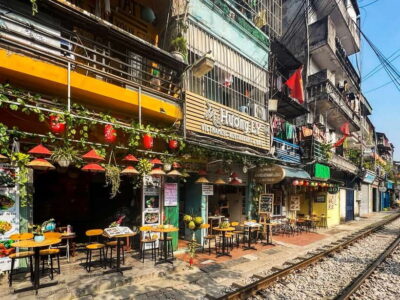
Hanoi Cooking Class: Culture, Local Market & Meaning CSR Impact
Read our review →
5 Traditional Dishes Hanoi Cooking Class with Market Trip
Read our review →Browse the lists this tour appears in