Reviewed · HANOI TOURS
Vietnam War: Uncovering Hanoi’s Untold Stories
Hanoi’s wartime story is not confined to museums or grand monuments. This three-hour walk takes you through black-market lanes, communal housing, and the Kham Thien B52 memorial, using everyday places to explain how divided Vietnam shaped ordinary families.
I like the local point of view and the way the tour works as a conversation rather than a formal lecture. I also like the route’s less-visited corners, especially the Cho Gioi area and the quieter end of Train Street. The main consideration is that this is more a social and historical walk than a parade of military sights. If you expect tanks, aircraft, and a long list of battle sites, you may find the focus different from what you imagined.
Key points
- See Hanoi beyond the postcard sights: Walk through Cho Gioi, a local market area, and places most visitors would pass without noticing.
- Understand daily life under the planned economy: Hear how shortages, communal housing, and informal trade affected families in northern Vietnam.
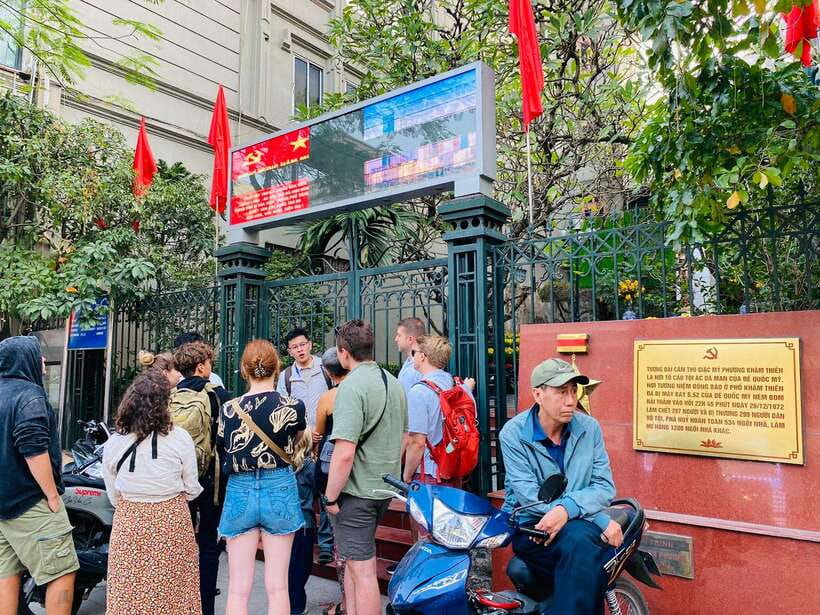
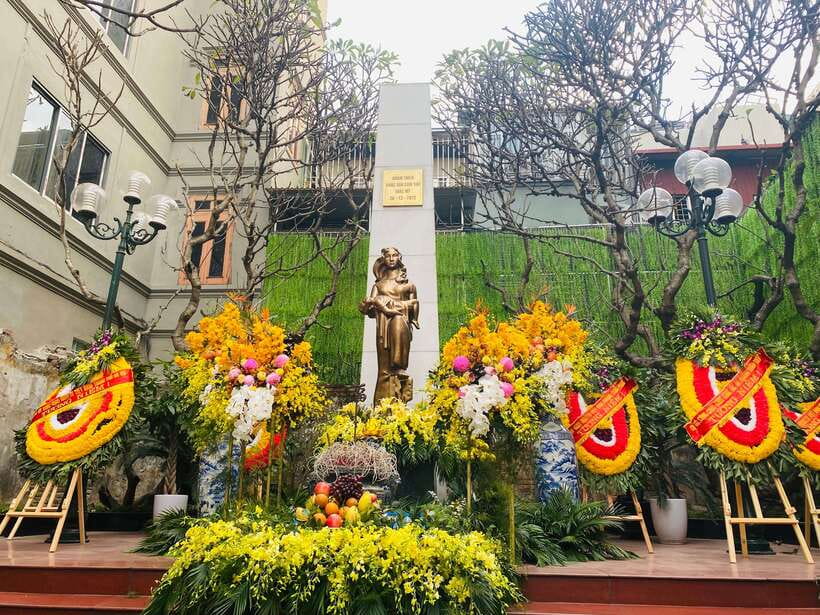
- Visit the Kham Thiem B52 memorial: Learn about the Christmas bombings and their impact on local residents.
- Hear more than one side of divided Vietnam: The discussion covers northern and southern experiences, unification, and the Cold War setting.
- Finish at Hanoi Train Street: Stop for coffee, tea, drinks, or snacks while taking in one of the city’s best-known modern scenes.
- Support two local causes: Twenty percent of profit goes to the Vietnam Association for Victims of Agent Orange/Dioxin and Blue Dragon Children’s Foundation in Hanoi.
Why this Hanoi history walk feels different
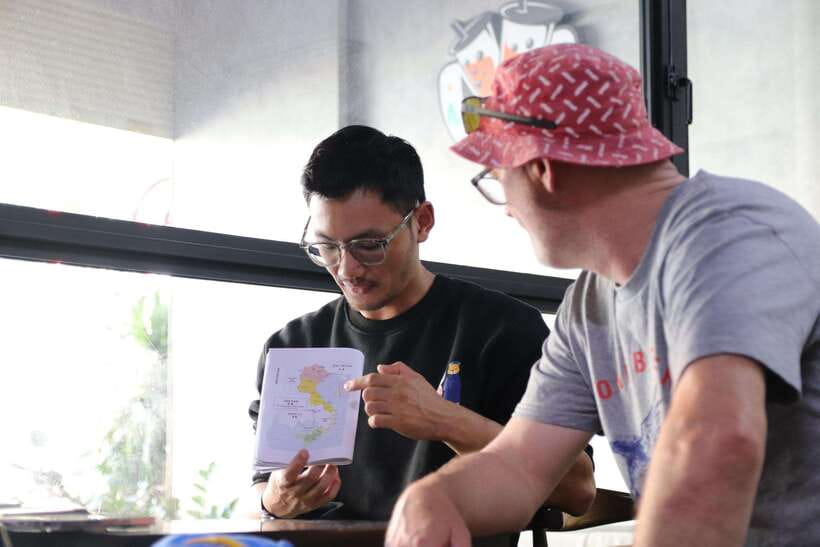
Many Hanoi tours begin with emperors, temples, or French colonial buildings. This one begins with the recent past, including the decades when Vietnam was split between a communist North and an anti-communist South.
That choice matters. The Vietnam War, called the Resistance War Against America in Vietnam, was not only fought in distant jungles or discussed at diplomatic tables. It affected food, housing, work, family ties, schooling, and the choices people could make.
Your guide explains those changes while taking you through ordinary neighborhoods. You are not simply looking at a memorial and moving on. You are linking the memorial to the streets around it, then linking those streets to present-day Hanoi.
The tone is intended to be relaxed and open. Guides such as Kien, Dung, Cong, and Quang have led this walk, and the strongest part of the experience is the personal, conversational delivery. Kien is especially noted for clear English, humor, and the ability to answer questions about both national events and daily life.
You should still expect serious subject matter. The walk deals with wartime loss, the bombing of Hanoi, the aftermath of Agent Orange, and the strain placed on ordinary people by political change. The friendly tone makes the material easier to discuss, but it does not turn the subject into light entertainment.
A few other Hanoi trips to compare
- Hanoi Jeep Tour: Food, Culture and Fun by Vietnam Army Jeep
★ 5.0 · 15,222 reviews - Full-Day Ninh Binh Highlights Tour from Hanoi
★ 5.0 · 7,761 reviews - Hanoi: Ha Long Bay Day Cruise – Swimming, Meal, Kayaking
★ 4.7 · 7,415 reviews
Starting near Chua Vua Street
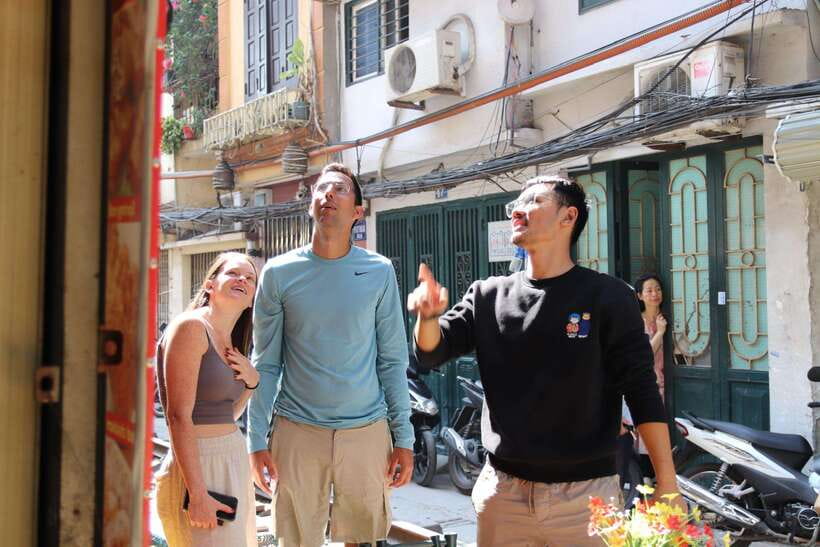
The walk starts at 24B Chua Vua Street, about 2.5 kilometers from Hoan Kiem Lake and roughly 3.5 kilometers from Hanoi’s Old Quarter. The meeting point is in front of Trường Trung học cơ sở Đoàn Kết, a secondary school.
Look for a coffee shop and several second-hand bicycle shops nearby. This is a useful landmark because the starting point is outside the usual sightseeing core. Allow enough time to reach it, especially if you are crossing Hanoi by taxi through busy streets.
The route lasts about three hours. There is a short taxi ride halfway through, so you are not on foot for the full distance. Still, comfortable shoes are important. Wear breathable clothing, and be ready for Hanoi’s heat, traffic, and changing weather.
The experience runs rain or shine. Check the forecast the day before and bring an umbrella or raincoat if needed. This is not a good choice for someone with vertigo or epilepsy, according to the activity guidance.
Cho Gioi and Hanoi’s informal economy
One of the first major ideas is life under the planned economy. The walk visits the Cho Gioi area, associated with informal trade and the city’s black market.
This stop helps explain a part of daily life that can be hard to understand from a standard war museum. In a planned economy, many goods were controlled or difficult to obtain. People relied on personal networks, rationing, reuse, repair, and unofficial trading to get what they needed.
You may walk through narrow lanes and market areas where the modern city carries on around you. The point is not to treat the market as a curiosity. It is to understand how older habits of buying, selling, and finding scarce goods grew from the pressures of the past.
The setting is also a practical reminder that history is often easiest to grasp when you see where people actually lived and worked. You may find little in the way of formal signs or displays here. The guide supplies the context, so the quality of the experience depends heavily on your guide’s English and storytelling.
This is where Kien’s conversational style can be particularly useful. Instead of reciting dates, he connects policy to ordinary problems and invites questions. The result is more like walking through a neighborhood with someone who can explain what you are seeing.
Communal housing and the texture of everyday life
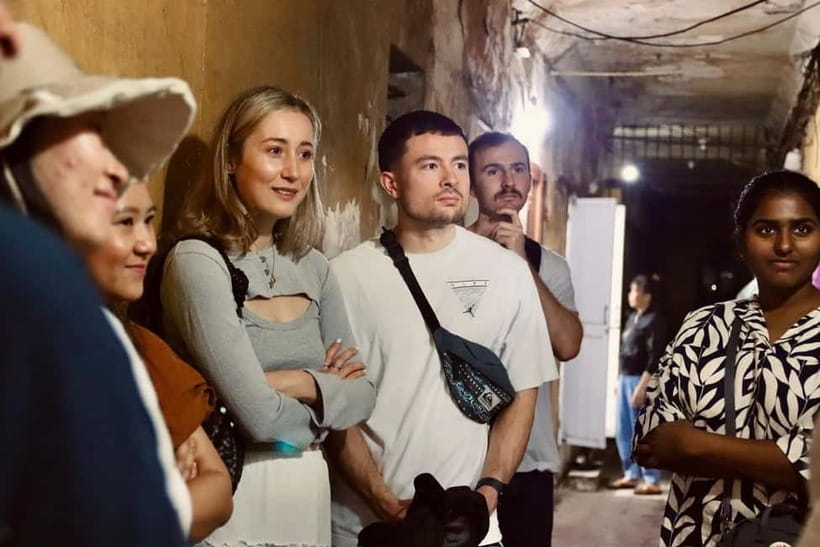
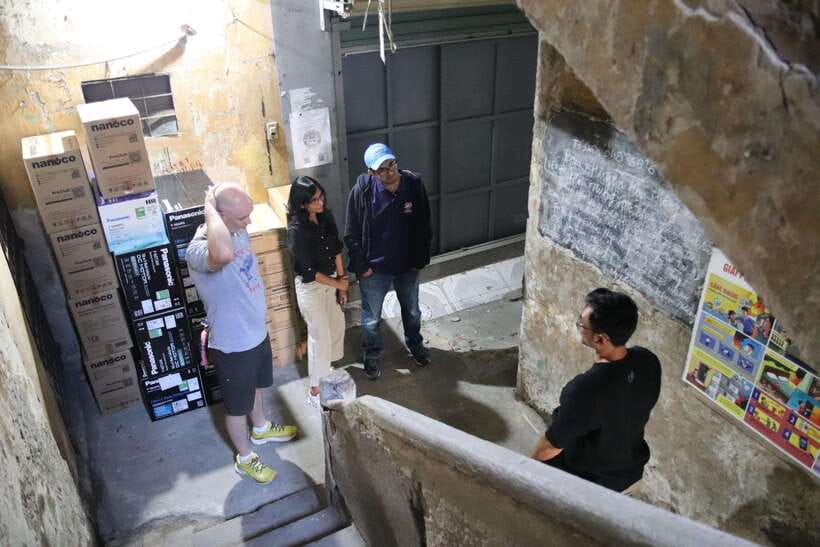
The walk can include a look inside one of Hanoi’s communal housing projects. This is one of the most useful parts for anyone who wants to understand how families lived after the country was divided and before economic reforms changed city life.
Communal housing tells a different story from political speeches. It brings the discussion down to rooms, shared areas, crowded buildings, and the practical limits of urban life. You can begin to see how social policy affected privacy, family arrangements, and the way residents used common space.
Access to these areas is not something you would normally arrange by wandering alone as a visitor. That makes the guide important, both for interpretation and for respectful behavior. You should follow instructions, avoid treating residents as scenery, and ask before taking photographs.
The walk does not present Hanoi as frozen in the past. Instead, it points out the links between older housing, the planned economy, and the city you see today. That connection is one reason I would place this tour early in a Hanoi stay. It can help you read the city’s streets, shops, and neighborhoods with more understanding during the rest of your visit.
Same base, a completely different day:
- Hanoi: Water Puppet Show Tickets
★ 4.6 · 7,029 reviews - Hanoi Motorbike Tour: Food, Culture and Fun by Vintage Motorbike
★ 5.0 · 6,699 reviews - Hanoi: Guided Food Tour with Train Street Visit
★ 4.9 · 6,239 reviews - Hanoi Cooking Class: Culture, Local Market & Meaning CSR Impact
★ 5.0 · 5,147 reviews
Kham Thiem B52 memorial and the Christmas bombings
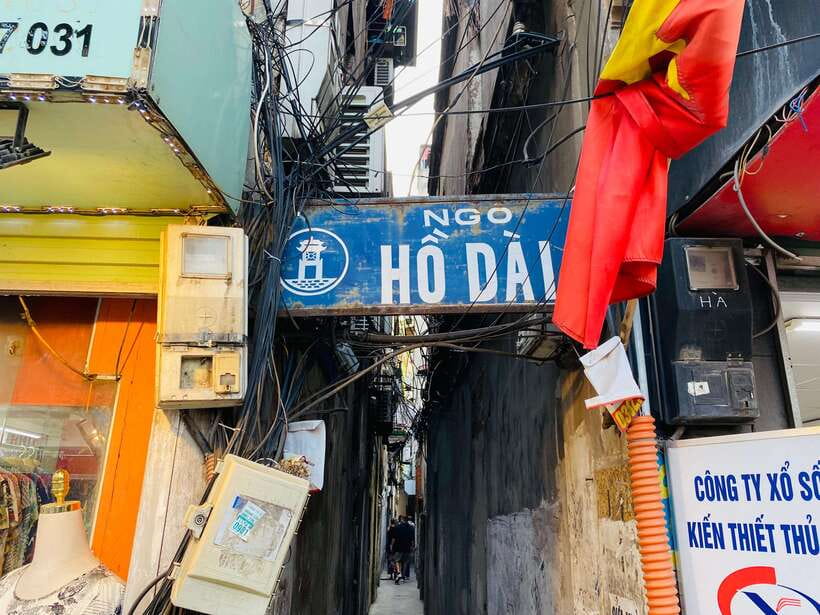
The Kham Thiem B52 memorial is the clearest war-related stop on the route. It marks the Christmas bombing campaign, when Hanoi was heavily bombed in December 1972.
The memorial is not presented as an isolated military object. The guide explains the effect on local residents and the surrounding community. You are encouraged to pause and honor those who died rather than simply take a quick photograph and continue.
This stop gives the tour its emotional center. The earlier market and housing sections explain how people lived. The memorial shows how that life could be shattered by war.
The history here can be difficult, and the presentation aims to include Vietnamese perspectives that are often missed in foreign accounts. The tour also discusses the broader conflict, including World War I, the resistance against French rule, the division between North and South, the involvement of global powers, and reunification.
You should expect a Vietnamese account shaped by local experience, not a neutral military timeline with every campaign listed. That is a strength if you want to understand how people in Hanoi remember the war. It may be less satisfying if your main goal is detailed battlefield history.
One useful point is the attention to long-term consequences. The tour connects the war to people affected by Agent Orange and explains that 20 percent of profit is donated to the Vietnam Association for Victims of Agent Orange/Dioxin and Blue Dragon Children’s Foundation. The donation does not replace careful research into these issues, but it gives the booking a social purpose beyond sightseeing.
Train Street as the final conversation
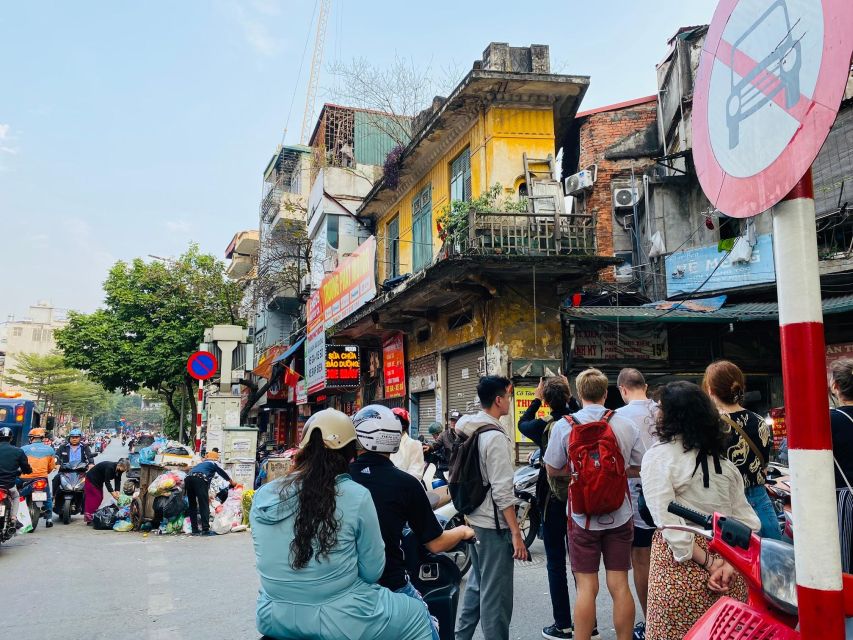
The walk ends at Hanoi Train Street, a narrow railway corridor lined with cafes and homes. This is a familiar image from modern Hanoi, but the tour approaches it after discussing war, housing, markets, and social change.
That order makes the stop more meaningful. Train Street is not only a place for a drink and a photograph. It is another example of how residents have adapted to limited urban space and how daily life continues beside major infrastructure.
The ending usually includes coffee, tea, or refreshments, and some groups have stopped for snacks, beer, lunch, or cold drinks. The included drink is a welcome pause after several hours on foot. Guides have also used this time to answer questions that came up earlier.
A train may pass during the visit, but the exact timing is not guaranteed by the information provided. Follow the guide’s safety directions and stay alert. The railway is an active setting, not a stage set.
The Train Street section can be busier and more commercial than the opening parts of the walk. That contrast is worth noting. You begin in local areas where tourists are uncommon and finish at one of Hanoi’s best-known visitor spots. The quieter section of the railway is generally the more appealing part of this stop, especially if you want a calmer drink and conversation.
What you get for $28
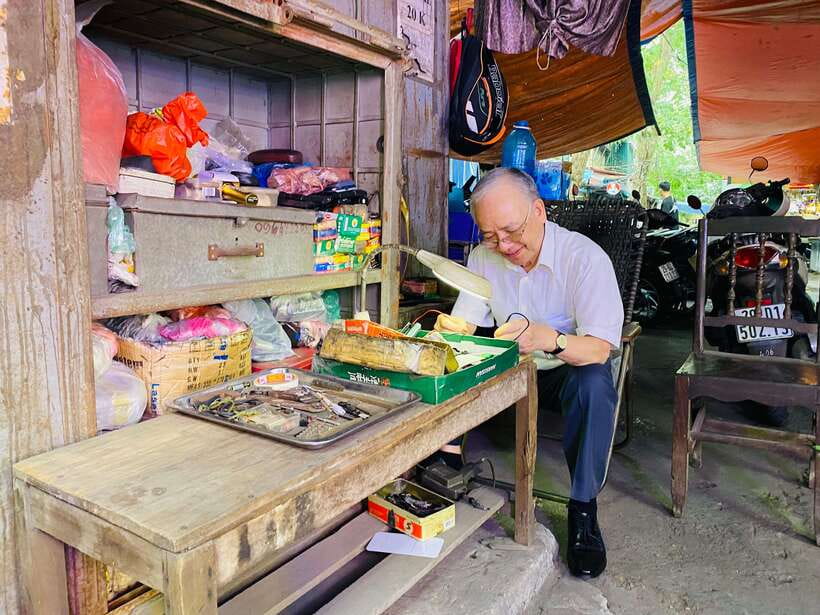
At $28 per person, the tour is priced as a small, guided cultural experience rather than a simple walking route. The fee includes an English-speaking guide, local war stories, coffee or tea, and the short taxi ride.
The value comes from access and explanation. You could walk through parts of Cho Gioi or pass near Kham Thiem on your own, but you would not easily understand the connection between the market, communal housing, bombing memorial, and postwar life. You also might not know which residential areas are appropriate to enter.
The guide’s role is the main reason the price makes sense. Kien, Dung, Cong, and Quang have been described as warm, articulate, and easy to talk with. Some guides have lived abroad, which can help with English communication and with explaining Vietnamese history to people who do not know the local political vocabulary.
Drinks and the taxi ride are modest inclusions, but they make the three-hour outing easier. You do not need to arrange transport between the walking sections, and the cafe stop breaks up the route.
The donation also adds value for people who prefer tours with a local benefit. Twenty percent of profit supports organizations working with Agent Orange victims and children in need. If that matters to you, check the current booking details for how the donation is handled, since the supplied information does not specify the accounting method.
Who should book this experience
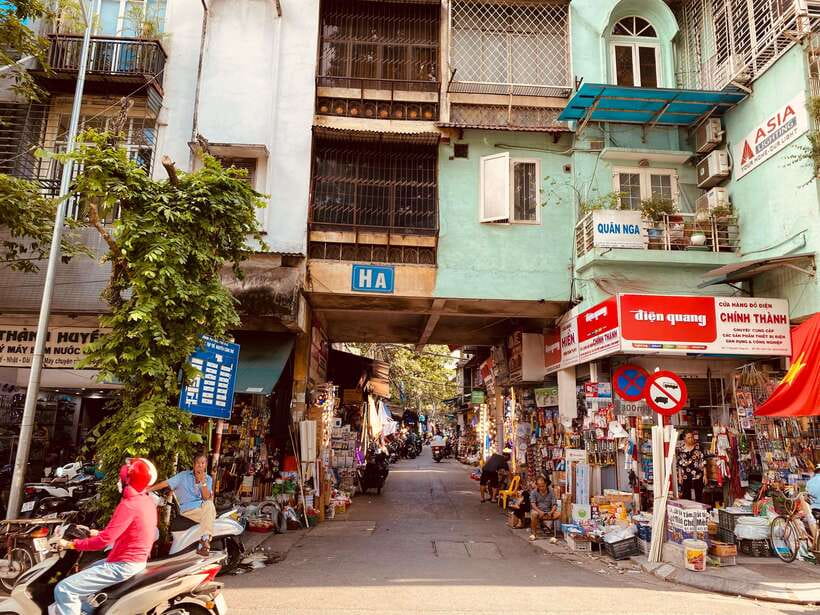
I would recommend this tour to you if you want more than Hanoi’s standard landmarks. It suits history buffs, first-time visitors who want context, and anyone curious about how large political events affect ordinary families.
It is also a good fit for solo visitors. A small group and a conversation-based format make it easier to ask questions without feeling as if you are interrupting a formal presentation. Families with teenagers can enjoy it too, provided they are comfortable discussing war and political history.
The pace works well for people who want a three-hour walk without spending the whole time in a museum. One family even managed the route with a young child in a stroller, though the suitability of any specific section will depend on the conditions that day.
I would think twice if you want only dramatic war relics. One person expected more war-related sights and found the emphasis different from their hopes. The experience spends plenty of time on social history, housing, markets, and culture.
You should also be comfortable walking through working neighborhoods. These are not polished attractions designed solely for sightseeing. That is exactly the appeal, but it calls for patience, modest clothing, and respect for residents.
Practical ways to get more from the walk
Book it early in your Hanoi visit if you can. The discussion of the war, planned economy, and reunification can help you understand other places you visit later, including museums and former prison sites.
Come with questions. The format is designed for conversation, and the guides are prepared to discuss both national history and present-day life. Asking how a policy affected food, housing, school, or family life will usually lead to more useful answers than asking only for another date.
Bring water even though a drink is included. Wear shoes with a good grip, especially if rain is forecast. Hanoi’s weather can make a three-hour route feel very different from one day to the next.
Keep your camera away in residential areas unless you have permission. The experience is strongest when you treat the neighborhoods as living communities, not an open-air museum.
At the end, you might continue to the Maison Centrale prison, which is a short walk from where the tour concludes. This is a useful pairing for visitors who want another historical site, though the prison visit is separate and not included in the walk.
Should you book the Hanoi untold stories walk?
Book it if you want context, local access, and an honest discussion of ordinary life during wartime. The strongest parts are the guide-led explanations, the communal housing, the Kham Thiem memorial, and the chance to see parts of Hanoi far from the usual tourist route.
Skip it if you are looking for a museum-style military tour packed with weapons and battlefield displays. This walk is about people, policy, memory, and the way the past remains visible in daily life.
For $28, the mix of three hours with a local English-speaking guide, a taxi ride, a cafe stop, and charitable support is a fair deal. I would especially choose it near the start of a Hanoi stay, when its stories can give meaning to the city you are about to explore.
FAQ
How long does the experience last?
The walk lasts about three hours, with a short taxi ride halfway through.
Where does the tour start?
It starts at 24B Chua Vua Street, in front of Trường Trung học cơ sở Đoàn Kết. A coffee shop and several second-hand bicycle shops are nearby.
Where does the tour finish?
The activity ends back at the meeting point.
What places are included?
The route includes the Cho Gioi area, the Kham Thiem B52 memorial, and Hanoi Train Street.
Is a drink included?
Yes. Coffee or tea is included, along with stories from local people about life during the war.
What language is the tour offered in?
The experience is offered in English.
What should I bring?
Bring comfortable shoes and breathable clothing. The walk operates in rain or shine, so bring an umbrella or raincoat if the forecast calls for rain.
Newly listed around Hanoi
- Hanoi: Halong Bay Cruise, Amazing Cave, Titov Island & Kayak★ 4.2 · 39 reviews
- 2Days-1Night Halong Bay Luxury Genesis Regal Cruises★ 4.5 · 39 reviews
- Ninh Binh 1 Day Tour(Tam Coc – Mua Cave – Bich Dong)★ 5.0 · 39 reviews
- 8 days 360° Vietnam Adventure from Hanoi★ 5.0 · 39 reviews
- Dora Cruise – Luxury 5 Star Cruise in Halong Bay & Lan Ha Bay (2D1N)★ 4.5 · 39 reviews
- 3 Days and 2 Nights Ha Giang Loop Tour★ 5.0 · 39 reviews
- Best Value Ha Long bay 1 day – Lunch, kayak, swimming, transfer★ 5.0 · 39 reviews
- From Hanoi: Ha Giang Loop Motorbike Tours 3-Days 2-Nights★ 5.0 · 40 reviews
Hanoi Tours, compared.
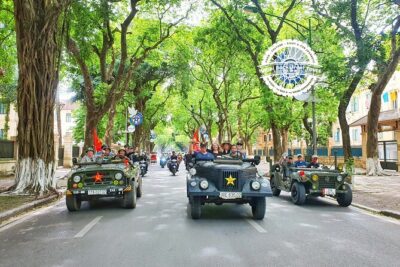
Hanoi Jeep Tour: Food, Culture and Fun by Vietnam Army Jeep
Read our review →
Full-Day Ninh Binh Highlights Tour from Hanoi
Read our review →
Ha Long Bay Day Cruise – Swimming, Meal, Kayaking
Read our review →
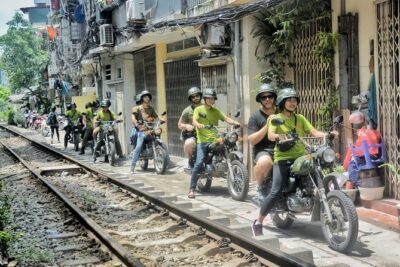
Hanoi Motorbike Tour: Food, Culture and Fun by Vintage Motorbike
Read our review →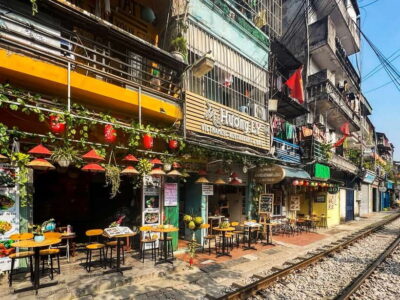

Hanoi Cooking Class: Culture, Local Market & Meaning CSR Impact
Read our review →