
Reviewed · LANTERN & HOI AN OLD TOWN TOURS
Hoi An Ancient Town Walking Tour with a Local
Hoi An’s past comes into focus on foot, one old doorway, assembly hall, and market stall at a time. This small-group walk connects the town’s Japanese, Cantonese, Vietnamese, and merchant traditions, rather than treating the UNESCO old town as a pretty backdrop for photographs.
I like the maximum group size of 10, which gives a local guide room to answer questions and keep the pace personal. I also like the practical finish at the central market, where you can taste local food, pick up shopping tips, and continue exploring on your own.
The main consideration is cost clarity: the $9.89 tour price does not include Hoi An’s UNESCO entrance ticket, listed as ₫120,000 per person. Most stops are easy on the legs, but you should still expect nearly three hours of walking on busy old-town streets.
Key points at a glance

- Japanese roots first: Start with a short timeline of Hoi An and its links with Japan at the Japanese Culture Gallery.
- Six focused stops: See the Covered Bridge, Cantonese Assembly Hall, Quan Thang Ancient House, traditional arts venue, and central market.
- A guide-led history walk: Guides including Kun, Trang, Anh, Minh, June, and Sanh have led tours noted for clear explanations and friendly local insight.
- Small-group format: The group can include up to 10 people, with group discounts available.
- Food and tea along the way: A special herbal tea is included, and the market portion includes small tastings.
- Useful trip planning: The walk ends with local advice on restaurants, shops, and activities such as a lantern boat ride.
Why this three-hour walk helps you read Hoi An
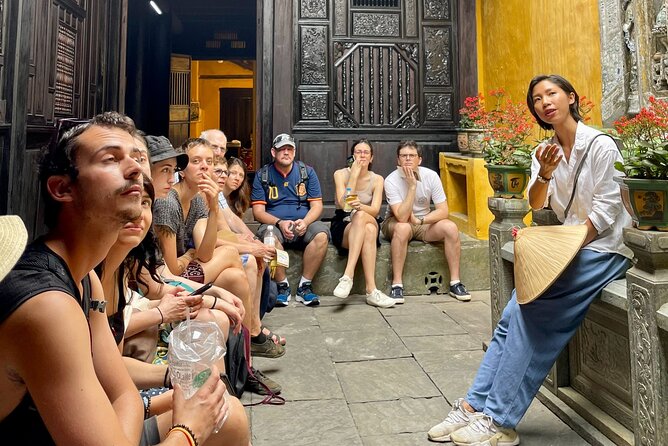
Hoi An is easy to admire and surprisingly easy to misunderstand. The yellow walls, tiled roofs, silk shops, lanterns, and riverside lanes can blur into one attractive scene if you do not know what you are seeing.
This walk gives those details a story. You hear why Japanese merchants came here, how Cantonese communities shaped the town, and how merchant families lived in houses designed for trade, worship, storage, and family life. The focus is not just on famous sights. It is on how several cultures worked side by side in one port town.
I find that especially useful early in a Hoi An stay. Once you understand the town’s layout and cultural mix, later walks feel less random. You can return to a house, hall, or market stall and notice details you would have passed without a guide.
The tour runs for about three hours. The planned stops add up to roughly 165 minutes, leaving a little flexibility for walking between sites, questions, and pauses. This is a walking tour, not a bus outing, so you should be comfortable covering the old town at a leisurely but steady pace.
More Walking Tours in Hoi An
- Evening Walking Food Tour, folk game and lantern boat
★ 5.0 · 665 reviews - Hoi An Ancient Town – Walking Tour with Local Guide
★ 4.9 · 385 reviews - Hoi An Street Food Walking Tour with Tastings
★ 5.0 · 317 reviews
Starting at the Japanese Culture Gallery
The route begins at the Japanese Culture Gallery on 125 Phan Chu Trinh. This is a useful first stop because it gives you a quick timeline before the architecture starts competing for your attention.
You learn how Hoi An began, why Japanese traders were present, and how the town developed as an international port. The gallery also introduces Japan’s artistic traditions and cultural influence, giving more meaning to the next stop, the Japanese Covered Bridge.
The planned visit lasts about 25 minutes. That is long enough for an overview, but not enough for a slow museum visit. Admission is not included in the tour price, and the general UNESCO entrance ticket is listed separately at ₫120,000 per person.
I like this opening because it puts Hoi An’s buildings into context right away. If you want a detailed museum study, this will feel brief. If you want a clear starting point before walking through the old town, it does the job.
The Japanese Covered Bridge and its complicated symbolism
The Japanese Covered Bridge is one of Hoi An’s best-known sights, and the tour gives you about 20 minutes there. Its compact form and Japanese architectural influence make it an obvious photo stop, but a local explanation helps you see it as more than a decorative bridge.
The bridge represents the presence of Japanese merchants and the town’s wider trading links. It is also a useful reminder that Hoi An’s identity was formed through contact among different communities, not in isolation.
Because the bridge is famous, this can be one of the more crowded points on the route. The short visit keeps the group moving, but you may want extra time later for your own photographs. The tour is best for understanding the structure and its place in Hoi An, not for lingering there quietly.
The bridge is also covered by the UNESCO entrance arrangement, so keep the required ticket in mind when working out the total cost.
Cantonese detail at the Assembly Hall
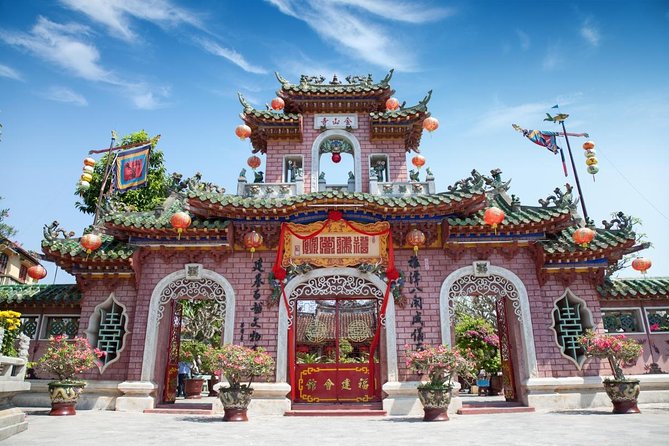
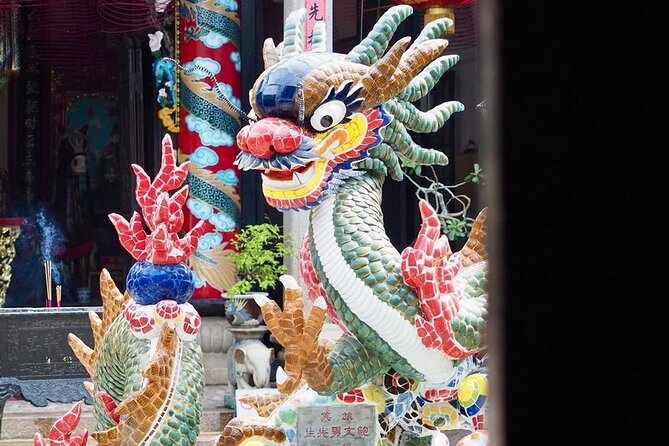
The Cantonese Assembly Hall follows, with about 25 minutes inside. This stop shifts the story from Japanese influence to the Cantonese community and shows how Chinese associations shaped religious, social, and commercial life in Hoi An.
Look for the decorated surfaces, strong colors, ceremonial design, and carefully arranged interior spaces. The appeal here is not only visual. A guide can explain how an assembly hall served a community and why these buildings mattered to people living and trading far from home.
I would pay close attention to the guide’s explanations of the decorative details. Without context, the hall can look like another ornate building. With context, its design becomes a record of identity, faith, and community ties.
The 25-minute stop is enough for an introduction. It is not a long architectural study, and the hall may feel compact if you prefer to examine every carving. Still, it adds an important Cantonese chapter to a route that could otherwise focus too heavily on the Japanese Covered Bridge.
A few other Hoi An trips to compare
- Hoi An: Vietnamese Foldable Lantern Making Class
★ 4.9 · 3,742 reviews - Hoi An Full Lantern Making Class- A special Foldable lantern
★ 5.0 · 2,007 reviews - Hoi An : Hoai River Boat Trip by Night and Floating Lantern
★ 4.6 · 1,988 reviews - Hoi An: River Lantern Boat Experience with Free 5G eSIM
★ 4.5 · 1,819 reviews
Merchant life inside Quan Thang Ancient House
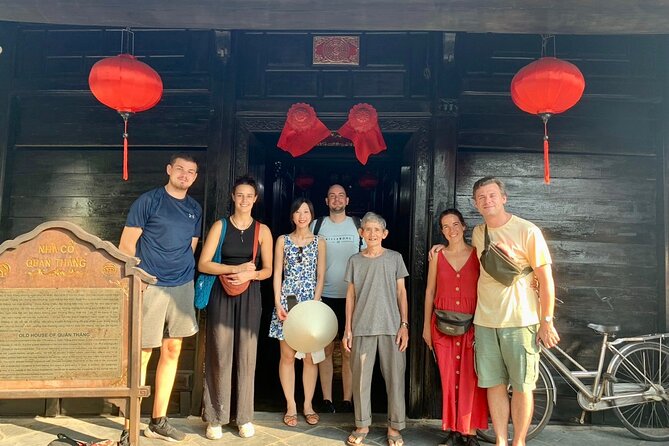
Quan Thang Ancient House is one of the most useful stops for understanding daily life. You spend about 25 minutes inside a preserved merchant home, with its layout offering clues about how a prosperous family lived and worked.
The house helps connect architecture to ordinary routines. Spaces could serve family life, business, storage, and visitors, and the narrow arrangement reflects the needs of an old trading town. The building is valuable because it makes Hoi An’s commercial past feel human-sized.
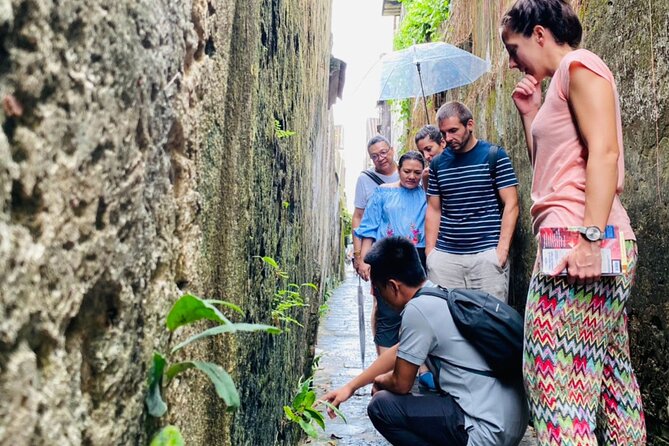
One especially worthwhile feature is the chance to see beyond the polished front rooms. A guide named Anh has been praised for taking people through the back door of an old house to see a working kitchen and explain how the building survived floods across eight generations. That detail may not occur on every departure, but it shows the kind of local perspective this tour can provide.
This is also where a guide’s storytelling matters most. You are not simply looking at woodwork and courtyards. You are trying to picture the people who cooked, traded, stored goods, raised families, and adapted to repeated flooding in the same structure.
Traditional music and theater in Hoi An
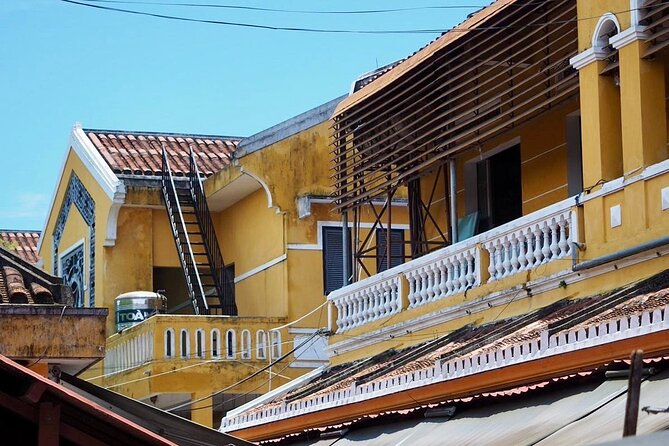
The Hoi An Traditional Art Performance Theatre receives about 35 minutes, making it the longest scheduled stop. Here, local artists present traditional music, dance, and theatrical work using traditional instruments.
This portion gives the walk a cultural break from buildings and historical explanation. It also shows that Hoi An’s heritage is not limited to preserved walls. Music, movement, instruments, and stage traditions are part of the town’s cultural life too.
The schedule describes a performance venue rather than a full evening show, so set your expectations accordingly. You may find the format more introductory than a standalone theater program. Still, the stop adds variety and offers a chance to sit or pause during a walking-heavy afternoon.
I like the balance here. A route made entirely of architecture can become tiring, especially in warm weather. A short performance gives your eyes and feet a change of pace while keeping the focus on local culture.
Finishing at Hoi An Central Market
The final stop is Hoi An Central Market, reached at 19 Tran Phu. You spend about 35 minutes moving from stall to stall, looking at local food, handicrafts, and souvenirs, with small tastings included in the market portion.
This is the most practical part of the tour. A market guide can help you understand what you are seeing, point out local delicacies, and explain how people shop and eat in Hoi An. The tour also includes a special herbal tea, which gives you a simple pause during the walk.
The market is a good place to ask questions about food before ordering on your own. You can also use the final stop to compare prices, identify gifts, and decide which stalls deserve a return visit. The tour does not turn you into a market expert in 35 minutes, but it gives you enough orientation to explore with more confidence.
The ending is convenient if you want to continue shopping or eating. It is not near the starting point, so plan to make your own way onward from the market rather than expecting a return transfer.
What the guides add to the route
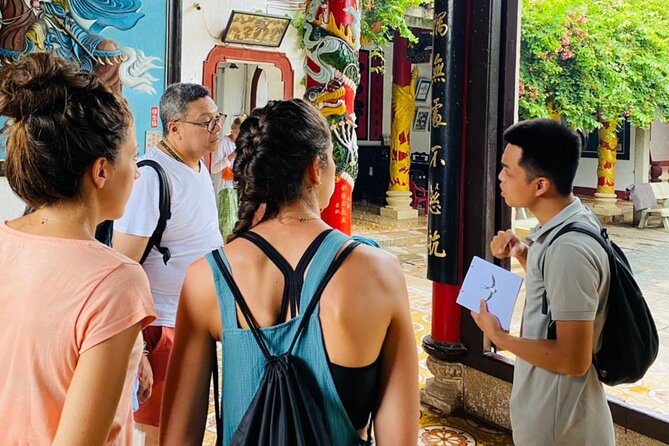
The strongest feature of this tour is the human explanation between the sights. Guides named Kun, Trang, Anh, Minh, June, and Sanh have led departures, so the exact personality and style can vary.
Kun is described as warm, funny, encouraging, and attentive to pace. Trang has provided restaurant suggestions at the end, while Anh has offered detailed explanations of architecture, culture, and life in Hoi An across several generations. Minh has focused on local history and everyday life, and Sanh has led a private-feeling walk when only one person booked.
You should not assume you will receive a particular guide unless the booking allows you to select one. The useful point is that the experience depends heavily on the person leading it. This route rewards questions, so ask about family houses, floods, food, Japanese connections, and the way Hoi An’s communities interacted.
The small group limit helps. With no more than 10 people, you can usually hear the explanation and speak directly with the guide. On a departure with fewer bookings, the walk may feel almost private, but that depends on the date.
Price, ticket cost, and overall value
At $9.89 per person, this is an inexpensive way to get a structured introduction to Hoi An. The value comes from the guide’s interpretation, the entry to several heritage locations, and the time saved figuring out how the sites connect.
The extra UNESCO entrance ticket matters. It is listed at ₫120,000 per person and is not included in the advertised tour price. The individual stops also note that admission is not included, so confirm how the ticket is handled at booking and bring enough local currency if needed.
Even after adding the entrance charge, the walk can make sense for a first visit. You are paying less for transport and more for orientation, local explanation, and a sensible sequence through the old town. If you already know Hoi An well and have visited each site, the value will be lower.
Group discounts may reduce the per-person cost for larger bookings. A mobile ticket makes the meeting process simpler, but you still need to arrive at the stated starting point on Phan Chu Trinh.
Who should book this walk
I would choose this tour for a first or second day in Hoi An. It gives you a basic map of the old town, points out the main cultural influences, and ends with food and shopping advice you can use for the rest of your stay.
It suits people who want history without a lecture hall. The route is active but not described as strenuous, and most people can participate. Service animals are allowed.
Families, couples, solo visitors, and small groups can all fit the format. Solo booking may occasionally result in a very small group or a one-person walk, as happened for Sanh’s departure. That can be a fine bonus if it occurs, but it should not be treated as guaranteed.
I would be less likely to choose it if your priority is a long food crawl, a dedicated photography tour, or extended time inside each museum. The schedule moves through six stops, so the emphasis is breadth and connection rather than deep study of one building.
Weather also matters. The tour requires good conditions, and a cancellation caused by poor weather leads to an alternative date or a full refund. You can cancel for a full refund up to 24 hours before the local start time. Changes or cancellations inside that window are not accepted.
My call on the Hoi An walking tour
Book it if you want a low-cost, well-organized introduction to Hoi An’s old town, especially if you value local stories more than simply checking off famous buildings. The Japanese Culture Gallery, Cantonese Assembly Hall, merchant house, theater, and market create a varied route, and the small group size gives the guide space to make it personal.
Go in knowing that the UNESCO ticket costs extra and that the pace leaves limited time for lingering. Arrive ready to walk, ask questions, taste a few market treats, and write down the restaurant and shopping suggestions offered at the end. For most first-time visitors, that combination makes the $9.89 starting price a sensible buy.
FAQ
How long does the Hoi An walking tour last?
The tour lasts approximately three hours. The scheduled visits cover six stops, with time for walking between them.
What places does the tour visit?
The route includes the Japanese Culture Gallery, Japanese Covered Bridge, Cantonese Assembly Hall, Quan Thang Ancient House, Hoi An Traditional Art Performance Theatre, and Hoi An Central Market.
Is the UNESCO entrance ticket included?
No. The Hoi An UNESCO entrance ticket is listed separately at ₫120,000 per person.
What is included in the tour price?
A special herbal tea is included. The advertised price is $9.89 per person, and group discounts are available.
Where does the tour start and finish?
The walk starts at 125 Đ. Phan Chu Trinh in Hoi An. It finishes at Hoi An Market, 19 Trần Phú.
What happens if I need to cancel?
You can cancel at least 24 hours before the local start time for a full refund. Cancellations or changes made less than 24 hours before the start are not accepted. If poor weather or an unmet minimum number of participants cancels the tour, you are offered another date or experience, or a full refund.
Newly listed around Hoi An
- VIP Limousine: Hoi An to Hue Trip★ 4.0 · 39 reviews
- Hoi An Ancient Town And Countryside Tour Full Day★ 5.0 · 39 reviews
- A Private Full Day Tour to My Son Sanctuary & Marble Moutains★ 5.0 · 39 reviews
- Hoi An: Private Car To/From Hue via Multi Attraction( 1-Way)★ 5.0 · 39 reviews
- My Son Sanctuary and Hoi An Walking Tour★ 4.5 · 40 reviews
- From Hoi An: Cooking Class at Organic Farm★ 5.0 · 40 reviews
- Coconut Boat Hoi An★ 4.6 · 41 reviews
- Hoi An: Full-Day Small Group Trip to My Son Sanctuary★ 4.4 · 41 reviews
Lantern & Hoi An Old Town Tours, compared.
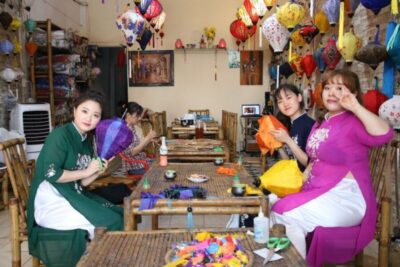

Hoi An Full Lantern Making Class- A special Foldable lantern
Read our review →
Hoai River Boat Trip by Night and Floating Lantern
Read our review →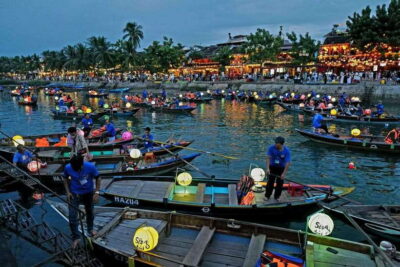
River Lantern Boat Experience with Free 5G eSIM
Read our review →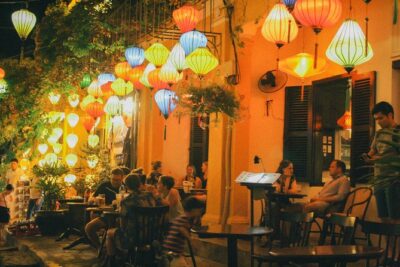
Marble Mountains – Hoi An Ancient Town Sunset Daily Ingroup Tour
Read our review →
Evening Walking Food Tour, folk game and lantern boat
Read our review →

The Lantern Lady: Traditional Lantern Class in Old Town
Read our review →Browse the lists this tour appears in