
Reviewed · HO CHI MINH CITY TOURS
Cooking Class: 3 Course Traditional Meal by local Chef HCM
The best part of this Ho Chi Minh City experience is that you do not just eat Vietnamese food, you learn how it comes together. At your own station, a local chef walks you through a three-course menu, with examples including spring rolls, Vietnamese pancakes, and pho. Alice has led classes praised for her warmth, humor, and practical teaching.
I like the private cook station and the fact that the class ends with food you have helped prepare. I also like the recipe book, a useful souvenir that lets you repeat the dishes at home. The main consideration is that some ingredients are prepared ahead of time, so this is better for beginners and curious eaters than for serious cooks seeking advanced knife work or restaurant-level technique.
Key points at a glance
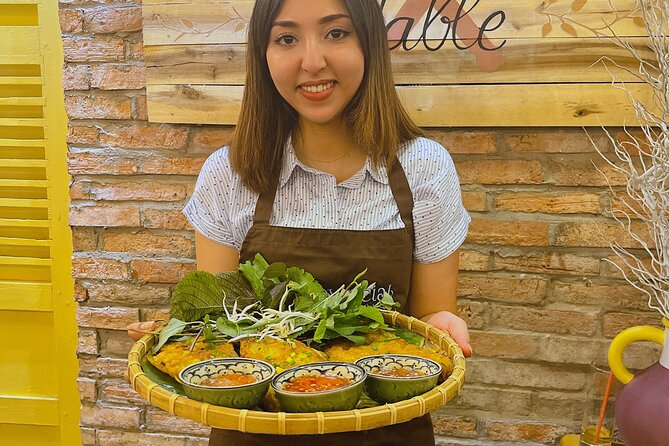
- Three Vietnamese dishes in about three and a half hours: The menu changes daily, with classic recipes such as spring rolls, Vietnamese pancakes, and pho appearing in the program.
- Your own cooking station: Each person receives a private workspace, ingredients, and the tools needed for the lesson.
- Local chef instruction: Alice is one named instructor associated with the class, and the teaching style is friendly, cheerful, and hands-on.
- A meal you prepare yourself: The dishes are cooked during class and eaten as part of the experience.
- Recipe book included: You leave with a small collection of recipes for cooking at home.
- Convenient District 1 location: Meet at 131/3 Nguyễn Thị Minh Khai, with the class returning to the same address.
What the 3.5-hour class is really like
This is a sit-down cooking lesson with active participation, not a market tour or a quick demonstration. The class is built around three traditional Vietnamese dishes, and the chef explains the ingredients, seasonings, and cooking methods as you work.
The daily menu is not fixed in the information provided, so you should not book expecting one exact set of dishes every time. Still, the examples give a good sense of the range: spring rolls introduce wrapping and assembly, Vietnamese pancakes show off batter and pan cooking, and pho brings in one of Vietnam’s best-known noodle dishes.
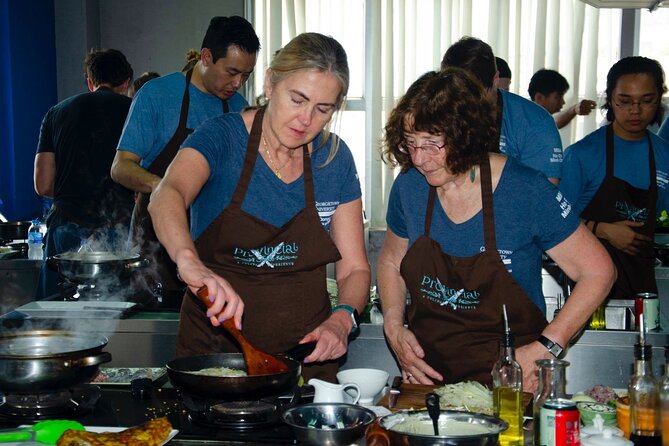
You receive a private cooking station, which is a useful detail. It means you are not standing behind someone else trying to see the pan, and you can take part instead of simply watching the chef. You should expect to work at a beginner level, using the ingredients and steps prepared for the menu of the day.
The class fits three dishes into roughly three and a half hours. That is enough time to cook, eat, and ask questions, but it also explains why the lesson does not cover every part of Vietnamese food preparation from scratch. Some ingredients are prepared in advance, allowing the group to focus on the most useful cooking steps within the available time.
More Cooking Classes in Ho Chi Minh City
- Cai Be Mekong Delta Tour: Cooking Class, Cycling & Craft Villages
★ 5.0 · 1,881 reviews - Chef Vu Cooking Class Plus Market Trip in Saigon Center (Pick up by Cyclo)
★ 5.0 · 477 reviews - Immersive Cooking Class & Wet Market Tour by Local Chef +Cookbook
★ 5.0 · 367 reviews
Learning Vietnamese flavors without a lecture
A good cooking lesson teaches more than a recipe. It helps you notice the balance that makes Vietnamese food taste distinct, including the relationship between herbs, savory seasonings, fresh vegetables, noodles, fillings, and sauces.
Here, the chef introduces flavors and techniques connected with Vietnam’s broad food traditions. That wording matters because Vietnamese cooking varies from north to south, and a three-dish class can only offer a sample. You are getting an approachable introduction, not a full survey of every regional kitchen.
The practical format works well for first-time cooks. You might learn how to assemble a spring roll, cook an egg or pancake, season a dish, or bring separate ingredients together in the right order. These are basic skills, but they are the kind you can use again in your own kitchen.
I would not choose this class mainly for advanced instruction. The menu is designed to fit into a single session, and one detailed account specifically describes the dishes as relatively basic for that reason. That is not a flaw for most people. It keeps the pace manageable and leaves room to enjoy the food.
Three courses, three different lessons
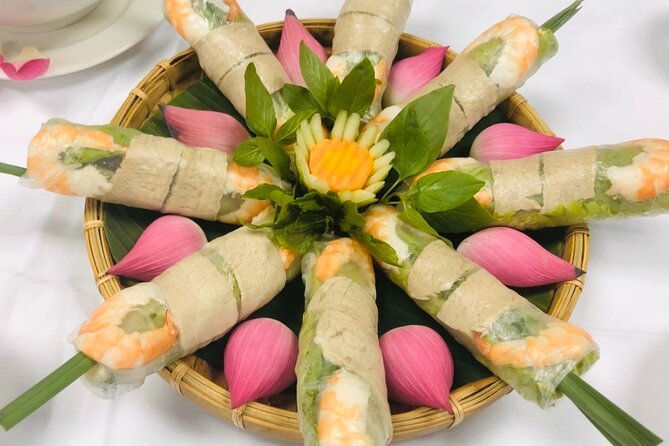
Spring rolls: hands-on assembly
Spring rolls are a natural opening dish for a group class because they involve preparation, arrangement, and careful rolling. You get a feel for how much filling to use and how to keep the wrapper together without making it too loose or too full.
The lesson is also a gentle introduction to Vietnamese textures. Fresh components, herbs, fillings, and dipping sauce can all play different roles in one bite. The exact recipe depends on the daily menu, but the class example suggests a dish that is practical and fun to make.
This part may feel simple if you cook often. For beginners, though, it is a good confidence builder because the result comes together quickly and can be eaten soon after preparation.
More cooking classes around Ho Chi Minh City:
- Small-group 2-Day Mekong Delta: Floating market, Cooking Class…
★ 5.0 · 194 reviews - Authentic Vietnamese Cooking Class with Market Visit in HCMc
★ 5.0 · 182 reviews - Experience half-day cooking class with market visit
★ 5.0 · 92 reviews - Farm-To-Table Healthy Cooking Class in Ho Chi Minh City
★ 5.0 · 79 reviews
Vietnamese pancakes: pan skills and timing
Vietnamese pancakes bring a different type of cooking to the table. You work with a batter and a hot pan, then learn how timing affects the texture and shape.
The class examples describe this as one of the dishes taught alongside spring rolls and pho. You should expect instruction aimed at home cooks, not a professional kitchen test. The useful lesson is learning how a few prepared ingredients become a crisp or tender finished dish through heat and timing.
This course does not promise that every menu includes pancakes, so treat them as an example rather than a guarantee. If a particular dish matters to you, check the day’s menu before booking.
Pho: the familiar Vietnamese classic
Pho gives the class its most recognizable dish. Many people have eaten pho in restaurants, but preparing it yourself can change the way you taste the finished bowl. You see how noodles, broth, seasonings, and toppings come together as one meal.
Within a three-and-a-half-hour class, the pho portion should be understood as a focused home-cooking lesson rather than a long, traditional broth-making project. The available details do not specify how much of the stock preparation is done in advance, so you should not assume that you will make every element from the beginning.
Even so, pho adds useful context to the class. It shows how Vietnamese food can look simple when served, while depending on careful balance and order in the kitchen.
The teaching style and class atmosphere
The named instructor Alice is described as warm, cheerful, funny, and skilled. Those qualities matter in a practical class because the chef needs to keep the room moving while making beginners feel comfortable.
You can expect the chef to demonstrate steps, explain ingredients and techniques, and help you as you cook. The format is social, but it remains centered on your own station and your own meal.
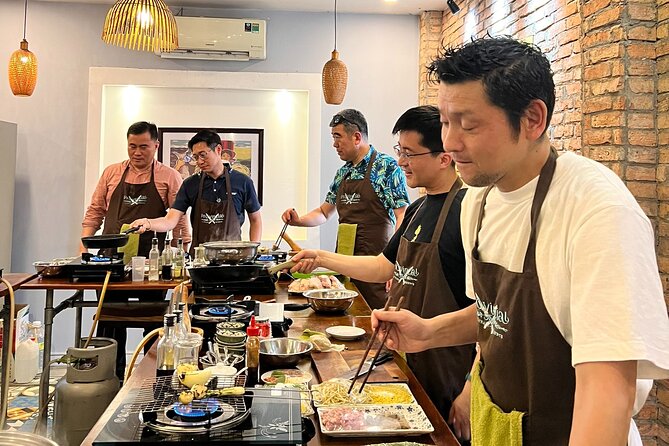
The group can hold up to 20 people. That is a reasonable maximum for a cooking activity, though the experience will feel different with a small group than with a full room. One class included two couples plus the pair who wrote about it, which suggests that some sessions may be pleasantly small. A fuller class could mean more energy but less individual attention at busy moments.
The class is not presented as a quiet private lesson. If you want one-on-one instruction, ask about group size when booking. If you enjoy meeting people over food, the shared format is part of the appeal.
Eating what you prepare
The food is the payoff, but it is also part of the lesson. Cooking your own three-course meal gives you a clearer sense of the ingredients and methods than simply ordering dishes at a restaurant.
The prepared food has been described as tasty, fresh, and especially satisfying because it is cooked during the class. That makes sense: you eat the dishes while the steps are still familiar, and you can connect each flavor with the work behind it.
The class examples include spring rolls, Vietnamese pancakes, and pho, though the menu changes daily. You should view the meal as a chance to sample several styles of Vietnamese cooking rather than as a single large restaurant feast.
Portion sizes and dietary substitutions are not specified. If you have allergies, dietary restrictions, or foods you cannot eat, contact the provider before booking. The provided details confirm service animals are allowed, but they do not explain ingredient substitutions.
The recipe book is a useful extra
The small recipe book is one of the better practical touches. Cooking classes can be enjoyable in the moment and then hard to repeat once you return home. Written recipes give you a way to remember the ingredients and steps.
It is especially useful here because the class is aimed at basic home cooking. You are not expected to memorize complex restaurant methods. The book should help you recreate at least some of the dishes and retain the techniques after your trip.
The information does not specify whether the book contains every possible daily menu or only selected recipes. Still, it adds value to a $30 experience and makes the class more than a meal with a demonstration attached.
Is $30 a fair price?
At $30 per person, the experience offers a three-and-a-half-hour activity, instruction from a local chef, a private station, ingredients, three dishes, the meal you prepare, and a recipe book. That is a solid package for someone who wants an activity as well as lunch or dinner.
The value is strongest if you enjoy cooking or want a practical memory of Ho Chi Minh City. You are paying for time, participation, food, and instruction rather than just a restaurant plate.
The value is weaker if you want a market visit, a broad food tour, or advanced culinary training. None of those is included in the stated program. You also should not assume that the daily menu will match the sample dishes you have in mind.
The class has been booked more than 10 times in the past week and carries a five out of five average from 41 ratings, with 100 percent recommending it. Those figures suggest steady interest, but the most useful point for your decision is the pattern of praise: the food, friendly teaching, humor, and recipe book receive repeated approval.
Location, timing, and practical details
The meeting point is 131/3 Nguyễn Thị Minh Khai, Phường Phạm Ngũ Lão, District 1, Ho Chi Minh City, postal code 711106. The activity ends back at the same location, so you do not need to arrange a separate return transfer.
The address is near public transportation, which helps if you are staying elsewhere in the city. The duration is approximately three hours and 30 minutes, so leave enough time afterward rather than scheduling a tight connection or another fixed activity.
You receive confirmation at booking, and the ticket is mobile-friendly. The maximum group size is 20 people. Service animals are allowed.
Free cancellation is available if you cancel at least 24 hours before the local start time. Inside that window, cancellations and changes are not accepted for a refund. That rule is worth noting before you finalize plans, especially if your Ho Chi Minh City schedule is still shifting.
Who will enjoy this class most
I would recommend this for first-time cooks, couples, families with older children, and anyone who wants an activity with a meal built in. The private station gives you a clear role, while the chef-led format keeps you from having to figure out every step alone.
It also suits people who have already tried Vietnamese food but want to understand it better. Preparing spring rolls, pancakes, or pho can help you recognize the balance of ingredients when you order them later.
This is less suitable for an experienced cook looking for difficult techniques. The ingredients are partly prepared, and the dishes are kept manageable so the group can finish within three hours. It is also not the right choice if your main goal is touring local markets or seeing major city sights.
For a birthday or another small celebration, the class has a cheerful, social tone. One birthday booking was described as especially enjoyable, with good food and a lively instructor. Just remember that the space may feel compact, particularly in a larger session.
Should you book The Provincial Table Cooking Class?
Book it if you want a friendly, practical introduction to Vietnamese cooking at a reasonable price. The strongest reasons are the private cooking station, three dishes, local chef guidance, fresh food prepared during class, and the recipe book you can take home.
Go in with the right expectations. This is a beginner-friendly lesson, not a full culinary apprenticeship. Some preparation is done before you begin, the menu changes daily, and the group may include up to 20 people.
If you would be happy learning simple techniques and eating the results, this is an easy activity to add to a Ho Chi Minh City visit. If you need a particular dish, advanced instruction, or a market component, confirm those details first or choose another type of food experience.
FAQ
Where does the cooking class meet?
The class meets at 131/3 Nguyễn Thị Minh Khai, Phường Phạm Ngũ Lão, District 1, Ho Chi Minh City, Vietnam.
Where does the activity end?
The class ends back at the meeting point.
How long does the cooking class last?
The experience lasts approximately three hours and 30 minutes.
How many people can join the class?
The maximum group size is 20 people.
Is a mobile ticket available?
Yes. The experience includes a mobile ticket, and confirmation is provided at the time of booking.
What is the cancellation policy?
You can cancel at least 24 hours before the local start time for a full refund. Cancellations or changes made less than 24 hours before the start time are not refunded.
More Workshops in Ho Chi Minh City
- Fun & Easy Vietnamese Coffee Workshop in Hồ Chí Minh City
★ 5.0 · 293 reviews - Decadent Vietnamese “Egg Coffee” Workshop in Hồ Chí Minh City
★ 5.0 · 150 reviews - Vietnamese Cooking Class and Cu Chi Tunnels Tour from Ho Chi Minh City
★ 5.0 · 77 reviews - 1 hour Egg Coffee Cooking Class with Snack and Local Instructor
★ 5.0 · 72 reviews
Newly listed around Ho Chi Minh City
- Ho Chi Minh City’s most delicious street food tour by motorbike★ 5.0 · 39 reviews
- Half Day – Saigon Off-the-Beaten-Path – City Cycling Tour★ 5.0 · 39 reviews
- Night Bus Tour in Ho Chi Minh City★ 3.0 · 39 reviews
- HCM City Local Street Food by scooter/ Aodai Rider Saigon tour★ 5.0 · 39 reviews
- Explore Vietnamese Cuisine: Cooking Class from Ho Chi Minh City★ 5.0 · 40 reviews
- Private Street Food Discovery by Cyclo at Night in Ho Chi Minh★ 5.0 · 40 reviews
- Ho Chi Minh City Sightseeing & Street Food Tasting Experience★ 5.0 · 40 reviews
- Mekong Delta Homestay Explore Nature 2-Day Family Tiny Garden★ 5.0 · 40 reviews
Ho Chi Minh City Tours, compared.
Cu Chi Tunnels Tour from HCM City – Morning or Afternoon
Read our review →
Ho Chi Minh City Street Food Tour & Sightseeing By Motorbike
Read our review →
Cu Chi Tunnels-Tapioca Small Group Tour Morning or Afternoon
Read our review →
Cu Chi Tunnels and Mekong Delta Signature Tour
Read our review →
Mekong Delta Guided Tour from Ho Chi Minh City
Read our review →
Cu Chi Tunnels & Mekong Delta Tour with VIP Limousine Transfer
Read our review →
Cu Chi Tunnels and Mekong Delta Full Day Tour – Max 12
Read our review →Browse the lists this tour appears in