
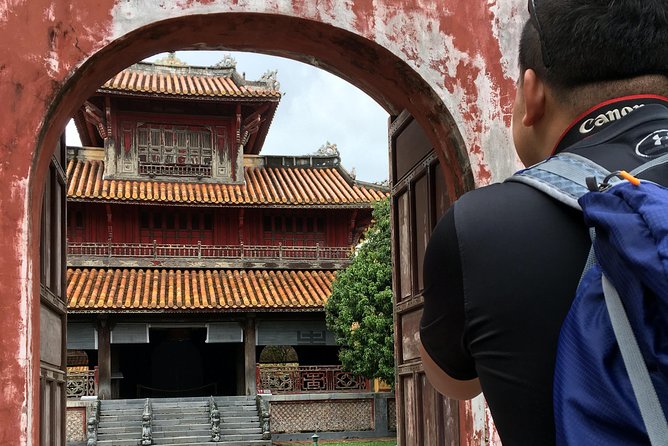
Reviewed · HUE TOURS
Hue Imperial City Walking Tour: Citadel & Forbidden City
Hue’s Imperial City is far too large to treat as a quick photo stop. This guided walk takes you from the grand Ngo Mon Gate through palace courts, ancestral temples, royal gardens, and the Forbidden City, where damaged buildings and carefully restored halls help tell Hue’s complicated story.
I like the clear route through a sprawling site and the chance to ask questions as you go. I also like the guides’ flexible pace. Guides such as Ngoc, Ha, Huong, Sue, Hoa, and Nhien are praised for strong English, patient explanations, and stories that connect palace buildings with ordinary life and national events.
The main drawback is practical: entry tickets are not included, and the tour involves several hours on foot across a large historic compound. Hot, rainy, or uneven conditions may make the walk tiring, and the activity is not suitable for wheelchair users.
Key points to know before you book
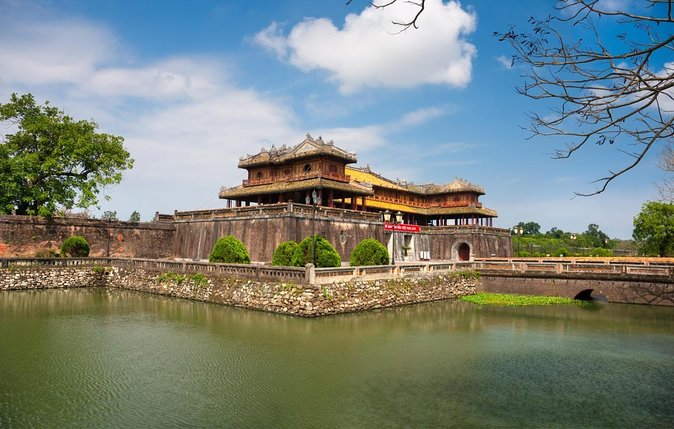
- Enter through Ngo Mon Gate: Begin at Hue’s most famous ceremonial entrance and learn how the imperial compound was organized.
- Follow the Nguyen Dynasty story: Thai Hoa Palace, The Mieu, and the Forbidden City each explain a different part of royal power and family life.
- See Kien Trung Palace and restored spaces: The palace offers a look at ongoing restoration and the changing appearance of Hue’s historic buildings.
- Expect a long, steady walk: The standard route takes about 150 minutes, while slower private visits with extra stops can reach 330 minutes.
- Meet at the four-cannon location: The meeting point is the site marked Nine Holy Cannons on Google Maps, specifically the four cannons near Cua Ngan.
- Pay for admission separately: The $11 tour price covers the guide and walking service, not the Imperial City entrance ticket, food, or drinks.
Why a guide helps inside Hue’s enormous citadel
Hue’s Imperial City is not a single palace. It is a broad walled complex with gates, courtyards, temples, administrative buildings, theaters, gardens, and the Forbidden City at its center.
You can walk through it on your own, but the buildings do not always explain themselves. A guide gives names and purpose to the structures, points out architectural details, and helps you understand how the Nguyen court worked. That context matters here because many buildings have been damaged, rebuilt, or reduced to foundations.
I especially value a guide at The Mieu, the temple area used to honor Nguyen emperors. The tour explains why certain kings were not worshiped there, a detail that opens up questions about royal succession, political judgment, and the way the dynasty wanted its past remembered.
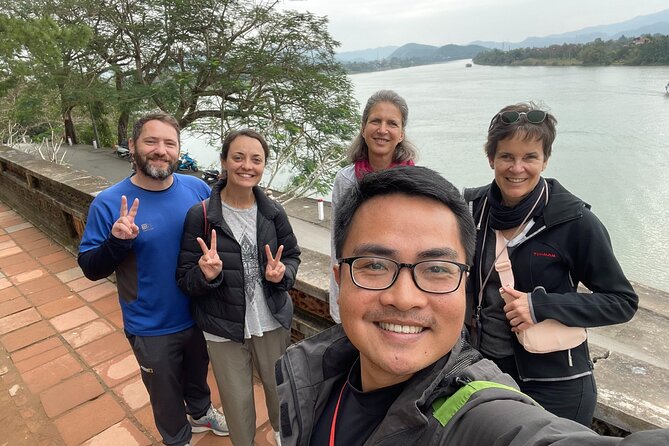
The guides also bring different strengths. Ngoc is repeatedly praised for precise explanations, excellent English, and patience with photographers. Ha is noted for a gentle pace and helpful local suggestions. Huong is described as clear, funny, and good at answering questions. Sue is praised for speaking slowly when guests need to translate for family members.
The exact guide depends on the date and group, but the pattern is useful: this is a tour built around explanation, not just escorting you from gate to gate.
More City Tours in Hue
- Hue Customizable Tour with Imperial Citadel & Forbidden City
★ 4.9 · 937 reviews - Hue :Exploring Royal City with Multi Options and Dragon Boat
★ 5.0 · 675 reviews - Hue City Tour Full Day – Group Tour
★ 4.7 · 518 reviews
Starting at the four cannons near Cua Ngan
The meeting instructions deserve careful attention. Google Maps labels the general area Nine Holy Cannons, but the cannons are split between two sites. Four are displayed at Cua Ngan, and five are near Quang Duc Gate.
You need the four-cannon location at Cua Ngan. The guide waits there, and sending your WhatsApp number allows the guide to share a map pin if needed. This is a small detail, but it can prevent a frustrating start, especially if you are arriving by taxi or meeting a private guide.
Pickup may be available if you select that option. In that case, the driver and guide come to your hotel, but you need to provide the hotel name and WhatsApp number. If you choose a meeting-point option, make sure you know which entrance and cannon site you are using before setting out.
Ngo Mon Gate: the right opening scene
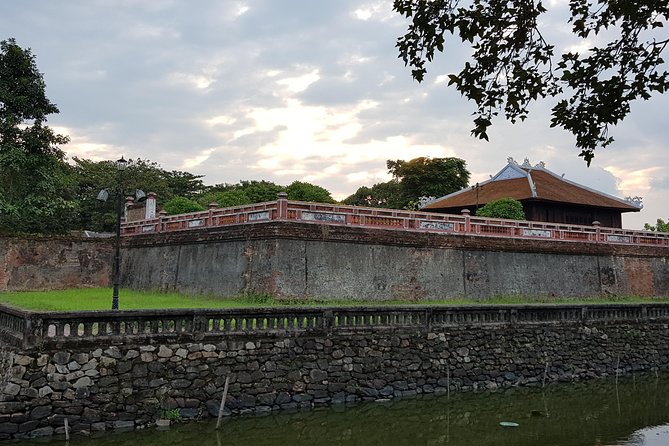
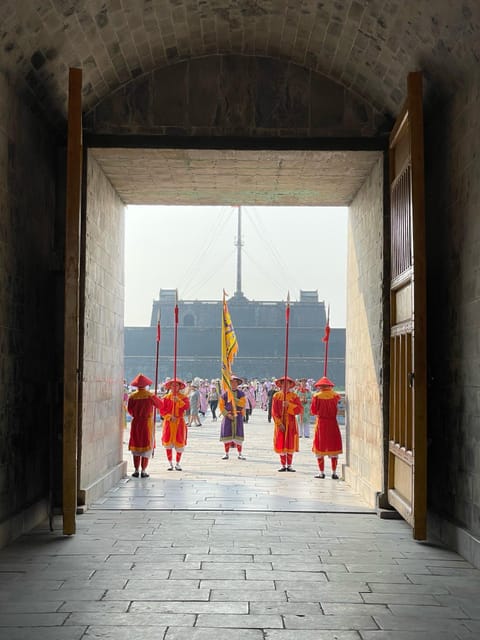
The walk enters the Imperial City through Ngo Mon Gate, the great southern entrance. Allow about 20 minutes here for the guide’s introduction, photographs, and an explanation of how the gate functioned in the imperial layout.
This is more than a grand doorway. It sets up the design of the whole complex, with formal movement from the outer public areas toward more restricted royal spaces. The guide can show you how ceremony and access were built into the architecture.
I like beginning here because it gives the rest of the walk a clear sense of direction. You are not simply wandering among old buildings. You are moving through layers of increasing privacy and royal importance.
The gate is also a popular photo stop, so your guide’s timing matters. A private or small group can pause for pictures without holding up a large party. Still, expect other people in the area, and do not count on a quiet, empty view.
Thai Hoa Palace and the formal court
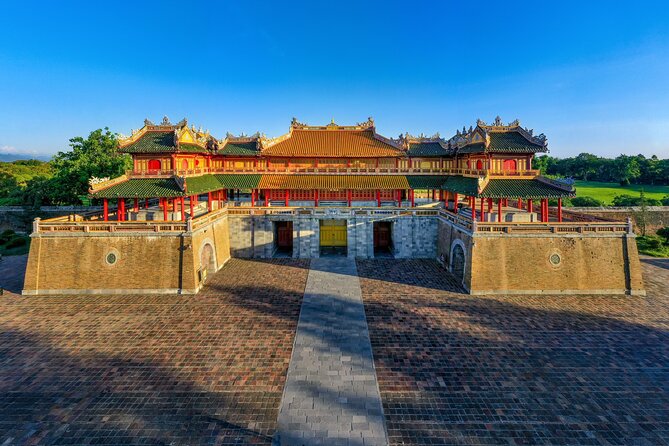
Thai Hoa Palace, or Palace of Harmony, receives about 30 minutes. This is one of the key stops, and rightly so. The hall represents the formal court and the public face of Nguyen rule.
Your guide explains how ceremonies worked, why the building mattered, and how the palace fits into the compound’s central axis. The point is not just to admire carved details or rooflines. You learn what kind of event took place there and who was allowed to enter.
This is one of the places where a guide earns the tour price. Without context, you may see a handsome historic hall. With context, you begin to read the building as a stage for authority, rank, and ritual.
Restoration is part of the visual story. Some parts of Hue appear carefully renewed, while others remain worn or incomplete. That contrast can be striking, but it also means the site does not look like a perfectly preserved royal city. I prefer knowing that before I arrive. You are seeing both the surviving architecture and the long work of bringing it back.
More Walking Tours in Hue
- Hue Imperial Ancient City Walking Tour
★ 4.8 · 308 reviews - Eat like a local with a local – Walking Tour
★ 4.9 · 57 reviews - Hue Imperial City and Forbidden City Walking Private Tour
★ 4.9 · 42 reviews - Hue: Imperial City Walk, Motorbike Tour & Private Car Options
★ 5.0 · 732 reviews
Hien Lam Pavilion and The Mieu temple
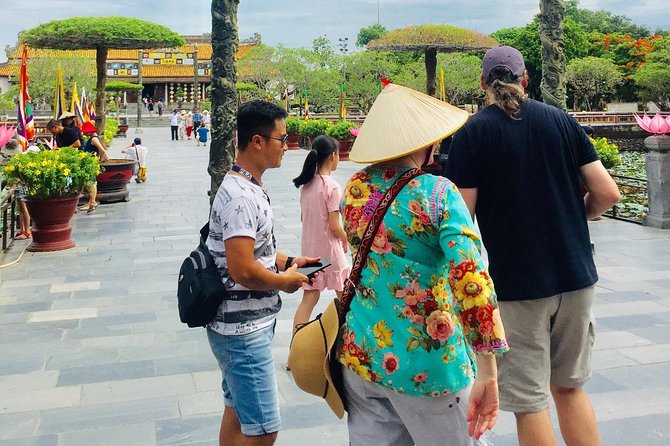
The itinerary then moves toward Hien Lam Pavilion, with about 10 minutes for a guided visit and photographs. The pavilion is part of the ceremonial area around The Mieu, where the Nguyen emperors were honored.
The Mieu receives more attention because it raises one of the tour’s most interesting questions: why were some emperors excluded from worship there? The answer involves the dynasty’s judgment of its own rulers, not simply family loyalty. Ask your guide to explain the political and moral reasoning behind those decisions.
This is a good point to slow down. The temple area helps you see that royal memory was managed carefully. The Nguyen court did not treat every emperor in the same way, and the arrangement of names and altars reflected that choice.
Guides on this route are often willing to answer questions beyond the basic script. You can ask about the dynasty, Vietnamese culture, the wars that affected Hue, or how royal traditions fit into modern Vietnam. The tour works best when you treat it as a conversation rather than a lecture.
Cua Chuong Duc and the less polished corners
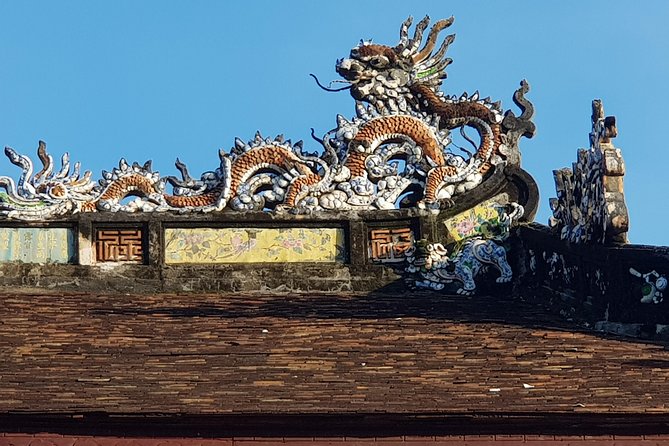
Cua Chuong Duc is another short guided stop, listed at about 10 minutes. The route also includes a further 20-minute visit and photo stop whose exact structure is not specified in the activity details.
That uncertainty is worth noting. The guide may adjust the order or emphasis based on access, restoration work, weather, and the group’s pace. Do not expect every visit to unfold with identical timing.
The less restored sections can be just as useful as the grand halls. They show the scale of damage and the uneven condition of the compound. You may find roofless walls, worn surfaces, or open spaces where a building once stood. Your guide helps you picture how these areas fit into the original royal plan.
There is also a planned 10-minute break. Use it for water, shade, or simply a pause from the steady walking. Hue can be rainy, and one account describes the tour continuing in gray, wet weather with the guide keeping the mood light. Bring sensible footwear and be ready for changing conditions.
Kien Trung Palace and the Forbidden City
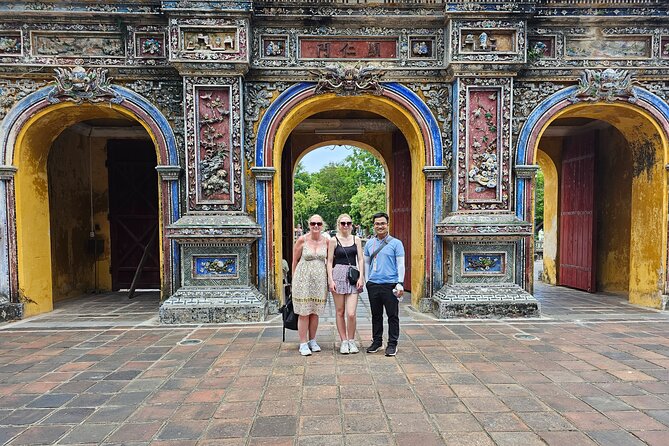
The route continues into the Forbidden City, the more private royal zone. Kien Trung Palace receives about 20 minutes, including walking and photographs.
The palace was used as a residence for the king’s family, so it helps shift the focus from public ceremony to private court life. Thai Hoa Palace shows the ruler in formal settings. Kien Trung Palace raises different questions: where did the royal family live, how private was royal life, and how did the inner court operate?
Kien Trung Palace is also a useful place to notice restoration. Some parts of Hue have been rebuilt with care, while other areas remain visibly incomplete. That mix can frustrate visitors hoping for a fully intact palace, but it also gives you a more honest view of the site’s survival.
Guides such as Ngoc have helped photographers find useful angles and allowed extra time for pictures. That kind of flexibility is easier in a private or small group than in a large scheduled crowd.
Thai Binh Pavilion and the royal gardens
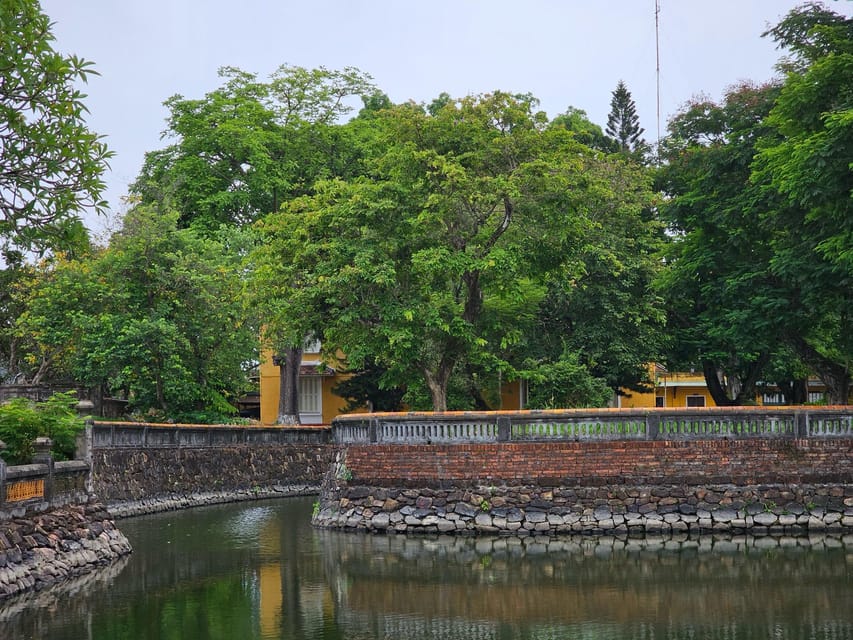
Thai Binh Pavilion follows with about 10 minutes of guided viewing and walking. The pavilion is tied to the quieter side of palace life, away from the most formal ceremonial spaces.
You then reach Thieu Phuong Garden for roughly 20 minutes of sightseeing and walking. The Royal Garden and nearby library area provide a change of pace after the gates, temples, and formal halls.
Gardens are not filler on this walk. They help you understand that the imperial compound was designed for more than ceremony. Palace life also required places for reading, rest, viewing, and controlled movement through attractive outdoor spaces.
The final section includes the Royal Library and Royal Garden before you leave the Imperial City. These closing stops are useful because they bring together the cultural and private sides of the court. You finish with more than a list of emperors and buildings. You get a sense of how architecture shaped daily royal life.
Duyet Thi Duong Royal Theater
Duyet Thi Duong Royal Theater receives about 10 minutes. It was connected to court entertainment and gives the itinerary another useful angle.
A royal compound needed music, performance, and ceremony as well as offices and temples. The theater reminds you that the court was a working social world, not only a collection of solemn halls.
The stop is brief, so do not expect a full performance or a long theater visit. Its value lies in the explanation and in seeing how entertainment fit into the life of the Nguyen court.
After a final photo stop, the tour ends with drop-off options in Hue or at Cua Hien Nhon. The route is not designed to include meals, and food and drinks are not supplied. Guides may suggest places to eat afterward, but you should plan to arrange your own meal.
How long the walk takes
The advertised duration ranges from 150 to 330 minutes. That is a wide spread, but it makes sense for a route through such a large compound.
A faster visit may take around two and a half hours. A private walk with questions, photographs, pauses, weather delays, or a slower pace can take close to five and a half hours. Several people have found that about three hours gives enough time to understand the site without rushing.
I would choose the longer option if you care about architecture, photography, or asking questions. If you have limited time in Hue, tell the guide early. The route includes many stops, and a good guide can help you focus on the buildings that matter most to you.
The walk is not suitable for wheelchair users. Even for visitors without mobility concerns, wear comfortable shoes and carry water. The site is large, and the experience is more enjoyable when you do not have to hurry from one court to the next.
Is $11 good value?
At $11 per person, the tour is inexpensive for a guided visit lasting roughly two and a half to five and a half hours. The price covers a local guide and walking tour, which means most of what you are paying for is interpretation and time.
You still need to buy the entry ticket separately. The activity information does not state the current admission price, so check it before booking and include it in your budget. Food and drinks are also separate.
The value is strongest if this is your first visit to Hue. The compound is so large, and the names and functions of the buildings are so easy to mix up, that a guide can save you from seeing only the most obvious gate and palace.
A self-guided visit may suit you if you prefer silence, take your time, or already know the Nguyen Dynasty. But at this price, the guide is a sensible addition for most first-time visitors.
Group size, language, and guide style
English and French tours are available. Private and small group options can be selected, and group size affects the feel of the walk.
A small party gives you more room for questions and photographs. Several bookings have turned into one-on-one walks when other people did not join, creating a personal pace and more conversation. That is not guaranteed, but the option is available.
The strongest guide qualities are consistent: clear English, patience, good timing, and an ability to explain difficult parts of Vietnamese history without making the walk feel stiff. Guides have also helped with practical local advice, including meal and coffee suggestions after the tour.
If you have a family member who needs slower English for translation, tell the guide at the start. One visit worked well because the guide spoke clearly and slowly enough for a guest to translate the story to her mother.
Who should book this Hue walking tour?
I would choose this tour if you want the Imperial City to make sense, not just look beautiful in photographs. It is especially suited to first-time visitors, history fans, photographers who want time for questions, and couples or families who prefer a personal guide.
It is also a good choice for visitors with only one day in Hue. The guide gives you a strong introduction to the citadel and can help you decide what else deserves your time.
I would think twice if you dislike several hours of walking, need step-free access, or want a completely independent visit. You also need to remember that admission, drinks, and meals cost extra.
Should you book it?
Book it if you want the stories behind Ngo Mon Gate, Thai Hoa Palace, The Mieu, Kien Trung Palace, and the royal gardens. The tour’s strongest feature is the guide’s ability to connect buildings with royal customs, political choices, family life, and Vietnam’s wider past.
Choose a private or small group option if you value a relaxed pace, photography, or detailed questions. Before you go, confirm the four-cannon meeting point near Cua Ngan, bring water, and budget separately for the entrance ticket.
At $11, this is a practical way to get your bearings in one of Vietnam’s most important historic sites. I would book it for a first visit, especially if you want Hue to be more than a set of impressive walls and restored halls.
FAQ
How much does the Hue Imperial City walking tour cost?
The tour costs $11 per person. Entry tickets, food, and drinks are not included.
How long does the tour last?
The duration ranges from 150 to 330 minutes. Starting times depend on availability and the option selected.
What language is the tour offered in?
Live guiding is available in English and French.
Is this a private tour or a group tour?
Private and small group options are available. Pickup options may also vary by selection.
Where is the meeting point?
The meeting point is at the four cannons near Cua Ngan. Google Maps may label the wider area Nine Holy Cannons, but five cannons are displayed near Quang Duc Gate at another site.
Is hotel pickup available?
Pickup is optional. If you choose it, the driver and guide can come to your hotel. You need to provide your hotel name and WhatsApp number.
What does the price include?
The price includes a local guide and walking tour. Entry tickets, food, and drinks are excluded.
Can wheelchair users join?
No. The activity is listed as unsuitable for wheelchair users.
Can I cancel the booking?
You can cancel up to 24 hours in advance for a full refund. Reserve now and pay later is also available.
More Walking Tours in Hue Vietnam
- Private Street Food Evening Walking Tour in Ho Chi Minh City
★ 5.0 · 3,175 reviews - [HOT] Hanoi Old Quarter Walking Street Food – Small Group Tour
★ 5.0 · 2,163 reviews - Super Niche Walking Street Food Tour in Ho Chi Minh City
★ 5.0 · 1,636 reviews - Private Walking Tour of Hanoi City
★ 5.0 · 1,251 reviews
Newly listed around Hue Vietnam
- Half-Day Phong Nha Cave Adventure by Dragon Boat★ 4.9 · 39 reviews
- Hoi An/Da Nang : Golden Bridge , Marble Mt & Lady Buddha★ 5.0 · 39 reviews
- From Hue/Da Nang/Hoi An: Bach Ma National Park Trekking Tour★ 4.5 · 39 reviews
- Hue City Full-Day Tour★ 4.8 · 41 reviews
- Chan May Port : to Golden Bridge/Imperial City/Hoi An Town★ 5.0 · 41 reviews
- Hue Imperial City and Forbidden City Walking Private Tour★ 4.9 · 42 reviews
- From Hue : Full-Day City Highlights Tour with Lunch★ 4.5 · 46 reviews
- Hue: Brew Egg, Salt & Coconut Coffee★ 5.0 · 47 reviews
Hue Tours, compared.

Hue to Hoi An ( Hoi An to Hue) Top Gear with Lefamily Riders Tours ( 1 way)
Read our review →
Easy Rider private tour via Hai Van pass from Hue – Da Nang – Hoi An (1Way|Loop)
Read our review →
Hue Customizable Tour with Imperial Citadel & Forbidden City
Read our review →
Easy Rider From Hue Da Nang Hoi An Via Hai Van Pass With Mister T
Read our review →
Hue to Dn/Hoi An: Hai Van Pass, beaches & Mt Monkey or vice versa
Read our review →
Imperial City Walk, Motorbike Tour & Private Car Options
Read our review →
Exploring Royal City with Multi Options and Dragon Boat
Read our review →
Hue city Deluxe Group Tour (Daily Tour-12 pax max)
Read our review →Browse the lists this tour appears in