
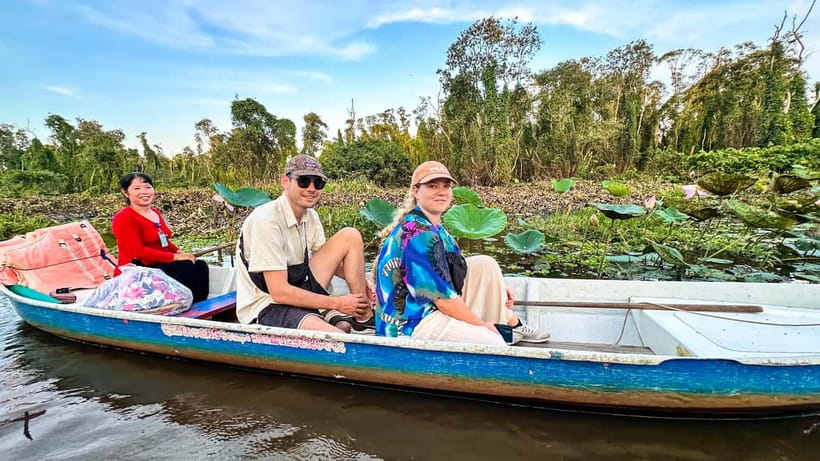
Reviewed · MEKONG DELTA TOURS
Ho Chi Minh: 3-Day Mekong Delta & Optional Exit to PhnomPenh
The best reason to choose this three-day Mekong Delta tour is that it shows several very different sides of southern Vietnam in one trip. You move from Cai Be’s fruit gardens and canals to Can Tho’s early floating market, then on to bird-filled Tra Su Forest and the Cham villages near Chau Doc. If you continue to Phnom Penh, the Mekong becomes your onward route rather than just a day trip from Ho Chi Minh City.
I like the hands-on local stops, especially the garden cooking session, noodle workshop, cycling, and visits to historic homes. I also like the practical route: the tour gives you two nights in the Delta and can carry you by fast boat or bus to Cambodia. The main drawback is the pace. Day two is packed, and the final morning can finish early, so this suits you better if you prefer seeing a lot rather than lingering over each stop.
Key points at a glance
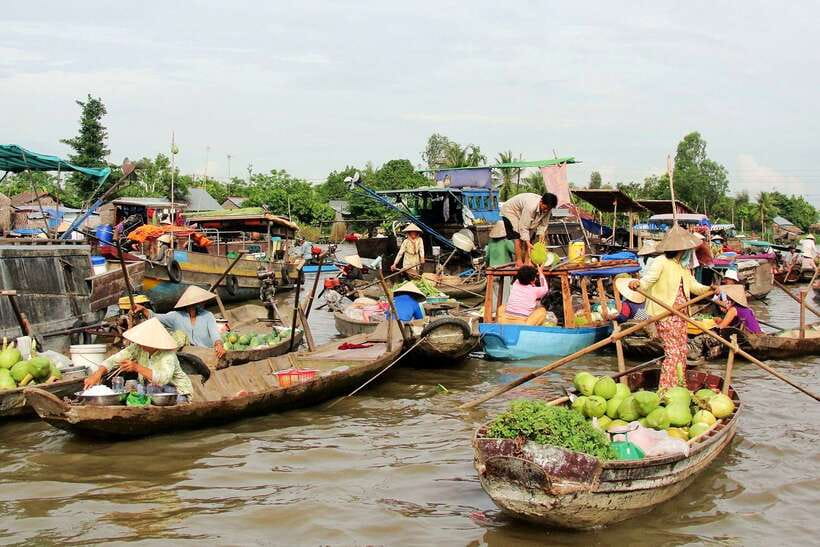
- Cai Rang before the crowds build: An early boat ride brings you to Can Tho’s famous floating market, followed by a family noodle workshop.
- Small-group feel when numbers are low: Groups reported on the tour have ranged from only a few people to around 15, with guides such as Tuco, Vi, Sunny, Elio, and Min keeping the days organized.
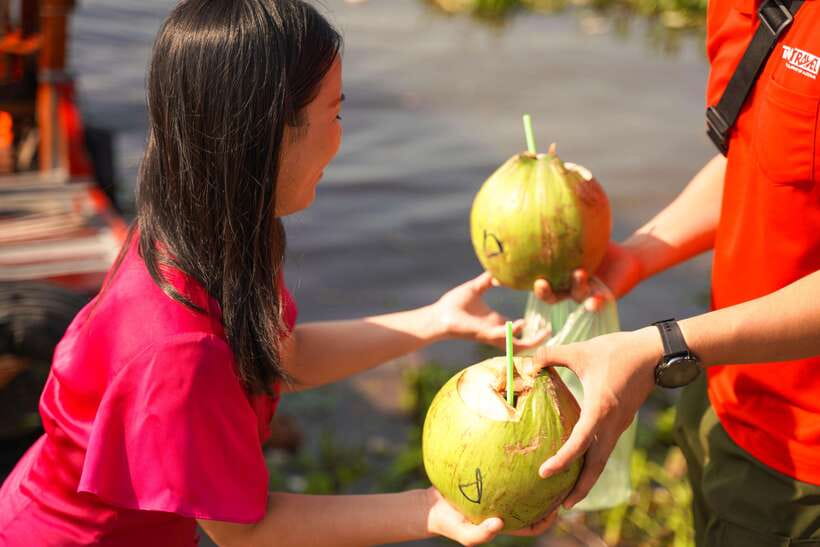
- More than scenery: You will cook in a local garden, taste coconut fudge and seasonal fruit, cycle through villages, and meet people working along the river.
- Tra Su is the nature highlight: A rowing boat carries you through the forest, where birdlife and quiet waterways replace the market noise.
- A useful route to Cambodia: The optional Phnom Penh transfer saves you from backtracking to Ho Chi Minh City, though the boat can be replaced by a bus.
- Good value, with a busy schedule: At $261 per person, the price covers transport, boats, guides, entrance fees, two nights, three included meals, and the Cambodia transfer when available.
Why three days works better than a day trip
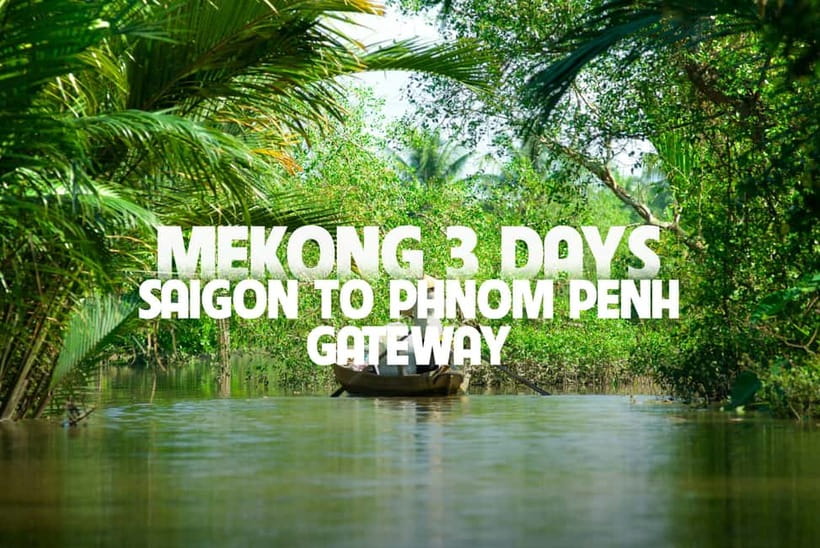
The Mekong Delta is not one single attraction. It is a broad network of rivers, canals, farms, market towns, islands, and villages spread across southern Vietnam. A day trip from Ho Chi Minh City can give you a quick taste, but it usually means a long ride there and back with little time in the Delta itself.
This tour uses two nights in Can Tho and Chau Doc to push farther west. That matters. You get Cai Be in the lower Delta, Cai Rang near Can Tho, and Tra Su and the Cham communities near the Cambodian border. The route also makes sense if Phnom Penh is next on your plan.
The tour costs $261 per person, based on two people sharing a twin or double room. For that fee, you receive air-conditioned road transport, several boat trips, a professional English-speaking guide, entrance fees, two breakfasts, two lunches, one set-menu Vietnamese dinner, and two nights in three-star hotels.
I consider that a fair price for the amount of ground covered. Independent travel is possible, but arranging the small boats, forest visit, market timing, local workshops, hotels, and border transfer yourself would take time. The tradeoff is control: you follow a fixed schedule and spend time at commercial stops along with the cultural ones.
A few other Ho Chi Minh City trips to compare
- From HCM City: Mekong Delta Tour with Sampan Journey
★ 4.5 · 13,132 reviews - Cu Chi Tunnels and Mekong Delta Signature Tour
★ 5.0 · 7,328 reviews - Mekong Delta Guided Tour from Ho Chi Minh City
★ 4.5 · 7,192 reviews
Cai Be: orchards, canals, and a working island
The first day begins with pickup or a meeting in central Ho Chi Minh City between 7:30 and 7:45 AM. Pickup is limited to central District 1 areas, so if you stay elsewhere, go directly to 112 Tran Hung Dao Street and look for the TNK Travel sign. The vehicle is air-conditioned, a welcome feature in southern Vietnam’s heat.
Cai Be introduces you to the Delta at a gentle pace. You cruise along the Tien River, then move into smaller waterways and orchard areas. The appeal is not a single grand sight. It is the change in scale, from the broad river to narrow canals, garden paths, and village homes.
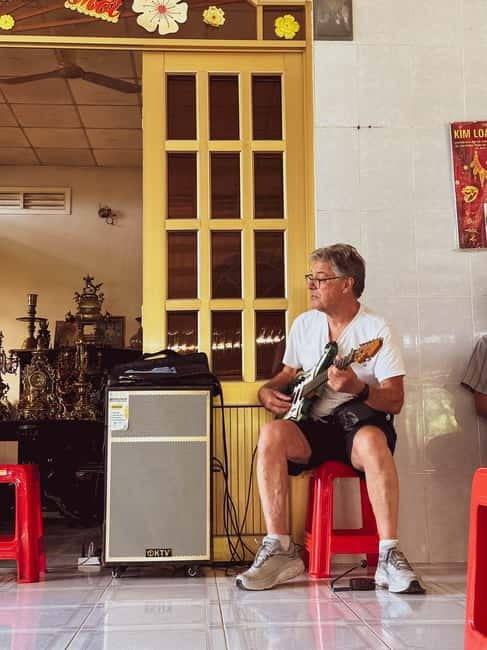
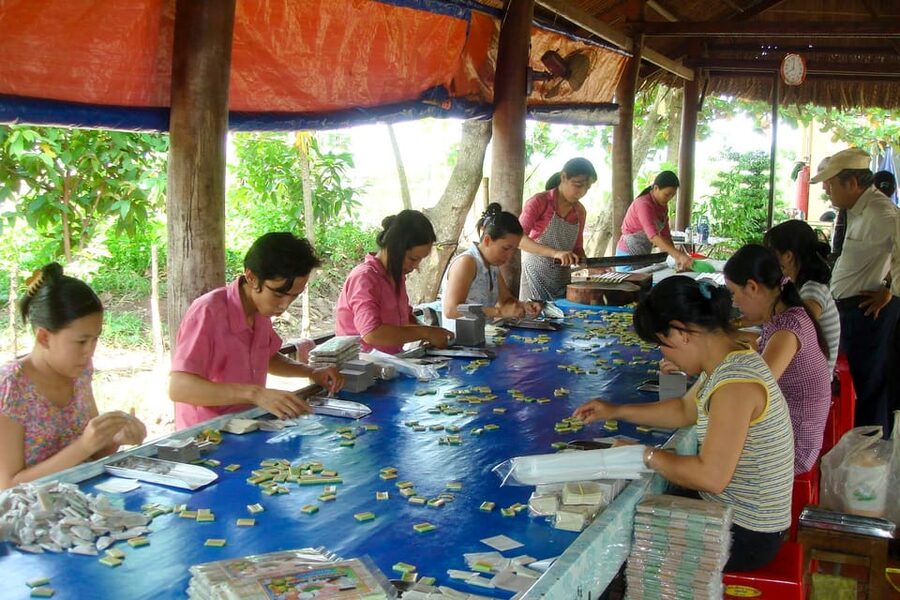
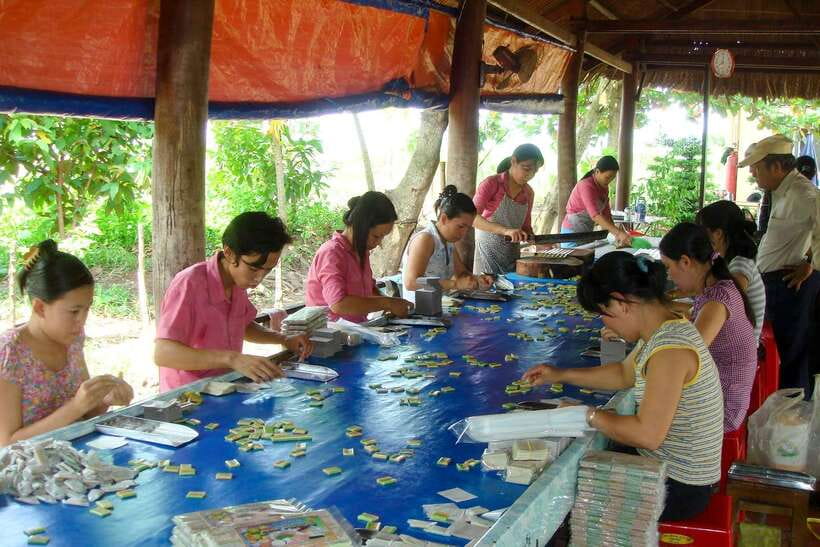
You will visit orchards and traditional villages, sample coconut fudge, and hear Southern Vietnamese folk music. The coconut candy stop is brief, according to one detailed account, so do not expect a long factory tour. Think of it as a quick look at a local product, with time to taste and buy if you wish.
The garden cooking session adds more value than a standard restaurant lunch. You take part in preparing food in a local garden, then eat the result. Meals receive especially strong praise on this tour, including from vegetarians, but tell your guide about dietary needs as early as possible. A guide named Thuyen was specifically praised for handling a daughter’s allergy carefully.
After lunch, cycling gives you a better sense of the island than staying on the boat. You pass gardens and village lanes, meet local residents, and visit Ba Kiet’s historic house. The house offers a look at older domestic architecture and gives the guide a useful setting for explaining local life.
This portion feels most rewarding when you pay attention to ordinary details: how fruit is grown, how homes face the water, and how food production fits into village life. It is less rewarding if you want uninterrupted sightseeing, since local enterprise visits can include shopping.
You then continue to Can Tho for the night. Accommodation is usually at the West Hotel or a similar three-star property, though recent arrangements have also included the Wink Hotel. Some rooms have been described as large and comfortable. Hotel quality can vary, so keep your expectations at a solid local three-star level rather than a resort standard.
Cai Rang at first light
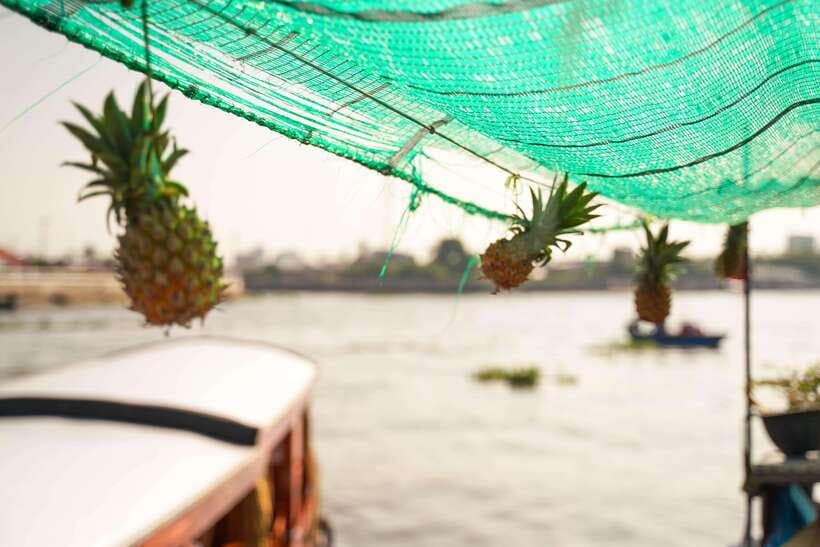
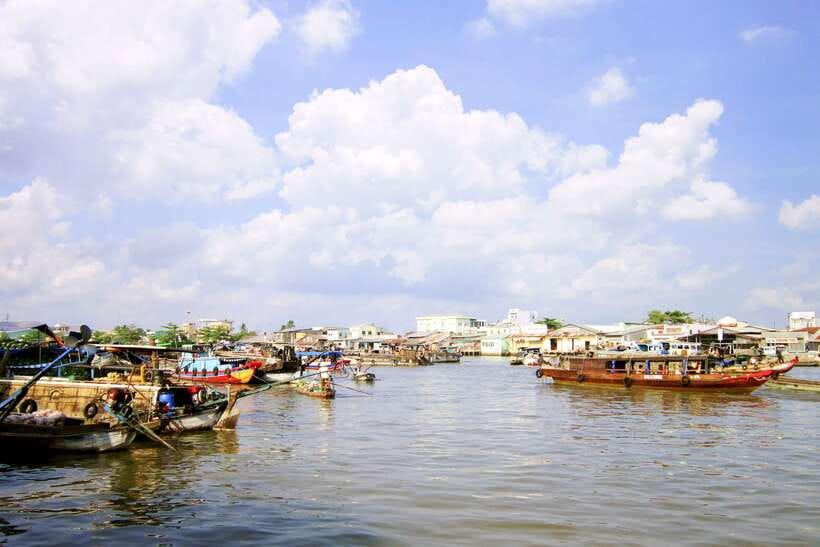
Cai Rang Floating Market is the reason many people book this trip, and the early start is essential. Boats gather on the river to sell produce, with larger boats advertising what they carry by displaying goods from poles. It is a working market first and a sightseeing scene second.
That distinction makes the visit worthwhile. You are not simply looking at boats arranged for tourists. You are watching a river-based trading system, even though the market has also become a major stop on Delta tours.
The timing means breakfast may be early or on the move. Bring water, sun protection, and a light layer if you are sensitive to morning air. Sunglasses and a sun hat are listed as useful items, and comfortable shoes will help throughout the day.
After Cai Rang, you visit a family-run noodle workshop. This is one of the tour’s better food stops because it connects a familiar dish with the work behind it. You see a small-scale production setting and learn how rice becomes noodles before tasting more local food later in the day.
The second day then adds Munir Ansay Pagoda, an important Khmer cultural site in Can Tho. Dress with respect: shoulders and knees must be covered. The pagoda is not just a photographic pause. It shows that the Mekong Delta is home to distinct Vietnamese, Khmer, and Cham communities, each with its own traditions and places of worship.
You also stop at a fruit plantation for seasonal produce. The exact selection will depend on what is growing, but this is a good counterpoint to the market and noodle workshop. At the plantation, the focus shifts from trade and processing to the Delta’s agricultural wealth.
The packed road to Chau Doc
After the Can Tho visits, the route continues toward Chau Doc. This is where the itinerary becomes especially full. You cover substantial distances, make several stops, and still need to reach Tra Su Forest and dinner.
That busy rhythm is useful if you have limited time. It is tiring if you want long breaks. One guide may adjust the plan when the group arrives early, as Vi did for a sunset stop at a mountainside monastery, but you should not count on every extra stop. The main schedule already fills the day.
Chau Doc gives the trip a different feel. It is closer to Cambodia, and the cultural mix becomes more noticeable. The usual hotel is the Paris Hotel or a similar property. Hot water has not always been reliable at the Chau Doc accommodation, so pack with modest hotel expectations and consider checking the room soon after arrival.
Dinner is included as a set Vietnamese meal. Drinks and extra meals are not included, but local restaurants are available if you want something beyond the planned food. The included meals are a strong part of the value, especially for people who want local dishes without having to choose every restaurant themselves.
Same base, a completely different day:
- Cu Chi Tunnels Tour from HCM City – Morning or Afternoon
★ 5.0 · 15,833 reviews - Ho Chi Minh City Street Food Tour & Sightseeing By Motorbike
★ 5.0 · 9,413 reviews - HCM: Cu Chi Tunnels-Tapioca Small Group Tour Morning or Afternoon
★ 5.0 · 7,485 reviews - Cu Chi Tunnels & Mekong Delta Tour with VIP Limousine Transfer
★ 5.0 · 7,052 reviews
Tra Su Forest by rowing boat
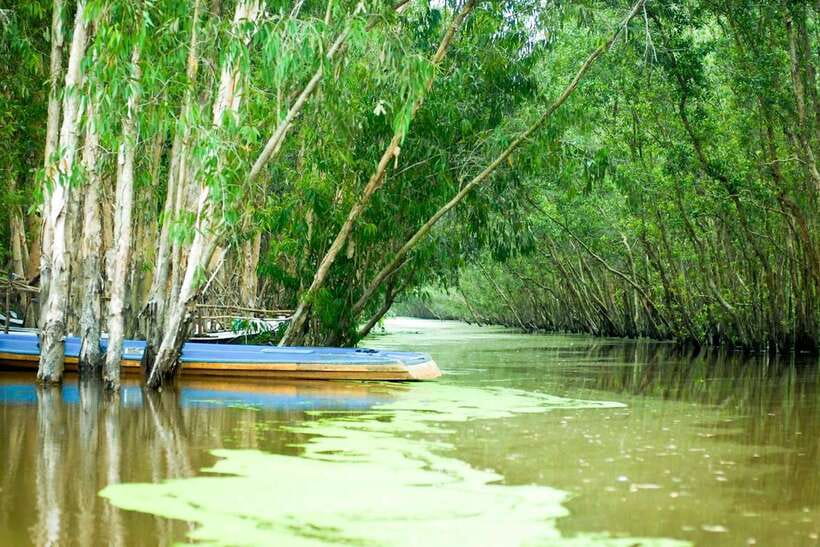
Tra Su Mangrove Forest is the natural high point of the tour. Instead of noisy city streets or open river traffic, you travel by small rowing boat through narrow waterways lined with wetland vegetation.
The outing is quiet and close to the water. You may see birds and other wildlife, and the forest gives you a chance to slow down after the morning’s market and road travel. Some departures also include a boat ride through the forest area that feels more open and scenic.
The experience depends on conditions. Water levels, weather, and wildlife are never fully predictable, so come for the atmosphere and habitat rather than a guaranteed bird list. The forest is still rewarding even when animals keep their distance.
This stop also helps explain why the Delta matters beyond farming and transport. Wetlands store water, shelter wildlife, and support the complex river environment. You do not need a specialist nature background to appreciate it, but binoculars could be useful if you already carry them.
Several people who enjoyed the tour most highly preferred this upper Delta section over the floating market. I understand why. Cai Rang is lively and famous, but Tra Su feels more peaceful and less like a standard city excursion.
Floating villages and Cham heritage near Chau Doc
The final day turns from nature to community life. You visit floating villages and the Cham Village, where the river is not just scenery but part of the daily routine.
The floating village shows homes and work connected to the water. The Cham visit adds cultural depth, especially when your guide explains how Cham heritage fits into the wider Mekong region. Guides vary, but the strongest ones, including Tuco, Elio, Min, Sunny, and Vi, have been praised for adding context, answering questions, and handling the practical details of a mixed group.
The third-day program may finish early after breakfast and the morning visits. That is convenient if you are taking the boat to Phnom Penh, but it can feel under-filled if you are returning to Ho Chi Minh City and expected another full day of touring.
If you return to Ho Chi Minh City, confirm the drop-off plan with your guide. If you continue to Cambodia, the early finish is exactly what you need.
Taking the Mekong to Phnom Penh
The optional Cambodia transfer is one of this tour’s smartest features. Rather than returning to Ho Chi Minh City and then arranging another journey to Phnom Penh, you can continue from Chau Doc by fast boat or bus, depending on real-time conditions and availability.
The boat journey has been described as taking about five hours, with a clean toilet and drinks available for purchase. It is a simple way to turn a sightseeing tour into part of your overland route. Arriving in Phnom Penh by river also feels more connected to the geography than flying between the two cities.
You need to arrange and pay for your Vietnam and Cambodia visas separately. Bring your passport, and budget for visa costs. The tour operator can assist with the border process, and boat staff may handle much of the practical movement between Vietnam and Cambodia, but you remain responsible for having the correct documents.
The boat is not guaranteed. Real-time river conditions can mean a bus transfer instead. If reaching Phnom Penh by boat is the main reason you are booking, treat it as a useful possibility rather than a promise.
Guides, group size, and the pace
The guide can make or break a tightly scheduled Delta trip. Names praised for warmth, organization, and clear English include Tuco, Vi, Yudi, Naomi, Sunny, Elio, Min, Tom, Kevin, and Thuyen. The exact guide depends on the departure, but you should expect a live English-speaking guide who coordinates boats, hotels, meals, and border arrangements.
Group size also changes the feel. Some departures have had only two to five people, while others have been around eight or 15. A small group gives you more room in the vehicle and makes questions easier. Larger groups can still work well because the program is structured, but transitions take longer.
You need to be ready at the stated time. The tour cannot wait for latecomers, and a delayed start can affect boats and market visits. Comfortable shoes matter because you switch between bus, larger boats, small rowing boats, village paths, pagoda grounds, and bicycles.
The activity is not suitable for wheelchair users, people with mobility impairments, pregnant women, people with heart problems, or people over 70. That reflects the combination of boat transfers, uneven access, cycling, early starts, and long road days.
What to pack and what to expect at meals
Pack light. Oversize luggage is not allowed, which matters most if you are taking the Cambodia transfer. Keep your passport, medication, and essential documents with you.
Your useful kit is simple:
- Comfortable walking shoes
- Sunglasses and a sun hat
- Sunscreen and drinking water
- Clothing that covers shoulders and knees for the pagoda
- A small bag rather than a large suitcase
- Cash for drinks and visa costs
Two breakfasts, two lunches, and one Vietnamese dinner are included. Extra meals and drinks are not. Food has been one of the tour’s most consistently praised features, and vegetarian meals can be arranged successfully when the guide is told in advance.
Do not expect every meal to be a long restaurant stop. The schedule works because food is fitted around the day’s transport and visits. That keeps the tour moving, but it also contributes to the feeling that day two is full from morning to night.
Is the $261 price fair?
I think the price is good for the route, provided you value convenience and variety. Two nights of accommodation alone account for part of the cost, while the boat rides, entrance fees, air-conditioned transport, guide, meals, and possible Phnom Penh transfer add up quickly.
The strongest value comes from access. A private visitor could find some of these places, but organizing a rowing trip in Tra Su, village visits, floating market timing, local workshops, and a border crossing would be difficult without local help.
The weak point is not the price but the fixed nature of the experience. You may spend less time than you want at a coconut candy stop or pagoda, and you cannot easily skip one activity to rest. The Chau Doc hotel may also be less polished than the Can Tho property.
Who should book this Mekong Delta trip?
Book it if you want a broad first look at southern Vietnam, prefer a planned route, and like mixing food, culture, nature, and river transport. It is especially useful if Phnom Penh is your next destination.
It suits active adults who can handle early mornings, road travel, boats, cycling, and full sightseeing days. Families may enjoy it, but check the physical demands and tell the guide about allergies or dietary needs.
I would choose another option if you want a slow luxury stay, long time in one village, or a tour built around one subject such as wildlife or photography. I would also avoid it if you dislike commercial craft stops or tightly organized schedules.
Should you book it?
For most first-time visitors to the Mekong Delta, yes. The route gives you far more than a quick floating-market outing, and the optional Phnom Penh transfer adds real practical value. The best parts are the variety, the local food, Tra Su Forest, and guides who take care of the many moving parts.
Book with two things in mind: expect a busy second day, and do not assume the Cambodia leg will always run by boat. If you can accept those limits, $261 buys a useful, well-filled journey from Ho Chi Minh City to the edge of Cambodia, with plenty of real Delta life along the way.
FAQ
Where does the tour start?
Meet the guide between 7:30 and 7:45 AM at 112 Tran Hung Dao Street, Ben Thanh Ward, District 1, Ho Chi Minh City. Look for the TNK Travel sign.
Is hotel pickup available?
Pickup is available only from hotels in central District 1 areas, including Saigon Ward, Ben Thanh Ward, and Cau Ong Lanh Ward. Hotels on Nguyen Binh Khiem Street, Nguyen Huu Canh Street, and in Tan Dinh Ward are excluded.
Is the tour conducted in English?
Yes. The tour includes a live English-speaking guide.
What accommodation is included?
Accommodation is shared twin or double occupancy in three-star hotels. The usual properties are the West Hotel or a similar hotel in Can Tho and the Paris Hotel or a similar hotel in Chau Doc.
Is the Phnom Penh transfer included?
A fast boat or bus ticket to Phnom Penh is included when available. The transfer may be changed from boat to bus because of real-time conditions.
Do I need a visa for Cambodia?
Vietnam and Cambodia entry visas are not included. You are responsible for arranging and paying for the required visas.
What meals are included?
The tour includes two hotel breakfasts, two lunches, and one set-menu dinner with Vietnamese cuisine. Drinks and additional meals cost extra.
Can I return to Ho Chi Minh City instead of going to Phnom Penh?
Yes. On the final day, you can either return to Ho Chi Minh City or choose the transfer to Phnom Penh.
What clothing should I bring for the pagoda?
Your shoulders and knees must be covered when visiting the pagoda. Comfortable shoes, sunglasses, and a sun hat are also recommended.
Can I cancel the booking?
You can cancel up to 24 hours before the activity for a full refund. The reserve-now-and-pay-later option is also available.
Newly listed around Ho Chi Minh City
- Ho Chi Minh City’s most delicious street food tour by motorbike★ 5.0 · 39 reviews
- Half Day – Saigon Off-the-Beaten-Path – City Cycling Tour★ 5.0 · 39 reviews
- HCM City Local Street Food by scooter/ Aodai Rider Saigon tour★ 5.0 · 39 reviews
- Night Bus Tour in Ho Chi Minh City★ 3.0 · 39 reviews
- Explore Vietnamese Cuisine: Cooking Class from Ho Chi Minh City★ 5.0 · 40 reviews
- Private Street Food Discovery by Cyclo at Night in Ho Chi Minh★ 5.0 · 40 reviews
- Ho Chi Minh City Sightseeing & Street Food Tasting Experience★ 5.0 · 40 reviews
- Mekong Delta Homestay Explore Nature 2-Day Family Tiny Garden★ 5.0 · 40 reviews
Mekong Delta Tours, compared.
Cu Chi Tunnels and Mekong Delta Signature Tour
Read our review →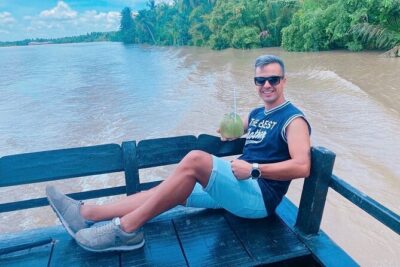
Mekong Delta Guided Tour from Ho Chi Minh City
Read our review →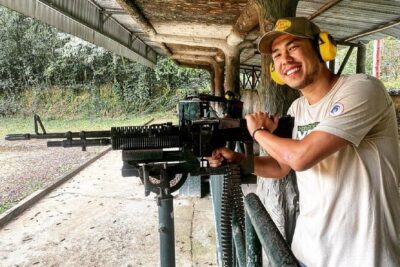
Cu Chi Tunnels & Mekong Delta Tour with VIP Limousine Transfer
Read our review →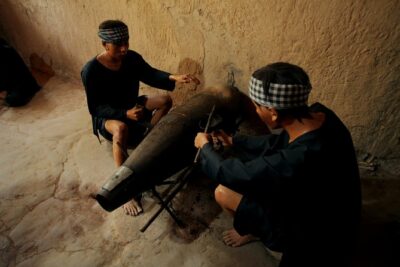
Cu Chi Tunnels and Mekong Delta Full Day Tour – Max 12
Read our review →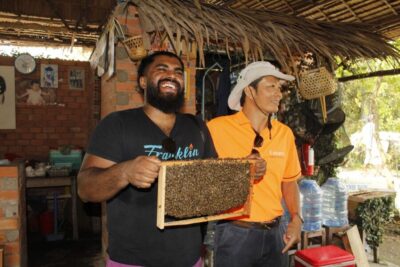
Mekong Delta, My Tho & Ben Tre Coconut Village
Read our review →
CuChi Tunnels&Mekong Delta-Boat,TukTuk,Coconut Village SmallGroup
Read our review →
Adventure Cu Chi Tunnels and Mekong Delta Tour From HCM
Read our review →Browse the lists this tour appears in