Reviewed · HANOI TOURS
Hanoi: Master the Art of 4-6 Signature Vietnameses Coffees
The best part of this Hanoi coffee workshop is that you do not simply watch someone pour coffee. You make six Vietnamese styles yourself, from strong black coffee and sweet brown coffee to egg, coconut, white, and salted versions. I especially like the small groups, which give instructors such as Jade, Eddie, Daisy, and Tyler time to explain each step, and the practical recipes that help you repeat the experience at home. You also get a taste of how coffee fits into daily Hanoi life.
The setting is a lived-in local space near the Old Quarter, not a polished cooking school built only for visitors. That makes the experience feel personal, though it also means the atmosphere is homey rather than formal. You will drink a lot of coffee in one to two hours, so I would book it early in the day and think twice if caffeine affects you strongly.
Quick points about the Hanoi coffee workshop
- Six cups, six different ideas: Make black, brown, egg, white or silver, coconut, and salted coffee, depending on the session.
- Hands-on from start to finish: Grind, measure, brew with a phin filter, whisk, taste, and adjust each drink.
- Small groups of up to 10: The limited size leaves room for questions and personal preferences.
- Local stories with your coffee: Learn how Vietnamese coffee developed and what different styles say about Hanoi life.
- Useful take-home help: Receive full recipes, practical substitutions, and local café and restaurant suggestions.
- A good value at $22: You get several drinks, instruction, ingredients, and a cultural introduction in about one to two hours.
Starting in a quiet Old Quarter corner
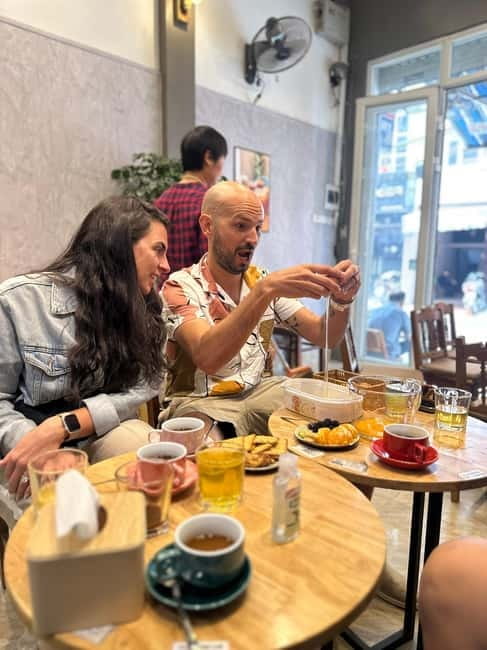
You meet at a cozy local café in a peaceful part of Hanoi’s Old Quarter. The location is described as close to the Hanoi Opera House, the French Quarter, the Red River, and Vinh Tuy Bridge, so it can fit neatly into a day spent around central Hanoi.
The entrance may feel modest and easy to miss. That is part of the charm. You step in from the street and find a local home atmosphere, with voices and daily life continuing outside. The room is air-conditioned, the restrooms are clean, and utensils are washed in a dishwasher and sterilized.
I like that the space is not presented as a theatrical version of Vietnam. You handle ceramic tools from local pottery villages, feel the coffee grounds, and watch foam form in front of you. A garden area is pet-friendly, and childcare is available, which may help families, though babies under one year are not suitable for the activity.
The setting will not suit everyone. If you want a sleek café, formal classroom, or carefully staged food demonstration, this may feel informal. If you prefer a place where people actually live and work, the relaxed room adds something important.
A few other Hanoi trips to compare
- Hanoi Jeep Tour: Food, Culture and Fun by Vietnam Army Jeep
★ 5.0 · 15,222 reviews - Full-Day Ninh Binh Highlights Tour from Hanoi
★ 5.0 · 7,761 reviews - Hanoi: Ha Long Bay Day Cruise – Swimming, Meal, Kayaking
★ 4.7 · 7,415 reviews
The first lesson: how Vietnamese coffee gets its strength
The workshop begins with the basics of Vietnamese coffee and the phin filter. This small metal brewer sits above your cup and lets hot water pass slowly through compact coffee grounds. You learn how grinding, water, timing, and pressure affect the final cup.
Vietnamese coffee is closely linked with beans from the Central Highlands. The coffee used here is specialty coffee selected from Vietnam, with beans changing by seasonal harvest. The aim is not simply to make a very strong drink. You learn how locals balance bitterness, sweetness, body, and strength.
That distinction matters. Many visitors first encounter Vietnamese coffee as a powerful drink under a layer of condensed milk. The workshop shows you how to control it rather than treating strength as the only goal.
You make black coffee first, then brown coffee, which combines brewed coffee with condensed milk. These early cups give you a useful comparison. The black version lets you taste the coffee itself. The brown version shows how sweetness and dairy can soften bitterness while keeping the coffee bold.
You are encouraged to adjust the drinks. If you prefer a sweeter or stronger cup, the instructor explains how to change the balance without losing the original character. That is more useful than memorizing a fixed recipe that only works with one particular brand or piece of equipment.
Egg coffee: the Hanoi specialty worth learning slowly
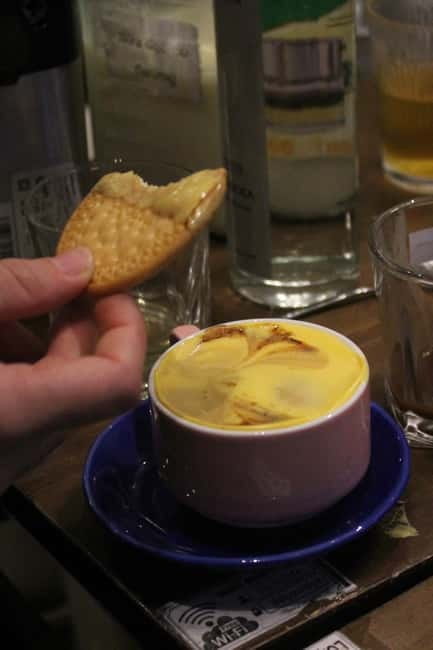
Egg coffee is usually the star of the workshop. It is one of Hanoi’s best-known coffee creations, and making it yourself helps explain why the drink feels more like a dessert than a standard cup of coffee.
You whisk fresh egg with the other ingredients until it becomes light and creamy, then combine it with coffee. The exact process is shown step by step, so you do not have to guess how long to whisk or how to achieve the right texture.
The instructor also explains the story behind egg coffee and its place in Hanoi’s café culture. Guides such as Jade and Daisy have been praised for making the history easy to follow while keeping the class friendly and relaxed. That personal storytelling is valuable because egg coffee can otherwise seem like a novelty with no context.
The drink is sweet, soft, and filling. If you normally prefer black coffee, you may find the contrast striking. I would treat it as a small tasting rather than expect it to replace your morning cup.
This is also where the workshop’s fresh ingredients matter. Eggs, milk, and coconut are prepared daily, and nothing is described as pre-made or artificial. That does not turn the class into a food-safety lecture, but clean utensils and fresh preparation offer sensible reassurance.
Coconut, salted, and white coffee
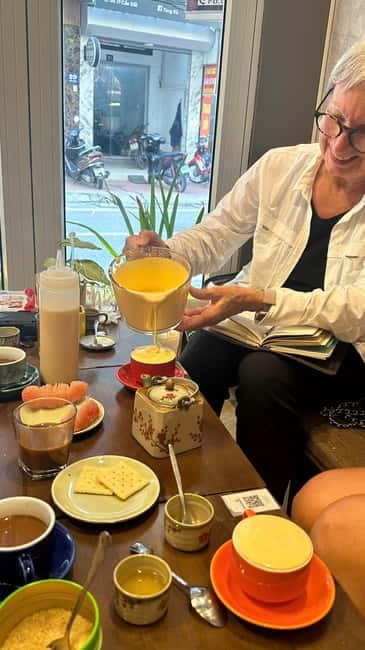
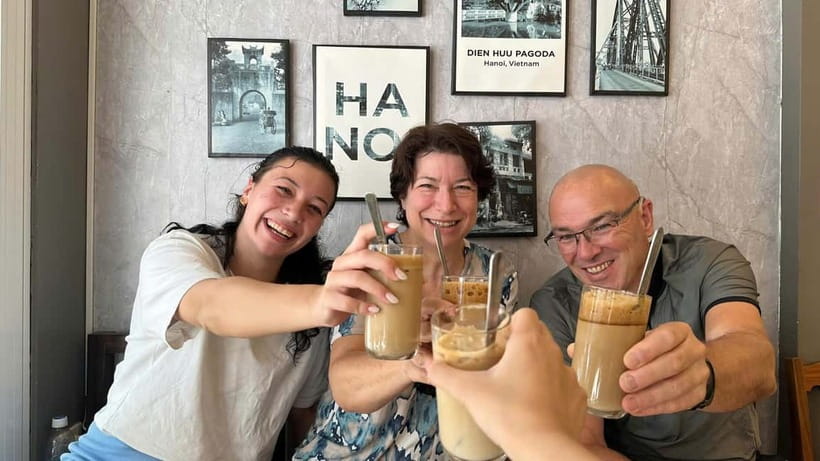
After the familiar styles, the class moves into drinks with more unusual flavor combinations. Coconut coffee is often a favorite because it combines strong coffee with a cool, creamy coconut base. The result is sweet and smooth, with enough coffee flavor to keep it from becoming a plain dessert.
You prepare the ingredients yourself, then taste how coconut changes the body of the drink. It is a useful lesson in texture. The same brewed coffee can feel very different once you add a thick, chilled, or creamy component.
Salted coffee offers another clear comparison. A small amount of salt can change how you perceive bitterness and sweetness. The point is not to make coffee taste salty. You learn how a carefully balanced ingredient can round out a strong brew.
White, or silver, coffee provides another variation on the basic formula. Together, these styles show how Vietnamese coffee can move from direct and bitter to creamy, sweet, fragrant, and lightly savory.
The exact number of drinks can be four to six. The experience description lists six signature styles, but the advertised duration and format allow some variation. I would expect to make several coffees and possibly all six, rather than assume every session follows an identical sequence.
Same base, a completely different day:
- Hanoi: Water Puppet Show Tickets
★ 4.6 · 7,029 reviews - Hanoi Motorbike Tour: Food, Culture and Fun by Vintage Motorbike
★ 5.0 · 6,699 reviews - Hanoi: Guided Food Tour with Train Street Visit
★ 4.9 · 6,239 reviews - Hanoi Cooking Class: Culture, Local Market & Meaning CSR Impact
★ 5.0 · 5,147 reviews
What your instructor adds to the experience
The workshop depends heavily on the person leading it. The instructors named in the available information include Jade, Eddie, Daisy, Tyler, Jessica, Zoey, Mint, and Ngoc. You may meet a different member of the team, but the repeated strengths are clear: friendly teaching, clear English, patience, and plenty of time for questions.
Jade is particularly associated with history, local recommendations, and careful explanations of each recipe. Eddie is noted for walking through all six coffees patiently and clearly. Daisy has led sessions that combine coffee history with easy conversation, while Tyler has been praised for warmth and a strong introduction to Vietnamese coffee culture.
I like the fact that the guide’s role goes beyond measuring ingredients. You learn why a drink tastes the way it does and how it connects with Hanoi mornings, old cafés, changing tastes, and family traditions. That turns the workshop into a small cultural lesson rather than a chain of unrelated recipes.
Many instructors also share suggestions for cafés, food, markets, restaurants, bars, and less obvious places around Hanoi. Some participants receive a local map or a digital recipe booklet. These extras can be useful early in your stay, when you still need help deciding where to eat and drink.
The quality of the session will still depend on your instructor and group size. A group of two may feel almost private, while a full group of 10 will be more social and slightly less personal. The limit is sensible, but it does not guarantee the same pace in every time slot.
Why the small-group format matters
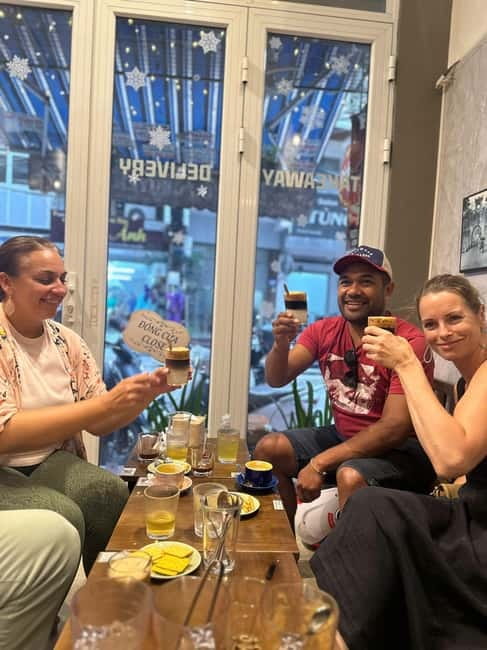
The workshop caps participation at 10 people. That is large enough to meet other visitors but small enough for the instructor to watch your brewing and help you correct mistakes.
This matters most with the phin filter. Small changes in coffee quantity, water, or pressure can alter the result. If you only watch from the back of a large room, you may leave knowing the idea but not the technique.
With a smaller group, you can also set your own preferences. You may ask for a bolder cup, less sweetness, or a different balance. The workshop is built around tasting and adjusting, so personal feedback is a real part of the activity.
A smaller session can sometimes become a private class. One participant described being the only person booked for a time slot, while another had a two-person session. That is not something you should count on, but it shows how the format can change depending on demand.
I would choose a morning time if possible. The class may take one hour, or closer to two, and you could drink four to six coffee styles. One participant specifically advised doing it early because of the caffeine. I would not schedule it immediately before bed or after an already coffee-heavy day.
The take-home value of the $22 price
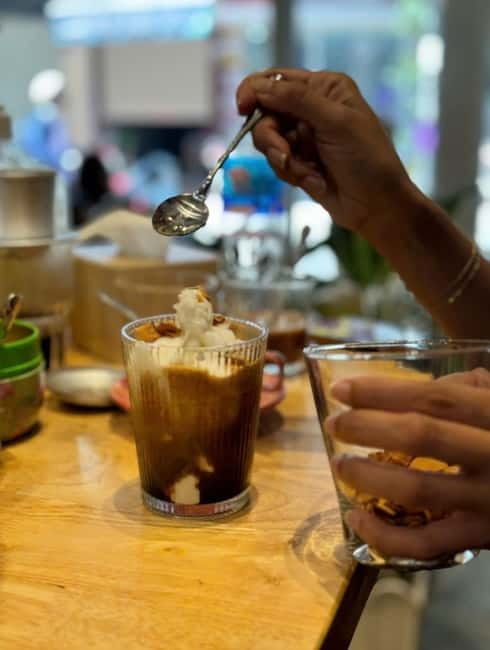
At $22 per person, this is not the cheapest way to drink coffee in Hanoi. You can buy a cup at a local café for very little. The value comes from what happens between cups.
You receive coffee and tea, fresh ingredients, instruction, recipes, and an introduction to Vietnamese coffee culture. You also get a chance to practice with equipment rather than simply taste finished drinks. If you later buy a phin filter and use the recipes, the class can continue paying off after your trip.
I see the price as fair for visitors who care about coffee or want an activity with a clear cultural angle. Six drinks alone would not justify the cost for me. The guided tasting, technique, stories, and take-home instructions do.
The value is lower if you dislike sweet drinks, avoid caffeine, or already know Vietnamese coffee well. You may also find the one to two hour length too short if you want a full cooking course with market shopping and a meal. This is a focused coffee workshop, not a broad food tour.
Some people buy a phin filter afterward so they can make the drinks at home. The availability of the equipment is useful, but you should think about luggage space and whether you really want another kitchen item before purchasing one.
Practical details before you book
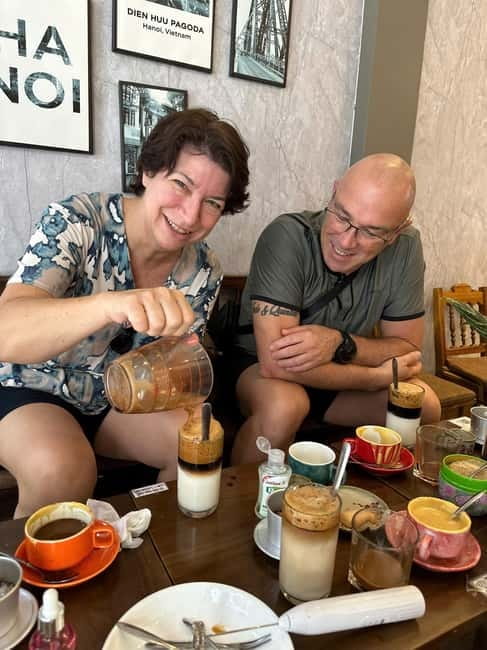
The activity is offered in Vietnamese and English. English-speaking instructors such as Jade, Eddie, Daisy, and others have led sessions, and clear step-by-step teaching is a central part of the format.
The meeting point is in the Old Quarter, near central sights and the French Quarter. Check the exact starting time when booking because the duration can range from one to two hours.
The workshop is wheelchair accessible. Clean restrooms, air conditioning, sterilized utensils, and a pet-friendly garden space are included. Childcare is available, but babies under one year are not suitable, and the activity is not intended for people over 95.
You can cancel up to 24 hours before the start for a full refund. The reserve-now, pay-later option also helps if your Hanoi plans are still moving around. Those policies are useful, but I would still choose your time carefully because the coffee load is substantial.
Bring curiosity rather than special equipment. The necessary coffee tools and ingredients are supplied. You should be ready to handle coffee grounds, whisk fresh ingredients, and taste several drinks.
Who will enjoy this Hanoi experience most
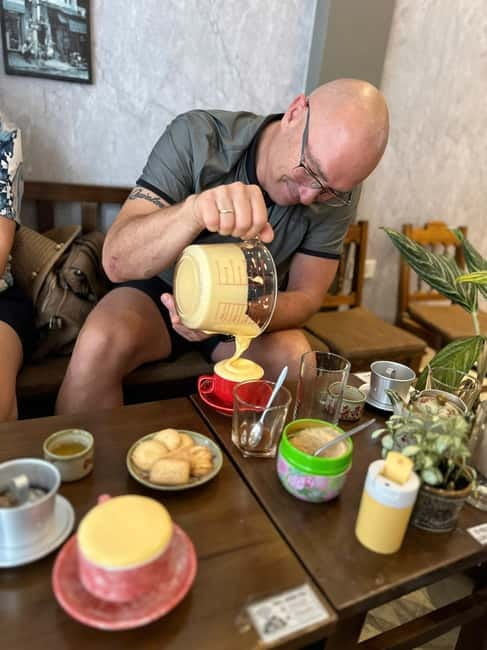
I would recommend this to coffee drinkers who have already seen Vietnamese coffee on café menus and want to understand how it is made. It also suits people who like short cultural activities that fit around sightseeing.
First-time visitors to Hanoi can use the local recommendations as a bonus. A guide may point you toward food, coffee, markets, and bars that help shape the rest of your stay. Booking the class early in your trip makes those suggestions more useful.
Families may appreciate the childcare option and accessible setting, but the caffeine, hands-on work, and age restrictions mean this is not designed for very young children. Couples, solo visitors, and small groups can all fit comfortably into the format.
I would be cautious if you are sensitive to caffeine, dislike condensed milk and sweet flavors, or want a quiet tasting with no participation. You will be grinding, brewing, whisking, tasting, and talking. That is the point, but it is not a passive café stop.
Should you book the coffee workshop?
I would book it if you want more than a good cup of coffee in Hanoi. At $22, the workshop gives you several distinct drinks, clear instruction, local context, full recipes, and a useful first step toward making Vietnamese coffee at home.
Choose a morning slot and ask for the earliest convenient time, especially if you plan to taste all six styles. Expect an informal local setting, a friendly instructor, and enough caffeine to power a few hours of sightseeing afterward.
Skip it if you are looking only for a cheap drink, cannot handle several coffee tastings, or prefer a formal culinary school. For most coffee lovers, though, this is a practical and enjoyable way to understand one of Hanoi’s everyday rituals.
FAQ
How many Vietnamese coffees will I make?
The experience teaches four to six signature coffees. The listed styles are black, brown, egg, white or silver, coconut, and salted coffee.
How long does the workshop last?
The duration is listed as one to two hours. Starting times vary, so check availability when choosing a session.
What does the $22 price include?
The price includes the coffees and teas, ingredients, a local instructor, recipes and additional materials, and the use of the coffee-making equipment during the workshop.
Is the workshop taught in English?
Yes. The activity is offered in Vietnamese and English.
How large is the group?
The small-group format allows up to 10 participants. Some sessions may have fewer people, depending on bookings.
Where does the activity meet?
You meet at a cozy local café in a peaceful corner of Hanoi’s Old Quarter, near the Hanoi Opera House and the French Quarter.
Are the ingredients fresh?
Fresh eggs, milk, and coconut are prepared daily. The coffee comes from selected beans sourced from Vietnam’s Central Highlands.
Can I cancel the booking?
Yes. You can cancel up to 24 hours in advance for a full refund.
Is the activity wheelchair accessible?
Yes, the activity is listed as wheelchair accessible. It also includes air conditioning, clean restrooms, sterilized utensils, and a pet-friendly garden space.
Newly listed around Hanoi
- Hanoi: Halong Bay Cruise, Amazing Cave, Titov Island & Kayak★ 4.2 · 39 reviews
- 2Days-1Night Halong Bay Luxury Genesis Regal Cruises★ 4.5 · 39 reviews
- Ninh Binh 1 Day Tour(Tam Coc – Mua Cave – Bich Dong)★ 5.0 · 39 reviews
- 8 days 360° Vietnam Adventure from Hanoi★ 5.0 · 39 reviews
- Dora Cruise – Luxury 5 Star Cruise in Halong Bay & Lan Ha Bay (2D1N)★ 4.5 · 39 reviews
- 3 Days and 2 Nights Ha Giang Loop Tour★ 5.0 · 39 reviews
- Best Value Ha Long bay 1 day – Lunch, kayak, swimming, transfer★ 5.0 · 39 reviews
- From Hanoi: Ha Giang Loop Motorbike Tours 3-Days 2-Nights★ 5.0 · 40 reviews
Hanoi Tours, compared.

Hanoi Jeep Tour: Food, Culture and Fun by Vietnam Army Jeep
Read our review →
Full-Day Ninh Binh Highlights Tour from Hanoi
Read our review →
Ha Long Bay Day Cruise – Swimming, Meal, Kayaking
Read our review →

Hanoi Motorbike Tour: Food, Culture and Fun by Vintage Motorbike
Read our review →
Hanoi Cooking Class: Culture, Local Market & Meaning CSR Impact
Read our review →