Reviewed · HO CHI MINH CITY TOURS
Three Coolest Neighborhoods in Saigon
Saigon reveals its character in the places most sightseeing tours skip. This four-hour walk leads you from the narrow alleys of District 4 to Chinatown and then to important wartime sites, with stops for Vietnamese coffee, herbal tea, and fresh market fruit along the way. Guides Kyle and Danny are named among the tour team, and the small group gives the outing a personal feel.
I like the way this tour connects ordinary daily life with major history, rather than treating Saigon as a string of postcard sights. I also like the variety: a market, fish aquarium street, herbal medicine shops, a Chinese-style Buddhist temple, and a secret weapon cellar all fit into one morning.
The main drawback is the walking. You cover about 5.5 to 6 kilometers in warm city conditions, much of it through alleys and busy streets. Wear good shoes, bring water, and think twice before booking if a long urban walk sounds tiring.
Key points to know before booking

- District 4 comes first: Walk through Xom Chieu Market and tiny residential alleys in the area sometimes called the Mafia District.
- Chinatown is more than temples: The route includes Aquarium Street, Herbal Medicine Street, Chinese culture, and herbal tea.
- The history is unusually direct: You visit the Burning Monk site and go down into the Commando Safehouse cellar.
- Food and drinks are part of the walk: Fresh seasonal fruit, Vietnamese coffee, and herbal tea are included.
- The group stays small: No more than eight people can join, which suits anyone who wants room for questions.
- The route ends near central Saigon: The finish in District 3 is about a five-minute walk from the city center.
Why this walk answers Saigon’s big question
Many first visits to Ho Chi Minh City stay around District 1. That is convenient, but it gives you only one slice of the city: grand hotels, major shopping streets, colonial buildings, restaurants, and the familiar tourist circuit.
This experience takes you outside that comfortable zone. It asks what makes Saigon different, then answers through neighborhoods where people shop, worship, work, study, and move through narrow lanes. You are not simply checking off sights. You are watching the city operate at street level.
That change of setting matters. The route moves through three districts with distinct identities, and each one adds a different piece to the story. District 4 shows local residential life. Chinatown brings Chinese-Vietnamese traditions and trade. The final section ties the city to the Vietnam War through a monument and a former safehouse.
The small maximum of eight is a real advantage here. In a large group, an alley walk can become a slow-moving line, and explanations are harder to hear. With fewer people, you should have a better chance to ask about what you see. The tour has earned a 5 out of 5 rating from 43 reviews, with 98 percent recommending it, and the strongest praise centers on the guides’ personal approach and strong English.
Guides Kyle and Danny are specifically mentioned, and Kyle is described as bringing a folder of visual material. That kind of aid can help when the streets, names, and wartime events begin to blur together. Guide assignments can change, so book this for the route and format rather than a guaranteed request for one particular guide.
A few other Ho Chi Minh City trips to compare
- Cu Chi Tunnels Tour from HCM City – Morning or Afternoon
★ 5.0 · 15,833 reviews - From HCM City: Mekong Delta Tour with Sampan Journey
★ 4.5 · 13,132 reviews - Ho Chi Minh City Street Food Tour & Sightseeing By Motorbike
★ 5.0 · 9,413 reviews
Xom Chieu Market and the alleys of District 4
The morning starts at 8:30 am from 36 Ho Tung Mau in District 1. From there, you make the first, roughly 3-kilometer walk toward Xom Chieu Market in District 4.
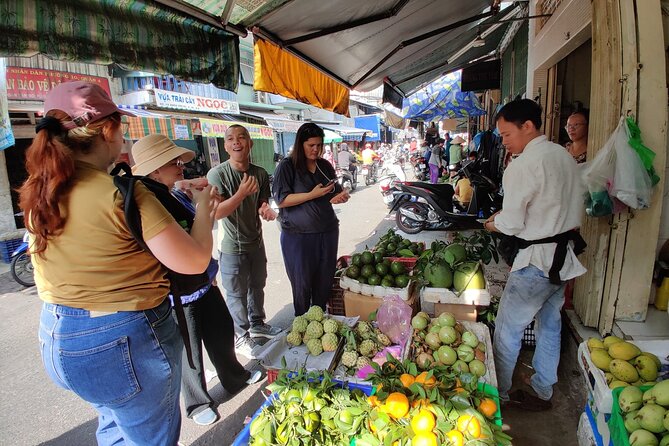
The market is not presented as a polished food hall or a staged cultural stop. Its value is in seeing where local shopping happens and how the surrounding community is arranged. You walk through small alleys where many residents live, gaining a look at the close quarters and everyday rhythm that are easy to miss from a taxi window.
This portion takes about 90 minutes, making it the longest section of the morning. You will have time to look around instead of rushing through the market for a quick photograph. Fresh seasonal fruit is bought here for you to taste, and that simple snack gives the stop a useful local connection.
The route description uses the nickname Mafia District for this area. That label may catch your attention, but the worthwhile part is not a dramatic crime story. It is the chance to see a neighborhood shaped by narrow lanes, local commerce, and residential life. The guide’s explanation is what turns the walk from a random detour into something you can understand.
You should expect uneven pacing. Market alleys can be tight, and the group may stop often while the guide explains a building, shop, or local custom. Keep your belongings secure as you would in any crowded market, and do not expect the first section to feel like a quiet stroll.
For me, this is the part that best supports the tour’s main idea. Saigon becomes easier to understand when you see not only its famous buildings, but also the places where people buy fruit, pass through alleys, and organize daily life around a local market.
Chinatown’s Aquarium Street and Herbal Medicine Street
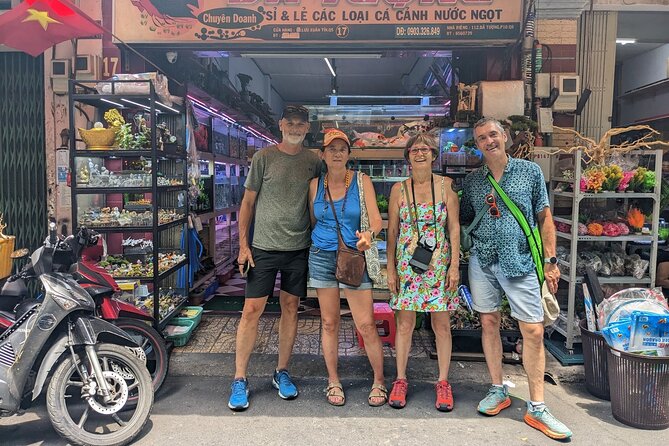
The second section covers about 1.5 kilometers and takes around an hour. You continue into Chinatown, known locally as Cho Lon, with stops on Aquarium Street, Herbal Medicine Street, and at a Chinese-style Buddhist temple.
This is a useful contrast with District 4. The first neighborhood focuses on local residential life. Chinatown adds a strong commercial and cultural identity, with streets linked to particular trades. The aquarium section and herbal medicine street show how specialized shopping streets can shape a neighborhood’s character.
The fish aquarium stop is an especially unusual inclusion. It is not the sort of sight usually placed on a first-time city tour, which is exactly why it can be useful. A street devoted to aquarium shops gives you a glimpse of a local business world that most visitors would probably never find on their own.
Herbal Medicine Street adds another layer. You will learn about Chinese influence in Saigon and taste a cup of herbal tea. The tea is included, so you do not need to budget for an extra purchase at this point. The stop also gives the guide a natural way to discuss traditions, commerce, and the relationship between Vietnamese and Chinese communities.
The Chinese-style Buddhist temple provides the visual centerpiece of this section. Expect bright decoration and a setting that differs from the more familiar modern streets around District 1. The tour description identifies it as colorful, but it does not promise a large monument or a long temple visit. Think of it as one part of a neighborhood walk, not a standalone attraction requiring an hour by itself.
This section should suit you if you enjoy seeing how a city’s identity appears in small details. The value is not only the temple. It is the combination of a trade street, a tea stop, aquarium shops, and Chinese cultural influence within a compact route.
Vietnamese coffee and the pleasure of a useful pause
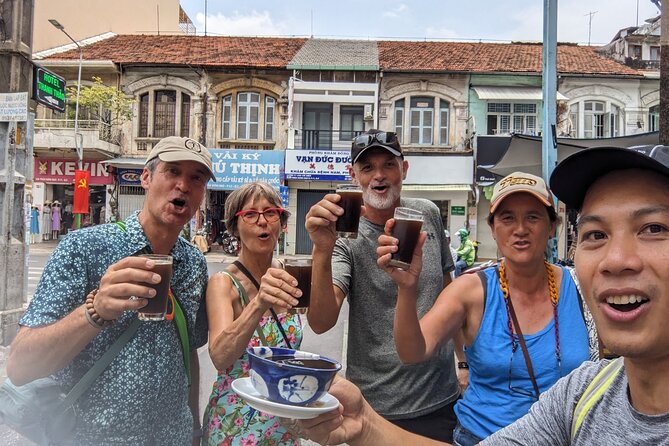
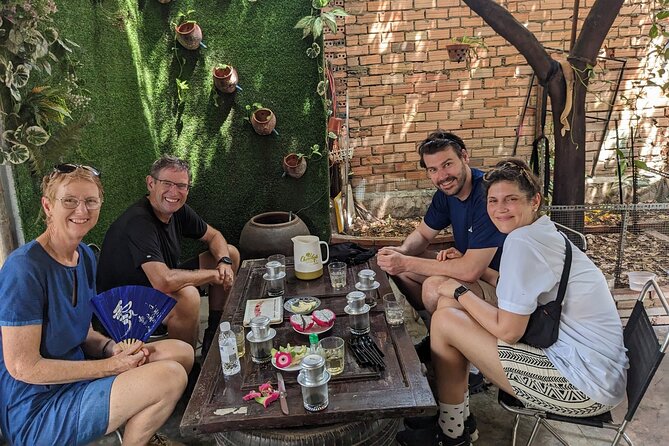
Vietnamese coffee is included, along with herbal tea and fruit. These tastings are modest, but they make the walking easier and give the guide a chance to explain something through taste rather than a lecture.
Coffee is part of daily life in Vietnam, and a cup during the tour feels more connected to the city than stopping at a familiar international chain. The supplied details do not specify the café, coffee style, or preparation method, so you should not book expecting a particular signature drink.
The same applies to the herbal tea. It is linked to the Chinatown and herbal medicine section, which gives the drink a clear place in the route. Seasonal fruit from Xom Chieu Market adds a third food moment and keeps the experience grounded in what is available locally that morning.
I like that the food is integrated into the walk rather than sold as a separate tasting package. Still, these are snacks, not lunch. Eat breakfast before the 8:30 start, especially if you are not used to walking several kilometers in humid weather.
Same base, a completely different day:
- HCM: Cu Chi Tunnels-Tapioca Small Group Tour Morning or Afternoon
★ 5.0 · 7,485 reviews - Cu Chi Tunnels and Mekong Delta Signature Tour
★ 5.0 · 7,328 reviews - Mekong Delta Guided Tour from Ho Chi Minh City
★ 4.5 · 7,192 reviews - Cu Chi Tunnels & Mekong Delta Tour with VIP Limousine Transfer
★ 5.0 · 7,052 reviews
The Burning Monk site and Saigon’s wartime memory
The final section covers about 1 kilometer and takes roughly an hour. It includes the Venerable Thich Quang Duc Monument, the site associated with the Burning Monk, and the Commando Safehouse.
This is where the tour shifts from neighborhood life to national history. Thich Quang Duc’s self-immolation became one of the most recognized images of the Vietnam War era. The monument gives the event a physical place in the city, allowing the guide to explain the political and religious tensions behind it.
The stop is important because it resists a simplified war story. A single photograph can become a symbol without explaining the people, beliefs, and events around it. The guide’s role is crucial here, and the tour’s visual folder, if used by your guide, should help set the scene.
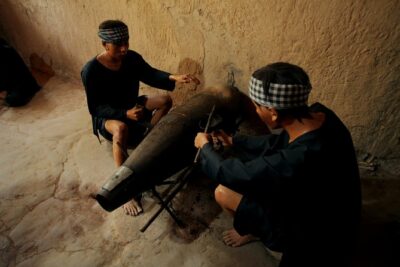
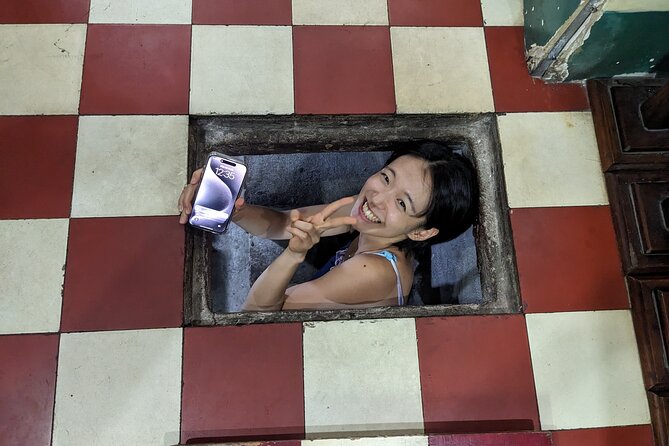
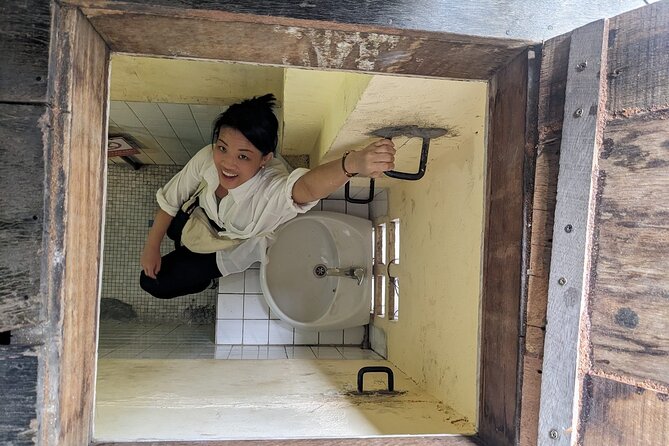
The Commando Safehouse adds a more concealed wartime location. You go down into the secret weapon cellar, which gives the final portion a tangible, physical quality. Instead of only hearing about conflict from a monument or museum label, you enter a space connected to the storage and movement of weapons.
The two stops work well together. The monument represents public memory. The cellar represents secrecy and underground activity. Neither should be treated as a quick thrill stop. Both need explanation, and the quality of that explanation will shape how much you gain from the visit.
This final hour also makes the tour more than a neighborhood food walk. If you want only markets, coffee, and architecture, the wartime section may feel heavier than expected. If you want a better grasp of how Vietnam’s past remains present in Ho Chi Minh City, it is one of the strongest reasons to choose this route.
Walking distance, timing, and group size
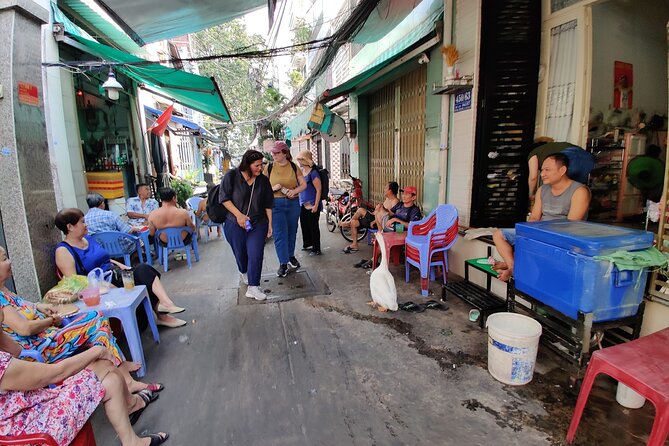
The full experience lasts about four hours and starts at 8:30 am. The total walking distance is approximately 5.5 to 6 kilometers, split across the three neighborhood sections.
That distance is manageable for most people who are comfortable walking in a city, but it is not a light sightseeing stroll. You will spend much of the morning on foot, with stops for explanations, drinks, fruit, and historical sites. Comfortable shoes are essential. A mobile ticket makes entry and meeting details easy to keep on your phone, but the tour does not include hotel pickup or drop-off.
The route begins in District 1 and ends on Vo Van Tan in District 3. The endpoint is about a five-minute walk from the city center, which is helpful if you want to continue sightseeing or return to your hotel without arranging another ride.
The maximum group size is eight. That is small enough for a more conversational walk and practical for narrow alleys. Group discounts are available, so the price may work better for people booking together.
Is $37.59 a fair price?
At $37.59 per person, this is not the cheapest way to spend a morning in Ho Chi Minh City. You could visit markets, Chinatown, and several streets on your own for far less money.
The question is what you are paying for. The fee includes an English-speaking guide, all taxes and fees, fresh seasonal fruit, Vietnamese coffee, and herbal tea. More important, it pays for the connections between places. Without a guide, you might see the market, temple, or safehouse but miss why each belongs in the same story.
The small group also improves the value. A private tour would cost more, while a large group might make the alley sections awkward and reduce time for questions. For someone visiting Saigon for the first time, the tour can serve as a strong orientation to areas outside District 1.
I would call the price fair for a guided, food-included half-day walk, especially if history and local neighborhoods matter to you. It is less compelling if you already know District 4 and Chinatown well, or if you prefer to spend your money on major museum admissions and longer guided visits.
Personal expenses are not included, and tipping is optional but appreciated. Since the included food is limited to snacks and drinks, plan your own meal after the tour.
Who will enjoy this experience most?
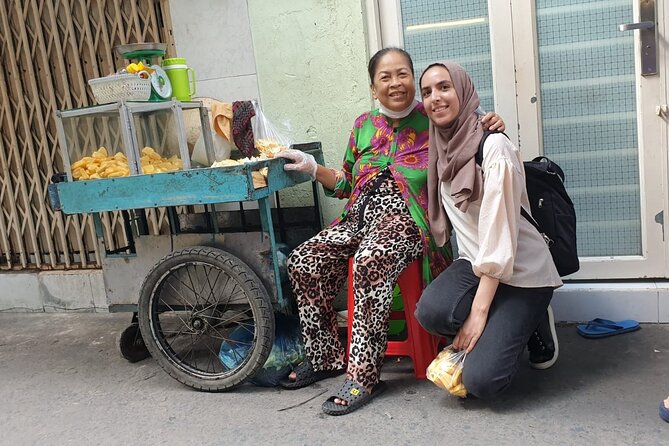
You should consider booking if you want:
- A first look at Saigon beyond the main tourist streets
- A small group with no more than eight people
- A mix of local markets, cultural sites, food, and wartime history
- An English-speaking guide who can explain what you are seeing
- A walking tour with unusual stops rather than famous landmarks only
The tour suits curious first-time visitors particularly well. It also works for repeat visitors who have already seen District 1 and want a different side of the city.
You may want another experience if you have limited walking ability, dislike warm urban conditions, or want a relaxed vehicle-based tour. The route is active, and the 5.5 to 6 kilometers should be treated as a central feature, not a footnote.
Most people can participate, and the tour operates near public transportation. Still, the supplied information does not give details about step-free access or the precise surfaces in every alley, so contact the provider if those details matter to you.
Practical advice for getting the most from the morning
Wear comfortable walking shoes and start with breakfast. Carry water, even though the tour includes drinks, because the morning is long and the route is active.
Arrive at the meeting point at 36 Ho Tung Mau in District 1 before the 8:30 start. The tour does not provide pickup, so allow time to reach the starting point independently.
Keep your schedule flexible after the tour. The endpoint in District 3 is close to the city center, but the experience can run close to its four-hour estimate. That finish makes it easy to continue your day, but you may not want to book a fixed activity immediately afterward.
Bring your phone for the mobile ticket and a camera if you want one, but pay attention to the guide’s explanations. The value of this walk is the meaning behind the places, not simply the number of photographs you take.
Free cancellation is available if you cancel at least 24 hours before the local start time. Changes or cancellations made inside that window are not accepted for a refund.
Should you book the Three Coolest Neighborhoods in Saigon?
Book it if you want Saigon explained through real neighborhoods, local food and drink, Chinese cultural sites, and difficult wartime history. The mix is unusually broad for a four-hour walk, and the small group makes the format more personal than a standard city tour.
Skip it if you want a short, low-effort outing or a checklist of major landmarks. This is a substantial walk, and its best moments depend on your interest in everyday city life.
For most first visits, I would choose it early in the trip. It gives you a better sense of how Saigon extends beyond District 1, and it leaves you with useful context for the rest of your time in the city.
FAQ
How long does the Three Coolest Neighborhoods in Saigon tour last?
The tour lasts approximately four hours.
How much walking is involved?
You will walk about 5.5 to 6 kilometers in total. Comfortable shoes are recommended.
What time does the tour start?
The tour starts at 8:30 am.
Where does the tour begin?
The meeting point is 36 Ho Tung Mau, Ben Nghe, District 1, Ho Chi Minh City, Vietnam.
Where does the tour end?
The tour ends on Vo Van Tan in District 3, about a five-minute walk from the city center.
What food and drinks are included?
The tour includes seasonal fruit purchased at the market, Vietnamese coffee, and herbal tea.
How large is the tour group?
The maximum group size is eight people. Group discounts are available.
Is hotel pickup included?
No. Pickup and drop-off service are not included.
Can I cancel for a full refund?
Yes, if you cancel at least 24 hours before the experience start time. Cancellations made less than 24 hours in advance are not refunded.
Newly listed around Ho Chi Minh City
- Ho Chi Minh City’s most delicious street food tour by motorbike★ 5.0 · 39 reviews
- Half Day – Saigon Off-the-Beaten-Path – City Cycling Tour★ 5.0 · 39 reviews
- Night Bus Tour in Ho Chi Minh City★ 3.0 · 39 reviews
- HCM City Local Street Food by scooter/ Aodai Rider Saigon tour★ 5.0 · 39 reviews
- Explore Vietnamese Cuisine: Cooking Class from Ho Chi Minh City★ 5.0 · 40 reviews
- Private Street Food Discovery by Cyclo at Night in Ho Chi Minh★ 5.0 · 40 reviews
- Ho Chi Minh City Sightseeing & Street Food Tasting Experience★ 5.0 · 40 reviews
- Mekong Delta Homestay Explore Nature 2-Day Family Tiny Garden★ 5.0 · 40 reviews
Ho Chi Minh City Tours, compared.

Cu Chi Tunnels Tour from HCM City – Morning or Afternoon
Read our review →
Ho Chi Minh City Street Food Tour & Sightseeing By Motorbike
Read our review →
Cu Chi Tunnels-Tapioca Small Group Tour Morning or Afternoon
Read our review →
Cu Chi Tunnels and Mekong Delta Signature Tour
Read our review →
Mekong Delta Guided Tour from Ho Chi Minh City
Read our review →
Cu Chi Tunnels & Mekong Delta Tour with VIP Limousine Transfer
Read our review →