
Reviewed · CU CHI TUNNELS TOURS
Cu Chi Tunnel VIP Morning or Afternoon Half Day Tour
The most striking part of this half-day outing is the chance to see how people dug, lived, and fought underground at Cu Chi. A documentary, handmade bamboo traps, hidden tunnel entrances, and a short crawl through the tunnels make the wartime story physical rather than distant.
I like the low price of $16.50, especially since it includes transport, entrance, bottled water, a snack, and a guide. I also like the choice built into the day: you can enter the tunnels, try steamed cassava, and fire an AK-47 if you wish, or simply watch. The main drawback is transport comfort. One recent experience found the minibus poorly air-conditioned unless seated by a window, and an unplanned stop at a tourist shop may not suit everyone.
Key points to know before booking
- The tunnels are the main event: See how guerrillas built and used an underground network, then crawl through a section if you choose.
- Pickup is central: Collection is offered at selected central hotels near Ben Thanh Market, with the listed meeting point at 165 Pham Ngu Lao.
- A small group keeps it manageable: The vehicle holds no more than 25 people, a useful size for questions and moving through the site.
- You get more than tunnel access: The visit includes a documentary, bamboo traps, handmade weapons, rice paper and rice wine demonstrations, and steamed cassava.
- Gun firing costs extra: AK-47 shooting is optional, but ammunition is not included in the tour price.
- The return can be flexible: You return to the meeting point, with a possible drop-off at the War Remnants Museum on the way back.
Why Cu Chi works best as a half-day history outing
Cu Chi is not a polished sightseeing stop in the usual sense. Its value comes from showing the practical side of war: how people made traps from bamboo, concealed entrances, stored supplies, and moved through narrow underground passages.
The documentary sets the scene before you walk around the site. It focuses on local people who made their own weapons and explains how determination could challenge much more advanced technology. That framing helps you understand the tunnels as a system built through labor, patience, and survival rather than as a simple underground attraction.
I find this kind of introduction useful because the tunnels can otherwise feel like a series of holes in the ground. Once you know what you are looking at, the demonstrations and entrances make more sense.
The visit also covers local crafts and food traditions. You learn how rice paper and rice wine are made, then try steamed cassava, a simple food associated with life in the tunnels. These details give the site a human scale. The experience is not only about military equipment and combat.
A few other Ho Chi Minh City trips to compare
- Cu Chi Tunnels Tour from HCM City – Morning or Afternoon
★ 5.0 · 15,833 reviews - HCM: Cu Chi Tunnels-Tapioca Small Group Tour Morning or Afternoon
★ 5.0 · 7,485 reviews - Cu Chi Tunnels and Mekong Delta Signature Tour
★ 5.0 · 7,328 reviews
Leaving Ho Chi Minh City between 7:45 and 8:30
The morning schedule begins with pickup between 7:45 and 8:30. The bus collects you from a selected centrally located hotel near Ben Thanh Market, or you can meet the group at 165 Pham Ngu Lao in District 1.
That central arrangement is practical if you are staying around Pham Ngu Lao, Ben Thanh Market, or nearby parts of District 1. If your hotel is outside the selected pickup area, you should plan to reach the meeting point yourself. The listed end point is also the meeting point, so this is not a door-to-door service for every address in the city.
The full outing lasts about seven hours, while the Cu Chi visit itself is listed at about three hours. The balance is used for city pickup, the journey out to the site, and the return. That makes this a sizeable part of your day, even though the main attraction is a half-day visit.
Transport is by air-conditioned vehicle, and bottled mineral water plus a snack are included. Still, I would keep expectations sensible. Air conditioning can feel uneven in a shared minibus, especially in Ho Chi Minh City heat. One recent account found the vehicle uncomfortable unless seated beside a window. If you care about airflow, arrive early enough to have a better chance of choosing a comfortable seat.
The group limit is 25 people. That is not an intimate private tour, but it is far easier to manage than a large coach group. The size should allow you to hear the guide and move through the site without feeling completely anonymous.
Watching the documentary before seeing the tunnels
The documentary is an important first step. It introduces the people who built their own weapons and explains the methods used to make bamboo traps and other basic defenses.
The film also describes the underground way of life. Guerrillas dug, lived, and fought in tunnels built by hand, often relying on concealment and local knowledge rather than modern equipment. The point is not to present technology as unimportant, but to show how planning and willpower could make a basic system effective.
This section may feel less active than the rest of the tour, but it gives the day a clear shape. You begin with explanation, then see objects and tunnel features in person. Without that context, the traps can seem like isolated displays.
The English and Vietnamese speaking guide leads the visit. No individual guide name is provided for this experience, so you should not expect to request a particular person when booking. The guide’s role is central because the site needs explanation. The physical remains alone do not tell you how the tunnel network functioned.
Bamboo traps and handmade weapons
The displays of bamboo traps are among the more memorable parts of the stop. They show how local materials could be turned into dangerous defenses with little industrial equipment.
You will see self-made weapons and trap designs while the guide explains how they worked. This is a good place to pay attention rather than rush toward the tunnel entrance. The designs reveal the practical thinking behind the defenses: concealment, surprise, and the use of materials available nearby.
The displays are also a reminder that the Cu Chi story includes civilians and local labor, not only soldiers. People had to build, maintain, and use an underground system over time. That human effort is what gives the site its force.
If you have young people with you, the traps may hold their attention, but the subject is still wartime violence. Parents should decide how much detail is suitable. The tour presents weapons as part of the historical setting, not as a light entertainment stop.
Same base, a completely different day:
- From HCM City: Mekong Delta Tour with Sampan Journey
★ 4.5 · 13,132 reviews - Ho Chi Minh City Street Food Tour & Sightseeing By Motorbike
★ 5.0 · 9,413 reviews - Mekong Delta Guided Tour from Ho Chi Minh City
★ 4.5 · 7,192 reviews - Cu Chi Tunnels & Mekong Delta Tour with VIP Limousine Transfer
★ 5.0 · 7,052 reviews
Entering the tunnels, if you choose
The most physical part of the visit is crawling into sections of the tunnels. You can take part if you wish, but you are not required to enter.
This choice matters. The tunnels can be narrow and physically demanding, so the ability to remain above ground makes the activity suitable for more people. You can still watch others, listen to the guide, and understand the site without crawling below.
If you do enter, expect a close, confined experience rather than a long walk. The point is to give you a brief sense of the cramped conditions underground. It cannot reproduce wartime life, but even a short passage helps you grasp how different this environment was from the open air above.
Wear clothing you do not mind getting dusty, and consider your own comfort before joining. The supplied information says most people can participate, but it does not promise that every section will suit every physical condition. If you dislike confined spaces, simply skip this part.
The tunnels are valuable because they turn an abstract story into something you feel in your shoulders, knees, and breathing. At the same time, you should treat the experience with respect. This is a historical site shaped by conflict, not just a novelty crawl.
Rice paper, rice wine, and steamed cassava
The stop includes an explanation of how locals make rice paper and rice wine. These demonstrations broaden the day beyond military history and show everyday skills connected with regional food and craft.
Rice paper is especially useful to see in context because it is a familiar part of Vietnamese cuisine, yet the making process is easy to overlook when you only encounter the finished product. Rice wine adds another local tradition to the visit.
You also try steamed cassava. It is a modest snack, not a full meal, but it connects with the food described as part of life in the tunnels. This is one of the small details that makes the visit feel grounded in daily survival rather than only weapons and tactics.
Water and a snack are included on the bus. You should still plan for a long morning and bring any food you personally need, since the included cassava and snack are not presented as lunch.
Optional AK-47 shooting
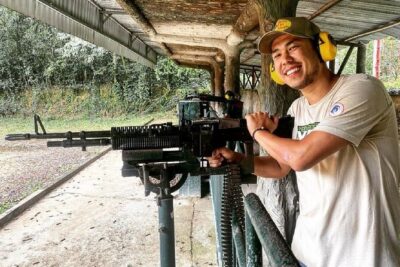
You can try firing an AK-47, but this is optional and the bullets cost extra. The ammunition fee is not part of the $16.50 price, so decide before you arrive if this is something you want to budget for.
This activity will appeal to some people as a direct connection to the site’s military setting. Others may find it uncomfortable or unnecessary, and the tour does not require participation. You can visit the tunnels, see the weapons, and learn the history without using the range.
I appreciate that the choice is clear. The core tour remains available without the shooting add-on. If you are traveling with a group that has mixed interests, some people can take part while others wait, though the supplied information does not specify the waiting arrangements or extra time involved.
The possible tourist-shop stop
There is one practical warning worth taking seriously. A recent account praised the guide but disliked a surprise visit to a tourist shop on the way. The tour details do not describe this stop as part of the planned highlights, so you should be prepared for the possibility of a sales-oriented detour.
This is common enough on budget day trips to be worth factoring into your expectations. A short shop stop can break up the ride, but it also uses time and may feel intrusive if you want a direct visit to Cu Chi.
If the tour includes such a stop, you are not obliged to buy anything unless the guide says otherwise. Keep your budget for the optional ammunition or for your own plans in Ho Chi Minh City. The shop issue is not a reason to dismiss the tour outright, but it is the clearest mismatch between the advertised historical focus and the possible day-to-day reality.
Returning to District 1 and the museum option
After leaving Cu Chi, the bus returns to Ho Chi Minh City and ends back at the listed meeting point. On the way back, you may be able to get off at the War Remnants Museum.
That option can make good sense if you want a full day of war history. It is not described as a guaranteed museum visit or as included admission, so treat it as a possible drop-off rather than a second guided attraction. Confirm the arrangement with the guide on the day.
The museum is also a useful alternative to returning directly if you have energy and want to continue the subject in the city. If you are tired after the early start and long ride, returning to the meeting point gives you an easy base for lunch or an afternoon break.
What the $16.50 price really covers
At $16.50 per person, this is a strong budget option. The price includes an air-conditioned vehicle, bottled water, a bus snack, steamed cassava, English and Vietnamese guiding, entrance to the Cu Chi Tunnels, and pickup and drop-off at selected central hotels.
The entry fee alone is only one part of the value. You also avoid arranging transport to a site outside the city, and you get an explanation of what you are seeing. For a first visit to Cu Chi, that combination is more useful than simply paying for admission and wandering around without context.
The low price does come with limits. You are sharing a vehicle, the pickup window is broad, and comfort may vary by seat. The possible tourist-shop stop is another trade-off. This is a practical group excursion, not a private custom day with a carefully controlled schedule.
The experience has a 4.9 rating from 148 reviews and is recommended by 99 percent of participants. Those figures suggest that the main mix of price, guide service, and Cu Chi access works very well for most bookings, but they do not erase the transport concern. I would book it for value, not for luxury.
Who should book this Cu Chi tour
I would recommend this outing if you want the main Cu Chi experience without arranging a private car. It suits first-time visitors who want the documentary, traps, tunnels, food, and local craft demonstrations in one organized visit.
It is also a good fit if you want flexibility during the active portions. You can crawl through the tunnels or remain above ground, and you can choose whether to pay for the shooting activity.
The tour may be less suitable if you need guaranteed vehicle comfort, dislike sales stops, or want a tightly controlled timetable. A private option would likely give you more control, but this tour costs far less and includes the basic services you need.
The early pickup and roughly seven-hour commitment also matter. You will lose much of a morning or afternoon, depending on the departure you select. Since the published timing gives exact hours only for the morning version, confirm the afternoon pickup time before booking that option.
For families, the activity can work if everyone understands that the subject is war and the tunnel crawl is optional. For older people or anyone with mobility concerns, the ability to stay above ground is helpful, but the transport and site walking may still require personal judgment.
Booking details worth checking
Confirmation is provided when you book, and mobile tickets are supported. The activity is near public transportation, though pickup is offered only at selected central hotels rather than every address.
The experience allows free cancellation up to 24 hours before the start time for a full refund. Cancellations or changes made less than 24 hours before the start are not accepted for a refund, and the cutoff follows local time.
Tipping is optional but recommended. Bullets for the optional shooting activity are extra. The tour ends at the meeting point, with a possible return drop-off at the War Remnants Museum.
Should you book it?
Book this Cu Chi tour if you want a cheap, structured introduction with transport and admission handled for you. The documentary, handmade traps, tunnel access, rice traditions, cassava, and optional shooting create a fuller visit than a simple entry ticket.
Skip it if a cramped or poorly cooled vehicle would ruin your day, or if an unplanned tourist-shop stop would irritate you. For most budget-conscious visitors staying near Ben Thanh Market or Pham Ngu Lao, the price makes the compromises reasonable. Just arrive ready for a shared ride, keep the tunnel crawl optional, and confirm the afternoon schedule if you do not choose the morning departure.
FAQ
How much does the Cu Chi Tunnel tour cost?
The tour costs $16.50 per person.
How long does the experience last?
The full outing lasts about seven hours. The Cu Chi Tunnels visit itself is listed at about three hours.
Is pickup included?
Yes. Pickup and drop-off are included from selected centrally located hotels near Ben Thanh Market. The listed meeting point is 165 Pham Ngu Lao in District 1.
Where does the tour end?
The activity ends back at the meeting point. You may also be able to get dropped off at the War Remnants Museum on the return journey.
What time does the morning tour start?
Morning pickup takes place between 7:45 and 8:30. The supplied information does not give a specific afternoon pickup time.
Is admission to the Cu Chi Tunnels included?
Yes. Entry to the Cu Chi Tunnels is included in the tour price.
Can I enter the tunnels?
Yes, you can crawl through sections of the tunnels if you wish. Entering is optional.
Is shooting an AK-47 included?
The shooting activity is optional, but bullets are not included. You must pay separately for the ammunition.
What food and drinks are included?
Bottled mineral water, a bus snack, and steamed cassava are included.
How large is the tour group?
The activity has a maximum of 25 participants.
Newly listed around Ho Chi Minh City
- Ho Chi Minh City’s most delicious street food tour by motorbike★ 5.0 · 39 reviews
- Half Day – Saigon Off-the-Beaten-Path – City Cycling Tour★ 5.0 · 39 reviews
- Night Bus Tour in Ho Chi Minh City★ 3.0 · 39 reviews
- HCM City Local Street Food by scooter/ Aodai Rider Saigon tour★ 5.0 · 39 reviews
- Explore Vietnamese Cuisine: Cooking Class from Ho Chi Minh City★ 5.0 · 40 reviews
- Private Street Food Discovery by Cyclo at Night in Ho Chi Minh★ 5.0 · 40 reviews
- Ho Chi Minh City Sightseeing & Street Food Tasting Experience★ 5.0 · 40 reviews
- Mekong Delta Homestay Explore Nature 2-Day Family Tiny Garden★ 5.0 · 40 reviews
Cu Chi Tunnels Tours, compared.
Cu Chi Tunnels Tour from HCM City – Morning or Afternoon
Read our review →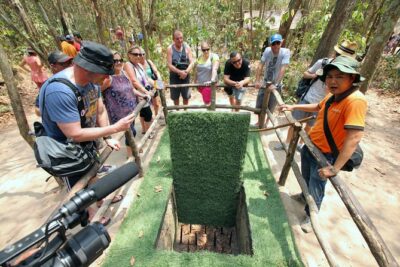
Cu Chi Tunnels-Tapioca Small Group Tour Morning or Afternoon
Read our review →
Cu Chi Tunnels and Mekong Delta Signature Tour
Read our review →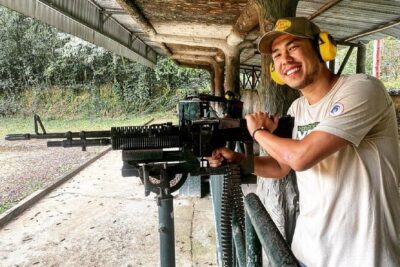
Cu Chi Tunnels & Mekong Delta Tour with VIP Limousine Transfer
Read our review →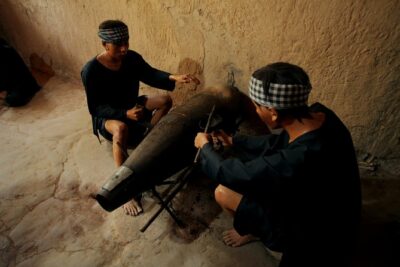
Cu Chi Tunnels and Mekong Delta Full Day Tour – Max 12
Read our review →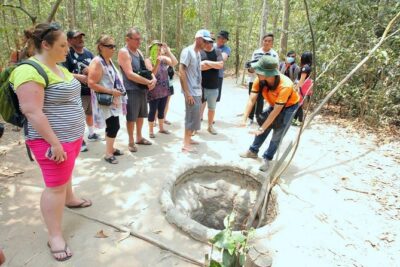
Cu Chi Luxury Group Tour – Tapioca and Cake Half Day
Read our review →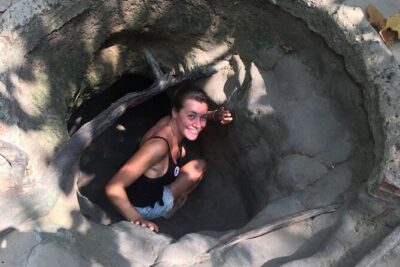
Adventure Cu Chi Tunnels and Mekong Delta Tour From HCM
Read our review →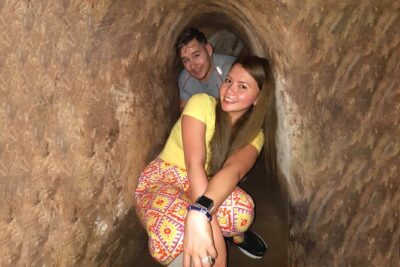
Cu Chi Tunnels and Mekong Delta – Small Group Tour
Read our review →Browse the lists this tour appears in